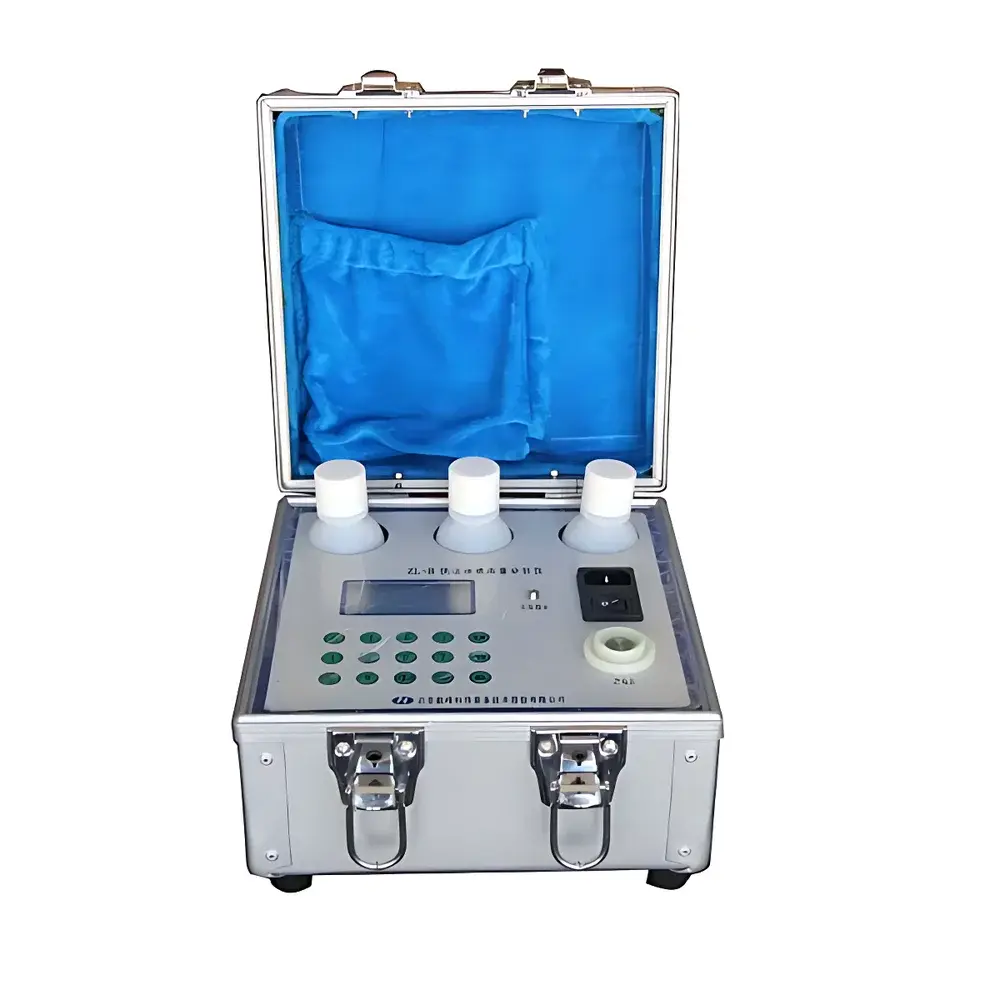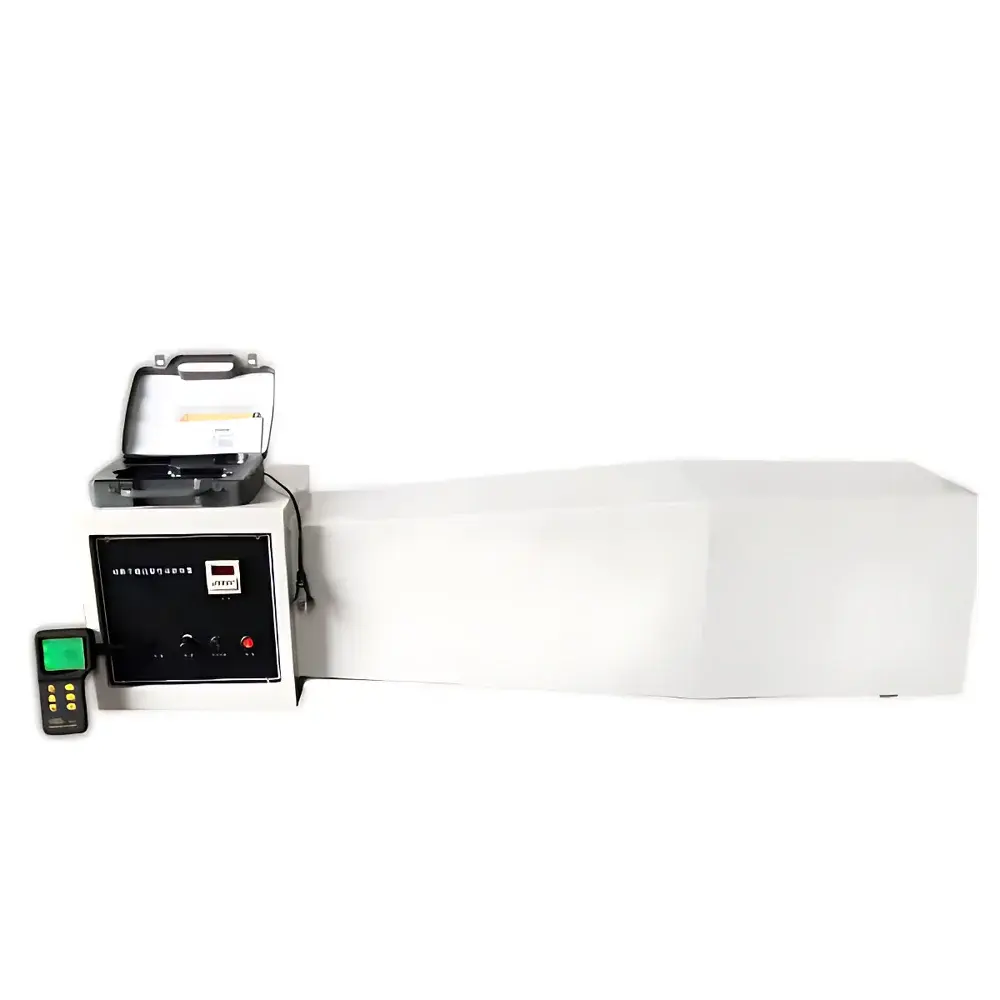
Aerospace CRTA-2 Initial Drying Crack Resistance Tester
| Brand | Aerospace |
|---|---|
| Origin | Beijing, China |
| Model | CRTA-2 |
| Compliance | GB 9779–2015, GB 14907–2002, JG/T 157–2009 |
| Airflow Velocity | 3.0 ± 0.3 m/s |
| Test Specimen Dimensions | 150 × 70 × (4–6) mm |
| Timer Range | 0–99 h 99 min |
| Sample Substrate | Asbestos-free fiber-cement board (JC/T 412.1–2006, NAF HV grade, 4–6 mm thick) |
| Wet Film Thickness (Primer) | 80 µm |
| Drying Interval (Primer) | 1–2 h (tack-free) |
| Application Sequence | Primer → Immediate application of intermediate coat → Wind-induced drying test |
Overview
The Aerospace CRTA-2 Initial Drying Crack Resistance Tester is a precision-engineered laboratory instrument designed to evaluate the early-stage drying behavior and surface crack formation propensity of architectural coatings under controlled airflow conditions. It operates on the principle of forced convection drying within a calibrated wind tunnel environment, simulating real-world wind exposure during the critical initial drying phase—typically within the first few hours after application. The system conforms strictly to the test methodology specified in GB 9779–2015 Textured Architectural Coatings, and is equally applicable to assessment protocols defined in GB 14907–2002 Fireproof Coatings for Steel Structures and JG/T 157–2009 Exterior Wall Putties. Unlike general-purpose environmental chambers, the CRTA-2 delivers reproducible, standardized airflow dynamics essential for comparative evaluation across coating formulations—including monocolor, multicolor, thick-film, granite-chip, and composite textured systems.
Key Features
- Calibrated axial-flow fan system with analog velocity control, maintaining airflow at 3.0 ± 0.3 m/s across the full test zone—verified via integrated digital anemometer with U-tube sensor interface
- Dedicated test chamber (wind tunnel) constructed from corrosion-resistant aluminum alloy, featuring laminar airflow geometry and low-turbulence inlet design to minimize boundary layer disruption
- Adjustable specimen rack accommodating three 150 × 70 × (4–6) mm asbestos-free fiber-cement boards (per JC/T 412.1–2006 NAF HV grade), mounted parallel to airflow direction
- Programmable digital timer (0–99 h 99 min resolution) with hardware-enforced pre-set lockout—prevents mid-test parameter alteration to ensure GLP-compliant test integrity
- Stainless-steel sample support tray (300 × 300 mm) included for flexible specimen preparation, compatible with extended dimensions required by fireproof coating and putty standards
- Integrated safety architecture including in-line fuse housed within the power inlet connector, compliant with IEC 61000-4 electromagnetic immunity requirements
Sample Compatibility & Compliance
The CRTA-2 supports standardized evaluation of multiple building material categories under their respective national technical specifications. For textured architectural coatings (GB 9779–2015), pass/fail criteria are determined by visual inspection at 0.5 m distance under diffuse daylight or 500–700 lx artificial illumination after prescribed drying duration. Acceptance thresholds vary by classification: Type I (interior), Type II/III (exterior), and functional subtypes (e.g., elastic, flexible, or granular finishes). In fireproof coating testing (GB 14907–2002), crack width and quantity limits are differentiated between indoor (NC/NB/NH) and outdoor (WCB/WBH) variants, with maximum allowable crack width ranging from ≤0.5 mm to ≤1.0 mm. For exterior wall putties (JG/T 157–2009), performance is assessed per application thickness tier (≤1.5 mm vs. >1.5 mm), requiring zero cracks at 1 mm or 2 mm wet film thickness respectively. All test reports generated using the CRTA-2 may be referenced in ISO/IEC 17025-accredited laboratories when coupled with documented calibration records and substrate traceability logs.
Software & Data Management
The CRTA-2 operates as a standalone electromechanical test platform without embedded firmware or proprietary software. This design philosophy prioritizes operational transparency, long-term serviceability, and audit readiness—particularly important in GMP-aligned quality control environments where software validation (per FDA 21 CFR Part 11) introduces complexity. All test parameters—including airflow velocity, timer setpoint, specimen identification, substrate batch number, and observer notation—are recorded manually in bound laboratory notebooks or LIMS-integrated electronic worksheets. Optional integration with external anemometer data loggers (e.g., Vaisala WXT530 or Testo 480) enables time-stamped velocity trend capture for enhanced repeatability analysis. Calibration certificates for the supplied anemometer and timer are provided upon delivery, traceable to CNAS-accredited metrology institutes.
Applications
- Formulation development of acrylic, silicone-acrylic, and styrene-acrylic textured coatings targeting improved film integrity during rapid solvent/water evaporation
- QC release testing of production batches against contractual crack resistance specifications for commercial façade projects
- Comparative benchmarking of rheological modifiers (e.g., associative thickeners, cellulose ethers) on early-film cohesion
- Technical support for failure analysis of field-applied coatings exhibiting premature mud-cracking or checking
- Regulatory submission documentation for CE marking (EN 15824), CCC certification, or green building rating systems (e.g., LEED MR credits requiring low-VOC, high-durability finishes)
FAQ
Is the CRTA-2 compliant with international standards such as ASTM or ISO?
The CRTA-2 implements test procedures aligned with Chinese national standards (GB/JG series), which are technically equivalent to ASTM D6083 (for acrylic emulsion coatings) and ISO 2812-3 (cross-cut adhesion under stress), though formal cross-referencing requires method equivalence validation by the end user.
Can the instrument accommodate substrates other than asbestos-free fiber-cement board?
Yes—while GB 9779–2015 mandates NAF HV-grade fiber-cement board (JC/T 412.1–2006), the specimen rack geometry permits substitution with gypsum board, mortar panels, or steel coupons when evaluating alternative material systems, provided substrate conditioning follows GB/T 9271–2008.
What maintenance is required for long-term accuracy?
Annual verification of anemometer calibration and timer drift is recommended; fan motor lubrication is not required due to sealed bearing construction; airflow path should be inspected quarterly for dust accumulation.
Does the unit include certified reference materials or substrate?
No—substrates must be sourced independently per JC/T 412.1–2006 specifications; however, dimensional tolerances and surface preparation protocols are fully documented in the operator manual.
Is remote monitoring or Ethernet connectivity supported?
No—the CRTA-2 is intentionally designed as an analog-digital hybrid system to eliminate cybersecurity risks and reduce lifecycle validation burden in regulated manufacturing settings.