
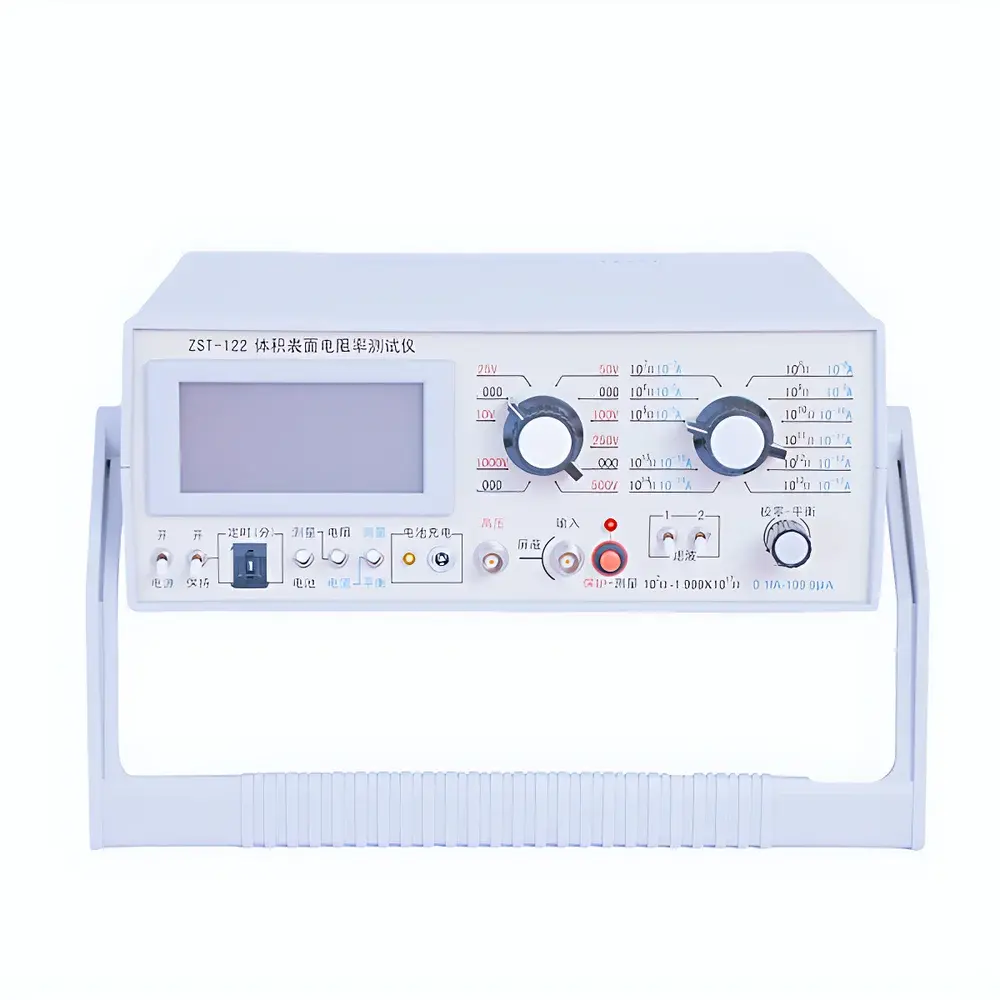
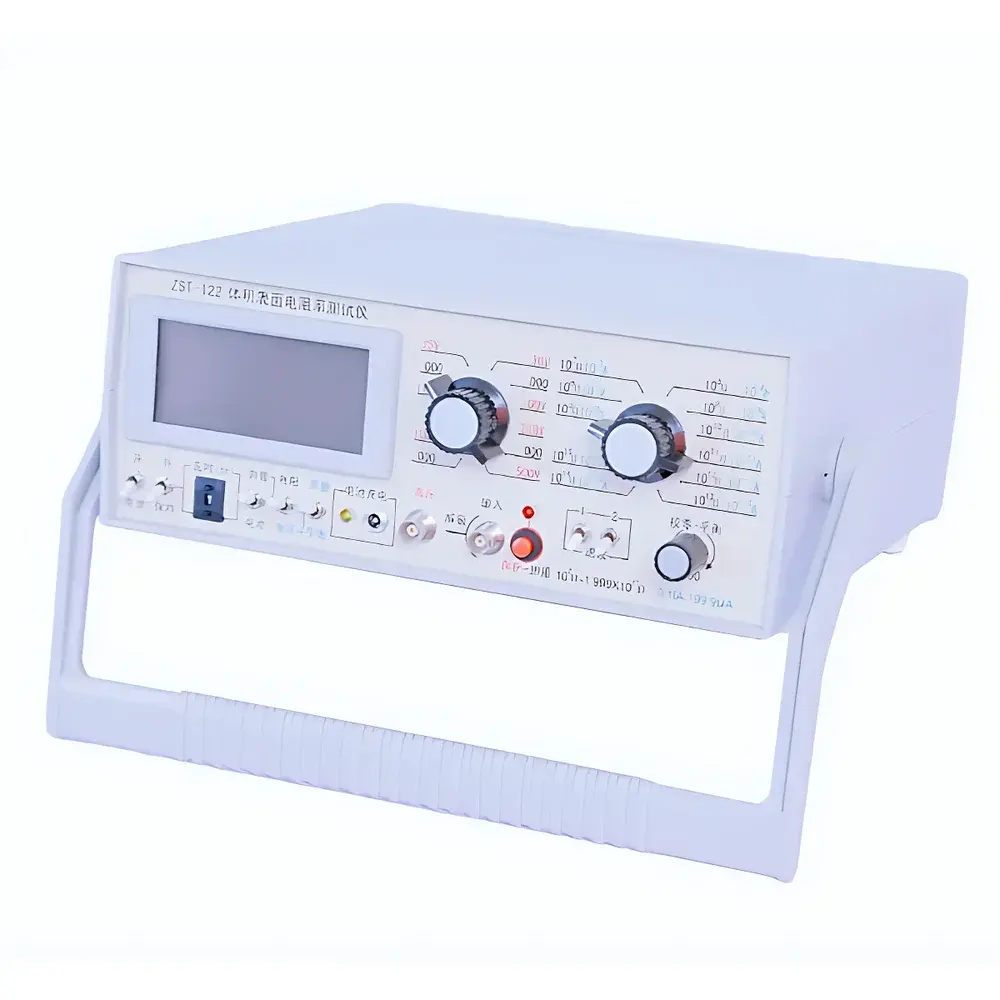
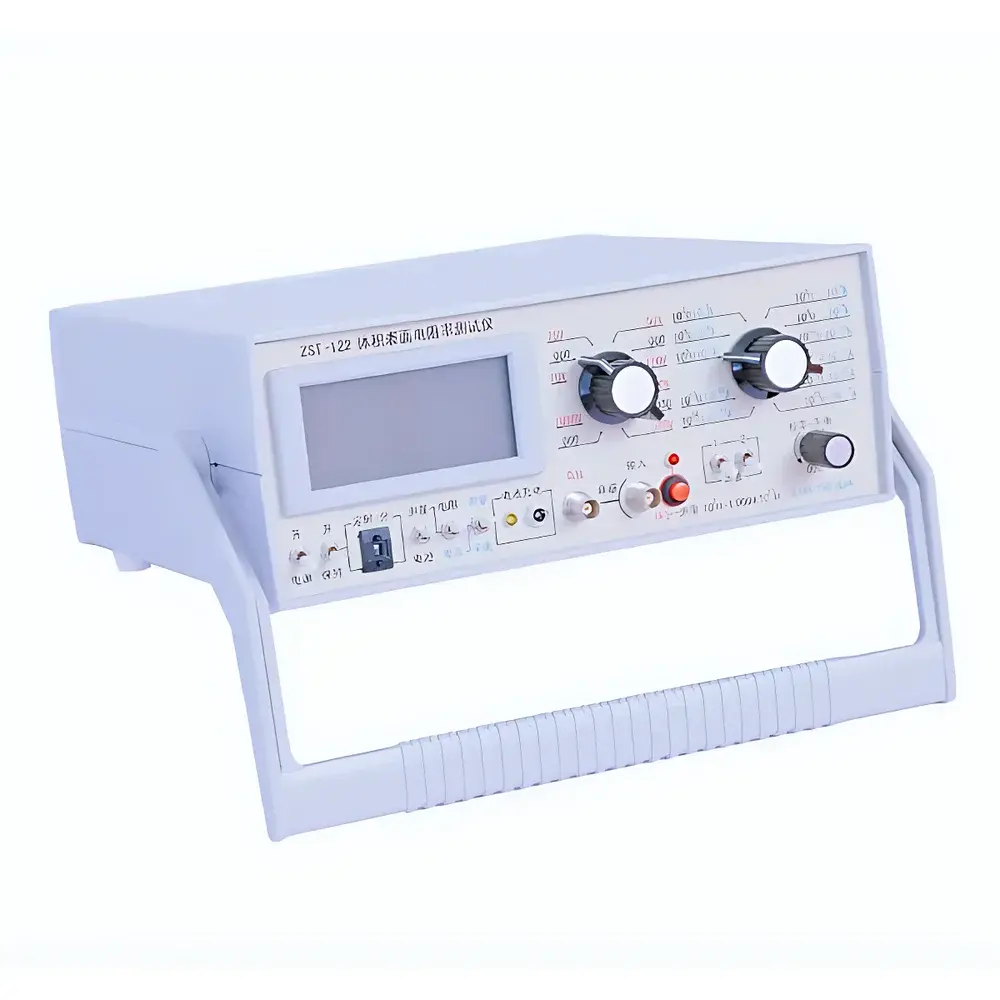
Aerospace GB/T 1692 Vulcanized Rubber Volume & Surface Resistivity Tester
| Brand | Aerospace |
|---|---|
| Origin | Beijing, China |
| Model | GB/T 1692 Resistivity Tester |
| Compliance | GB/T 1692–2008, GB/T 1410, ASTM D257, IEC 60093 |
| Measurement Range | 1 × 10⁶ Ω to 1 × 10¹⁶ Ω |
| Test Voltages | 100 V, 250 V, 500 V, 1000 V (DC) |
| Electrode Configuration | Three-electrode system (main electrode Ø50 mm, guard ring ≥10 mm wide, grounded outer electrode) |
| Accuracy | ±20% of reading |
| Environmental Control Support | Compatible with standard climatic chambers (23 ± 2 °C / 50 ± 5 %RH) |
Overview
The Aerospace GB/T 1692 Vulcanized Rubber Volume & Surface Resistivity Tester is a precision instrument engineered for compliance-driven electrical insulation characterization of vulcanized rubber and elastomeric materials. It implements the measurement principles defined in GB/T 1692–2008 (“Vulcanized Rubber — Determination of Insulation Resistivity”), which aligns closely with international standards including ASTM D257 and IEC 60093. The system operates on the fundamental principle of direct-current (DC) resistive measurement: a calibrated DC voltage is applied across a standardized three-electrode configuration mounted on a uniformly thick, conditioned rubber specimen; the resulting leakage current is measured, and both volume resistivity (ρv, in Ω·cm) and surface resistivity (ρs, in Ω) are calculated using geometrically defined electrode parameters. This dual-parameter output enables rigorous differentiation between bulk dielectric integrity and surface contamination or moisture-related conduction pathways—critical for quality assurance in high-reliability applications such as cable insulation, railway signaling gaskets, and medical device encapsulants.
Key Features
- Three-electrode measurement architecture per GB/T 1692–2008: includes a 50 mm diameter main electrode, concentric guard ring (≥10 mm width), and grounded outer electrode—effectively eliminating edge leakage currents and ensuring traceable volume resistivity determination.
- Programmable DC test voltages (100 V, 250 V, 500 V, 1000 V) with stable regulation (<±1 %), enabling voltage-dependent resistivity profiling required for material qualification under varying stress conditions.
- High-impedance measurement circuitry with extended range (10⁶ Ω to 10¹⁶ Ω), optimized for low-current detection (fA–pA level) and minimizing polarization effects during 60-second stabilization intervals.
- Integrated grounding interface and optional Faraday cage compatibility to suppress electromagnetic interference—essential for reproducible ultra-high-resistance measurements in non-shielded laboratory environments.
- Modular mechanical design supporting seamless integration with environmental conditioning systems (e.g., standard climatic chambers operating at 23 ± 2 °C / 50 ± 5 %RH), fulfilling mandatory preconditioning requirements specified in Clause 6 of GB/T 1692–2008.
Sample Compatibility & Compliance
The tester accommodates circular or square specimens (1–3 mm thickness, surface defect-free, cleaned per ISO 24368) prepared in accordance with GB/T 1692–2008, GB/T 1410, and ASTM D257. Specimen mounting fixtures ensure repeatable electrode contact pressure and alignment. All measurement protocols—including voltage application timing (60 s hold), ambient monitoring, and post-test discharge sequencing—follow documented procedures aligned with GLP (Good Laboratory Practice) frameworks. The system supports audit-ready documentation for regulatory submissions where compliance with GB/T 1692–2008 is mandated by Chinese industrial procurement specifications or third-party certification bodies (e.g., CQC, CNAS).
Software & Data Management
While the base configuration operates via front-panel controls and analog/digital metering, optional PC-based software provides automated test sequencing, real-time current decay logging, and resistivity calculation per standardized formulas (ρv = Rv × A / t; ρs = Rs × L / g). Data export is supported in CSV and PDF formats, with embedded metadata (operator ID, timestamp, environmental readings, voltage setting, electrode geometry). Audit trail functionality—including user login tracking, parameter change logs, and result modification history—is available in configurations compliant with FDA 21 CFR Part 11 requirements upon validation.
Applications
- Quality control of extruded rubber insulation layers in power and communication cables.
- Validation of antistatic or insulating properties in automotive EPDM seals and bushings exposed to high-voltage subsystems.
- R&D screening of halogen-free flame-retardant (HFFR) compounds for rail transit applications requiring >10¹³ Ω·cm volume resistivity.
- Third-party testing laboratories performing accredited resistivity assessments per CNAS-CL01 (equivalent to ISO/IEC 17025).
- Failure analysis of field-aged rubber components exhibiting unexpected leakage currents or tracking phenomena.
FAQ
What standards does this instrument directly support?
GB/T 1692–2008 (primary), GB/T 1410, ASTM D257, and IEC 60093.
Is calibration certification included with delivery?
Yes—a NIST-traceable calibration certificate for resistance measurement function is provided; annual recalibration is recommended per ISO/IEC 17025 guidelines.
Can the system measure both volume and surface resistivity simultaneously?
No—it performs sequential measurements using the same three-electrode fixture; switching between ρv and ρs modes requires reconfiguration of terminal connections per Clause 7.2 of GB/T 1692–2008.
Does it require external environmental control equipment?
The instrument itself does not include climate control; however, it is designed to interface with standard 23 ± 2 °C / 50 ± 5 %RH chambers, as mandated by the standard’s preconditioning clause.
Is the guard electrode adjustable for non-standard specimen sizes?
The guard ring geometry is fixed to meet GB/T 1692–2008 dimensional tolerances; custom electrode sets for alternative standards (e.g., ASTM D257 disk vs. ring electrodes) are available upon request.
Related Products







