
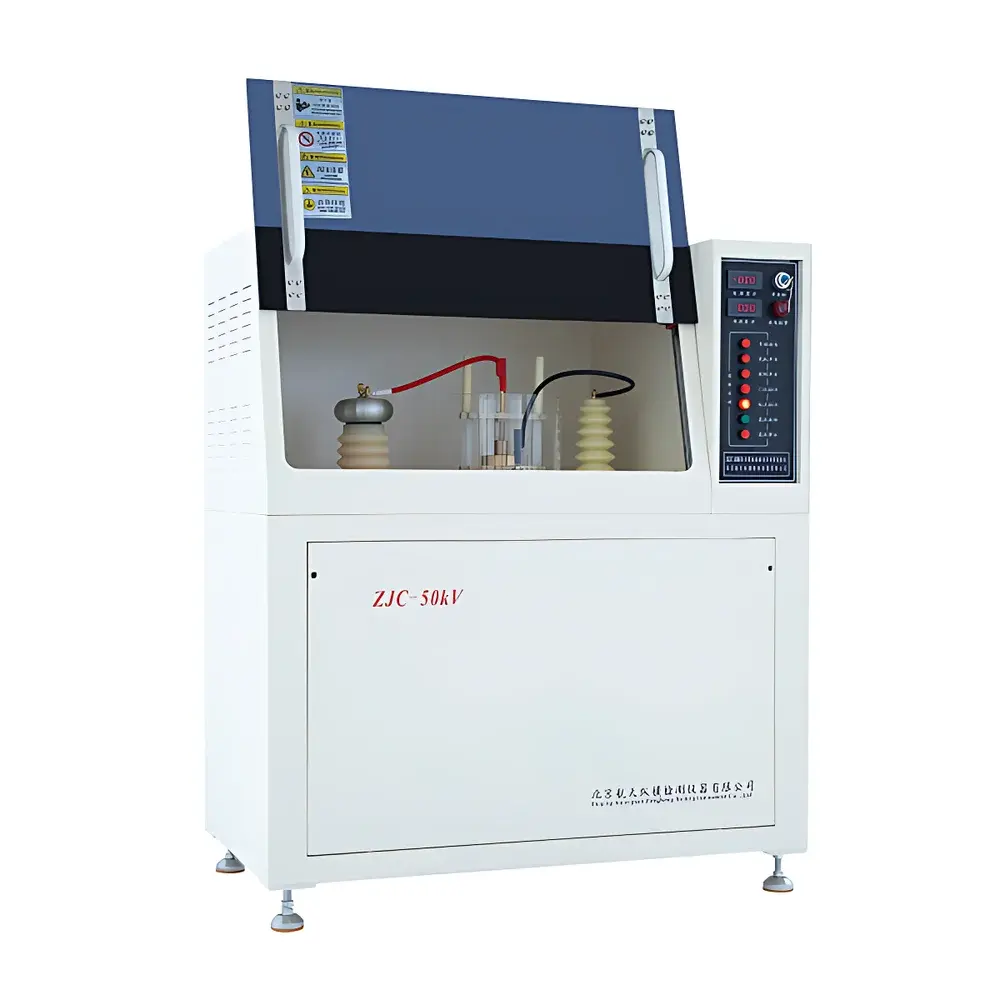
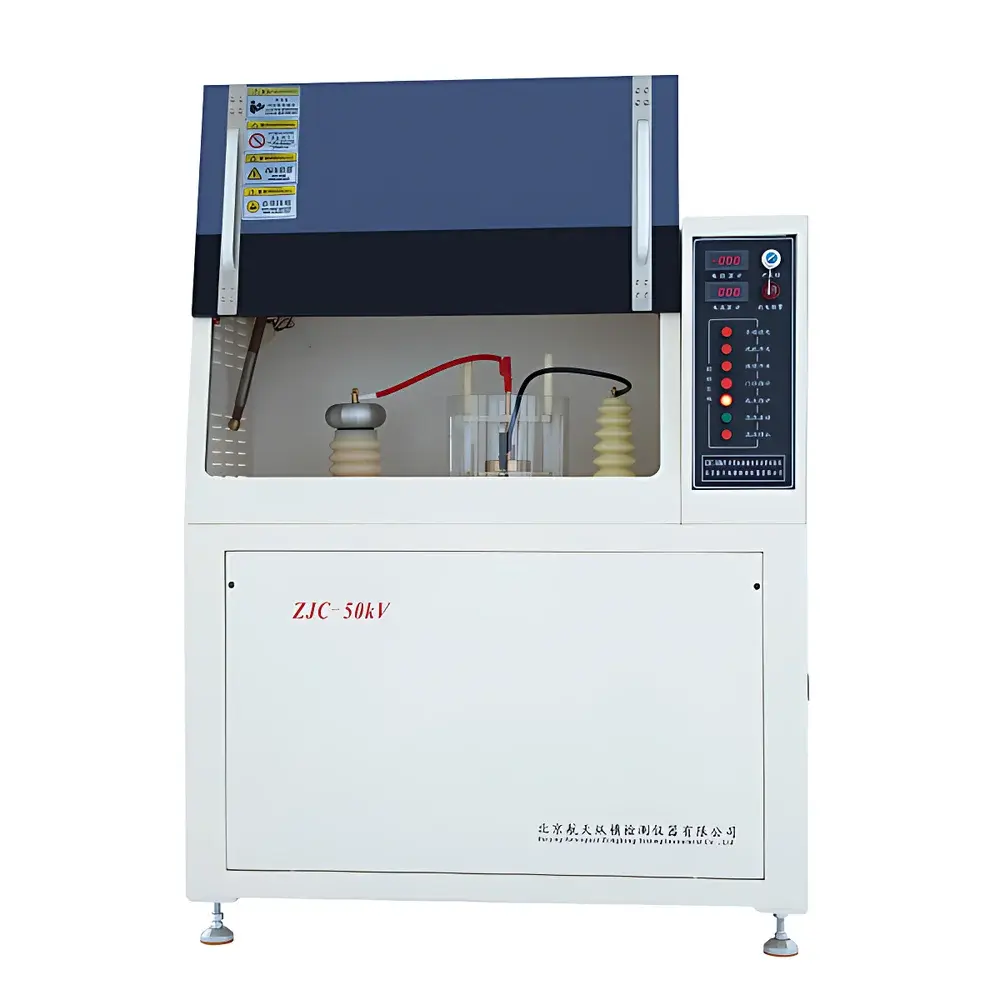
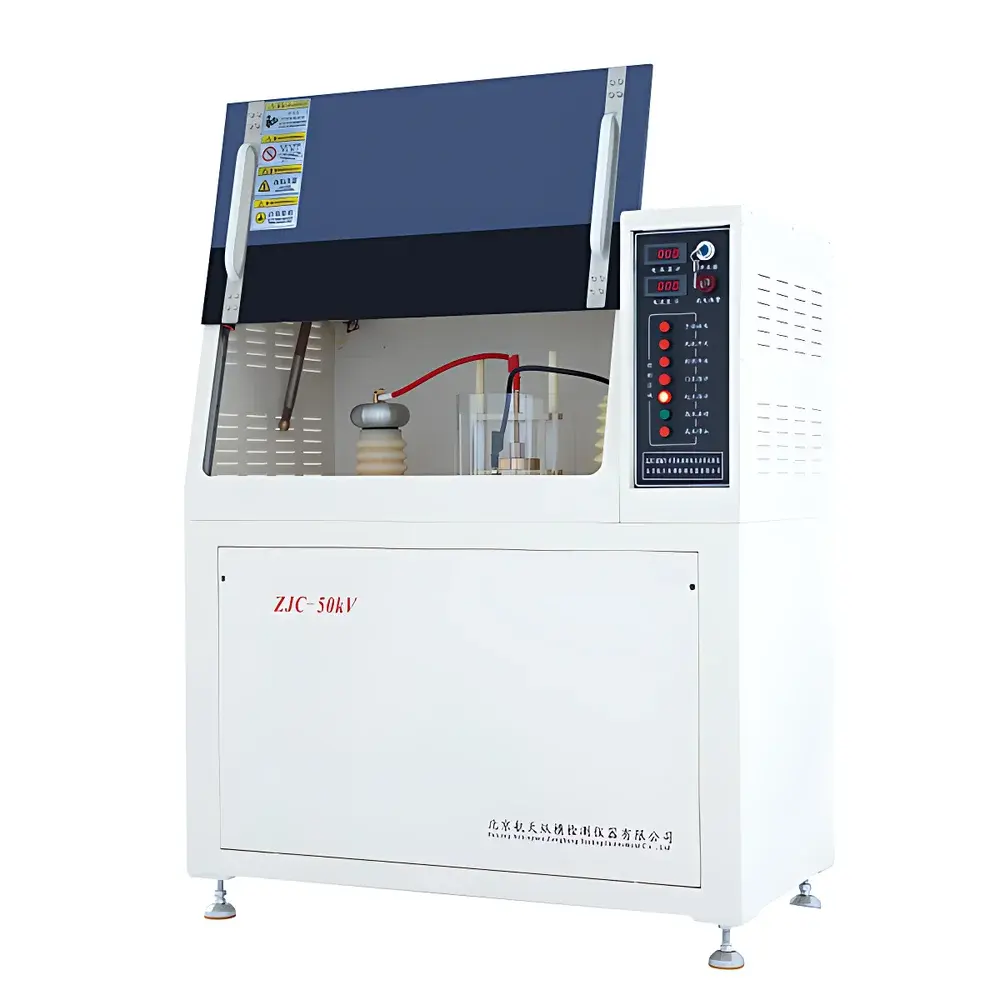
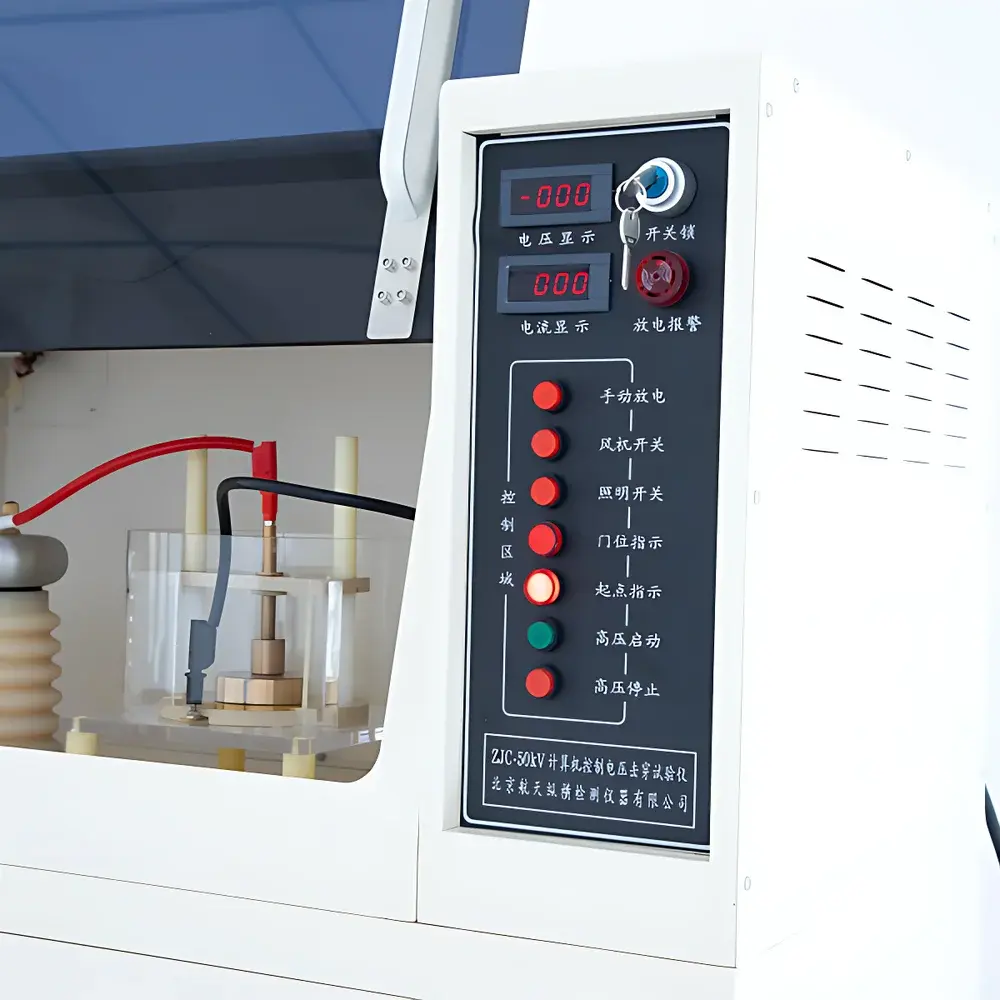
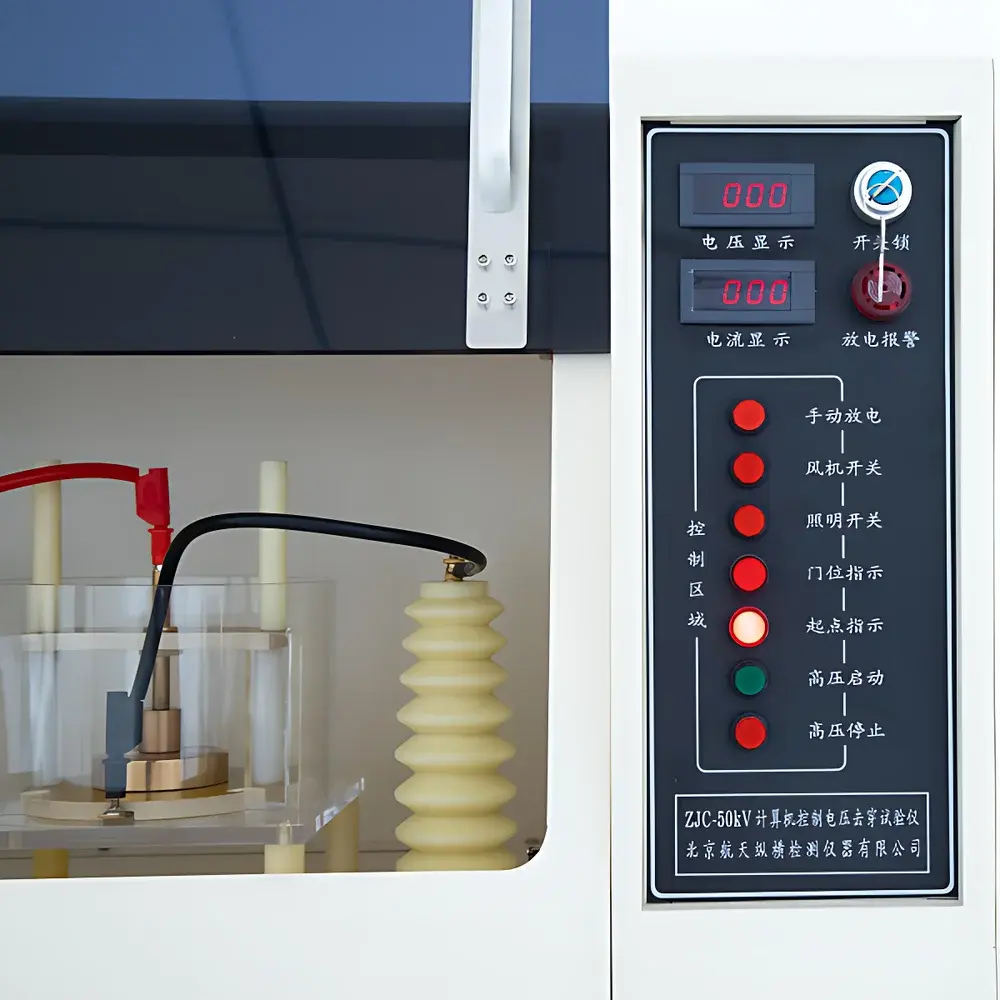
Aerospace ZJC-100KV Dielectric Strength Tester
| Brand | Aerospace |
|---|---|
| Origin | Beijing, China |
| Model | ZJC-100KV |
| Maximum Test Voltage | 100 kV AC/DC |
| Voltage Accuracy | ≤2% |
| Rise Rate Range | 0.01–5 kV/s (adjustable in real time) |
| Test Modes | AC/DC, stepwise ramp, withstand, breakdown |
| Electrode Options | 6 mm sphere, 25 mm & 75 mm flat disc electrodes |
| Test Medium | air or insulating oil |
| Safety Protection | 9-level interlocked protection system |
| Power Rating | 10 kVA |
| Compliance | GB/T 1408.1–2016, GB/T 1408.2–2006, GB/T 1695–2005, ASTM D149–2023 |
| Software | PC-based control with real-time curve plotting, automatic breakdown detection, data logging, audit trail, and multi-sample parallel testing capability |
| Dimensions (L×W×H) | 1900 × 1300 × 1700 mm |
| Weight | 200 kg |
| Warranty | 3 years comprehensive, lifetime technical support |
Overview
The Aerospace ZJC-100KV Dielectric Strength Tester is a precision-engineered high-voltage test system designed for determining the dielectric breakdown strength and electrical insulation performance of solid and liquid insulating materials under controlled AC or DC voltage stress. Based on the principle of controlled voltage ramping until catastrophic electrical failure (i.e., dielectric breakdown), the instrument quantifies the maximum electric field a material can withstand before conduction path formation—expressed as kV/mm or kV. Its architecture conforms to the fundamental electrostatic and electromechanical requirements defined in IEC 60243-1, ASTM D149, and GB/T 1408 series standards. The system integrates a digitally regulated high-voltage transformer, optically isolated data acquisition, and a fail-safe PLC-driven control loop to ensure repeatability, traceability, and operator safety during high-energy testing up to 100 kV.
Key Features
- Full-range programmable voltage output: 0–100 kV AC or DC, continuously adjustable with <2% measurement uncertainty per IEC 61000-4-30 calibration reference.
- Multi-mode voltage ramp control: linear (0.01–5 kV/s), stepwise (predefined voltage increments), and timed withstand protocols—all software-configurable and reproducible.
- Simultaneous five-position test station: enables parallel evaluation of up to five specimens per test cycle, significantly improving throughput versus single-sample systems.
- Optically isolated signal acquisition: eliminates electromagnetic interference (EMI) during high-voltage transients, ensuring integrity of leakage current (1–100 mA range) and breakdown voltage capture.
- Nine-tier hardware and software safety architecture: includes overvoltage cutoff (<100 ms response), door-interlocked high-voltage disable, automatic post-test electromagnetic discharge, grounding fault detection, and zero-voltage reset prior to chamber access.
- Advanced waveform capture: real-time plotting of voltage vs. time and leakage current vs. voltage; overlay-capable for comparative analysis across batches or formulations.
- Wireless Bluetooth interface: enables remote operation and monitoring without compromising RF isolation integrity in shielded lab environments.
Sample Compatibility & Compliance
The ZJC-100KV accommodates rigid and flexible insulating materials including thermoplastics, elastomers, ceramic substrates, glass laminates, polymeric films, epoxy resins, insulating varnishes, transformer oils, and composite dielectrics. Standard electrode configurations (6 mm spherical, 25 mm and 75 mm flat disc) comply with ASTM D149 Figure 1 and GB/T 1408.1 Annex A geometries. Testing may be conducted in ambient air or immersed in certified insulating oil (e.g., ASTM D877-compliant mineral oil), supporting both surface and bulk breakdown assessment. All operational parameters—including rise rate, hold duration (0–6 h), and trip current threshold—are fully configurable to meet material-specific qualification protocols. The system satisfies regulatory documentation requirements for GLP and GMP environments through built-in audit trail functionality, user access controls, and electronic signature support aligned with FDA 21 CFR Part 11 principles.
Software & Data Management
The proprietary Windows-based control suite provides ISO/IEC 17025-aligned data governance: all test sessions are timestamped, user-logged, and stored with full metadata (electrode type, medium, ramp profile, environmental conditions). Raw curves and tabulated results export natively to CSV, PDF, and XML formats. Version-controlled firmware updates preserve calibration history, while encrypted database backups ensure long-term data integrity. The software supports statistical reporting (mean, SD, Weibull distribution fitting) and comparative trend analysis across material lots or processing conditions—essential for QC release, R&D formulation screening, and supplier qualification workflows.
Applications
This instrument serves critical roles in quality assurance laboratories at cable manufacturers, aerospace composites suppliers, automotive electronics Tier 1s, power transformer OEMs, and national metrology institutes. Typical use cases include: validation of polymer film dielectric integrity for capacitor manufacturing; evaluation of silicone rubber housing resistance to partial discharge in HV switchgear; certification of insulating oil aging behavior per IEC 60156; qualification of printed circuit board substrate materials per IPC-4101; and development of nanocomposite dielectrics for next-generation energy storage devices. Its compliance with ASTM D149 and GB/T 1408 makes it suitable for third-party certification submissions to CNAS-accredited bodies such as China Academy of Metrology Science (CAM) and China National Institute of Metrology (NIM).
FAQ
What standards does the ZJC-100KV explicitly support?
It is fully configured to execute tests per GB/T 1408.1–2016, GB/T 1408.2–2006, GB/T 1695–2005, and ASTM D149–2023, with preloaded test templates and report formats.
Can the system perform both AC and DC breakdown tests?
Yes—dual-mode high-voltage supply allows seamless switching between sinusoidal 50/60 Hz AC and polarity-stable DC outputs, each with independent calibration and safety logic.
Is automated breakdown detection reliable at high voltage?
Breakdown is detected via dual-channel validation: rapid voltage collapse (>10 kV/ms drop) combined with sustained leakage current exceeding the user-defined threshold—minimizing false positives from transient noise.
How is data integrity ensured during electromagnetic transients?
All analog signals pass through galvanically isolated amplifiers and 16-bit A/D converters housed in shielded enclosures; optical fiber links eliminate ground loops between control PC and HV section.
Does the system support regulatory audit requirements?
Yes—the software maintains immutable audit trails, role-based access control, electronic signatures, and calibration certificate linkage compliant with FDA 21 CFR Part 11 and ISO/IEC 17025 Clause 7.7.



