
Aerospace ZJC-50KV DC Dielectric Breakdown Tester
| Brand | Aerospace |
|---|---|
| Origin | Beijing, China |
| Model | ZJC-50KV |
| Maximum Output Voltage | 50 kV |
| Compliance | IEC 60243-2, GB/T 1408.2 |
| Voltage Resolution | 0.1 kV |
| Ramp Rate Range | 0.1–5 kV/s (continuously adjustable) |
| Trip Current Threshold | 1–100 mA |
| Electrode Options | IEC-standard spherical/cylindrical electrodes (6 mm or 25 mm diameter) |
| Environmental Control | 23 ± 2 °C, 50 ± 5 % RH |
| Measurement Accuracy | ±1 % of reading (voltage) |
Overview
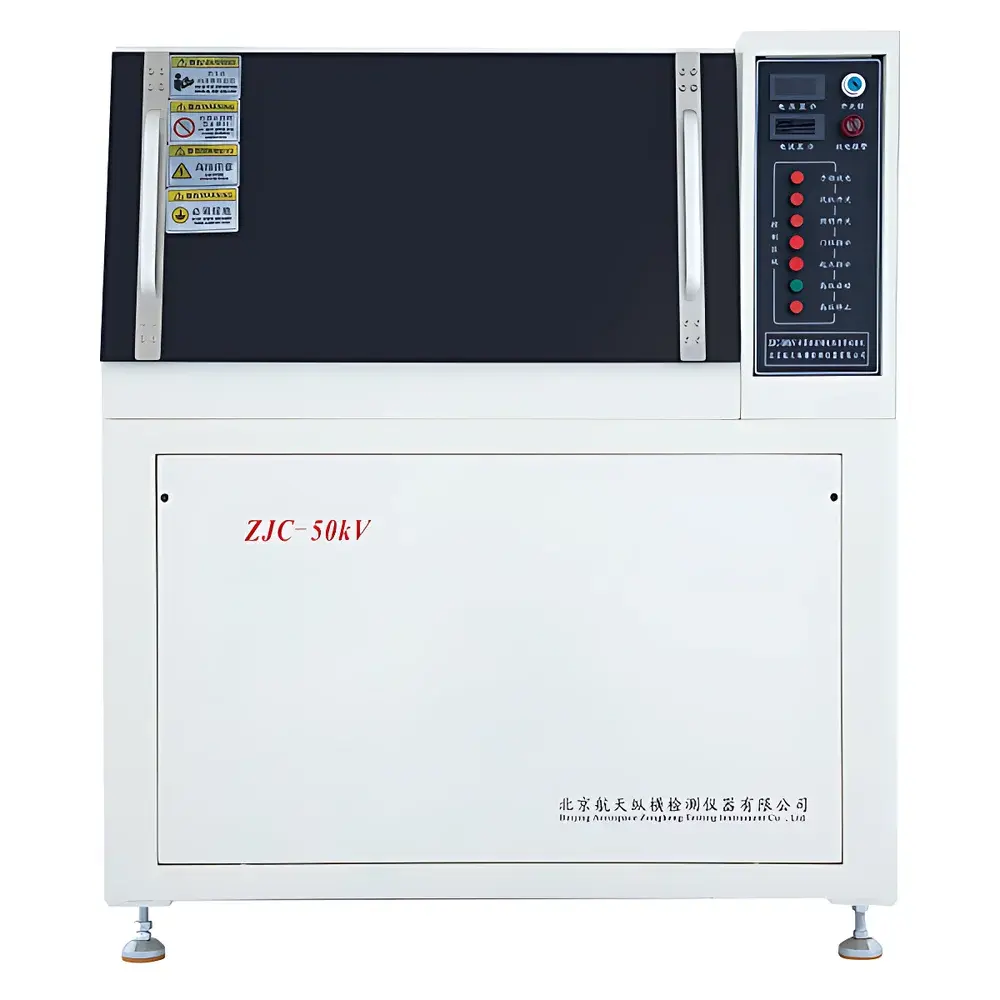
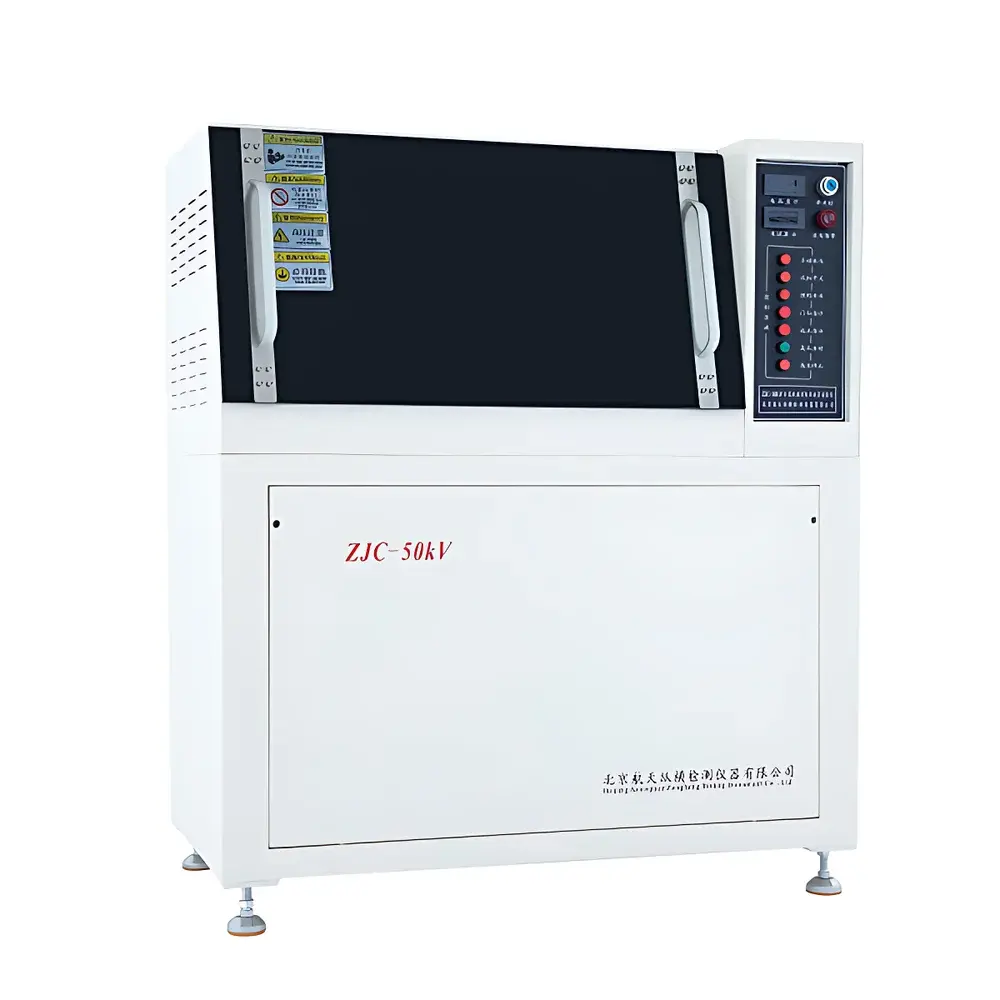
The Aerospace ZJC-50KV DC Dielectric Breakdown Tester is an engineered solution for determining the dielectric strength of solid insulating materials under controlled direct current (DC) high-voltage stress. It operates on the principle of progressive voltage ramping until electrical breakdown occurs—defined as the irreversible loss of insulating capability—enabling precise quantification of material resistance to DC electric fields. This test method is grounded in fundamental electrostatics and insulation physics, where breakdown voltage (kV) is normalized against specimen thickness (mm) to yield dielectric strength (kV/mm), a critical parameter for material qualification in power electronics, cable manufacturing, aerospace composites, and high-voltage equipment design. The instrument complies strictly with IEC 60243-2 (“Electrical strength of insulating materials — Part 2: Methods of test for electrical strength at DC”) and its national equivalent GB/T 1408.2, ensuring traceable, internationally recognized test outcomes suitable for regulatory submissions, internal quality assurance, and R&D validation.
Key Features
- Stable, ripple-free DC high-voltage generation up to 50 kV via precision-cascaded voltage multiplier circuitry, with output stability better than ±1 % over full load range.
- Programmable voltage ramp profiles: continuous linear ramp (0.1–5 kV/s) or stepwise increment mode, both fully configurable to match standard-specified stress protocols.
- Dual-threshold breakdown detection: simultaneous monitoring of leakage current and voltage collapse, with user-defined trip current (1–100 mA) and dynamic arc recognition logic to minimize false positives.
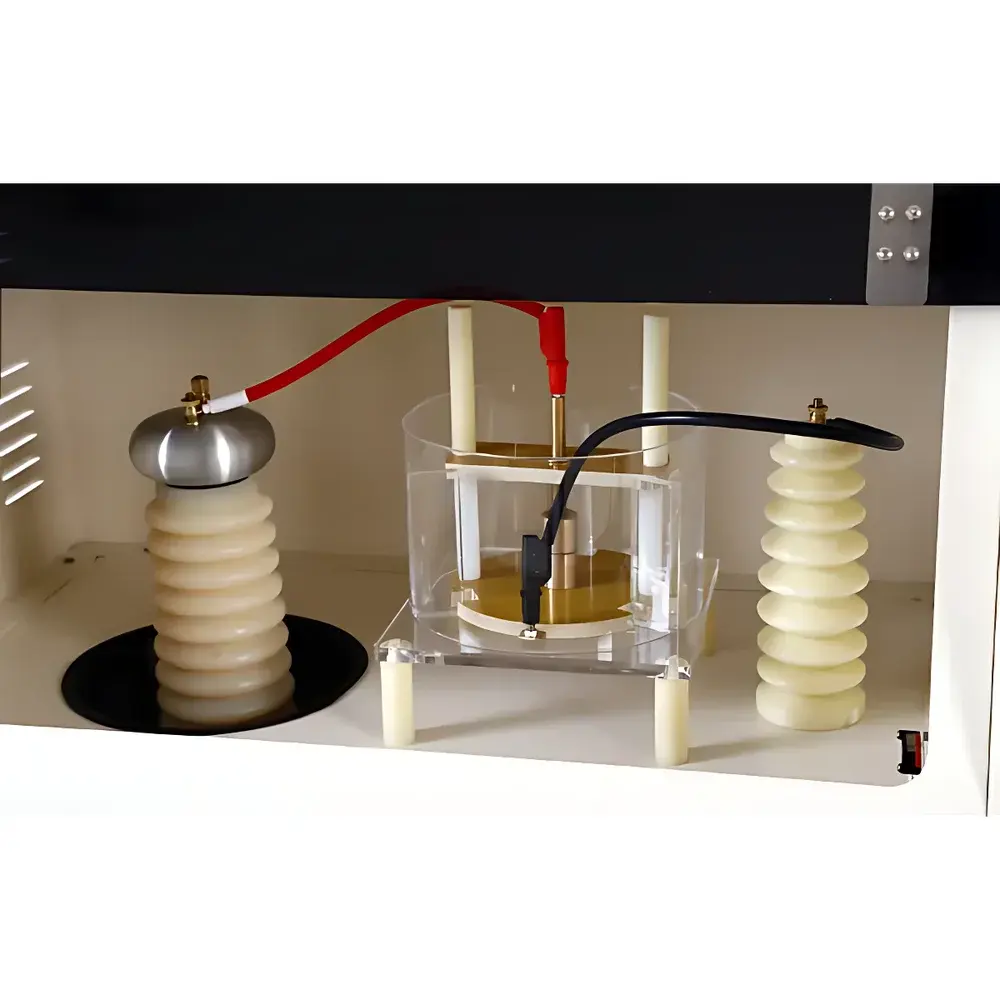
- IEC-compliant electrode system: interchangeable stainless steel or brass electrodes—including 6 mm spherical, 25 mm cylindrical, and flat parallel plate configurations—mounted on micrometer-adjustable holders for repeatable gap control.
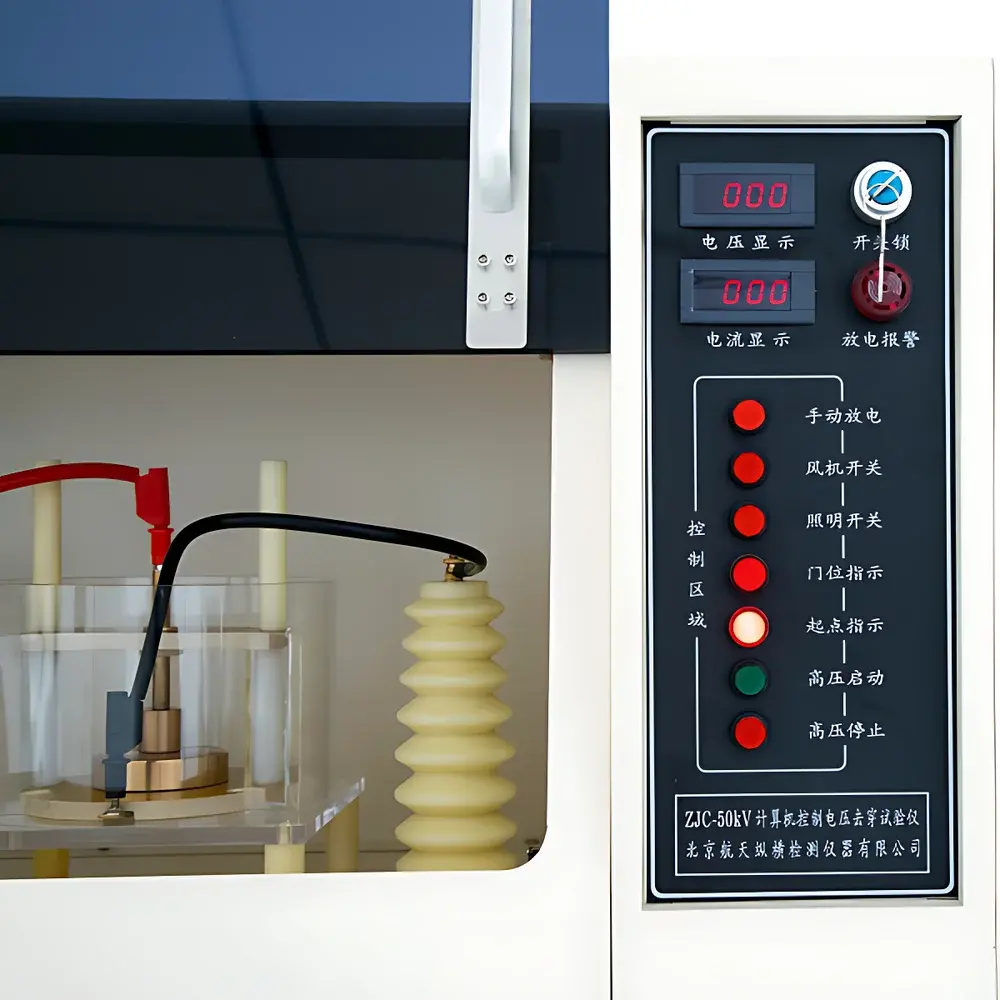
- Integrated safety architecture: interlocked transparent polycarbonate test chamber with dual-stage door sensors, emergency stop button with hardwired cut-off, automatic grounding discharge post-test, and real-time overcurrent/overvoltage shutdown.
- Industrial-grade control unit: embedded industrial PC running deterministic real-time OS, isolated analog front-end for high-fidelity voltage/current acquisition (16-bit resolution, 10 kS/s sampling), and optically isolated I/O for noise immunity in high-EMI environments.
Sample Compatibility & Compliance
The ZJC-50KV accommodates rigid and semi-rigid sheet, film, and molded specimens ranging from 0.1 mm to 12 mm in thickness, provided surface flatness meets IEC 60243-2 requirements (≤0.05 mm deviation across electrode contact area). Specimens must be preconditioned per Clause 5 of IEC 60243-2: 24-hour equilibration at 23 ± 2 °C and 50 ± 5 % RH prior to testing. The system supports standardized electrode geometries defined in Annex A of IEC 60243-2 and Clause 6.2 of GB/T 1408.2, including Type 1 (spherical, 6 mm radius), Type 2 (cylindrical, 25 mm diameter), and Type 3 (parallel plates, 25 mm diameter). All test sequences are auditable and support GLP/GMP-aligned documentation workflows, with timestamped metadata (operator ID, ambient conditions, calibration status) embedded in raw data files.
Software & Data Management
The proprietary test software provides ISO/IEC 17025-aligned data integrity controls: role-based access (administrator/operator), electronic signatures, audit trail logging (all parameter changes, start/stop events, error states), and full 21 CFR Part 11 compliance when deployed with optional digital certificate integration. Real-time visualization includes synchronized voltage–time and current–time plots with auto-scaling axes and cursor-assisted peak analysis. Test reports are generated in PDF format with embedded calibration certificates, statistical summaries (n ≥ 5 tests: mean, SD, CV%), pass/fail flags per specification limits, and graphical representation of breakdown distribution. Raw data exports support CSV, Excel (.xlsx), and XML formats for third-party statistical analysis (e.g., Weibull fitting per IEC 60243-2 Annex B). Software updates are delivered via secure HTTPS with SHA-256 signature verification.
Applications
- Qualification of polymer films (polyimide, PET, PP) for capacitor dielectrics and flexible printed circuits.
- Batch release testing of epoxy resin systems used in high-voltage transformer bushings and insulators.
- Comparative evaluation of nanocomposite insulation materials (e.g., SiO₂/epoxy, Al₂O₃/polyethylene) in academic and industrial R&D labs.
- Failure analysis of aged cable jacketing materials subjected to thermal and environmental aging per IEC 60811 series.
- Supporting certification documentation for UL 746, EN 60695-2-10, and IEC 60587 tracking resistance assessments where DC pre-stress is required.
FAQ
What standards does this instrument directly support?
It is configured and validated for full conformance with IEC 60243-2 Edition 3.0 (2013) and GB/T 1408.2–2016, including all mandatory clauses on electrode geometry, ramp rate tolerances, and environmental conditioning.
Is third-party calibration certification included?
Yes—each unit ships with NIST-traceable calibration certificate for voltage output (0–50 kV) and current measurement (1–100 mA), valid for 12 months; annual recalibration service is available under ISO/IEC 17025-accredited laboratory procedures.
Can the system be integrated into a LIMS environment?
Via optional OPC UA server module, enabling bidirectional data exchange with major LIMS platforms (e.g., LabWare, Thermo Fisher SampleManager) using secure TLS 1.2 encrypted channels.
What safety certifications apply to the test chamber?
The enclosure meets IP2X mechanical protection rating per IEC 60529 and carries CE marking under the Low Voltage Directive (2014/35/EU) and Machinery Directive (2006/42/EU), with independent verification by TÜV Rheinland.
How is measurement uncertainty quantified?
Total expanded uncertainty (k = 2) is ≤±1.4 % for voltage measurement and ≤±2.1 % for breakdown current detection, as documented in the uncertainty budget per GUM (JCGM 100:2008) and included in the calibration report.



