
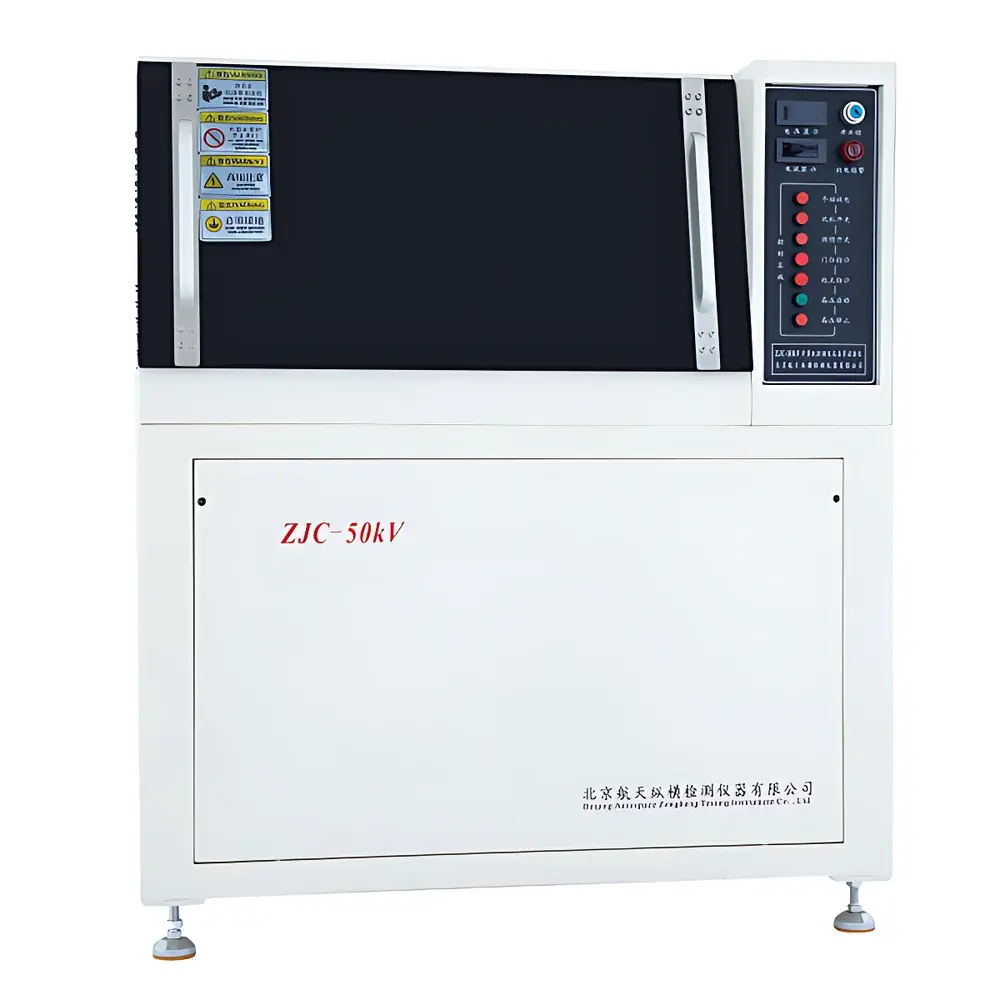
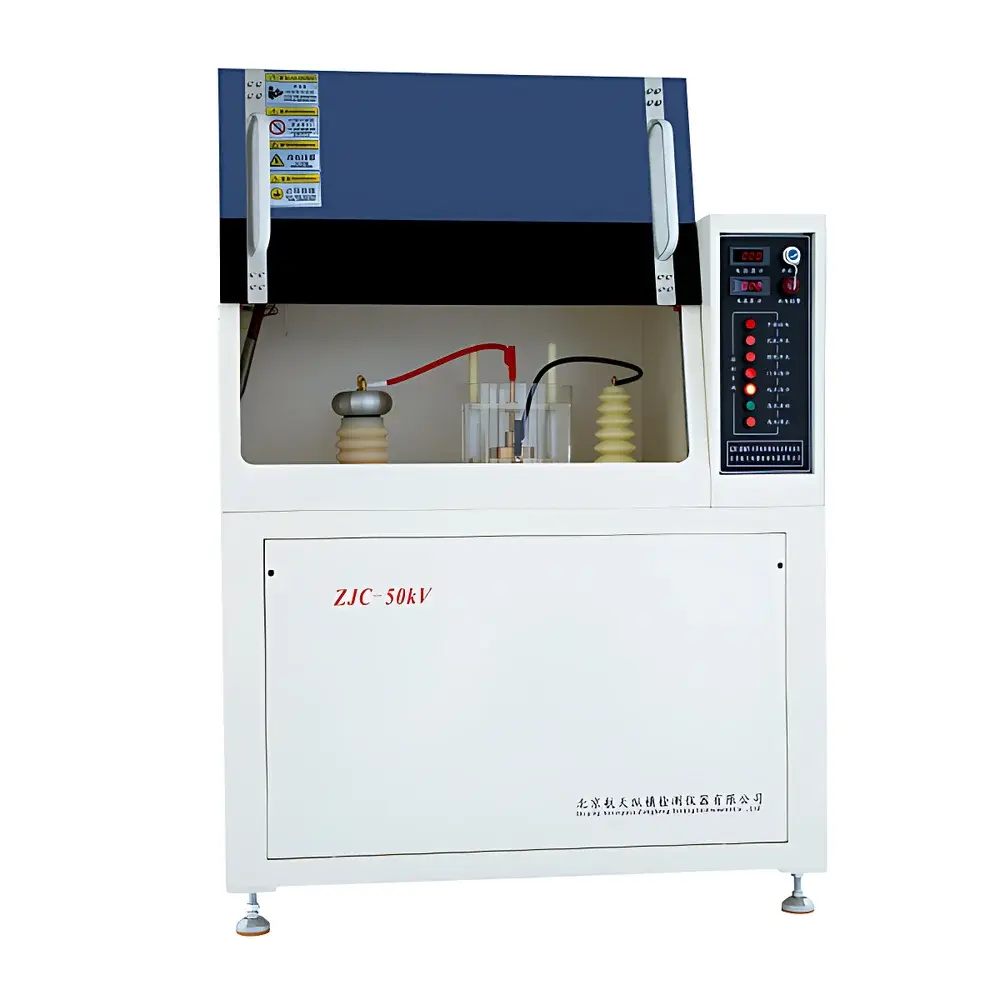
Aerospace ZJC-50KV Dielectric Strength Tester
| Brand | Aerospace |
|---|---|
| Origin | Beijing, China |
| Model | ZJC-50KV |
| Breakdown Voltage | 50 kV |
| Voltage Accuracy | ≤2% |
| Ramp Rate | 10 V/s – 5 kV/s |
| Test Modes | AC/DC, Stepwise, Withstand, Ramp-to-Failure |
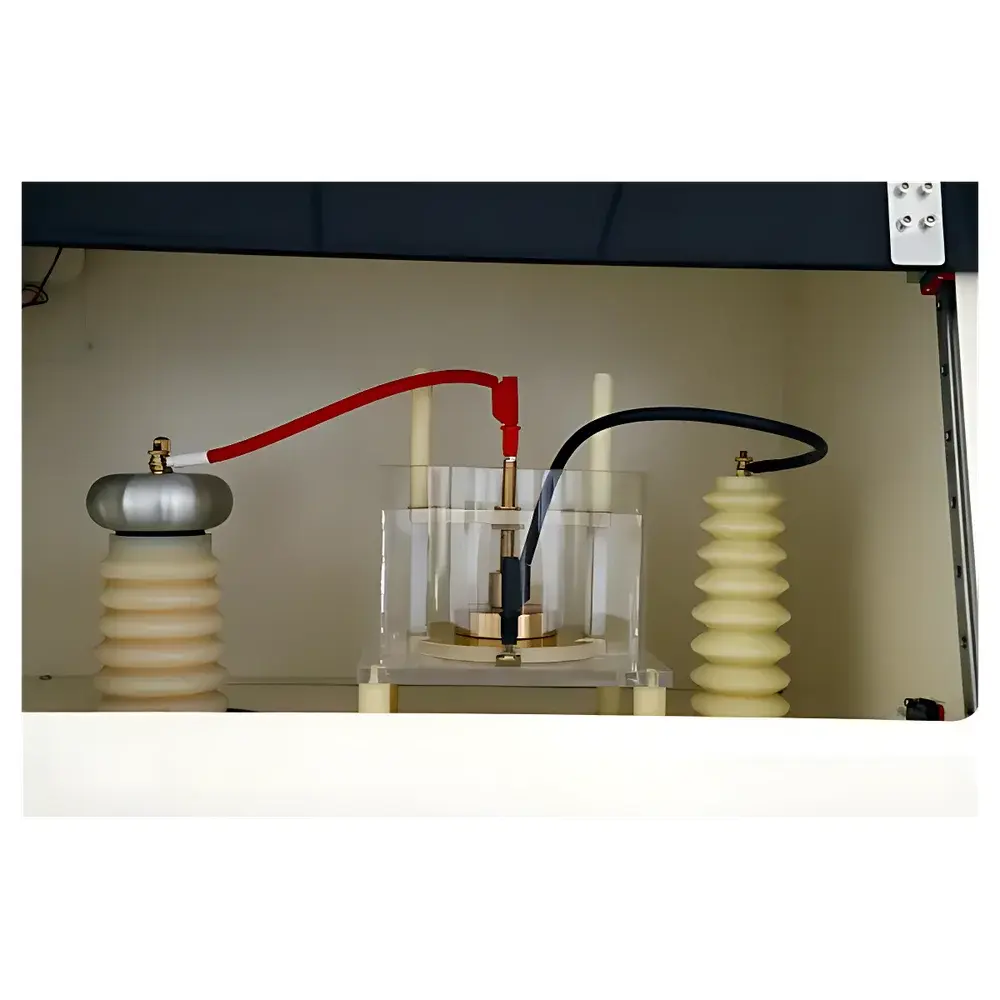
| Test Media | Air or Insulating Oil |
| Electrode Options | 6 mm, 25 mm, 75 mm diameter |
| Power Rating | 5 kVA |
| Safety Protection | 9-Level Interlocked Protection |
| Compliance | GB/T 1408.1–2006, GB/T 1408.2–2006, GB/T 1695–2005, ASTM D149 |
| Software | PC-based Control with Real-Time Curve Plotting, Data Logging, Audit Trail, and Multi-Sample Batch Testing |
| Dimensions (L×W×H) | 700×800×1300 mm / 1900×1300×1700 mm |
| Weight | 100 kg / 200 kg |
| Warranty | 3 Years Full Coverage, Lifetime Technical Support |
Overview
The Aerospace ZJC-50KV Dielectric Strength Tester is a precision-engineered high-voltage testing system designed for determining the dielectric breakdown strength and electrical insulation performance of solid and liquid insulating materials under standardized AC and DC conditions. Based on the principle of controlled voltage ramping across a defined electrode geometry, the instrument applies a continuously adjustable test voltage—up to 50 kV—to a specimen until electrical breakdown occurs, enabling quantitative assessment of intrinsic dielectric integrity. This measurement is fundamental to quality assurance in R&D, production control, and regulatory compliance for insulating polymers, elastomers, ceramics, glass, coatings, laminates, transformer oils, and wire/cable insulation systems. The system operates in accordance with internationally recognized test methodologies, including GB/T 1408.1–2006 (equivalent to IEC 60243-1), GB/T 1408.2–2006 (DC-specific requirements), GB/T 1695–2005 (for vulcanized rubber), and ASTM D149 (Standard Test Method for Dielectric Breakdown Voltage of Solid Electrical Insulating Materials at Commercial Power Frequencies). Its fully isolated optical data acquisition architecture eliminates electromagnetic interference during high-voltage transients, ensuring traceable, repeatable, and metrologically sound results.
Key Features
- Programmable voltage ramp rates from 10 V/s to 5 kV/s, adjustable in real time via PC software for precise control over stress application kinetics
- Dual-mode operation: AC (50/60 Hz) and DC output, supporting both short-term breakdown and extended withstand testing (0–6 hours)
- True no-contact voltage regulation using solid-state stepping motor-driven autotransformer, eliminating mechanical wear and hysteresis associated with traditional servo-motor or variac systems
- Simultaneous multi-sample capability: up to five specimens can be tested in sequence within a single automated batch run
- Nine-tier integrated safety architecture—including overvoltage cutoff, overcurrent interruption (<0.1 s response), interlocked chamber door sensing, zero-voltage reset, automatic post-test discharge (electromagnetic relay + resistor network), independent grounding, and software-level operational lockout
- Optically isolated signal path between HV section and control electronics, minimizing noise coupling and enhancing measurement fidelity
- Wireless Bluetooth interface for remote start/stop, emergency stop, and status monitoring without physical cable constraints
- Configurable leakage current threshold (1–100 mA), with automatic circuit interruption upon exceeding user-defined limits
Sample Compatibility & Compliance
The ZJC-50KV accommodates a broad spectrum of insulating materials per ISO/IEC 17025-aligned test preparation protocols. Compatible specimens include thermoplastics (e.g., PE, PP, PET), thermosets (epoxy, phenolic), elastomers (silicone, EPDM), ceramic substrates, glass plates, anodized aluminum oxide layers, conformal coatings, printed circuit board laminates (FR-4), enamel-coated magnet wire, extruded cable jackets, and mineral insulating oils. Standardized electrode configurations (6 mm spherical, 25 mm disc, 75 mm disc) enable conformance to ASTM D149 Annex A1 (flat electrodes) and Annex A2 (spherical electrodes), while optional fixtures support tubing, film, and irregular geometries. All test procedures adhere to GLP-relevant documentation practices: full audit trail logging (user ID, timestamp, parameter set, raw waveform, pass/fail flag), electronic signature support, and exportable CSV/PDF reports compliant with FDA 21 CFR Part 11 requirements when deployed with validated software configuration.
Software & Data Management
The proprietary Windows-based control suite provides deterministic real-time visualization of voltage vs. time and leakage current vs. time curves during each test cycle. Each trial generates a uniquely color-coded plot; overlay functionality enables comparative analysis of material batches or formulation variants. Raw data—including peak breakdown voltage, time-to-failure, pre-breakdown leakage trend, and ramp rate deviation—is stored in a relational database with version-controlled metadata. Users may retroactively annotate entries, reprocess datasets with alternate filtering parameters, or generate statistical summaries (mean, SD, Weibull distribution fitting). Export options include IEEE C37.90-compliant XML, Excel-compatible .xlsx, and printer-ready PDF with embedded calibration certificate references. System logs record all operator actions, configuration changes, and fault events—essential for internal audits and third-party accreditation (e.g., CNAS, A2LA).
Applications
This tester serves critical functions across multiple industrial sectors: validation of polymer compound formulations in automotive and aerospace wire harness development; qualification of encapsulation resins for power electronics modules; incoming inspection of ceramic capacitor dielectrics; shelf-life stability assessment of transformer oils under thermal aging; QC screening of medical device insulation (per IEC 60601-1 Clause 8.8); and failure analysis of arcing-resistant switchgear components. It is routinely employed by national metrology institutes (e.g., China Academy of Metrology Sciences), tier-1 automotive suppliers, photovoltaic module manufacturers verifying backsheet integrity, and universities conducting fundamental studies on charge transport mechanisms in nanocomposite dielectrics.
FAQ
What standards does the ZJC-50KV explicitly support?
It complies with GB/T 1408.1–2006, GB/T 1408.2–2006, GB/T 1695–2005, and ASTM D149. Optional firmware updates can extend coverage to IEC 60243-1 and UL 746A upon request.
Can the system perform DC withstand tests longer than one hour?
Yes—programmable dwell time extends up to six hours, with continuous monitoring of leakage current stability and automatic termination if threshold violation occurs.
Is calibration traceability provided with shipment?
Each unit ships with a factory calibration certificate traceable to NIM (National Institute of Metrology, China), with optional third-party certification available from CAST (China Academy of Space Technology) or CEMI (China Electronics Standardization Institute).
How is data integrity ensured during long-duration tests?
All analog inputs are sampled at ≥10 kHz with 16-bit resolution; data buffers are mirrored to non-volatile memory every 5 seconds to prevent loss during unexpected power interruption.
What maintenance is required during the three-year warranty period?
No scheduled maintenance is required; only periodic verification of electrode surface finish and oil dielectric strength (if used) is recommended. Firmware updates and remote diagnostics are included at no cost.



