
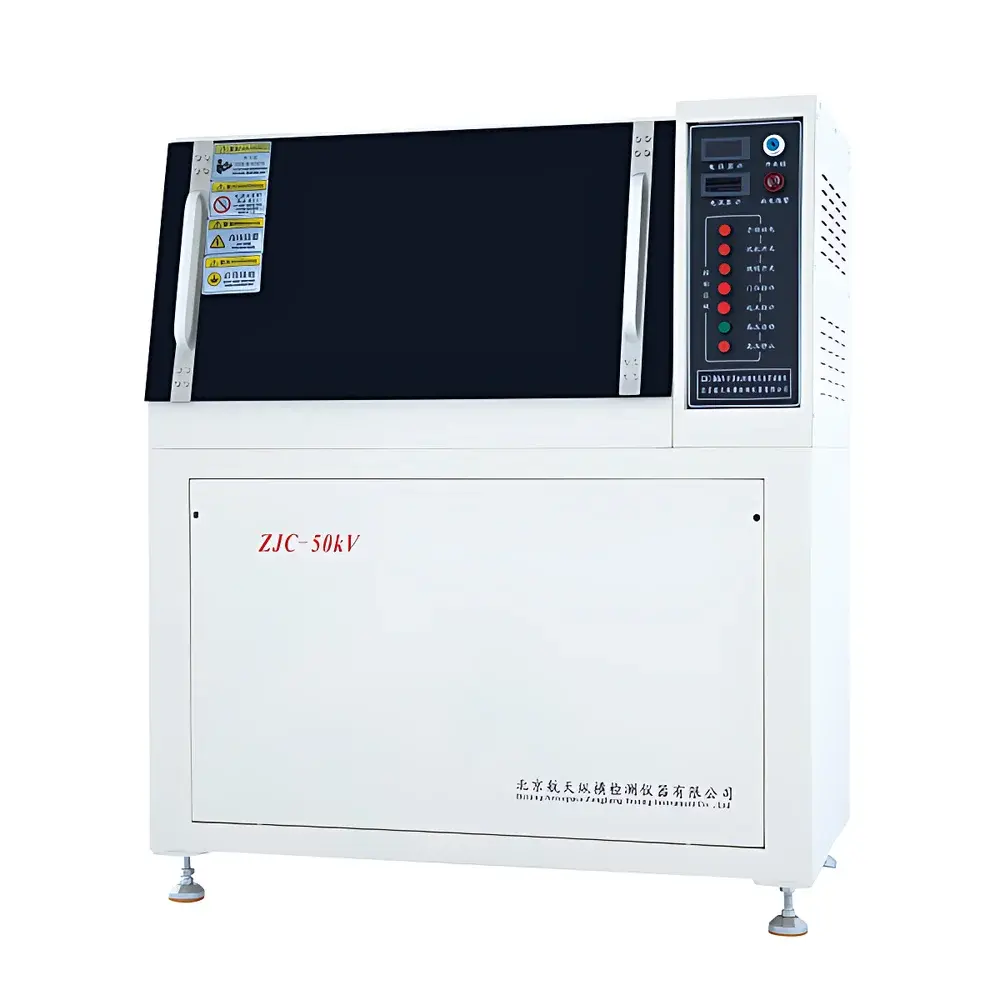
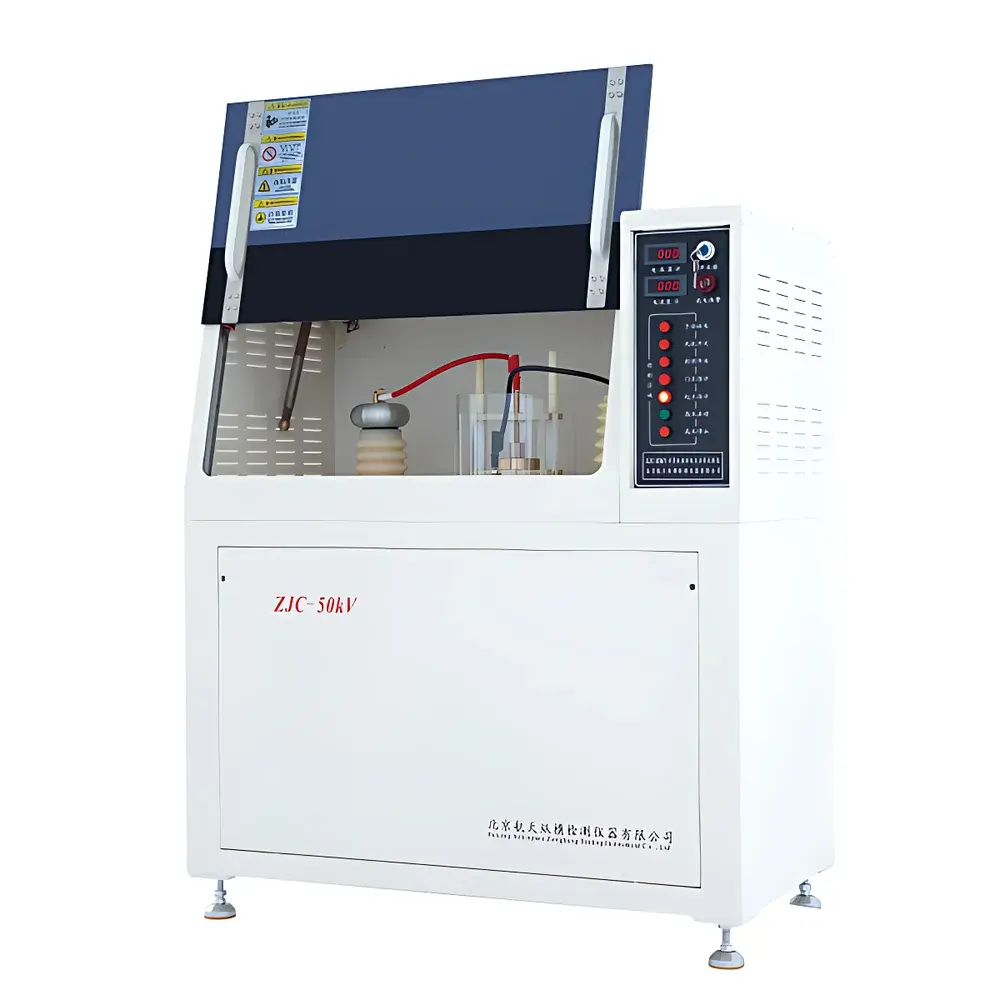
Aerospace ZJC-50kV Dielectric Strength Tester
| Brand | Aerospace |
|---|---|
| Origin | Beijing, China |
| Model | ZJC-50kV |
| Breakdown Voltage Range | 0–50 kV (AC/DC) |
| Compliance | IEC 60243, ASTM D149, GB/T 1408, GB 16935 |
| Safety Features | Overvoltage/overcurrent protection, automatic discharge, interlocked enclosure |
Overview
The Aerospace ZJC-50kV Dielectric Strength Tester is a precision high-voltage testing system engineered for the quantitative evaluation of electrical insulation performance in solid dielectric materials. It operates on the principle of controlled voltage ramping under standardized electrostatic stress conditions to determine the intrinsic dielectric strength—the maximum electric field (kV/mm) a material can withstand before catastrophic electrical breakdown occurs. This instrument implements the fundamental physics of Townsend avalanche and streamer propagation mechanisms, delivering reproducible measurements critical for material qualification, safety validation, and regulatory conformance in low- and medium-voltage applications. Designed for laboratory and quality control environments, it supports both AC and DC test modes with programmable ramp rates, making it suitable for comparative analysis across polymer films, elastomers, ceramics, laminates, and insulating coatings.
Key Features
- Adjustable high-voltage output: 0–50 kV AC or DC, with fine-resolution voltage control (±0.1% full scale) and stable ripple <1.5% RMS
- Dual-mode operation: Stepwise or continuous ramp-up (selectable rate from 0.1 to 5.0 kV/s), with configurable hold time and termination logic (breakdown detection or time-limited endurance)
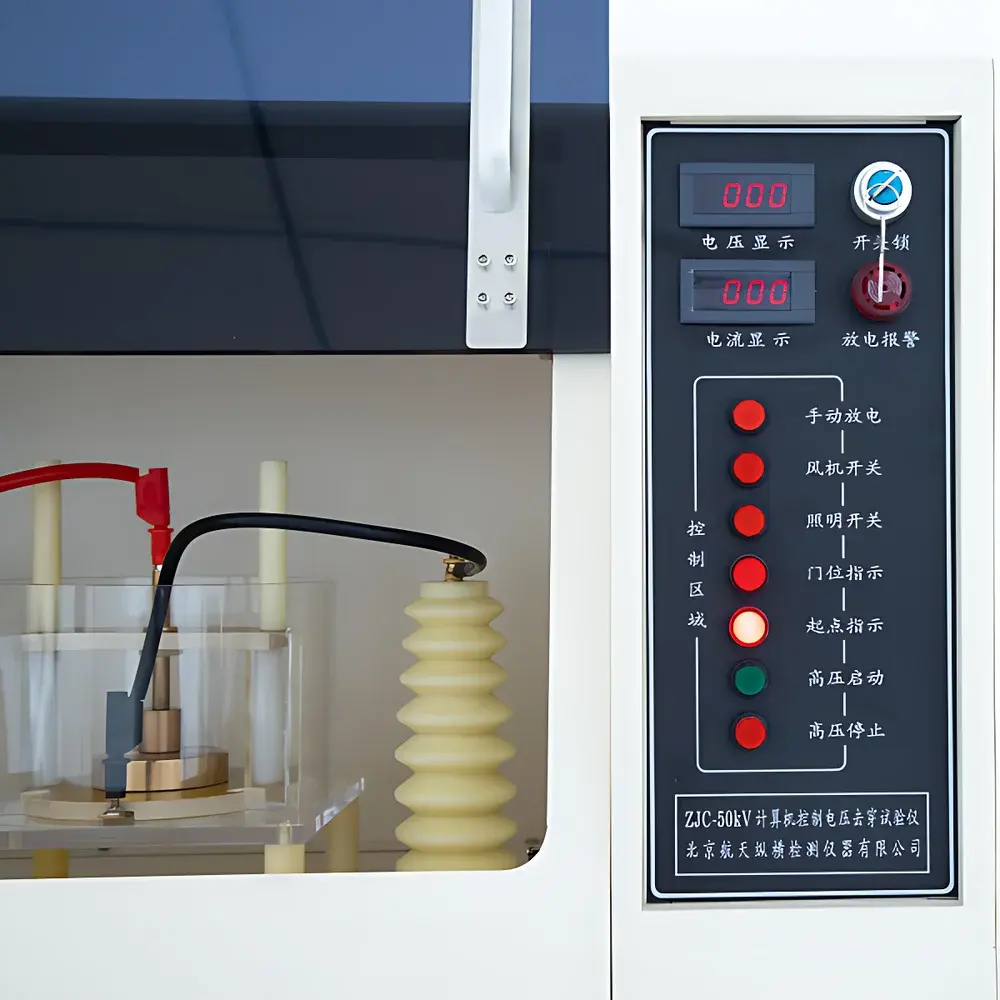
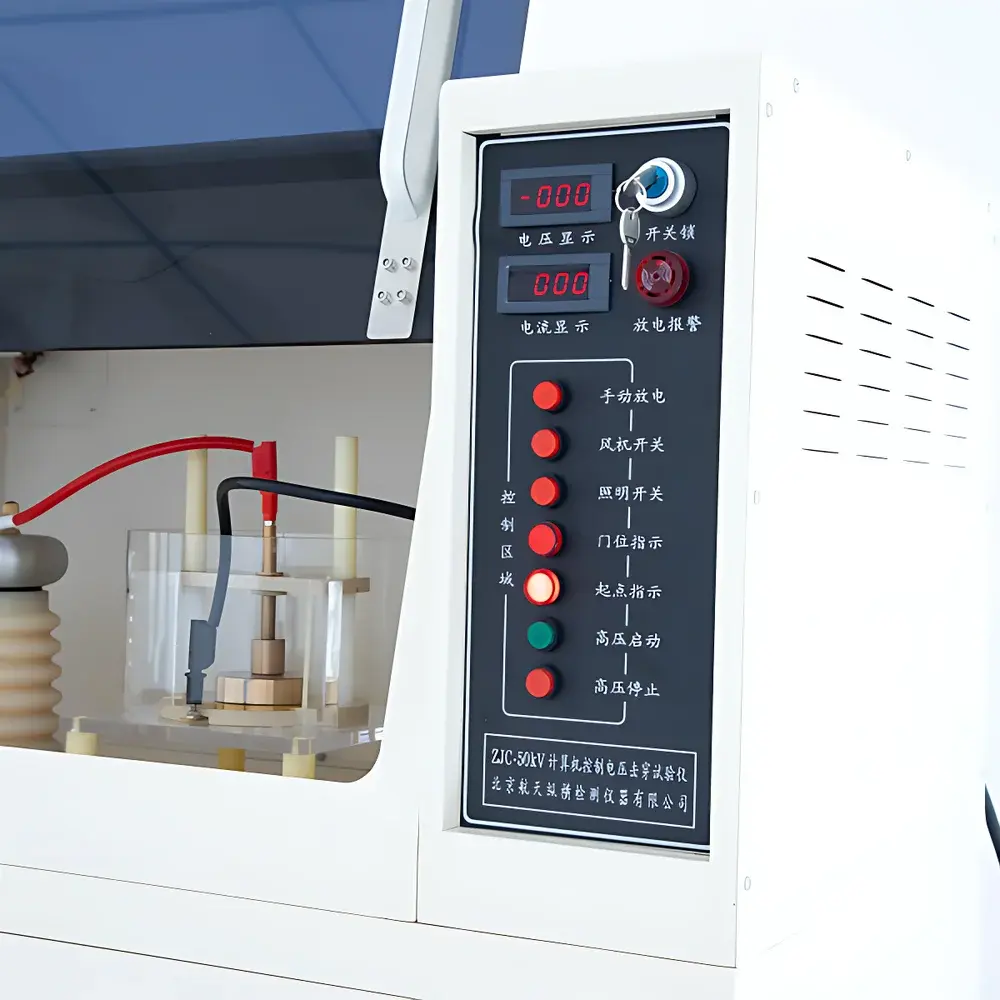
- Integrated leakage current monitoring: Real-time measurement range 0.1 µA–20 mA with auto-ranging analog-to-digital conversion and 12-bit resolution
- Standardized electrode configurations: Includes brass spherical (12.5 mm radius) and parallel-plate (25 mm diameter) electrodes compliant with IEC 60243–1 and ASTM D149 geometries
- Hardware-enforced safety architecture: Dual-channel interlock circuitry, grounded discharge resistor bank (<5 s residual charge decay), overvoltage cutoff at 105% setpoint, and emergency stop with mechanical latch
- Modular design with NIST-traceable calibration interface for periodic verification of HV output and current sensing modules
Sample Compatibility & Compliance
The ZJC-50kV accommodates flat, rigid, or semi-rigid specimens up to 150 mm × 150 mm and 10 mm thick—ideal for thermoplastics (e.g., PE, PP, PET), thermosets (epoxy, phenolic), elastomers (silicone, EPDM), ceramic substrates, and impregnated paper or fiber composites. Sample mounting ensures uniform pressure distribution (adjustable clamping force: 0.5–2.0 MPa) to minimize edge effects and void-induced premature breakdown. The system is fully aligned with international test standards including IEC 60243-1 (Methods for determining dielectric strength of solid insulating materials), ASTM D149 (Dielectric Breakdown Voltage of Solid Electrical Insulating Materials at Commercial Power Frequencies), and Chinese national standards GB/T 1408.1–2016 and GB 16935.1–2008. Its measurement traceability supports GLP-compliant documentation required for UL, CE, CCC, and RoHS certification submissions.
Software & Data Management
Control and analysis are executed via Windows-based software with role-based access control (operator, supervisor, administrator). The application records time-stamped voltage, current, and derivative dI/dt waveforms at ≥1 kHz sampling rate, storing raw data in HDF5 format for long-term archival integrity. Each test session generates an audit trail compliant with FDA 21 CFR Part 11 requirements—including electronic signatures, modification history, and immutable metadata (operator ID, calibration status, environmental log). Export options include CSV, PDF reports with pass/fail flags, and graphical overlays for statistical comparison across batches. Optional API integration enables direct linkage to LIMS platforms (e.g., LabWare, Thermo Fisher SampleManager) and MES systems for automated QC gate enforcement.
Applications
- Materials R&D: Screening of novel polymer blends, nanocomposite dielectrics, and bio-based insulators for breakdown threshold optimization
- Electrical component validation: Routine testing of wire enamel, transformer bushings, capacitor dielectrics, motor slot liners, and PCB substrate laminates
- Production QA/QC: In-line or batch-level verification of incoming raw materials (e.g., polyimide film, silicone rubber sheets) against internal specification limits
- Failure analysis: Correlation of leakage current transients with SEM/EDS findings to identify contamination-driven weak spots or interfacial delamination
- Standards laboratory use: Accredited testing per ISO/IEC 17025 for third-party certification bodies conducting IEC/UL compliance assessments
FAQ
What voltage types does the ZJC-50kV support, and how is waveform fidelity ensured?
It delivers sinusoidal AC (50/60 Hz, THD <3%) and ripple-free DC outputs. High-frequency compensation circuits and active feedback regulation maintain waveform integrity across load variations.
Can the system detect partial discharge (PD) activity during ramp testing?
While not a dedicated PD analyzer, its high-sensitivity current channel (0.1 µA resolution) and dI/dt derivative analysis enable identification of pre-breakdown micro-discharge events when combined with calibrated reference samples.
Is environmental conditioning integrated into the test chamber?
The base unit operates at ambient lab conditions (15–30°C, RH ≤75%). Optional climate-controlled test enclosures (–20°C to +85°C, RH 10–95%) are available as add-on modules with I/O synchronization.
How often must the system be recalibrated, and what standards apply?
Annual calibration is recommended per ISO/IEC 17025. Voltage output is verified using a certified HV divider (±0.2% accuracy); current measurement is validated against a NIST-traceable shunt standard.
Does the software support multi-user permissions and electronic record retention for audit purposes?
Yes—role-based authentication, encrypted audit logs, electronic signatures, and tamper-evident data packaging comply with 21 CFR Part 11 and EU Annex 11 requirements for regulated industries.



