
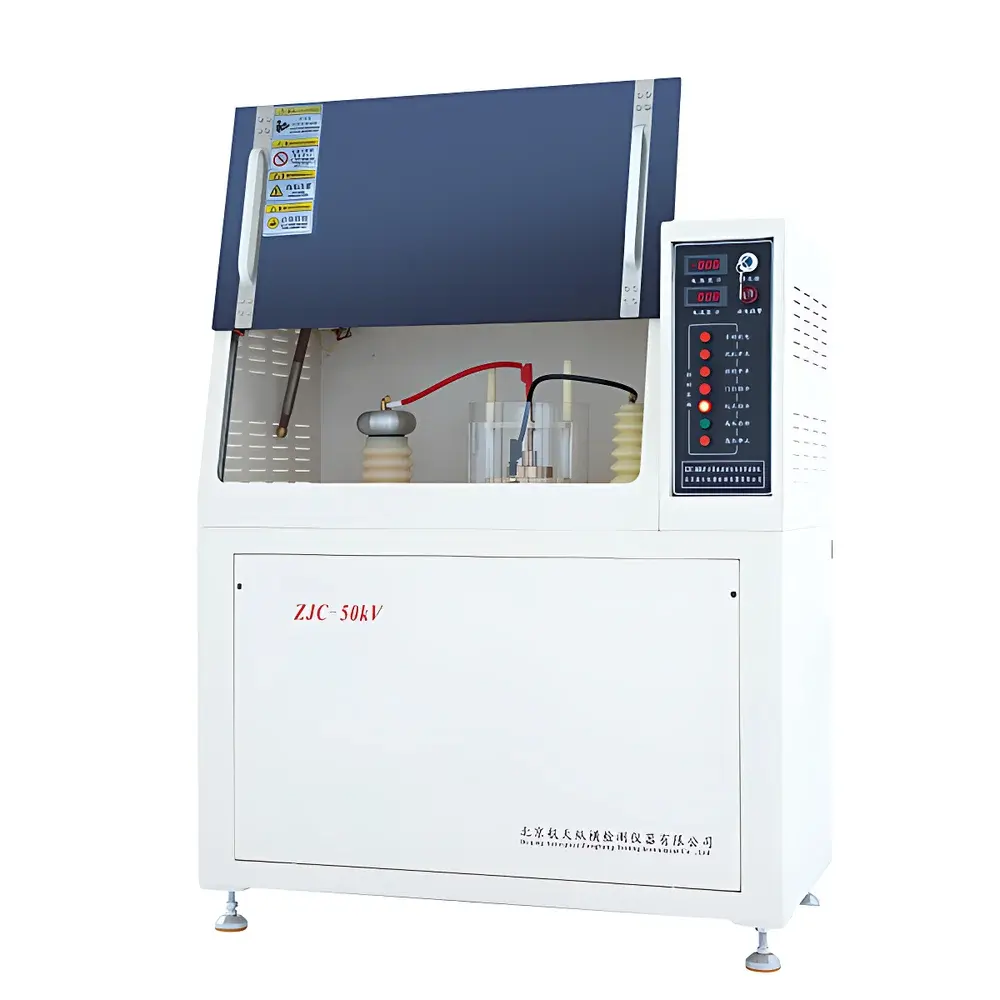
Aerospace ZJC-50kV High-Voltage Dielectric Breakdown Tester
| Brand | Aerospace |
|---|---|
| Origin | Beijing, China |
| Model | ZJC-50kV |
| Maximum Output Voltage | 50 kV |
| Compliance | IEC 60243, ASTM D149, IEC 60156, GB/T 13542 |
| Electrode Configurations | Sphere-Plate (Φ6 mm sphere vs. 25 mm plate) and Three-Electrode System |
| Temperature Control | 23 ± 2 °C |
| Relative Humidity Control | 50 ± 5 % RH |
| Voltage Waveform | 50 Hz AC sine wave (THD ≤ 5 %) or DC (ripple ≤ 3 %) |
| Safety Enclosure | Explosion-resistant viewing window rated ≥ 75 kV |
Overview
The Aerospace ZJC-50kV High-Voltage Dielectric Breakdown Tester is an engineered system for determining the dielectric strength of insulating materials under controlled electrical stress. It operates on the principle of applying a steadily increasing voltage across a standardized electrode configuration until electrical breakdown occurs—defined as the formation of a conductive path through or along the surface of the specimen. The resulting breakdown voltage (Vb) is normalized to specimen thickness (d) to yield dielectric strength (Eb = Vb/d, in kV/mm), enabling thickness-independent comparison of intrinsic insulation performance. Designed for laboratory-grade reproducibility, the instrument supports both short-time and stepwise voltage ramp protocols per IEC 60243-1 and ASTM D149, with precise control over environmental parameters critical to measurement fidelity.
Key Features
- High-stability 50 kV AC/DC output with programmable ramp rates (0.1–5 kV/s) and step-hold capability (1 min per increment, 5–10 % of expected Vb).
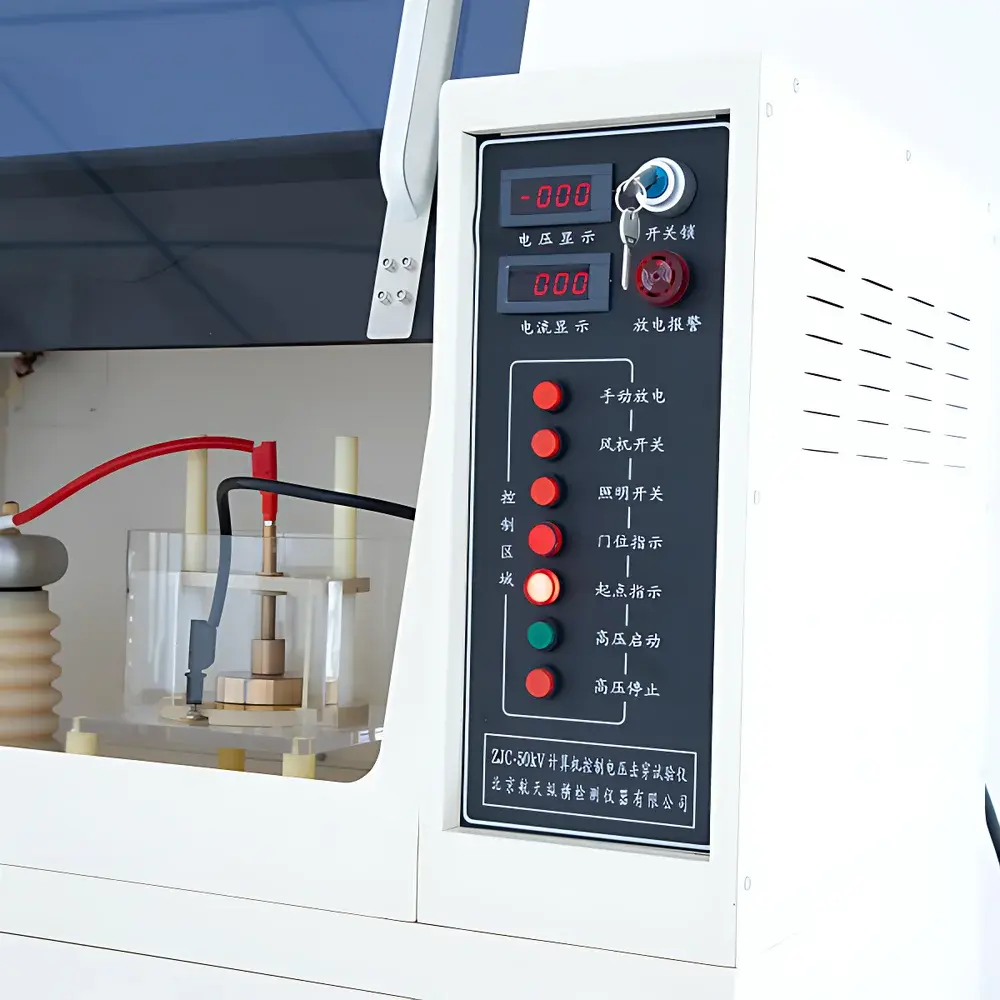
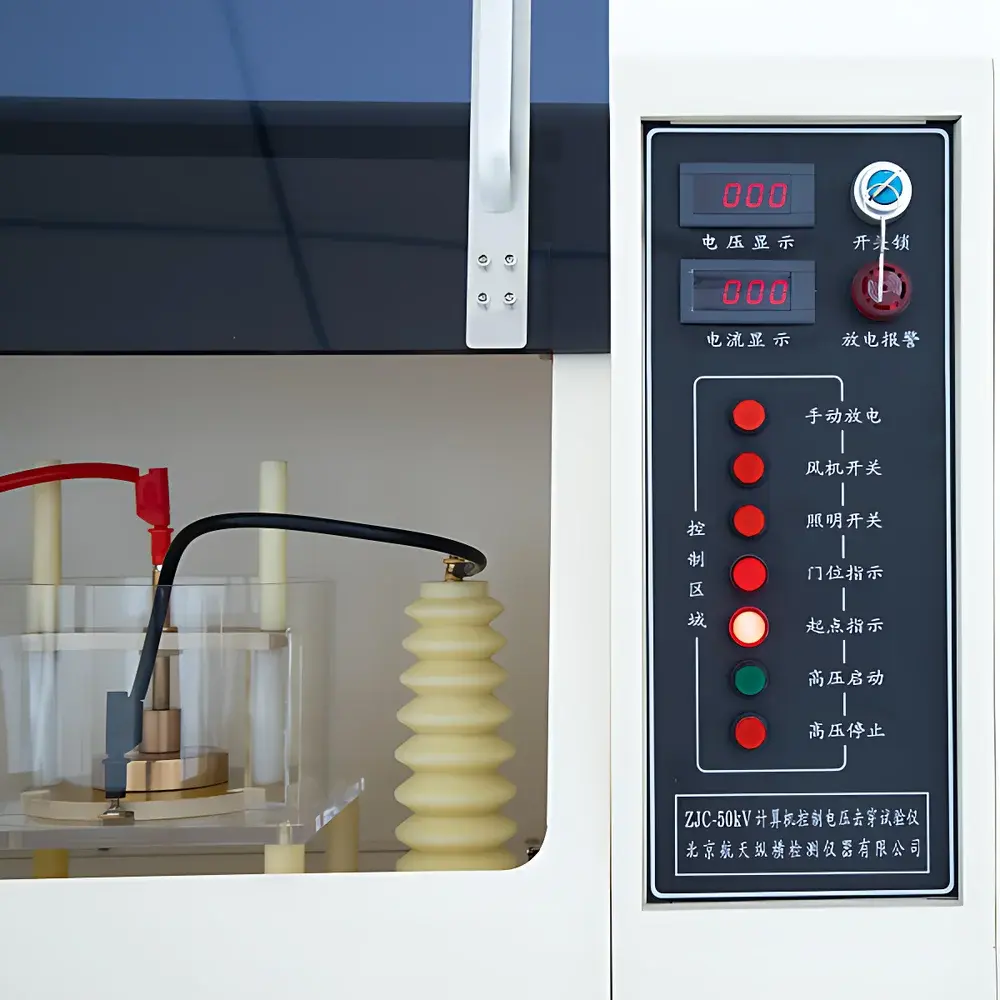
- Dual electrode configurations: precision-machined brass sphere-plate electrodes (Φ6 mm sphere, 25 mm flat plate, surface roughness Ra ≤ 0.8 µm) and optional three-electrode setup to suppress edge effects in thin films and laminates.
- Integrated environmental chamber with active temperature regulation (23 ± 2 °C) and humidity control (50 ± 5 % RH), compliant with standard test conditioning requirements.
- Real-time voltage/current monitoring with digital oscilloscope-grade sampling (≥1 MS/s) and automatic arc detection logic to terminate voltage application upon breakdown onset.
- Explosion-rated safety enclosure featuring laminated borosilicate viewing window (withstood pressure ≥ 75 kV), interlocked door switch, and emergency discharge circuitry meeting IEC 61010-1 Class II safety specifications.
- Compliance-ready architecture supporting audit trails, user access levels, and electronic signature functionality aligned with FDA 21 CFR Part 11 and GLP/GMP documentation workflows.
Sample Compatibility & Compliance
The ZJC-50kV accommodates solid dielectrics (e.g., polymer sheets, ceramic substrates, epoxy composites), liquid insulants (transformer oils, silicone fluids), and thin-film specimens (polyimide, PET, ceramic-coated separators). Sample thickness range: 0.05–10 mm; minimum measurable thickness resolution: ±1 µm (requires external laser micrometer per GB/T 13542). All testing follows internationally harmonized procedures: IEC 60243-1 (solid insulating materials), ASTM D149 (dielectric breakdown voltage of solid electrical insulating materials), IEC 60156 (dielectric breakdown voltage of insulating oils), and ASTM D877 (standard test method for dielectric breakdown voltage of insulating oils of petroleum origin). For thin-film applications (≤100 µm), the three-electrode system is recommended to minimize surface flashover and ensure volumetric failure mode dominance.
Software & Data Management
The proprietary BreakTest Suite v3.2 provides full test sequence programming, real-time waveform visualization, and automated pass/fail evaluation against user-defined criteria. Raw voltage, current, time, and environmental logs are stored in ISO-standard HDF5 format with embedded metadata (operator ID, calibration timestamp, ambient conditions). Statistical analysis modules include Weibull distribution fitting (shape parameter β, scale parameter η), Grubbs’ outlier detection (α = 0.05), and confidence interval estimation for mean dielectric strength. Audit trail records all parameter modifications, test starts/stops, and data exports—fully traceable and exportable for regulatory submission. Export formats include CSV, PDF reports (with embedded calibration certificates), and XML for LIMS integration.
Applications
- Power Systems: Qualification of transformer pressboard (IEC 60641), GIS epoxy castings (CIGRE WG D1.32), and bushing composite housings.
- Energy Storage: Evaluation of lithium-ion battery separators (ceramic-coated PE/PP, target Eb ≥ 300 kV/mm), solid-state electrolyte membranes, and cell encapsulation resins.
- Photovoltaics: Certification of backsheet materials per IEC 61215 (Eb ≥ 40 kV/mm), encapsulant adhesion interfaces, and junction box insulation systems.
- Electronics Packaging: Screening of underfill epoxies, mold compounds (JEDEC J-STD-020), and flexible printed circuit substrates (polyimide films, Eb 180–240 kV/mm).
- Advanced Materials R&D: Nanocomposite characterization (e.g., SiO₂/epoxy), high-frequency dielectric stability assessment (up to 1 kHz), and accelerated aging correlation studies.
FAQ
What standards does the ZJC-50kV support out-of-the-box?
The system is preconfigured for IEC 60243-1, ASTM D149, IEC 60156, ASTM D877, and GB/T 13542, with built-in test templates, reporting structures, and pass/fail thresholds.
Is three-electrode testing supported natively?
Yes—the instrument includes dedicated cabling, guard terminal interface, and software logic for true three-electrode operation with automatic guard potential regulation.
How is voltage waveform integrity verified?
Each unit undergoes factory calibration using a certified high-voltage probe (HV9000 series) and power quality analyzer to confirm THD ≤ 5 % (AC) and ripple ≤ 3 % (DC) at full load.
Can breakdown data be integrated into our LIMS?
Yes—via secure HTTPS REST API or direct database write (ODBC/JDBC) with configurable field mapping and authentication (OAuth 2.0 or certificate-based).
What maintenance is required for long-term accuracy?
Annual recalibration of high-voltage divider and current sensor is recommended; electrode polishing and surface inspection every 200 tests; environmental sensor verification quarterly.



