
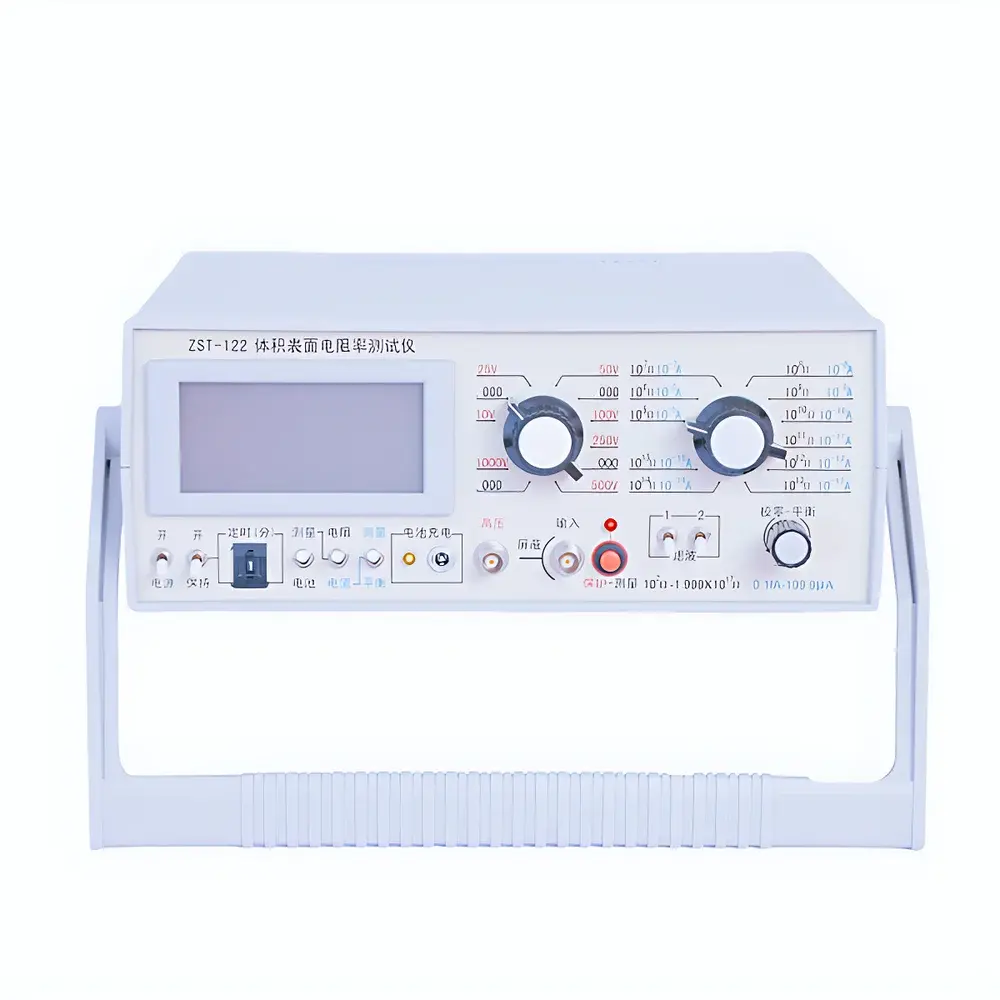
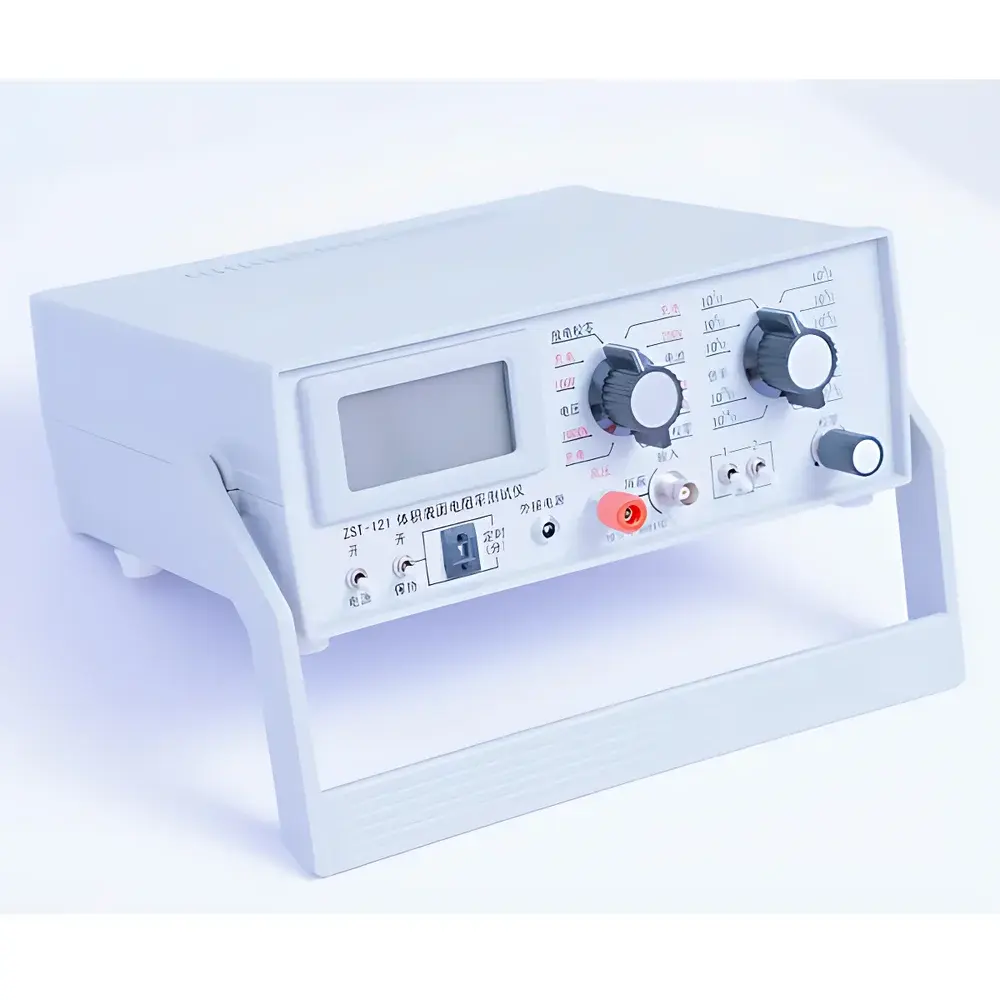
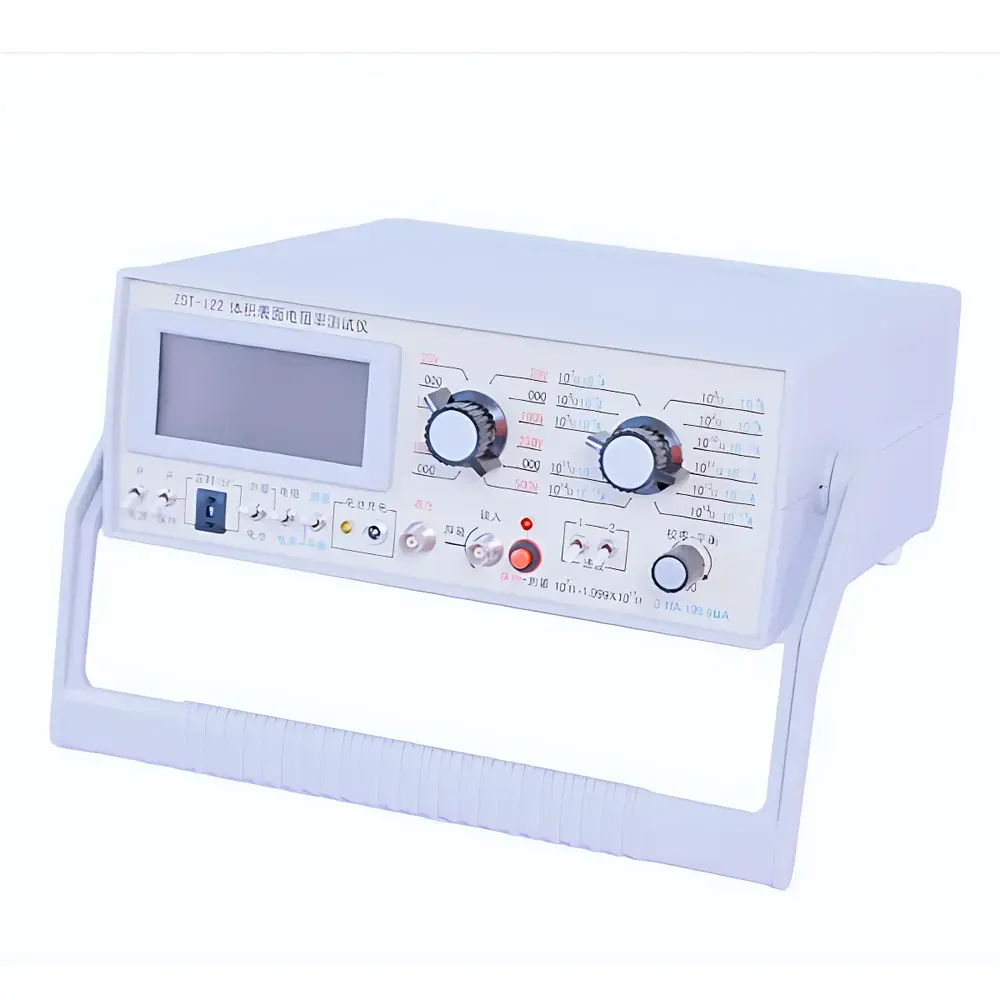
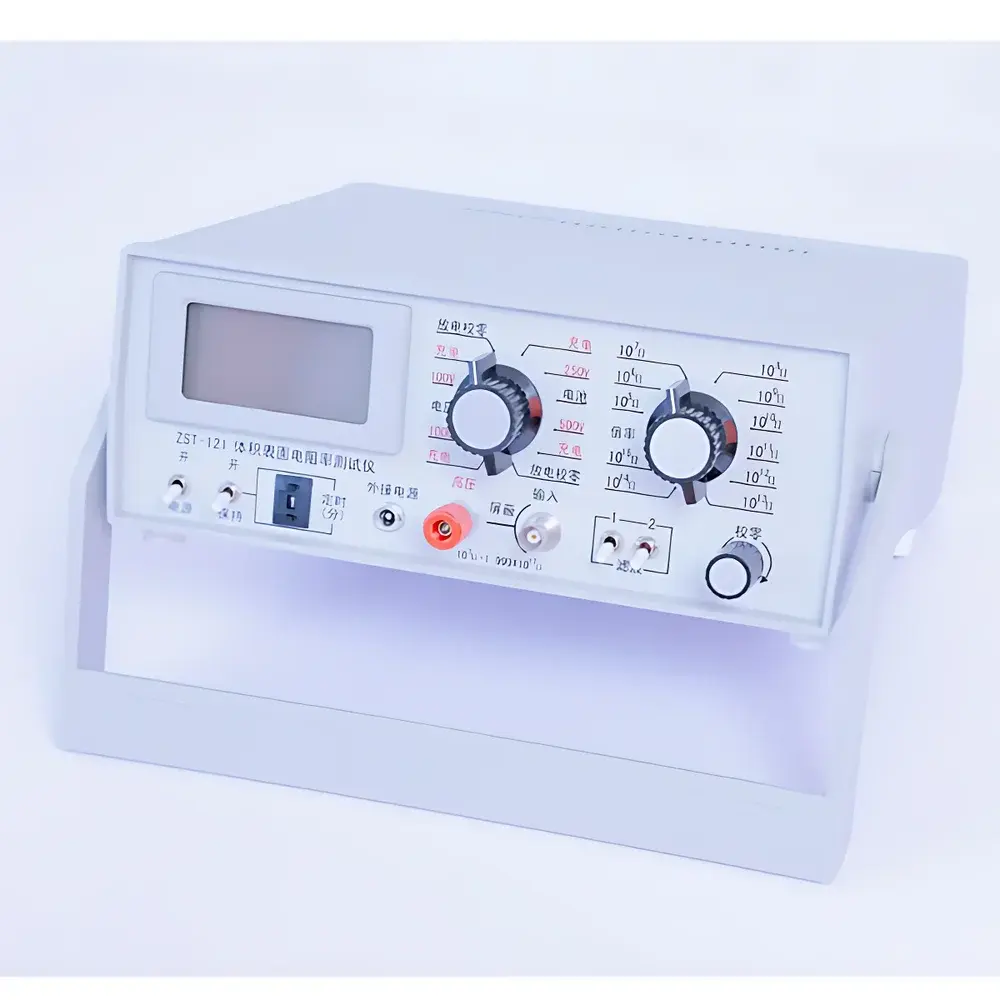
Aerospace ZST-121 Volume & Surface Resistivity Tester
| Brand | Aerospace |
|---|---|
| Origin | Beijing, China |
| Manufacturer Type | Authorized Distributor |
| Origin Category | Domestic (China-made) |
| Model | ZST-121 |
| Price Range | USD 2,100 – 7,000 |
| Resistance Range | 10 Ω to 2×10¹⁷ Ω |
| Resistance Accuracy | ±1% |
| Voltage Settings | 100 V, 250 V, 500 V, 1000 V |
| Voltage Accuracy | ±2% |
| Current Measurement Range | — |
| Display | 3½-digit LCD with backlight |
| Built-in Timer | 1–7 min auto-hold |
| Power Supply | 8×AA batteries (DC 8.5–12.5 V) or external regulated DC source |
| Dimensions (L×W×H) | 280 × 240 × 105 mm |
| Weight | 3 kg |
| Operating Environment | 0–40 °C, RH < 80% |
| Compliance | GB/T 1410–2006, GB/T 31838.1–2019, GB/T 2439–2001, GB/T 1692–2008, GB/T 10064–2006, GB/T 3048.5–2007 |
Overview
The Aerospace ZST-121 Volume & Surface Resistivity Tester is a portable, battery-powered high-resistance meter engineered for precise measurement of volume resistivity (ρv) and surface resistivity (ρs) in solid insulating materials. Based on the constant-voltage, guarded-electrode method per IEC 62631-3-1 and aligned with national standards including GB/T 1410–2006 and GB/T 31838.1–2019, the instrument applies a stable DC test voltage across standardized electrode configurations to determine resistivity according to Ohm’s law and geometric correction factors. Its floating-ground architecture eliminates ground-loop interference—critical when measuring coiled cables immersed in water tanks—and ensures stable readings in field environments where AC mains grounding is unreliable or prohibited. Designed for use in QC laboratories, R&D centers, and production floors, the ZST-121 delivers traceable, repeatable results for materials ranging from elastomers and thermoplastics to photovoltaic encapsulants and aerospace-grade composites.
Key Features
- True floating-input design enables safe, noise-immune measurement of insulated cables in water-bath setups—eliminating risk of high-voltage short circuits caused by conventional grounded instruments.
- 3½-digit backlit LCD display with automatic polarity indication and real-time resistance readout; optimized for readability under low-light factory or field conditions.
- Four programmable DC test voltages (100 V, 250 V, 500 V, 1000 V), each calibrated to ±2% full scale, supporting both routine screening and compliance-driven testing per ASTM D257 and IEC 60093.
- Integrated 1–7 minute programmable timer with auto-hold function—essential for standardized insulation resistance tests requiring fixed dwell times (e.g., GB/T 3048.5 for wire & cable).
- Low-power operation via eight AA alkaline cells (8.5–12.5 V DC); optional external regulated DC input allows continuous benchtop use without battery depletion.
- Dual-purpose electrode system included: concentric ring electrodes for surface resistivity (per GB/T 1692–2008) and parallel-plate configuration for volume resistivity (per GB/T 2439–2001), housed in a shielded test enclosure to suppress electromagnetic interference.
Sample Compatibility & Compliance
The ZST-121 accommodates rigid and semi-flexible solid dielectrics up to 150 mm × 150 mm × 50 mm, including vulcanized rubber compounds, polyolefin insulation sheaths, antistatic polymer sheets, silicone encapsulants, and ceramic substrates. Electrode contact integrity is maintained via spring-loaded pressure mounts and conductive silver paint options (not supplied). The system conforms to the electrode geometry, guard-ring tolerances, and environmental conditioning requirements specified in GB/T 1410–2006 and ISO 3915:2022. All measurements support GLP documentation workflows: test voltage, duration, ambient temperature/humidity, and operator ID can be manually logged against batch records. While the instrument itself does not provide electronic audit trails, its stable analog front-end and deterministic timing circuitry ensure data integrity for FDA 21 CFR Part 11–aligned manual reporting systems.
Software & Data Management
The ZST-121 operates as a standalone hardware meter with no embedded firmware-based data logging or USB/Bluetooth connectivity. This architecture prioritizes electromagnetic compatibility (EMC), long-term calibration stability, and operational simplicity in ESD-sensitive or RF-noisy industrial settings. Resistance values are recorded manually into laboratory notebooks or LIMS-compatible spreadsheets. For automated data capture, users may integrate the unit with third-party digital multimeters or DAQ systems via its isolated analog output interface (optional accessory). Calibration certificates—traceable to CNAS-accredited national standards—are supplied with each instrument and include as-found/as-left data at three voltage points (100 V, 500 V, 1000 V) across the 10⁴–10¹⁶ Ω range.
Applications
- Quality control of rubber compounds for automotive wiring harnesses per GB/T 2439–2001 and SAE J1668.
- Volume resistivity validation of PV module backsheet films prior to lamination (IEC 61215-2 MQT 17).
- Surface resistivity mapping of ESD-safe work surfaces and packaging materials (ANSI/ESD S20.20).
- Type testing of medium-voltage cable insulation per GB/T 3048.5 and IEC 60502-2.
- R&D screening of conductive filler dispersion in polymer nanocomposites (carbon black, graphene, CNTs).
- Periodic verification of grounding integrity in cleanroom flooring systems and static-dissipative flooring.
FAQ
Does the ZST-121 meet international standards such as IEC 62631 or ASTM D257?
Yes—the measurement methodology, electrode configuration, and voltage accuracy comply with the technical requirements of IEC 62631-3-1 and ASTM D257, though formal certification is issued by end-user accredited labs per local regulatory practice.
Can it measure resistivity of liquids or powders?
No—the ZST-121 is validated exclusively for solid, homogeneous dielectric samples with defined thickness and surface geometry. Liquid or granular media require alternative instrumentation (e.g., conductivity cells or powder resistivity jigs).
Is external calibration service available outside China?
Yes—Aerospace provides calibration support through ISO/IEC 17025 accredited partners in Germany, Singapore, and the USA; lead time is typically 10–14 business days.
What is the recommended recalibration interval?
Annual calibration is advised for routine QC use; biannual calibration suffices for infrequent R&D applications—subject to internal metrology policy and audit requirements.
Does the instrument include software for report generation?
No—reporting is manual or integrated via user-defined LIMS templates; no proprietary software is bundled or required.
Related Products





