
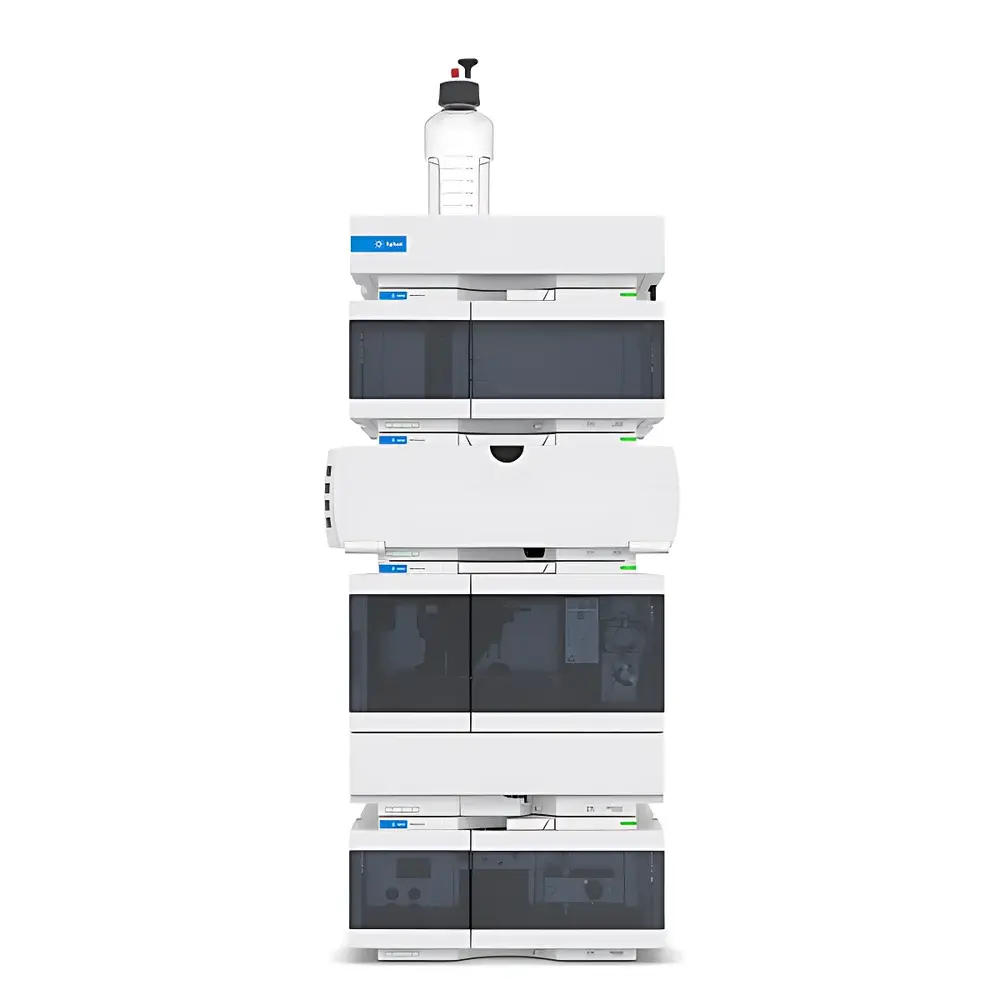
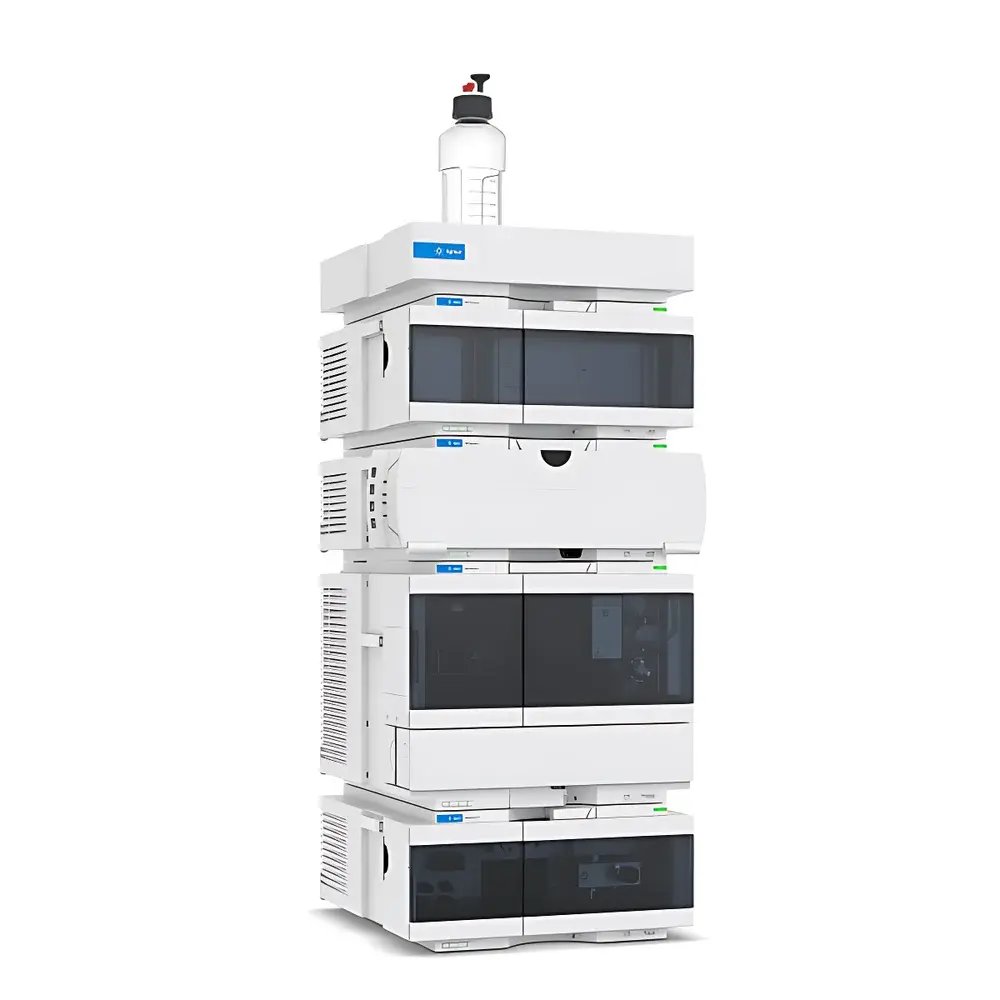
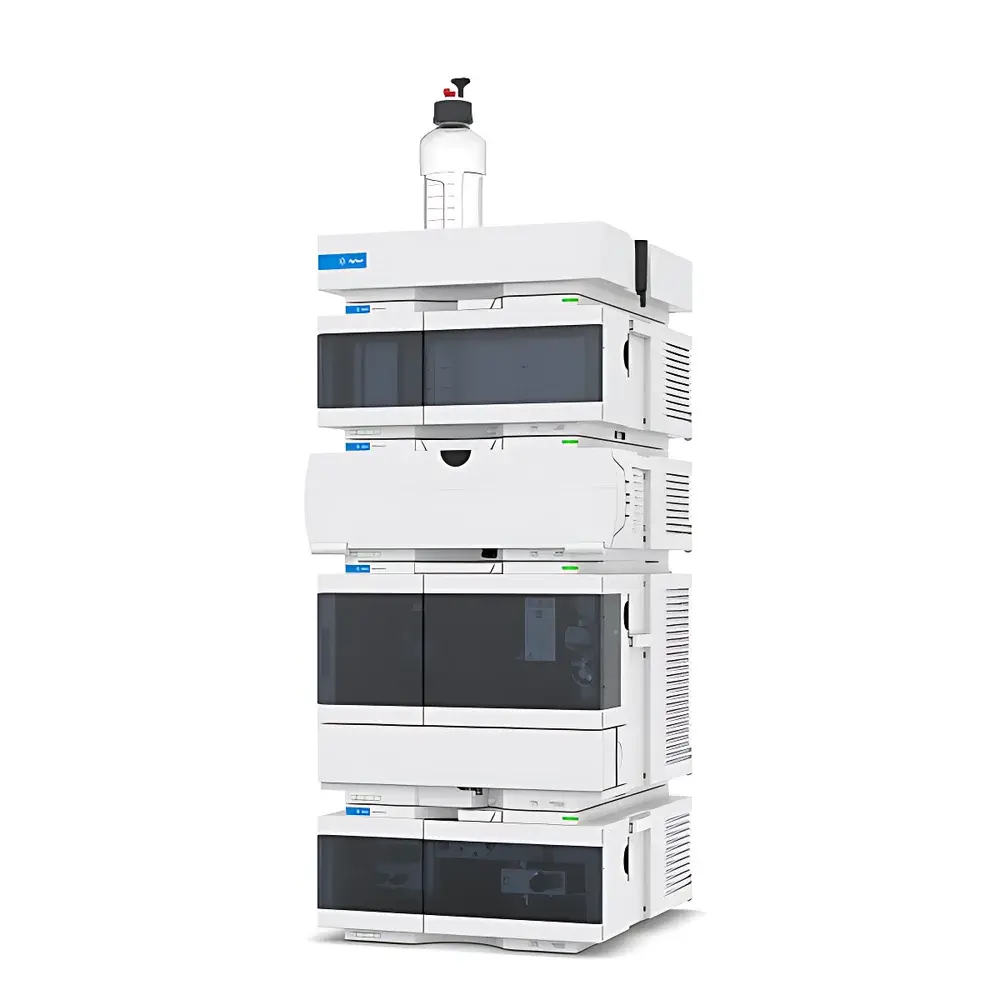
Agilent 1260 Infinity II GPC/SEC System
| Brand | Agilent Technologies |
|---|---|
| Origin | Germany |
| Manufacturer Type | Original Equipment Manufacturer (OEM) |
| Origin Category | Imported Instrument |
| Model | 1260 Infinity II GPC/SEC |
| Instrument Type | Conventional High-Performance Liquid Chromatograph (HPLC) |
| Application Scope | General-Purpose Polymer Characterization |
| Flow Rate Range | Up to 10 mL/min (G7110B Pump Module) |
| Maximum Operating Pressure | 600 bar |
| Injection Volume Range | 0.1–100 µL |
| Temperature Control | Dual-Zone Column Compartment (G7116A/B) |
Overview
The Agilent 1260 Infinity II GPC/SEC System is a purpose-engineered high-performance liquid chromatography platform optimized for gel permeation chromatography (GPC) and size-exclusion chromatography (SEC) of synthetic and natural polymers. Based on the robust 1260 Infinity II architecture, this system implements classical SEC separation principles—where analytes are separated in solution based on hydrodynamic volume as they pass through porous packing materials—enabling precise determination of molecular weight distribution (MWD), polydispersity index (PDI), and absolute or relative molar mass averages (Mn, Mw, Mz). Designed for laboratories requiring regulatory-compliant polymer characterization across R&D, quality control, and release testing, the system integrates thermally stabilized flow paths, low-dead-volume fluidics, and pressure-resilient components rated to 600 bar—ensuring reproducible retention time alignment and baseline stability over extended gradient or isocratic runs.
Key Features
- Isocratic pumping with ±0.1% RSD flow precision at 10 mL/min (G7110B module), minimizing retention time drift during multi-hour SEC analyses.
- Dual-zone column compartment (G7116A/B) enables independent temperature control of analytical and guard columns—critical for maintaining consistent elution behavior across diverse solvent systems (THF, DMF, chloroform, aqueous buffers).
- Automated sample introduction via 1260 Infinity II Sample Tray Autosampler supports unattended operation for up to 110 vials, with programmable needle wash and injection volume linearity from 0.1 to 100 µL.
- Refractive Index (RI) detection (G7120A) delivers high-sensitivity, universal response for non-UV-absorbing polymers, featuring active solvent compensation and real-time baseline correction algorithms.
- Modular detector expansion capability:预留接口支持串联多角度 light scattering (MALS), differential viscometry (DV), and UV/Vis detectors—enabling absolute molar mass determination and conformational analysis without column calibration.
- Solvent recycling function automatically diverts flow to waste only during peak elution windows, reducing solvent consumption by up to 40% compared to conventional continuous-flow SEC methods.
Sample Compatibility & Compliance
The system accommodates a broad range of polymer classes—including polyolefins, polystyrenes, acrylics, polyesters, polysaccharides, and proteins—across organic and aqueous mobile phases. Column sets (e.g., Agilent PLgel, TSKgel, or custom-packed SEC columns) are fully compatible with standard 1/16″ stainless-steel or PEEK capillary interconnects. From a compliance standpoint, the hardware and software architecture support audit-trail-enabled operation per FDA 21 CFR Part 11 requirements when paired with OpenLab CDS or MassHunter GPC/SEC software. All modules comply with IEC 61010-1 safety standards and electromagnetic compatibility (EMC) directives (EN 61326-1). Routine performance verification follows ASTM D5296 (standard test method for molecular weight averages of polystyrene by SEC) and ISO 16014-4 (plastics—determination of average molecular parameters of polymers by SEC).
Software & Data Management
Data acquisition, calibration, and MWD calculation are managed through Agilent’s dedicated GPC/SEC software module—integrated into OpenLab CDS 2.x or MassHunter Workstation. The workflow comprises three defined stages: instrument method setup (including pump gradient, column oven profile, detector sampling rate), automated sequence execution with real-time monitoring, and post-run analysis using customizable calibration curves (narrow standards, universal calibration, or multi-detector absolute methods). All raw data files (.D files) are stored in vendor-neutral formats with embedded metadata (instrument ID, operator, timestamp, method version). Electronic signatures, user role-based access control, and full audit trail logging—including parameter changes, integration events, and report generation—are enabled for GLP/GMP environments.
Applications
- Quality control of commercial polymer batches against specification limits for Mw, Mn, and PDI.
- Reaction monitoring during polymer synthesis (e.g., living anionic polymerization, RAFT, ATRP) to track chain growth and branching evolution.
- Stability assessment of biodegradable polymers (e.g., PLA, PHA) under accelerated aging conditions.
- Characterization of therapeutic protein aggregates and fragments in formulation development (aqueous SEC mode).
- Validation of column performance and system suitability per USP and Ph. Eur. 2.2.59 guidelines.
FAQ
Can this system be used for both organic-phase and aqueous-phase SEC?
Yes—the dual-zone column oven and chemically resistant fluidic path (stainless steel/PFA/PEEK) support THF, chloroform, DMF, and aqueous buffers including 0.1 M NaNO3 or phosphate buffers.
Is the RI detector compatible with gradient elution?
No—refractive index detection requires isocratic conditions; gradient use necessitates UV or light-scattering detection alternatives.
What is the minimum detectable concentration for polystyrene standards?
Typical LOD is ~10 ng on-column for narrow PS standards using the G7120A RI detector under optimized flow and temperature conditions.
Does the system support 21 CFR Part 11 compliance out-of-the-box?
Hardware supports it; full compliance requires configuration of OpenLab CDS with electronic signatures, audit trails, and permission-controlled user roles.
Can legacy Agilent 1100/1200 modules be integrated?
No—only 1260 Infinity II series modules are supported due to revised communication protocols and mechanical interlocks.




