
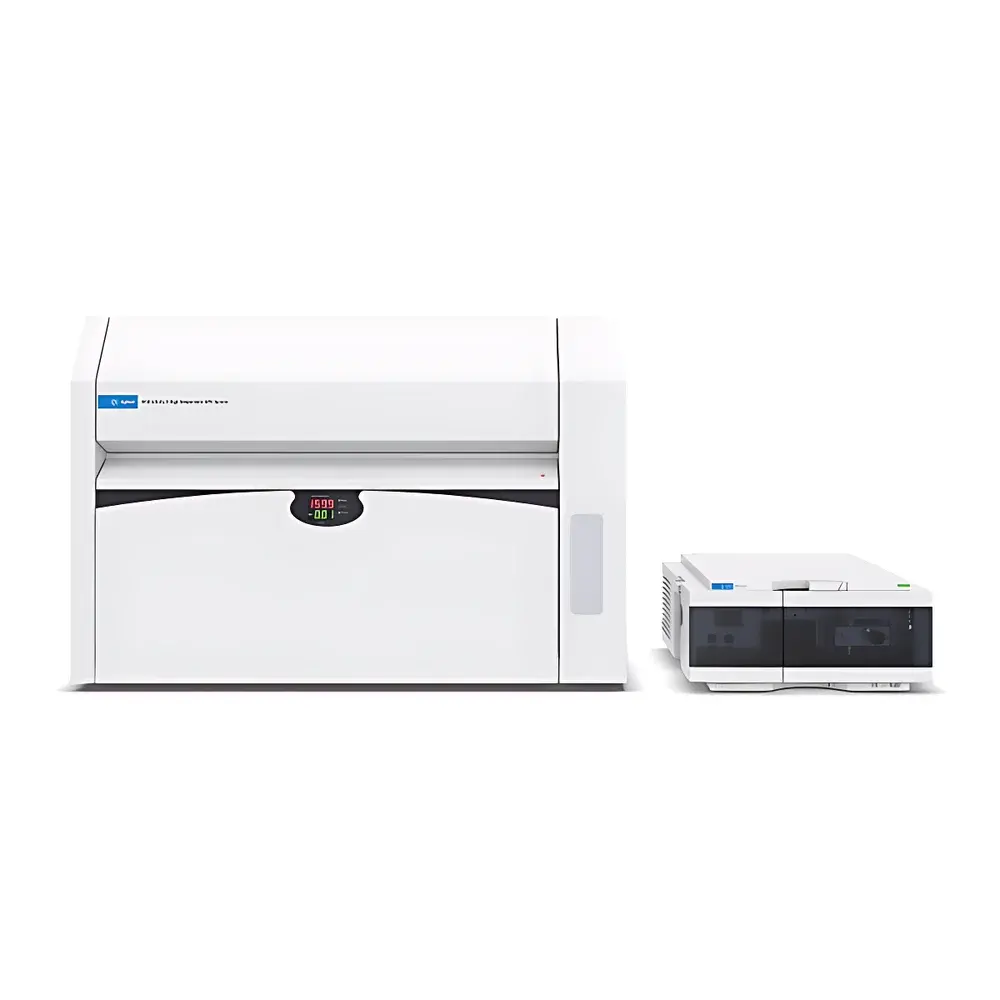
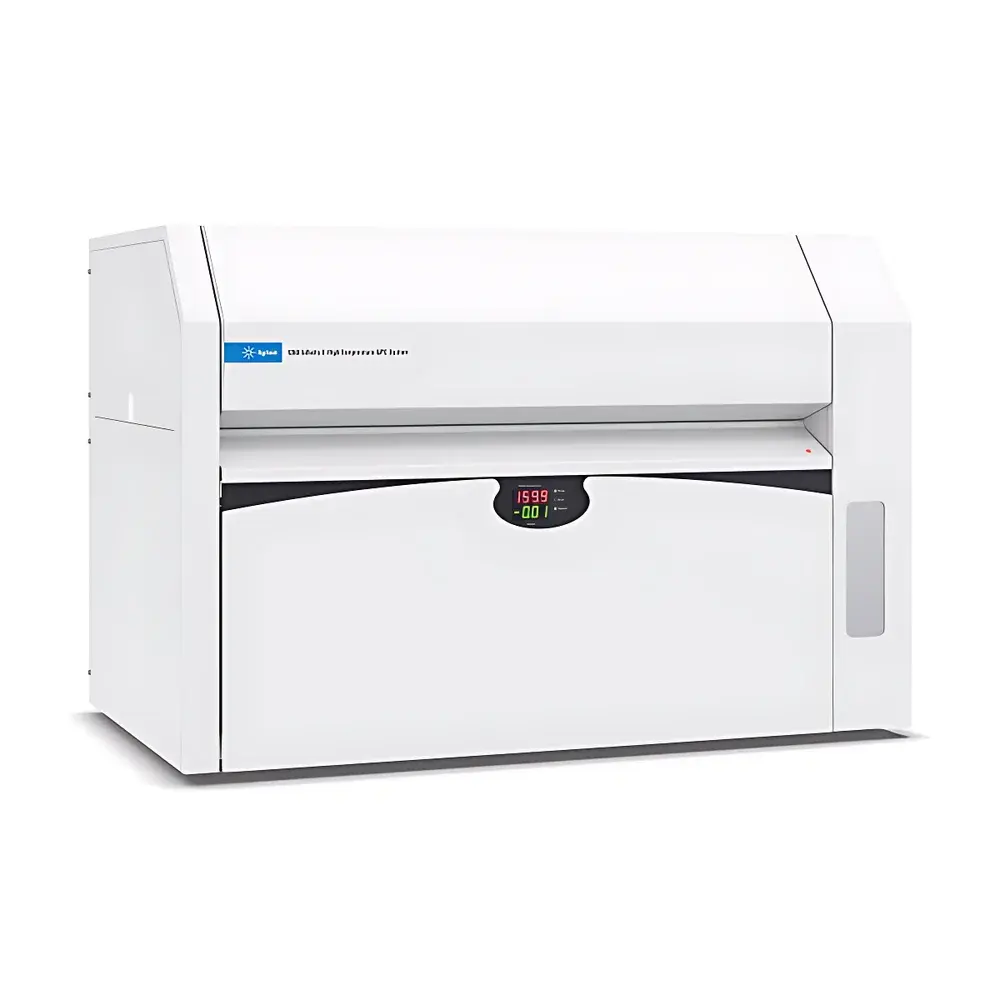
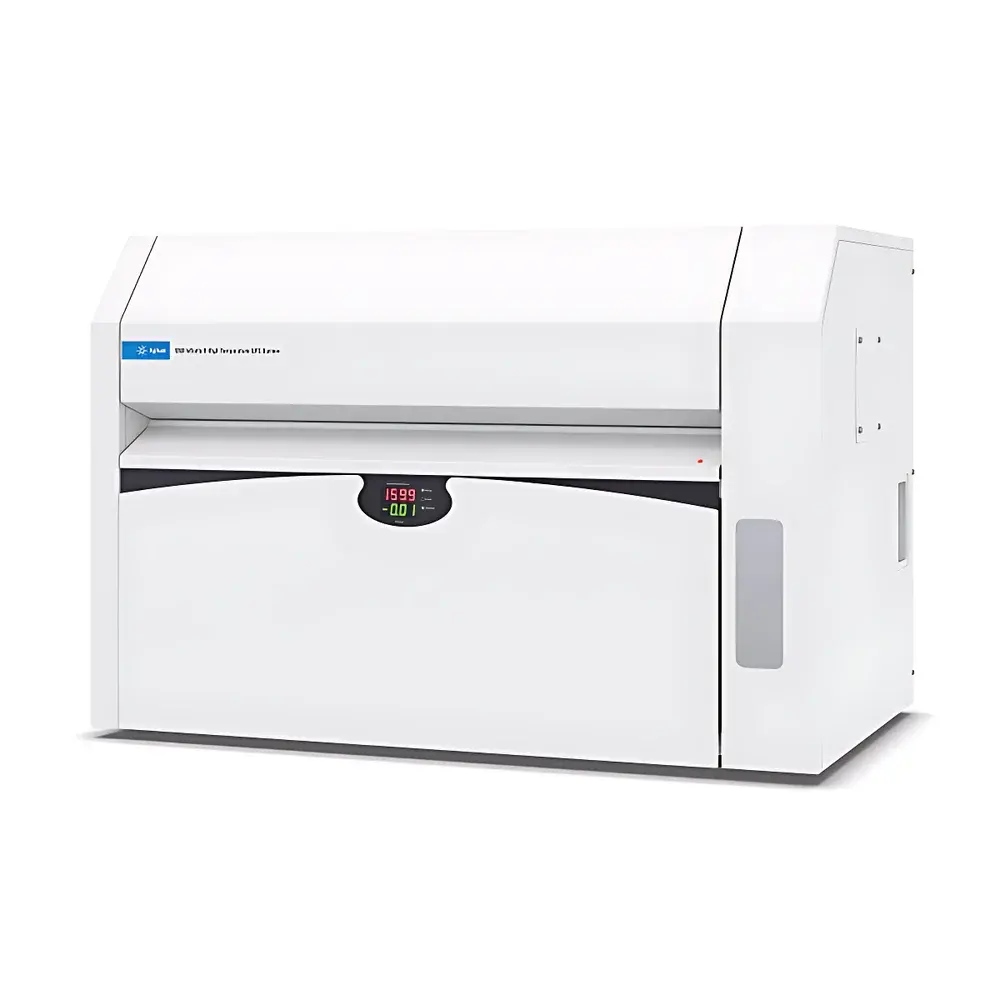
Agilent 1260 Infinity II High-Temperature GPC System
| Brand | Agilent Technologies |
|---|---|
| Origin | United Kingdom |
| Manufacturer Type | Original Equipment Manufacturer (OEM) |
| Origin Category | Imported |
| Model | 1260 Infinity II High-Temperature GPC |
| Instrument Type | High-Temperature Gel Permeation Chromatography (GPC) / Size Exclusion Chromatography (SEC) System |
| Pump Flow Range | Up to 10 mL/min (with G7110B high-temperature pump module) |
| Pump Pressure Rating | Up to 600 bar |
| Column Oven Temperature Range | Ambient to 220 °C |
Overview
The Agilent 1260 Infinity II High-Temperature GPC System is a purpose-engineered platform for size exclusion chromatography (SEC) and gel permeation chromatography (GPC) of thermally stable, high-molecular-weight polymers requiring dissolution and separation at elevated temperatures. It operates on the fundamental SEC principle—where polymer chains are separated in solution based on hydrodynamic volume as they pass through porous packing material—enabling precise determination of molecular weight distribution (MWD), polydispersity index (PDI), and branching architecture. This system is specifically optimized for polyolefins (e.g., polyethylene, polypropylene), engineering thermoplastics (e.g., polyamide, polyetherimide), and other high-melting-point synthetic polymers that remain insoluble or incompletely dissolved below 150 °C. Its robust thermal management architecture ensures full system equilibration—including autosampler, pump, column oven, and detectors—at temperatures up to 220 °C, eliminating cold zones that cause precipitation, column clogging, or retention time drift.
Key Features
- Integrated high-temperature liquid handling: G7110B high-pressure, high-temperature pump module rated to 600 bar and 220 °C, featuring chemically resistant wetted materials (e.g., Hastelloy C-276, sapphire pistons) for long-term stability with aggressive solvents such as 1,2,4-trichlorobenzene (TCB) and o-dichlorobenzene (ODCB).
- Thermally uniform column compartment: Precision-controlled oven with dual-zone heating and active air circulation maintains ±0.1 °C stability across the full 30–220 °C operating range, ensuring reproducible elution profiles and minimizing thermal degradation artifacts.
- Full-system thermal integration: All fluidic paths—from sample loop to detector flow cells—are actively heated and insulated to prevent condensation or crystallization of polymer solutions during transfer.
- PL-SP 260VS automated sample preparation station: Equipped with programmable syringe-based dispensing, temperature-controlled filtration (glass fiber or stainless-steel membranes), and integrated solvent degassing; reduces manual handling errors and improves inter-batch repeatability.
- Modular detector compatibility: Supports simultaneous multi-detector coupling—including high-temperature refractive index (HT-RID), high-temperature evaporative light scattering (HT-ELSD), online viscometry (HT-IV), and multi-angle laser light scattering (HT-MALS)—for absolute molecular weight calibration and conformational analysis without universal calibration assumptions.
Sample Compatibility & Compliance
The system is validated for routine analysis of polyolefin resins, polyamides, polyesters, polyacrylates, and fluoropolymers dissolved in high-boiling-point solvents under inert atmosphere (N₂ or Ar). It meets critical regulatory expectations for polymer characterization in quality control (QC) and R&D environments, supporting compliance with ASTM D5296 (standard test method for molecular weight averages of polystyrene by SEC), ISO 16014 (plastics—determination of average molecular weights of polymers by SEC), and USP (chromatography). Data integrity features—including electronic audit trails, user access controls, and instrument qualification documentation templates—align with FDA 21 CFR Part 11 and EU Annex 11 requirements for regulated laboratories operating under GLP or GMP frameworks.
Software & Data Management
Controlled via Agilent OpenLab CDS ChemStation Edition or OpenLab ECM (Enterprise Content Management), the system supports fully traceable method development, acquisition, and reporting workflows. Software modules include advanced SEC-specific calibration tools (linear, quadratic, and spline fitting), automatic baseline correction for HT-RID signals, and integrated MWD deconvolution algorithms. Raw data files (D, .ch, .cdf) are stored in vendor-neutral formats compliant with ISO/IEC 17025 data archival standards. Audit trail logs record all user actions, parameter changes, and instrument status events with timestamps and operator IDs—enabling full reconstructability during internal audits or regulatory inspections.
Applications
- Molecular weight distribution profiling of HDPE, LDPE, and LLDPE grades used in blow molding, film extrusion, and pipe manufacturing.
- Branching ratio quantification (e.g., short-chain branching in ethylene copolymers) using combined HT-IV and HT-RID detection.
- Stability assessment of polymer batches post-reactor quenching or during aging studies under accelerated thermal conditions.
- Quality-by-Design (QbD) support for polymer synthesis process validation, including correlation of MWD parameters with rheological behavior and mechanical performance.
- Regulatory submission support for medical device polymer components (e.g., PEEK, PEKK) requiring ISO 10993-compliant material characterization dossiers.
FAQ
What solvents are compatible with the 1260 Infinity II High-Temperature GPC System?
Commonly used solvents include 1,2,4-trichlorobenzene (TCB), o-dichlorobenzene (ODCB), and trichloroethylene—each requiring appropriate column chemistry (e.g., cross-linked polystyrene-divinylbenzene) and system conditioning protocols.
Can this system be upgraded to support triple-detection SEC?
Yes—the platform supports modular addition of HT-viscometer and HT-MALS detectors via standardized flow cell interfaces and synchronization triggers within OpenLab software.
Is column switching automation supported?
Column selection valves (e.g., Agilent G7156A) can be integrated for automated gradient or multi-column SEC methods, enabling extended resolution across broad MWD ranges.
How is system suitability verified at high temperature?
Standardized verification includes TCB blank injection for baseline noise/stability assessment, narrow polystyrene standard runs for resolution and asymmetry evaluation, and pressure/temperature ramp tests per ASTM D6474.
Does Agilent provide IQ/OQ documentation for this system?
Yes—factory-validated Installation Qualification (IQ) and Operational Qualification (OQ) protocols are available upon request, aligned with ISO/IEC 17025 and pharmaceutical GMP guidance documents.





