
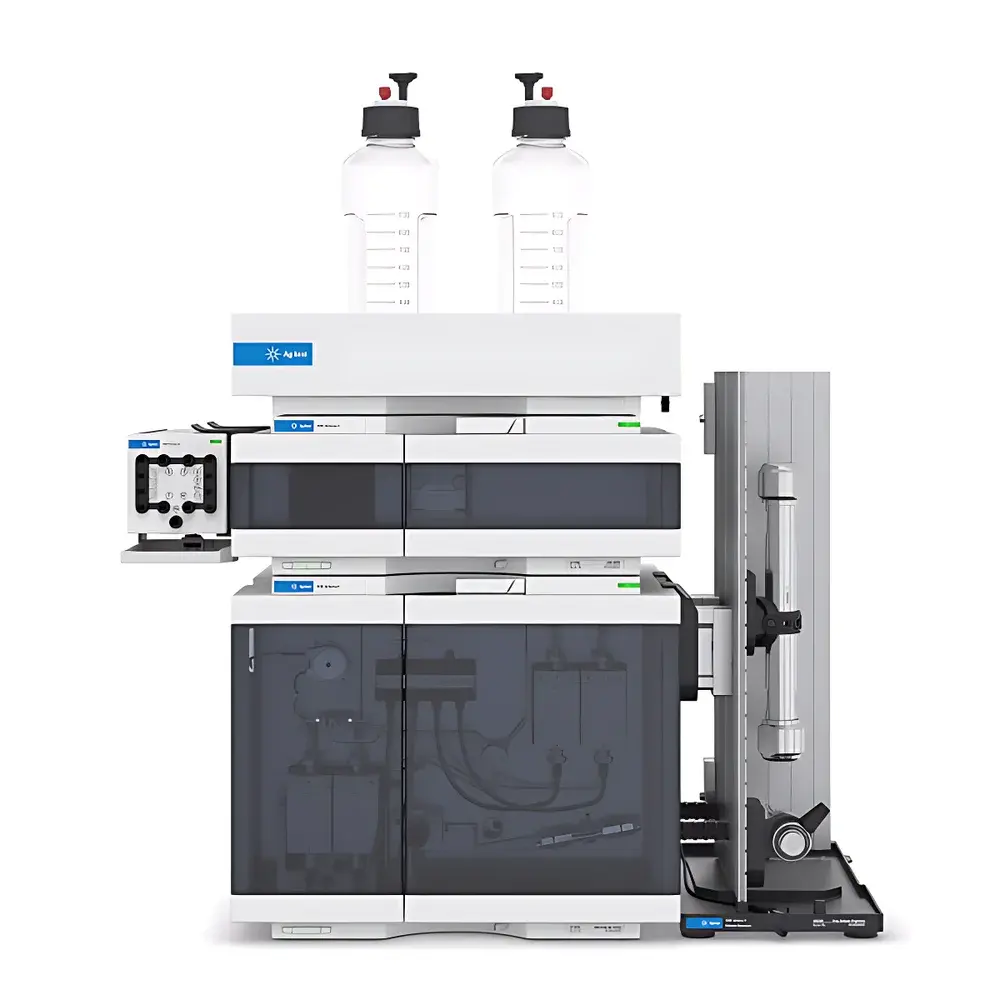
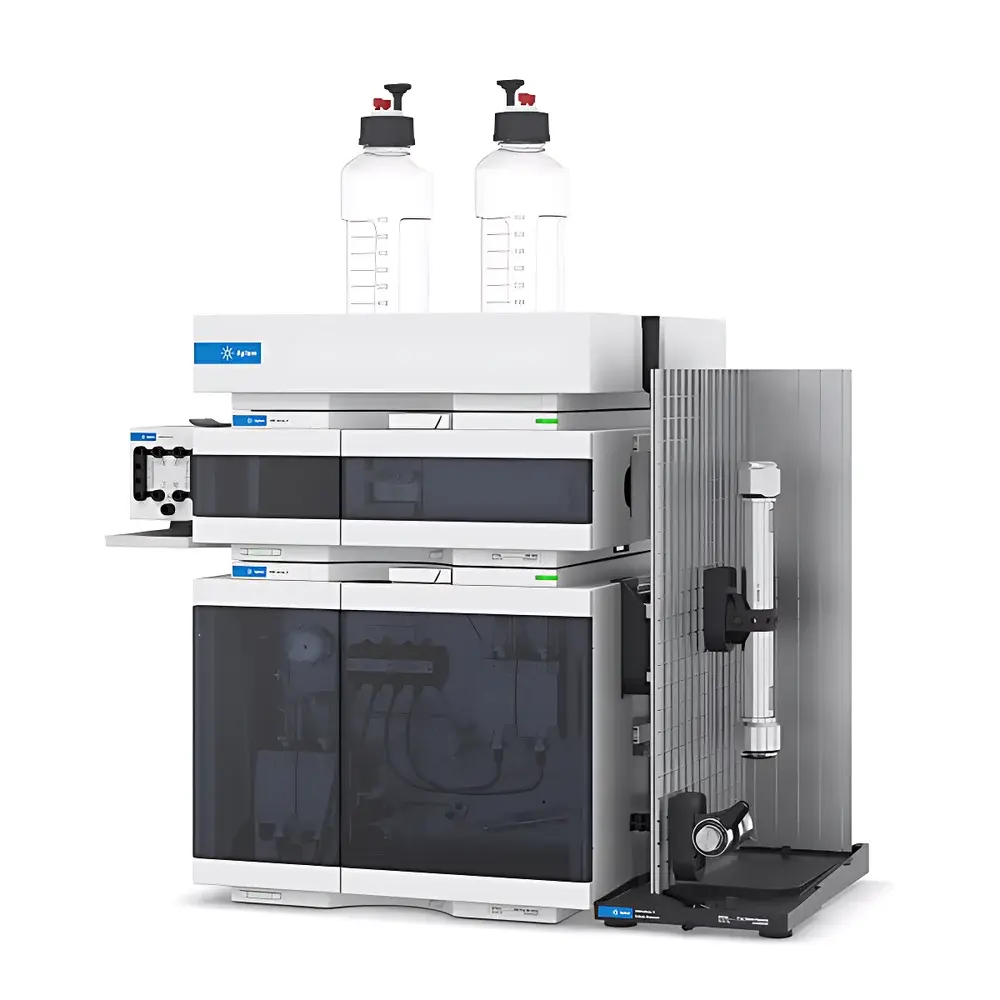
Agilent 1260 Infinity II Manual Preparative Liquid Chromatography System
| Brand | Agilent Technologies |
|---|---|
| Origin | Germany |
| Manufacturer Type | Original Equipment Manufacturer (OEM) |
| Origin Category | Imported |
| Model | 1260 Infinity II Manual Preparative |
| Application Level | Laboratory Grade |
| Instrument Type | High-Pressure Preparative Liquid Chromatograph |
| Flow Rate Range | 1–50 mL/min |
Overview
The Agilent 1260 Infinity II Manual Preparative Liquid Chromatography System is a high-integrity, benchtop-scale preparative HPLC platform engineered for reproducible purification of organic compounds, natural products, synthetic intermediates, and pharmaceutical actives at milligram-to-gram scale. Built upon Agilent’s proven Infinity II architecture, the system employs high-pressure binary gradient pumping with precise solvent delivery control, enabling robust separation performance across diverse polarity ranges. Its core operational principle relies on reversed-phase, normal-phase, or ion-exchange chromatographic mechanisms—fully configurable via column selection and mobile phase composition—making it suitable for both analytical method scouting and direct scale-up to preparative isolation. Designed for laboratories requiring reliable, operator-controlled purification without automation overhead, the system integrates seamlessly into GLP-compliant workflows while maintaining full traceability under FDA 21 CFR Part 11–enabled software environments.
Key Features
- Compact single-stack modular design minimizes footprint (< 0.5 m²), optimizing limited bench space in synthetic chemistry and QC labs.
- Binary high-pressure gradient pump delivering stable flow rates from 1 to 50 mL/min with ≤ 0.2% RSD across the full range—certified per ISO 13804 for flow accuracy and pulse dampening.
- Manual six-port, two-position injection valve supporting loop volumes up to 20 mL; compatible with standard Luer-lock or Valco-style fittings for rapid column changeover.
- Low internal volume fluidic path (< 150 µL from pump outlet to column inlet) reduces gradient delay and band broadening, enhancing resolution and recovery of target fractions.
- Integrated leak detection sensors embedded in each module (pump, UV detector, fraction collector interface) trigger immediate system shutdown upon pressure anomaly or fluid presence—meeting IEC 61010-1 safety requirements.
- Modular expandability: supports future integration of optional modules including UV/Vis variable-wavelength detector (G7111B), fraction collector (G1364C), and column oven (G1316C) without hardware replacement.
Sample Compatibility & Compliance
The system accommodates columns with internal diameters ranging from 4.6 mm to 50 mm—enabling method transfer from analytical (e.g., 4.6 × 150 mm, 5 µm C18) to semi-preparative (21.2 × 150 mm) and preparative (30–50 mm ID) formats. It supports common stationary phases including silica, C8, C18, phenyl-hexyl, and amino-bonded materials, as well as polymeric and HILIC media. Mobile phase compatibility includes aqueous buffers (e.g., ammonium acetate, phosphate), organic modifiers (acetonitrile, methanol, THF), and low-viscosity solvents (e.g., ethyl acetate, dichloromethane) within pressure limits up to 400 bar. The platform conforms to ASTM D7598 (liquid chromatography purity determination), USP (chromatography), and ISO/IEC 17025 calibration traceability standards when operated with certified reference materials and documented SOPs.
Software & Data Management
Controlled via Agilent OpenLab CDS ChemStation Edition, the system provides a validated, audit-trail-enabled software environment compliant with FDA 21 CFR Part 11 and EU Annex 11 requirements. All acquisition parameters—including gradient profiles, flow rate ramps, UV wavelength settings, and fraction collection triggers—are stored with user authentication, time stamps, and electronic signatures. Raw data files (D format) are archived in a secure, tamper-evident repository with automatic backup to network drives. Method validation reports—including system suitability tests (SST), peak symmetry (As), resolution (Rs), and tailing factor (Tf)—can be auto-generated per ICH Q2(R2) guidelines. Remote monitoring and instrument status alerts are supported via OpenLab Enterprise edition integration.
Applications
- Purification of reaction mixtures in medicinal chemistry and process R&D, including removal of catalysts, protecting groups, and regioisomeric byproducts.
- Isolation of natural product fractions from plant extracts or microbial fermentation broths for structural elucidation (NMR, HRMS).
- Recovery and polishing of peptides and oligonucleotides post-solid-phase synthesis.
- Stability-indicating purification of drug substance batches for forced degradation studies (oxidative, acidic, basic, thermal stress).
- Reference standard preparation for calibration curves in quantitative LC-MS assays.
- Method development for downstream scale-up to automated preparative systems (e.g., Agilent 1260 Infinity II Prep LC).
FAQ
What is the maximum operating pressure of the 1260 Infinity II Manual Preparative system?
The system is rated for continuous operation up to 400 bar (5800 psi), with pressure sensors calibrated per EN 61000-6-3 for electromagnetic compatibility and overpressure protection.
Can this system be used for chiral separations?
Yes—when paired with commercially available chiral stationary phases (e.g., Chiralpak AD-H, Whelk-O1) and appropriate low-viscosity eluents (e.g., ethanol/hexane), the system delivers baseline resolution of enantiomers at preparative scale.
Is method transfer from analytical to preparative conditions supported?
Yes—the system includes Agilent Method Translation Software (MTS) to calculate scalable flow rates, injection volumes, and gradient times based on retention and selectivity data from analytical methods.
Does the system support fraction collection synchronization with UV signal thresholds?
Yes—fraction triggering can be configured using real-time UV absorbance thresholds, time windows, or peak apex detection via the integrated ChemStation interface.
What maintenance protocols are recommended for long-term reliability?
Daily purging of pump seals, weekly column backflushing, quarterly calibration of flow sensors and UV lamp intensity, and annual preventive maintenance by Agilent-certified field engineers ensure >95% uptime over 5-year service life.





