
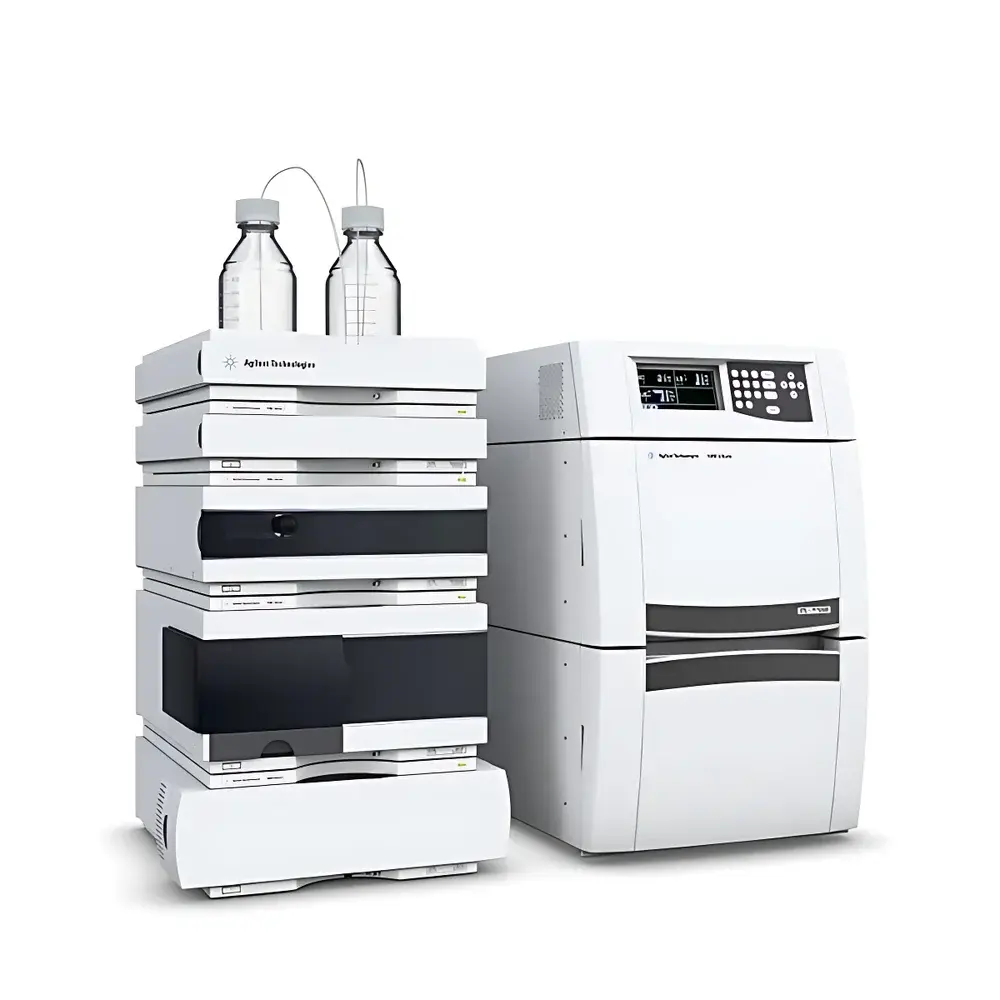
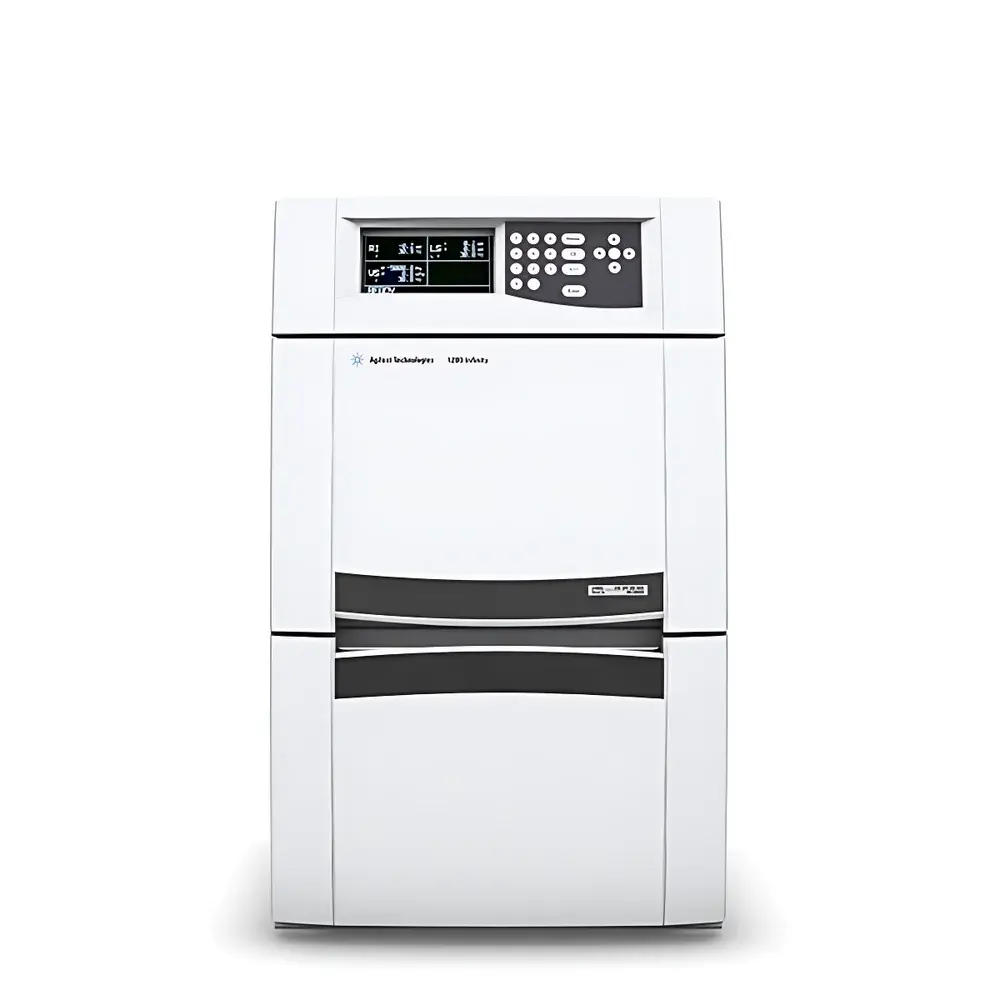
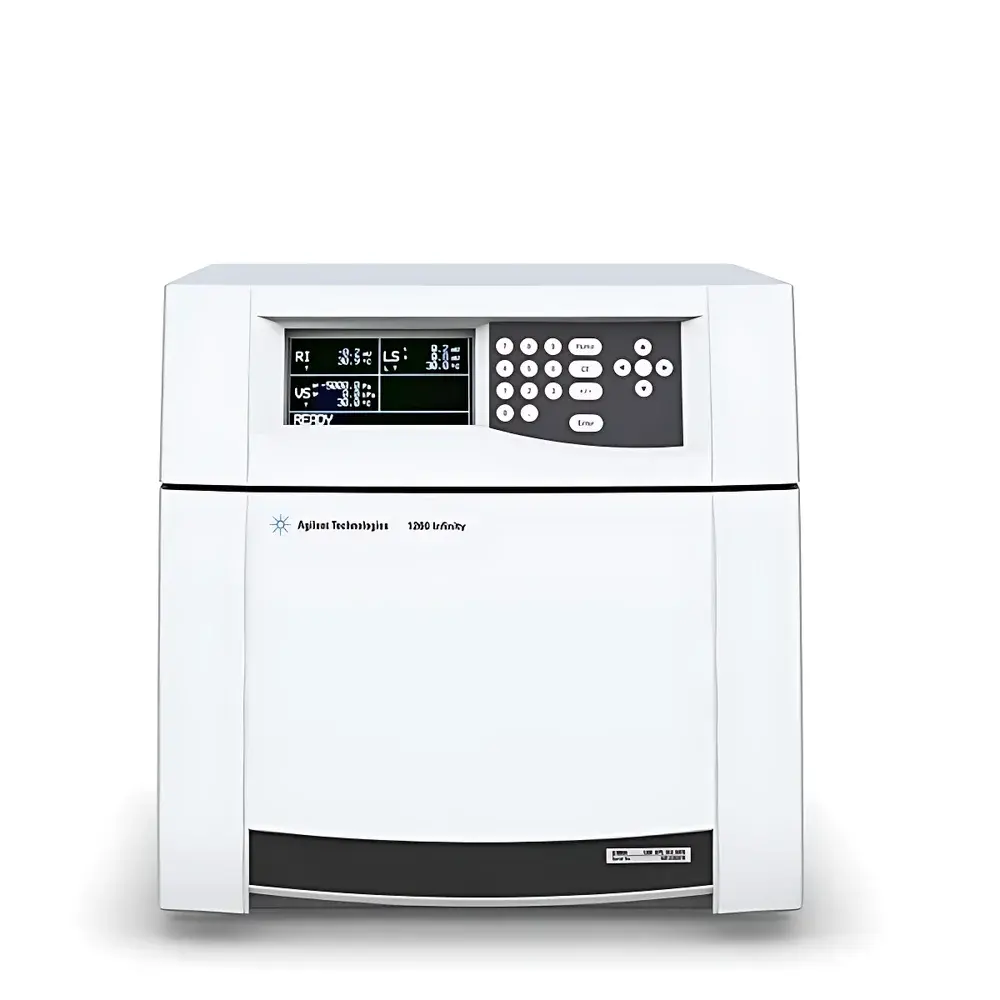
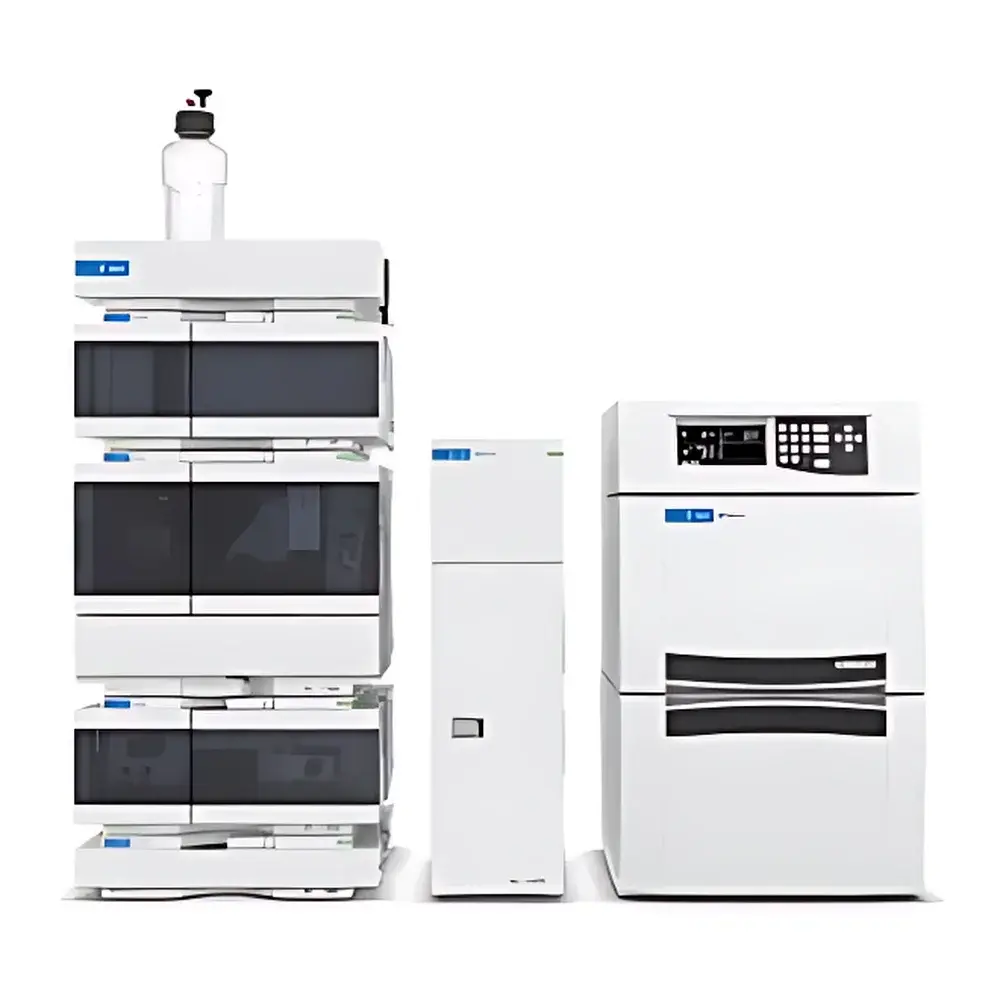
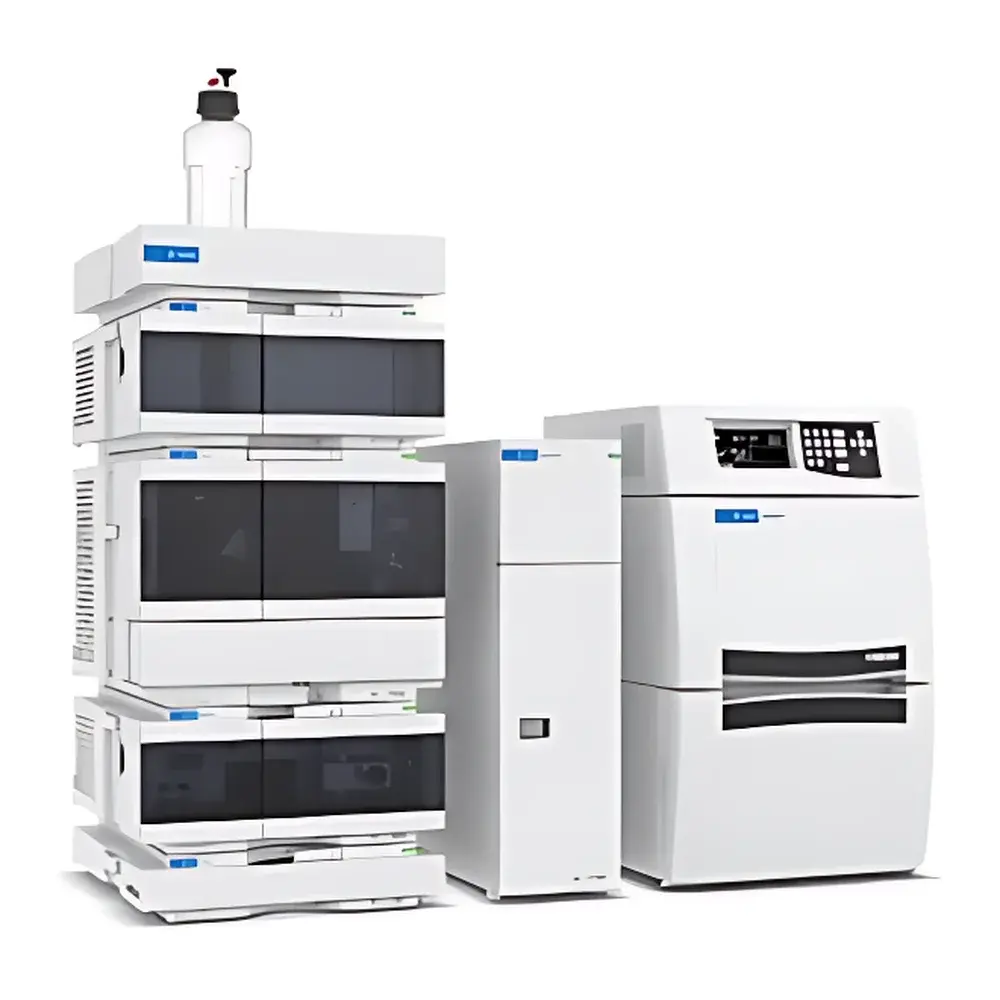
Agilent 1260 Infinity II Multi-Detector GPC/SEC System
| Brand | Agilent Technologies |
|---|---|
| Origin | Germany |
| Manufacturer Type | Original Equipment Manufacturer (OEM) |
| Origin Category | Imported |
| Model | 1260 Infinity II Multi-Detector GPC/SEC |
| Instrument Type | Ambient-Temperature GPC/SEC System |
| Column Oven & Detector Temperature Range | Independent temperature control per detector, 30–60 °C |
| Maximum Number of Temperature Zones | 2 (G7116A/B Dual-Zone Module) |
| Integrated Column Oven with Autosampler | Single-Zone Configuration |
| Pressure Operating Range | Up to 600 bar |
| Flow Cell Volume (Light Scattering Detector) | 10 µL |
Overview
The Agilent 1260 Infinity II Multi-Detector GPC/SEC System is a high-precision, modular gel permeation chromatography (GPC) and size exclusion chromatography (SEC) platform engineered for absolute macromolecular characterization. Unlike conventional single-detector GPC systems that rely on calibration standards to estimate relative molecular weight (Mw, Mn), this system integrates orthogonal detection principles—refractive index (RI), multi-angle light scattering (MALS), and differential viscometry—to deliver true absolute values for molecular weight, radius of gyration (Rg), intrinsic viscosity ([η]), branching ratio, and conformational parameters in a single chromatographic run. Its architecture supports both ambient-temperature operation and thermally stabilized analysis across a broad solvent compatibility range—including THF, DMF, chloroform, and aqueous buffers—making it suitable for synthetic polymers, biopolymers, proteins, and nanoparticle dispersions. The system’s core design adheres to fundamental SEC theory: separation by hydrodynamic volume in porous packing media, with detectors positioned downstream to capture eluent-specific physical responses without column interaction.
Key Features
- Independent thermal regulation for each detector (30–60 °C), minimizing baseline drift and ensuring day-to-day reproducibility in long-term stability studies.
- Low-volume (10 µL) flow cell in the light scattering detector, reducing band broadening and preserving high-resolution polydispersity (Đ) measurements.
- Dual-zone temperature control capability via G7116A/B module: one zone for column oven integration, another for detector compartment conditioning—critical for method transfer and regulatory compliance.
- Maximum operating pressure of 600 bar, enabling use of sub-2 µm particle columns for enhanced resolution and faster analysis cycles.
- Modular upgrade path: begin with RI detection only, then add MALS and/or viscometry modules without hardware replacement or system revalidation.
- Integrated silica-based capillary viscometer with pressure sensor technology, extending reliable detection down to ~200 Da—enabling characterization of oligomers and low-MW additives.
Sample Compatibility & Compliance
The system accommodates a wide spectrum of sample classes—including linear, branched, and star-shaped synthetic polymers; polysaccharides; monoclonal antibodies (mAbs); virus-like particles (VLPs); and synthetic nanoparticles. All detectors are compatible with common SEC solvents (THF, DMF, DMSO, aqueous NaNO3/Na2HPO4 buffers) and operate within ISO 16014-4, ASTM D5296, and USP guidelines for polymer characterization. Data acquisition and processing comply with FDA 21 CFR Part 11 requirements when used with Agilent OpenLab CDS and audit-trail-enabled GPC/SEC software. Thermal stability across detectors satisfies GLP/GMP environmental control expectations for validated laboratories conducting stability-indicating assays.
Software & Data Management
Control, acquisition, and advanced calculation are unified within Agilent’s dedicated GPC/SEC Software (v5.2+), built on the OpenLab CDS framework. The software provides automated calibration-free absolute molecular weight determination using Debye and Zimm analyses, Mark–Houwink parameter derivation, and branching quantification via the double-log plot method. It supports raw data export in ASTM E1382-compliant formats (e.g., .cdf, .txt), enables batch processing of hundreds of injections, and maintains full electronic records—including instrument configuration logs, detector alignment reports, and thermal history traces—for audit readiness. All user actions generate timestamped, operator-identified entries meeting ALCOA+ data integrity criteria.
Applications
- Quantitative assessment of long-chain branching (LCB) in polyethylene and polypropylene resins for catalyst development.
- Stability monitoring of therapeutic proteins under stress conditions (e.g., thermal, pH, agitation) via Rg/[η] trajectory mapping.
- Characterization of PEGylated biologics and lipid nanoparticles (LNPs) for mRNA delivery—resolving conjugate heterogeneity and aggregation states.
- Quality control of industrial adhesives, coatings, and elastomers where batch-to-batch consistency in molecular architecture directly impacts rheology and film formation.
- Academic research into supramolecular assemblies and stimuli-responsive polymers requiring simultaneous structural and hydrodynamic parameter extraction.
FAQ
Does this system require column calibration for molecular weight determination?
No—absolute molecular weight is calculated directly from light scattering intensity and concentration (via RI), eliminating dependence on narrow-distribution polystyrene standards.
Can the system analyze aqueous biological samples without organic solvents?
Yes—when configured with aqueous-compatible columns (e.g., Agilent PL-Aquagel OH MIXED-M) and buffered mobile phases, it supports native-state analysis of proteins and polysaccharides.
Is detector alignment required before each run?
No—MALS detector alignment is factory-optimized and mechanically stabilized; routine verification is performed quarterly per Agilent Service Protocol GPC-ALN-01.
What level of IT infrastructure is needed to support 21 CFR Part 11 compliance?
A domain-authenticated Windows Server environment with role-based access control, encrypted database storage, and periodic backup validation is required—fully supported by OpenLab CDS Enterprise deployment options.
How does the system handle highly viscous or aggregated samples?
The integrated viscometer detects shear-thinning behavior in real time; optional inline filtration (0.1 µm PTFE) and programmable flow-rate ramping mitigate clogging and preserve detector integrity during challenging injections.






