
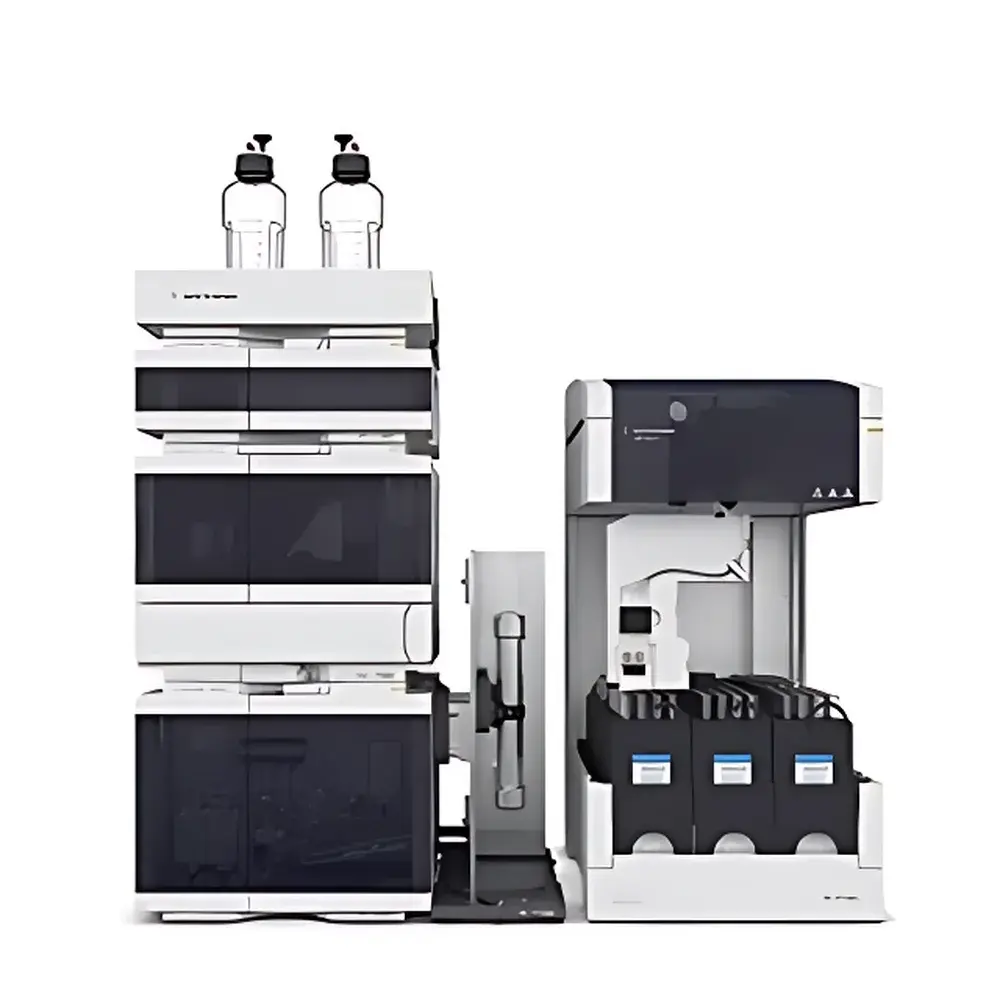
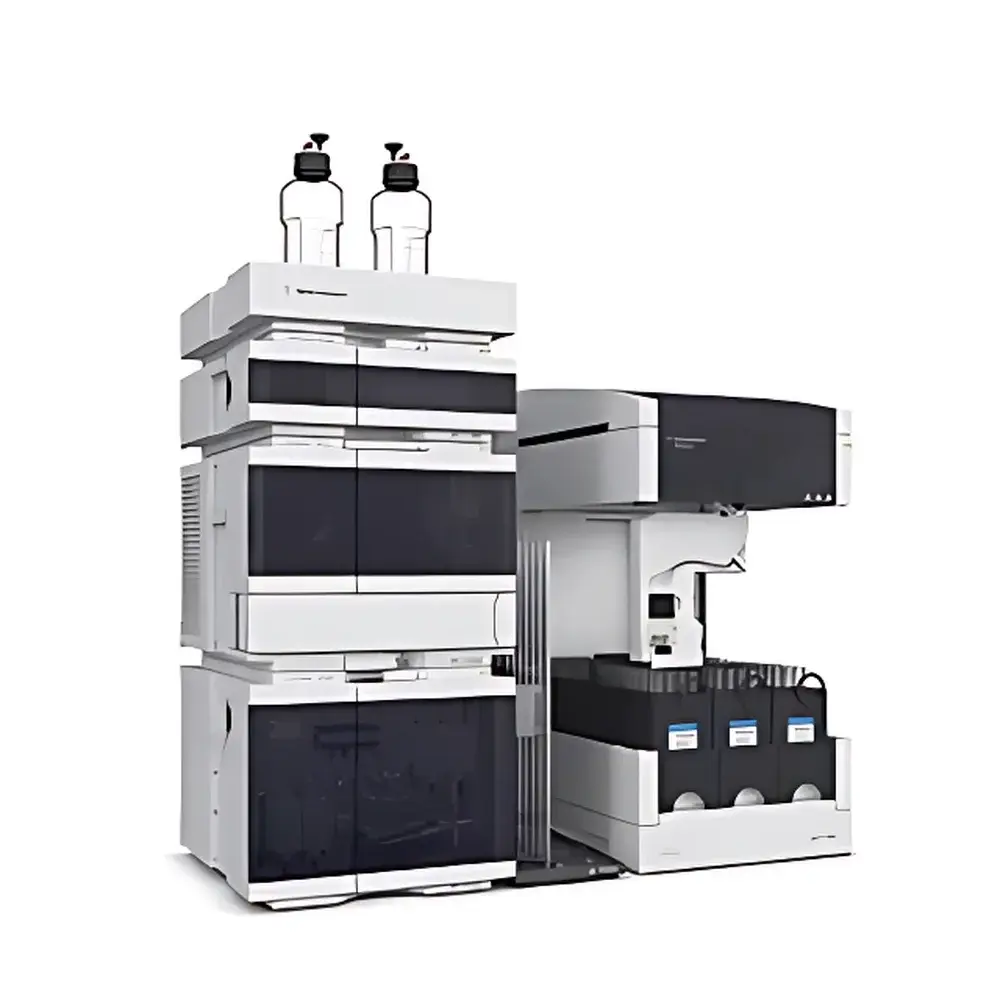
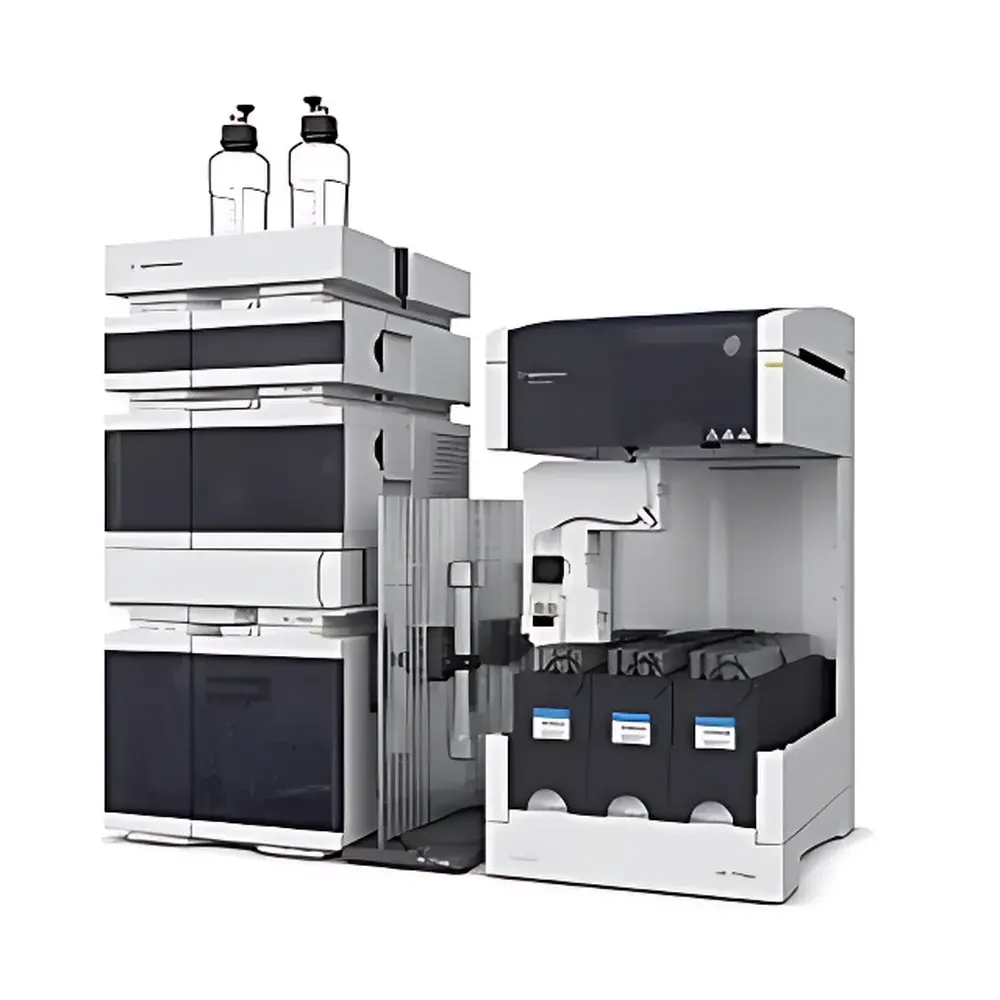
Agilent 1260 Infinity II Preparative Liquid Chromatography System
| Brand | Agilent Technologies |
|---|---|
| Origin | Germany |
| Manufacturer Type | Original Equipment Manufacturer (OEM) |
| Origin Category | Imported |
| Model | 1260 Infinity II Preparative |
| Application Level | Laboratory-Scale Purification |
| Instrument Type | High-Pressure Preparative LC |
| Flow Rate Range | 0.01–50 mL/min |
| Flow Accuracy | ≤0.3% RSD |
| Flow Precision | ≤0.3% RSD |
| Maximum Pressure | 420 bar |
| Wavelength Range | 190–700 nm (0.1 nm resolution) |
| Baseline Noise | 2.5 µAU at 254 nm, 1 s time constant |
| Data Acquisition Rate | 120 Hz |
| Injection Volume Range | 0.1–5000 µL |
| Fraction Capacity | Up to 648 tubes (with optional fraction collector upgrade) |
| System Dead Volume | Minimized via integrated delay sensor calibration |
| Solvent Channels | 2 |
| Power Supply | 100–240 VAC, 50/60 Hz |
| Dimensions (W × D × H) | 941 × 462 × 640 mm |
Overview
The Agilent 1260 Infinity II Preparative Liquid Chromatography System is a high-pressure, binary-gradient preparative HPLC platform engineered for reproducible, scalable purification of organic compounds, natural products, synthetic intermediates, and pharmaceutical actives at milligram-to-gram quantities. Built upon Agilent’s proven Infinity II architecture, the system employs dual-piston positive-displacement pumping technology to deliver precise solvent delivery across a wide dynamic flow range (0.01–50 mL/min) at pressures up to 420 bar—enabling robust operation with columns up to 30 mm internal diameter. Its core analytical engine integrates a high-sensitivity UV/Vis detector with 0.1 nm wavelength resolution and low baseline noise (2.5 µAU), ensuring accurate peak detection and quantitation during fraction collection. Unlike analytical-scale systems, this preparative platform is purpose-built for throughput-driven purification workflows where recovery yield, purity fidelity, and method transferability are critical—not just peak separation.
Key Features
- Binary high-pressure gradient pump with active solvent compressibility compensation, delivering ≤0.3% RSD flow accuracy and precision across the full 0.01–50 mL/min range
- Automated sample introduction via 132-position autosampler compatible with both 2 mL and 6 mL vials; injection volume programmable from 0.1 µL to 5 mL with syringe-based precision
- Integrated fraction delay sensor technology that dynamically measures and compensates for dwell volume between detector flow cell and switching valve—minimizing peak dispersion and cross-contamination while maximizing compound recovery
- Modular expandability: same-footprint upgrade path to 648-tube fraction collection, column oven integration (up to 80 °C), and optional mass-directed triggering via interface to Agilent LC/MS systems
- Real-time system integrity monitoring: embedded leak sensors in all fluidic modules automatically shut down pumps and isolate solvent paths upon detection of >10 µL/min leakage
- Low-dead-volume fluidic design with optimized tubing routing and zero-dead-volume fittings to preserve chromatographic efficiency during scale-up
Sample Compatibility & Compliance
The system supports a broad range of sample matrices—including small-molecule APIs, peptides, oligonucleotides, and plant extracts—across reversed-phase, normal-phase, and HILIC separations. Column compatibility extends from analytical-scale (2.1–4.6 mm ID) to semi-preparative and preparative formats (10–30 mm ID), facilitating seamless method translation from scouting to purification. All hardware and firmware comply with ISO 9001 manufacturing standards and support GLP/GMP-aligned operational practices. The OpenLab CDS ChemStation software includes audit trail functionality compliant with FDA 21 CFR Part 11 requirements, including electronic signatures, user access controls, and immutable data archiving. Method validation documentation aligns with ICH Q2(R2) guidelines for preparative chromatographic procedures.
Software & Data Management
Control and data acquisition are managed through Agilent OpenLab CDS ChemStation—a validated, enterprise-ready chromatography data system offering intuitive method building, real-time chromatogram visualization, and automated fraction triggering based on UV threshold, time window, or peak apex logic. The software supports custom scripting for advanced collection strategies (e.g., heart-cutting, peak re-injection, multi-wavelength triggering). All raw data files (.D format) are stored in vendor-neutral, ASCII-readable structures, enabling third-party integration with LIMS, ELN, and CMC platforms. Batch processing tools allow retrospective reprocessing of collected fractions using updated baselines or integration parameters—critical for regulatory submissions and technical transfer packages.
Applications
- Purification of synthetic reaction mixtures for structure confirmation and biological screening
- Isolation of natural product fractions from crude botanical extracts prior to NMR characterization
- Removal of residual catalysts or protecting groups in peptide synthesis workflows
- Generation of reference standards and impurity isolates for pharmacopeial compliance testing (USP, EP, JP)
- Scalable purification development supporting early-stage API process optimization under Quality by Design (QbD) principles
- Supporting continuous manufacturing initiatives via integration with Agilent’s Process Analytical Technology (PAT) toolset
FAQ
What column dimensions and chemistries are supported?
The system accommodates columns from 2.1 mm to 30 mm internal diameter, with standard fittings for stainless steel and PEEK tubing. Common stationary phases include C18, C8, phenyl-hexyl, cyano, silica, and amino columns—compatible with mobile phases ranging from aqueous buffers to high-organic solvents.
Can the system be used for mass-directed purification?
Yes—via optional Agilent MassHunter interface, the system can trigger fraction collection based on extracted ion chromatograms (EIC) or selected reaction monitoring (SRM) signals from connected LC/MS instruments.
Is method transfer from analytical to preparative scale supported?
Yes—the system’s consistent dwell volume management, pressure-compensated flow control, and identical detector optics enable direct retention time scaling using linear velocity or volumetric flow normalization per ASTM D7599.
How is system suitability verified during routine operation?
Built-in system suitability tests include flow accuracy verification, UV absorbance linearity assessment (using potassium dichromate), and gradient delay volume calibration—automated and reportable within OpenLab CDS.
What safety features prevent solvent exposure or overpressure events?
Dual-level pressure monitoring (pump head and column outlet), automatic solvent leak shutdown, pressure-relief valves rated at 450 bar, and interlocked cabinet doors ensure operator and instrument protection per IEC 61010-1.





