
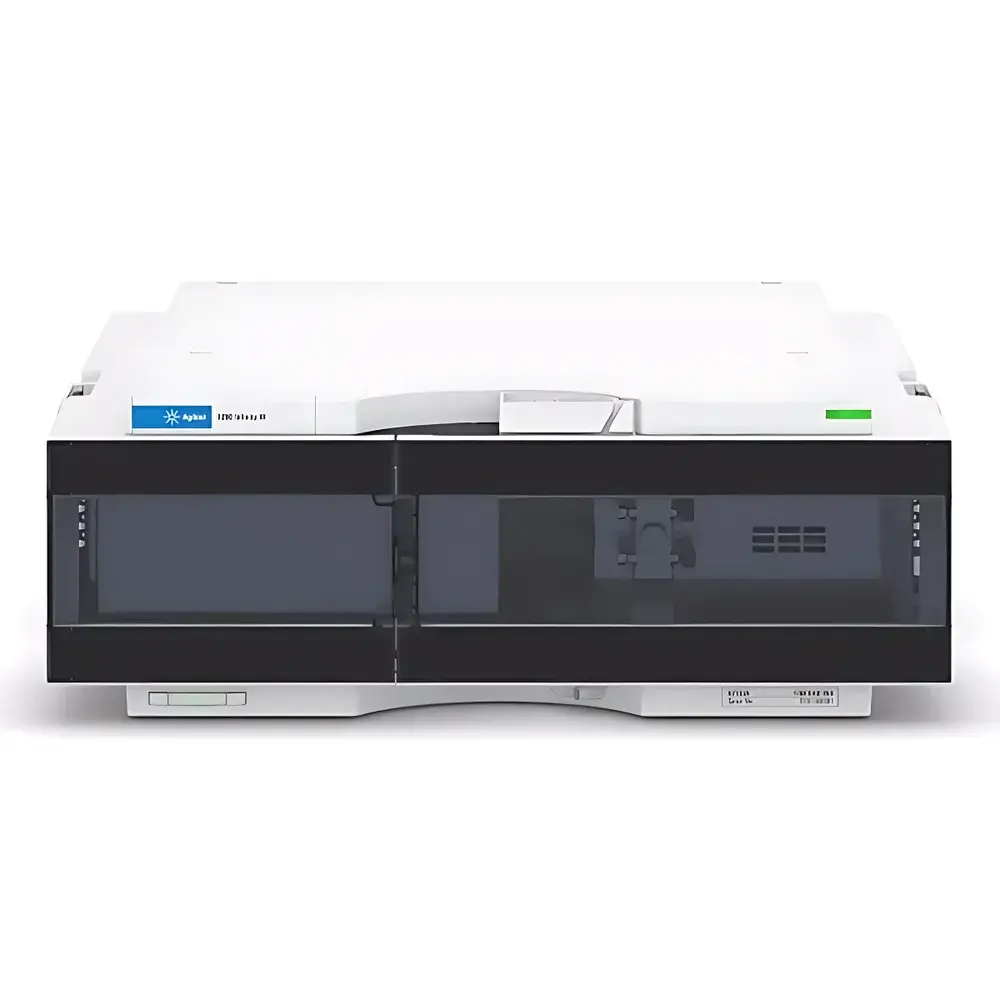
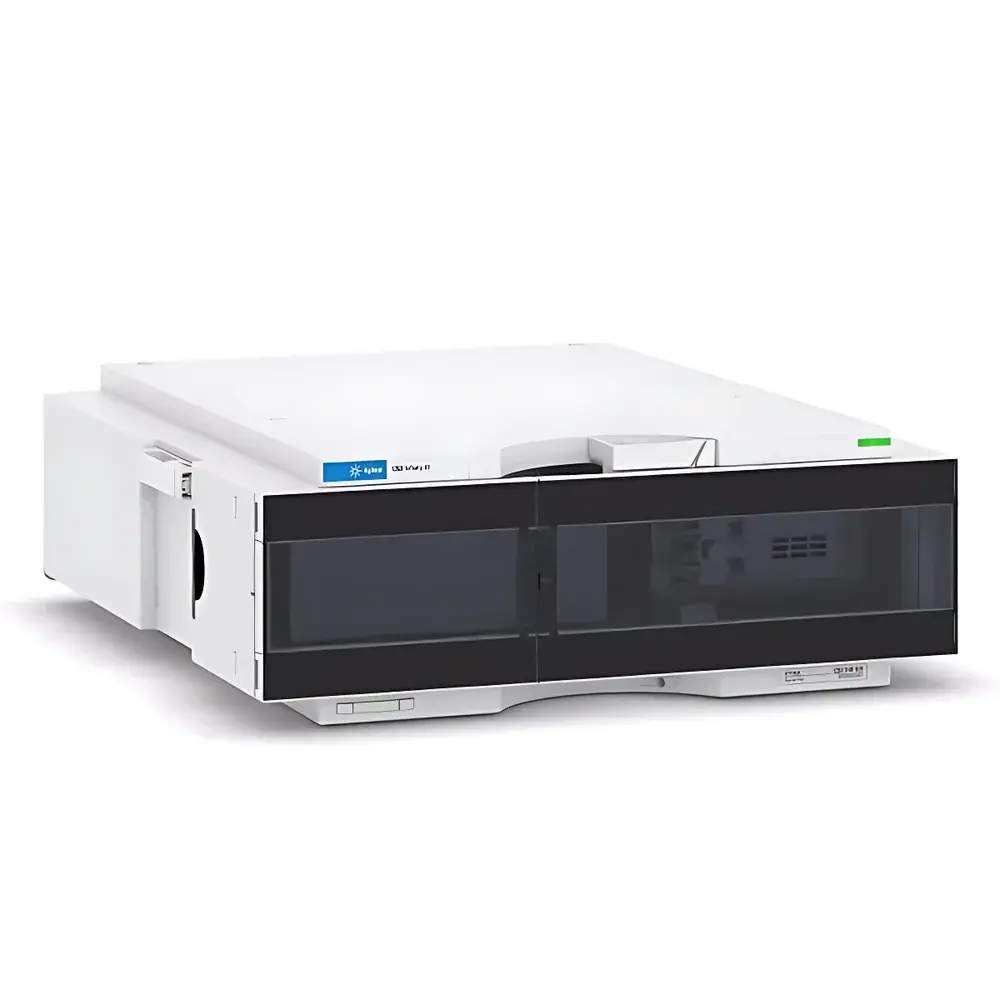
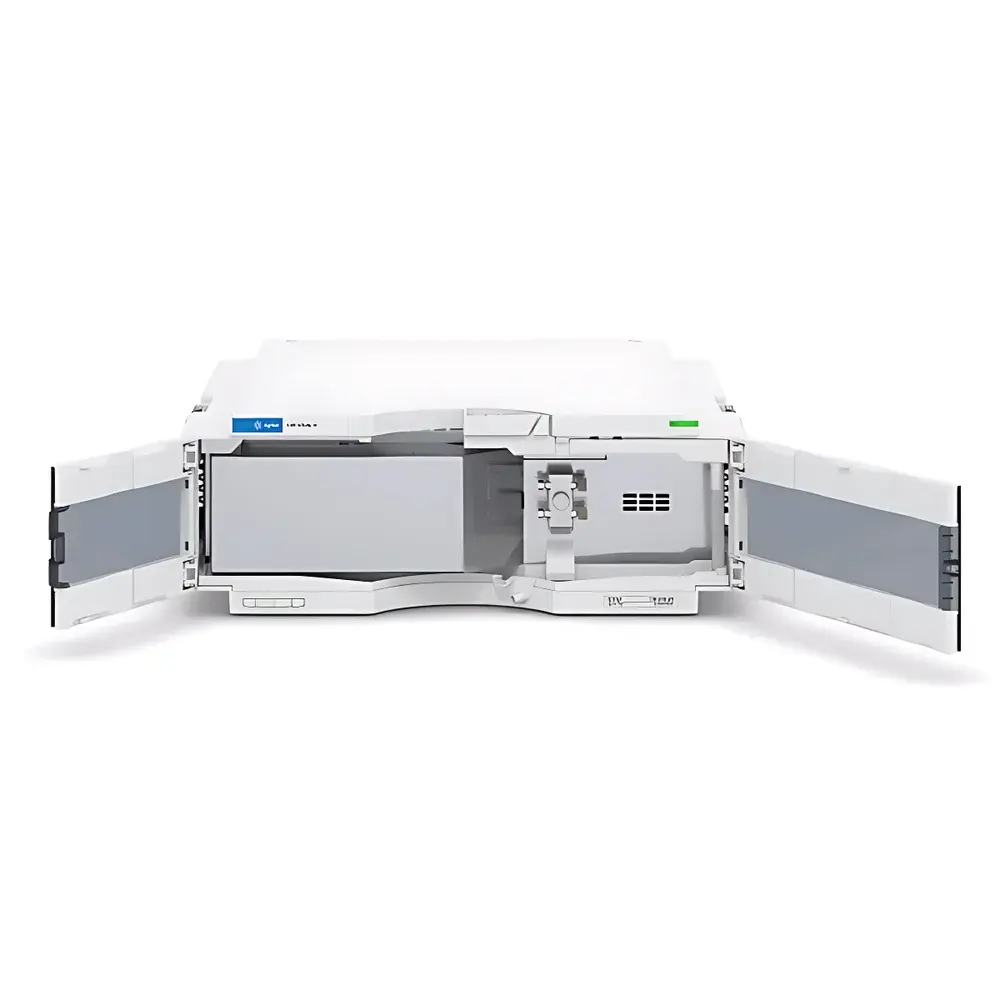
Agilent 1260 Infinity III Diode Array Detector WR
| Brand | Agilent Technologies |
|---|---|
| Origin | Germany |
| Manufacturer Type | Original Equipment Manufacturer (OEM) |
| Product Origin | Imported |
| Model | 1260 Infinity III Diode Array Detector WR |
| Instrument Type | Diode Array Detector (DAD) |
| Wavelength Range | 190–950 nm |
| Short-Term Noise | < ±7 µAU (ASTM compliant) |
Overview
The Agilent 1260 Infinity III Diode Array Detector WR (Wide Range) is a high-performance, modular UV-Vis detection system engineered for integration with Agilent’s 1260 Infinity III Liquid Chromatography platforms. It operates on the principle of simultaneous multi-wavelength absorbance measurement using a fixed diode array sensor, enabling full-spectrum acquisition across the ultraviolet and visible range without mechanical wavelength scanning. This architecture supports real-time spectral deconvolution, peak purity assessment, and compound identification directly from chromatographic runs—critical capabilities in regulated pharmaceutical, environmental, and academic research laboratories where method robustness and data integrity are paramount.
Key Features
- Full-spectrum acquisition at up to 120 Hz — delivers high-resolution spectral data points per second, preserving chromatographic fidelity even under fast gradient or UHPLC-compatible conditions.
- Dual-lamp optical design (deuterium and tungsten-halogen) ensures continuous, stable illumination across the entire 190–950 nm range, eliminating lamp-switching artifacts and supporting both deep-UV and near-IR applications.
- Programmable slit width (1–16 nm) allows dynamic optimization of spectral resolution versus signal-to-noise ratio—enabling method-specific trade-off control without hardware modification.
- Low-noise front-end electronics combined with a thermally stabilized flow cell design achieve short-term noise performance of < ±7 µAU (ASTM E1657-18), contributing to sub-nanogram-level detection limits in validated HPLC methods.
- Reference wavelength subtraction functionality actively compensates for baseline drift caused by solvent absorption, column bleed, or temperature-induced refractive index changes—enhancing quantitative reproducibility over extended run times.
- Simultaneous monitoring of up to eight user-defined wavelengths improves selectivity in complex matrices, facilitating multi-analyte quantitation and impurity profiling without sacrificing cycle time.
Sample Compatibility & Compliance
The detector is compatible with analytical-, preparative-, and supercritical fluid chromatography (SFC) configurations via its broad portfolio of 15 flow cells—including standard 10-mm pathlength analytical cells, microbore and capillary options, high-pressure SFC cells rated to 600 bar, and low-dead-volume cells for UHPLC applications. All flow cells adhere to ISO 8573-1 (compressed air purity) and ASTM D4176 (liquid handling system cleanliness) guidelines during manufacturing. The instrument complies with ICH Q2(R2) validation requirements for detector linearity, accuracy, precision, and detection limit determination. Data acquisition and storage conform to FDA 21 CFR Part 11 when used with Agilent OpenLab CDS software configured with audit trail, electronic signatures, and role-based access control.
Software & Data Management
Controlled exclusively through Agilent OpenLab CDS (ChemStation Edition or OpenLab ECM), the detector supports GLP/GMP-compliant workflows including method versioning, electronic lab notebook (ELN) integration, and automated report generation with embedded spectra and peak purity heatmaps. Spectral library matching (NIST, USP, and custom libraries) is natively supported. Raw spectral data are stored in vendor-neutral .d format, ensuring long-term archival integrity and third-party software interoperability (e.g., ACD/Labs, MestReNova). All detector parameters—including slit width, reference wavelength, sampling rate, and spectral averaging—are fully scriptable and exportable as XML-based method templates for cross-instrument deployment.
Applications
- Pharmaceutical QC/QA: Release testing of APIs and finished dosage forms per USP , including assay, related substances, and dissolution profiling with peak purity verification.
- Biopharmaceutical characterization: Monitoring protein aggregation, excipient interference, and forced degradation products via spectral overlay and similarity indexing.
- Environmental analysis: Multi-residue pesticide screening in water and soil extracts using spectral deconvolution to resolve co-eluting compounds.
- Natural product isolation: Real-time fraction collection triggering based on spectral thresholds in preparative HPLC and SFC systems.
- Academic method development: Rapid optimization of detection parameters for novel analytes with unknown UV-Vis profiles across broad spectral windows.
FAQ
What is the maximum data acquisition rate for full-spectrum scans?
The detector acquires complete 190–950 nm spectra at up to 120 Hz—equivalent to one full spectrum every 8.3 ms—without interpolation or spectral binning.
Does the detector support compliance with 21 CFR Part 11?
Yes, when operated with Agilent OpenLab CDS v2.5 or later and properly configured with audit trail, electronic signatures, and secure user authentication, it meets all technical and procedural requirements for Part 11 compliance.
Can the same flow cell be used across HPLC, UHPLC, and SFC platforms?
No—flow cells are application-specific. The 15 available options include dedicated designs for each platform, with distinct pressure ratings, internal volumes, and optical path geometries optimized for their respective operational envelopes.
How is baseline stability maintained during long-gradient analyses?
Through real-time reference wavelength subtraction, thermal stabilization of the optical bench, and active compensation for lamp intensity drift using built-in photodiode feedback loops.
Is spectral calibration traceable to NIST standards?
Yes—factory calibration includes holmium oxide and didymium oxide reference filters, with certificate of calibration traceable to NIST SRM 2034 (UV-Vis transmittance standard) and ISO/IEC 17025-accredited procedures.






