
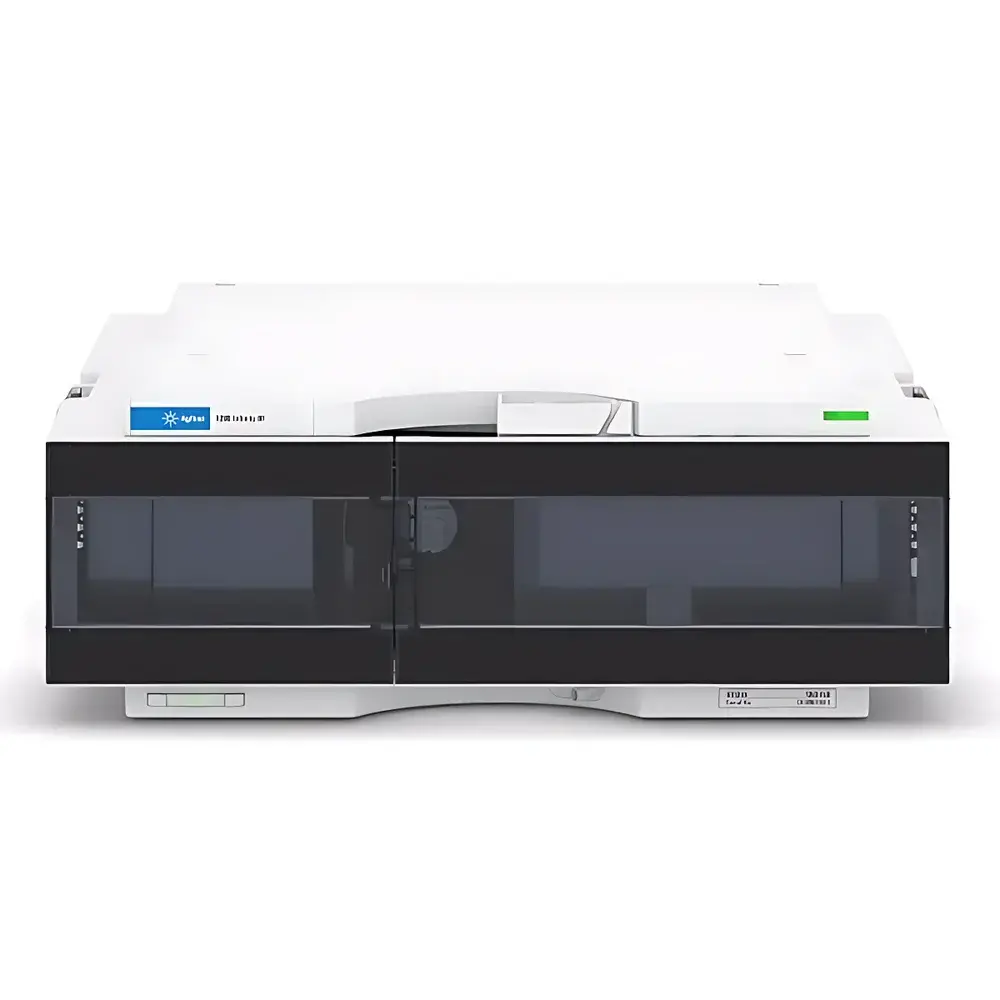
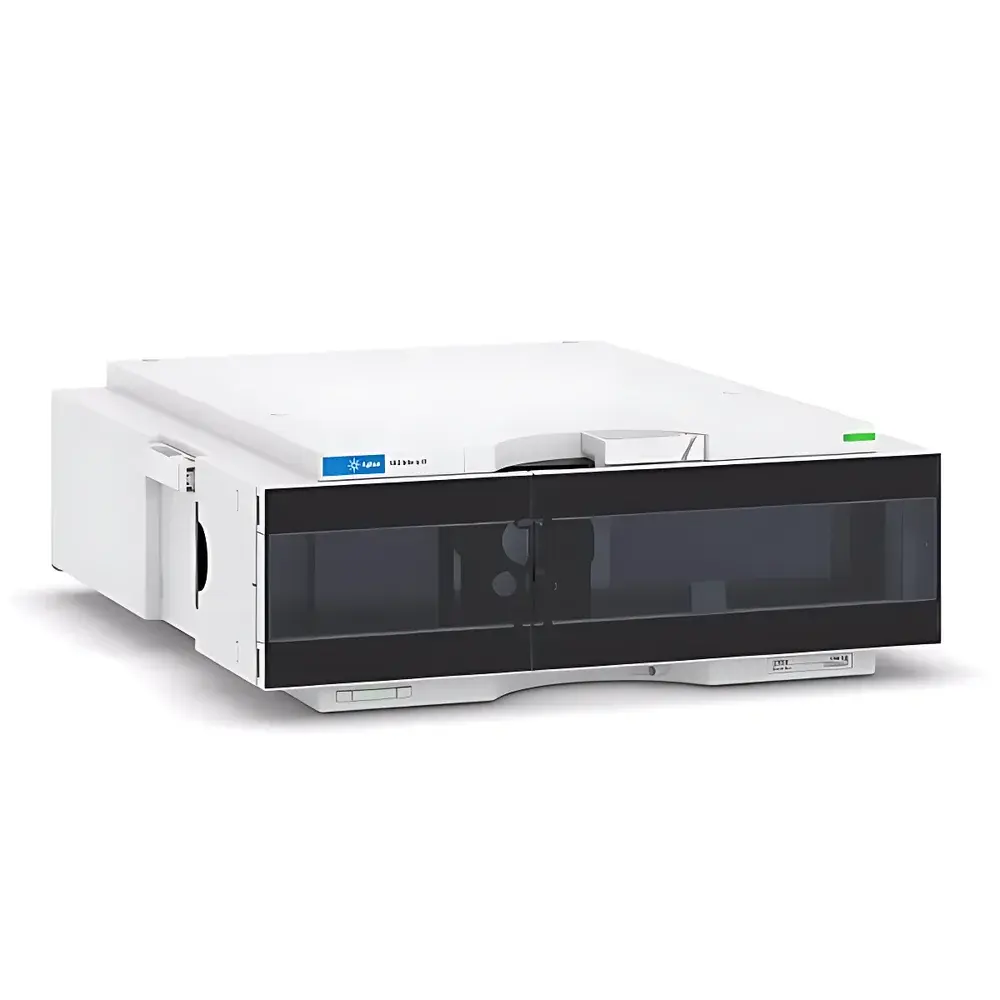
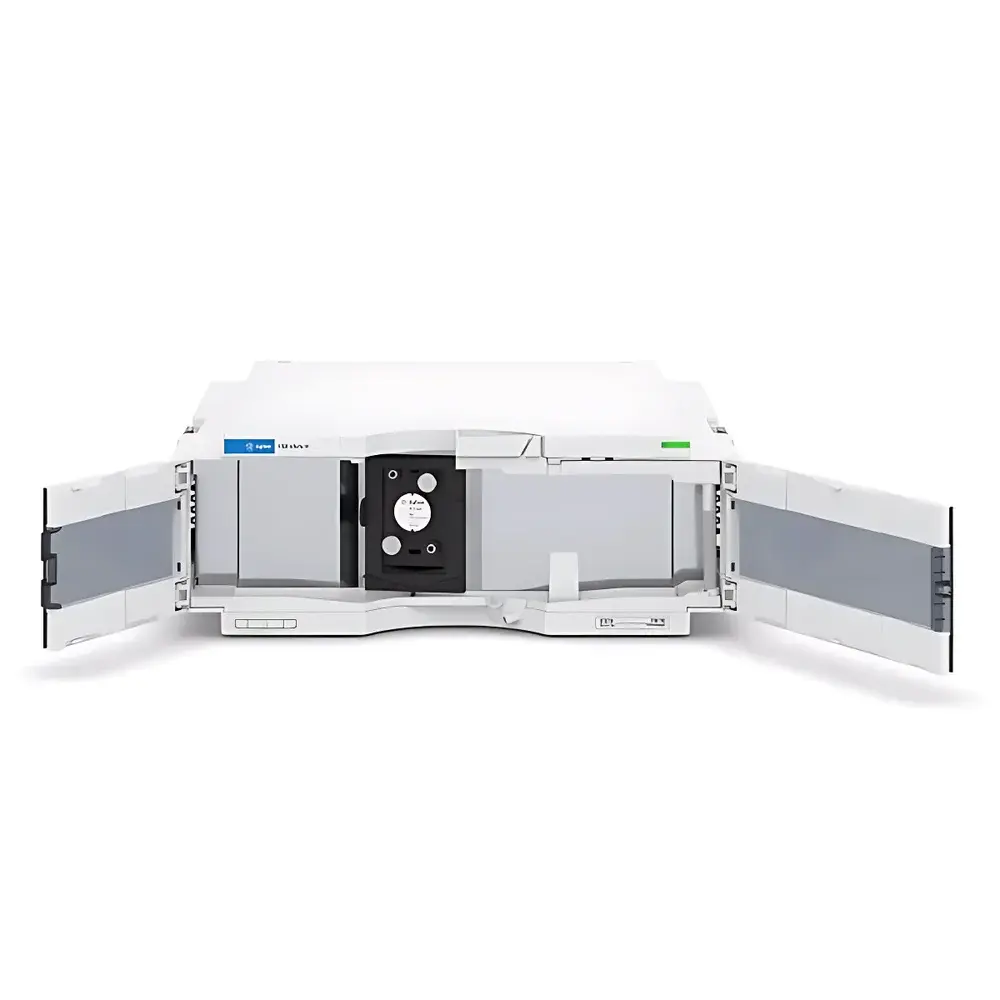
Agilent 1260 Infinity III Fluorescence Detector
| Brand | Agilent Technologies |
|---|---|
| Origin | Germany |
| Manufacturer Type | Original Equipment Manufacturer (OEM) |
| Origin Category | Imported |
| Model | 1260 Infinity III FLD |
| Detection Principle | Dual-wavelength Programmable Fluorescence Detection |
| Compatible Systems | Agilent InfinityLab LC Systems & Third-party HPLC Platforms |
| Detection Limit | Raman S/N > 3000 (measured against dark signal noise reference) |
| Data Acquisition Rate | Up to 74 Hz |
| Detector Type | Fluorescence Detector (FD) |
| Flow Cell Interface | Cartridge-style flow cell with auto-identification |
| Regulatory Compliance Support | GLP-compliant parameter logging, audit-ready metadata capture |
Overview
The Agilent 1260 Infinity III Fluorescence Detector (FLD) is a high-performance, dual-channel fluorescence detection module engineered for trace-level quantitation in reversed-phase, normal-phase, and hydrophilic interaction liquid chromatography (HILIC). It operates on the principle of selective excitation and emission wavelength scanning, enabling time-programmable spectral switching during gradient runs to maximize signal-to-noise ratio across multi-analyte separations. Its optical architecture employs thermally stabilized xenon flash lamps, low-stray-light monochromators, and precision photomultiplier tube (PMT) detection — all calibrated to deliver reproducible fluorescence response over extended operational lifetimes. Designed as a modular component within the Agilent InfinityLab LC ecosystem, it maintains full backward compatibility with legacy 1200/1220/1260 series controllers and data systems while supporting modern connectivity via LAN and USB 2.0 interfaces.
Key Features
- Time-resolved excitation/emission wavelength programming: Enables dynamic optimization of fluorescence sensitivity per peak — critical for multi-residue pesticide analysis or endogenous metabolite profiling.
- 74 Hz high-speed data acquisition: Captures narrow chromatographic peaks (≤ 2 s wide at baseline) without undersampling, ensuring accurate integration for fast-gradient UHPLC methods.
- Cartridge-style flow cell with embedded RFID chip: Automatically registers cell type (e.g., standard 8-µL, microflow 1-µL, or high-pressure 15,000 psi variants), serial number, installation date, and cumulative usage hours.
- Front-access maintenance design: All consumables — including lamp, excitation/emission filters, and flow cell — are serviceable without tools or system disassembly.
- Thermal stabilization of optical path: Maintains ±0.1 °C temperature control over the monochromator and PMT housing to suppress thermal drift and sustain baseline stability (< 0.5 mV/h drift under isocratic conditions).
- Integrated lamp energy monitoring: Real-time tracking of xenon lamp intensity decay enables predictive replacement scheduling and avoids unexpected downtime.
Sample Compatibility & Compliance
The detector supports aqueous and organic mobile phases compatible with standard stainless-steel or PEEK capillary tubing (up to 600 bar). Flow cells accommodate sample volumes from 0.1 µL to 10 µL, with optional low-diffusion microflow cells for capillary/nano-LC coupling. It meets essential regulatory requirements for pharmaceutical and environmental laboratories: automatic logging of detector configuration parameters (wavelengths, gain, PMT voltage, lamp status) satisfies GLP documentation standards; audit trail functionality in OpenLab CDS and MassHunter software aligns with FDA 21 CFR Part 11 electronic record integrity provisions. While not certified to ISO/IEC 17025 per se, its performance specifications conform to ASTM D7217–19 (standard test method for fluorescence detection sensitivity in HPLC) and USP chromatographic system suitability criteria for fluorescence-based assays.
Software & Data Management
Native control is provided through Agilent OpenLab CDS (ChemStation Edition and Modern Version), with full support for method transfer, sequence management, and report generation. The detector’s firmware embeds instrument-specific metadata — including lamp age, filter alignment status, and flow cell calibration history — directly into raw data files (.D files), enabling retrospective traceability without manual logbook entries. Remote diagnostics are accessible via Agilent’s Instrument Manager web interface, allowing IT-administered firmware updates and error-code interpretation. For laboratories operating under validated environments, the detector integrates with Agilent’s Electronic Lab Notebook (ELN) and Laboratory Information Management System (LIMS) adapters to enforce change control workflows and versioned method archiving.
Applications
- Pharmaceutical QC: Quantitation of fluorescent impurities (e.g., genotoxic nitrosamines) in APIs at sub-ppb levels per ICH Q2(R2) validation guidelines.
- Environmental monitoring: Multi-class analysis of polycyclic aromatic hydrocarbons (PAHs), mycotoxins (aflatoxin B1/B2), and veterinary drug residues (e.g., fluoroquinolones) in water, soil, and food matrices.
- Clinical research: High-sensitivity detection of neurotransmitters (serotonin, dopamine metabolites) and bile acids in plasma and cerebrospinal fluid using pre-column derivatization protocols.
- Natural product characterization: Profiling of flavonoids, alkaloids, and coumarins in herbal extracts where native fluorescence eliminates need for post-column reaction schemes.
FAQ
What is the maximum operating pressure supported by the standard flow cell?
The standard 8-µL flow cell is rated to 600 bar; high-pressure variants (15,000 psi) are available as configurable options.
Does the detector support synchronous scanning (excitation + emission sweep)?
No — it performs discrete, user-programmed wavelength pairs only; continuous scanning requires dedicated spectrofluorometers.
Can the FLD be used with non-Agilent HPLC systems?
Yes — analog voltage output (0–1 V) and digital RS-232/LAN interfaces enable integration with third-party LC platforms, though advanced features (e.g., auto-cell ID) require Agilent controller firmware.
How often should the xenon lamp be replaced?
Typical lifetime is 2,000 hours under standard usage; the detector logs cumulative lamp-on time and triggers alerts at 90% of rated life.
Is GLP-compliant audit trail functionality enabled by default?
Yes — all configuration changes, calibration events, and hardware status updates are timestamped and cryptographically signed in raw data files when OpenLab CDS is deployed in validated mode.




