
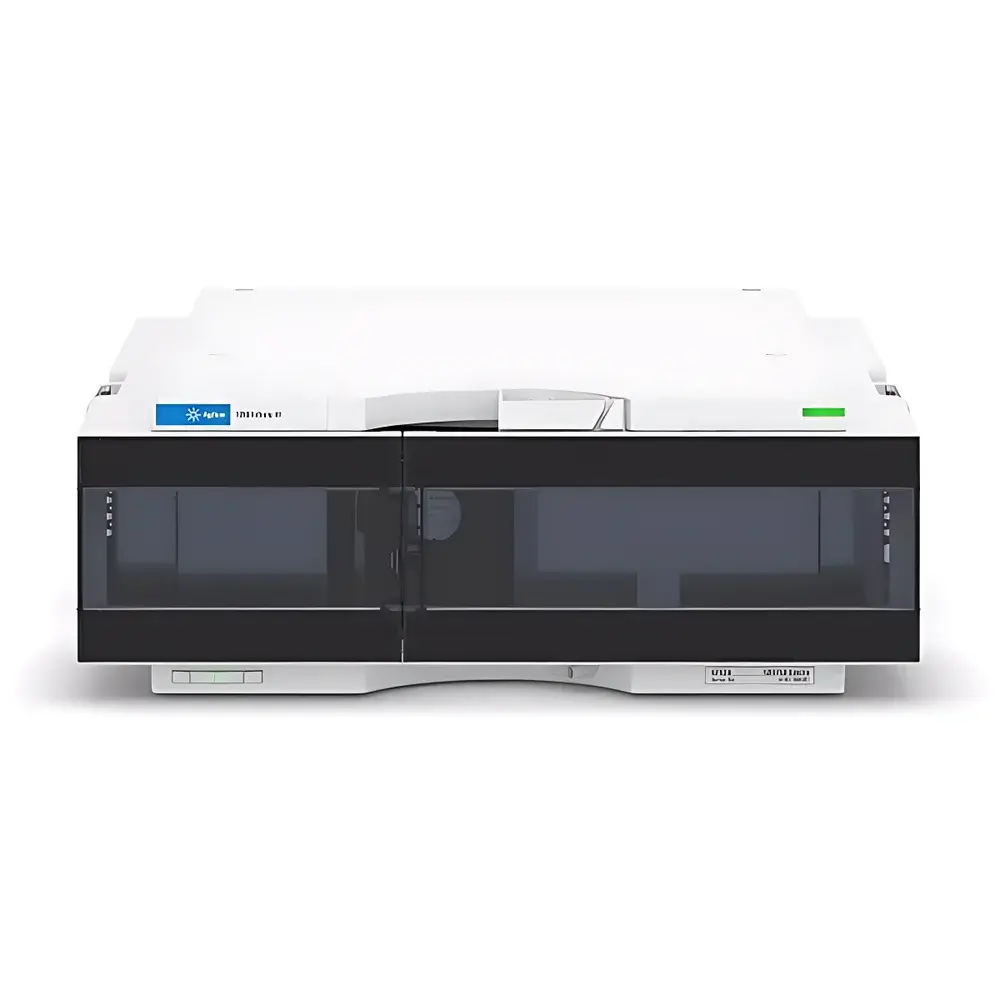
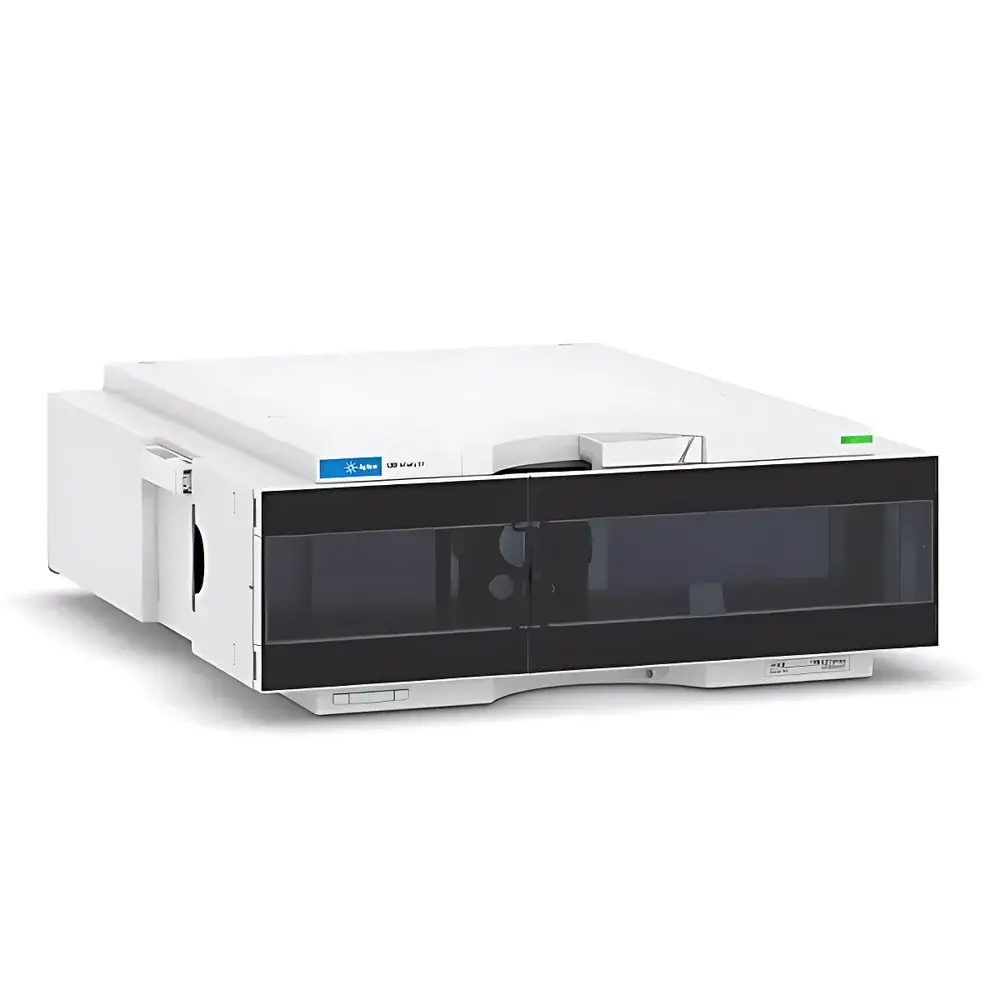
Agilent 1260 Infinity III Fluorescence Detector with Full-Spectrum Acquisition
| Brand | Agilent Technologies |
|---|---|
| Origin | Germany |
| Manufacturer Type | Original Equipment Manufacturer (OEM) |
| Product Origin | Imported |
| Model | 1260 Infinity III Fluorescence Detector with Full-Spectrum Acquisition |
| Instrument Type | Fluorescence Detector (FD) |
| Detection Limit | Raman Signal-to-Noise Ratio > 3000 (measured against dark signal noise reference) |
| Data Acquisition Rate | Up to 148 Hz |
| Compatibility | Fully compatible with Agilent InfinityLab LC systems and third-party HPLC platforms |
| Flow Cell | Bio-inert, optimized for biomolecular applications |
| Light Source | Long-life pulsed xenon lamp (> 4000 h), integrated lamp reference system |
| Optical Design | Simplified optical path for superior baseline stability |
| Spectral Capability | Real-time full-spectrum acquisition synchronized with chromatographic elution |
Overview
The Agilent 1260 Infinity III Fluorescence Detector with Full-Spectrum Acquisition is a high-performance, research-grade fluorescence detection module engineered for ultra-sensitive, information-rich HPLC analysis. Unlike conventional fixed-wavelength or programmable excitation/emission fluorescence detectors, this instrument employs a monochromator-based optical architecture with a rotating grating and dual-channel photomultiplier tube (PMT) detection system to acquire complete excitation–emission spectra—up to 148 full spectral scans per second—during chromatographic elution. This capability enables simultaneous quantification and spectral characterization of each analyte peak without sacrificing sensitivity or chromatographic resolution. The detector operates on the principle of molecular fluorescence: analytes are excited by tunable UV–visible light (typically 200–700 nm excitation range), and emitted photons (typically 250–800 nm emission range) are dispersed and resolved spectrally in real time. Its design targets demanding applications in pharmaceutical impurity profiling, natural product identification, peptide mapping, and oligonucleotide quality control—where spectral fingerprinting is essential for peak purity assessment and co-elution deconvolution.
Key Features
- Real-time full-spectrum acquisition at up to 148 Hz—enabling spectral resolution of sub-second chromatographic peaks while maintaining quantitative accuracy
- Integrated rotating grating monochromator delivering high optical throughput and minimal stray light, preserving signal-to-noise integrity across the full spectral range
- Bio-inert flow cell constructed from fused silica and PEEK, certified for compatibility with aggressive mobile phases (e.g., high-pH buffers, organic solvents) and sensitive biomolecules including monoclonal antibodies and ADCs
- Pulsed xenon lamp with > 4000-hour lifetime and active lamp energy referencing—ensuring stable excitation intensity over extended operation and eliminating drift-related calibration cycles
- Optimized optical path featuring thermally stabilized optics and low-vibration mechanical design, resulting in baseline noise < 0.5 mAU (RMS, 1 s bandwidth) under standard HPLC conditions
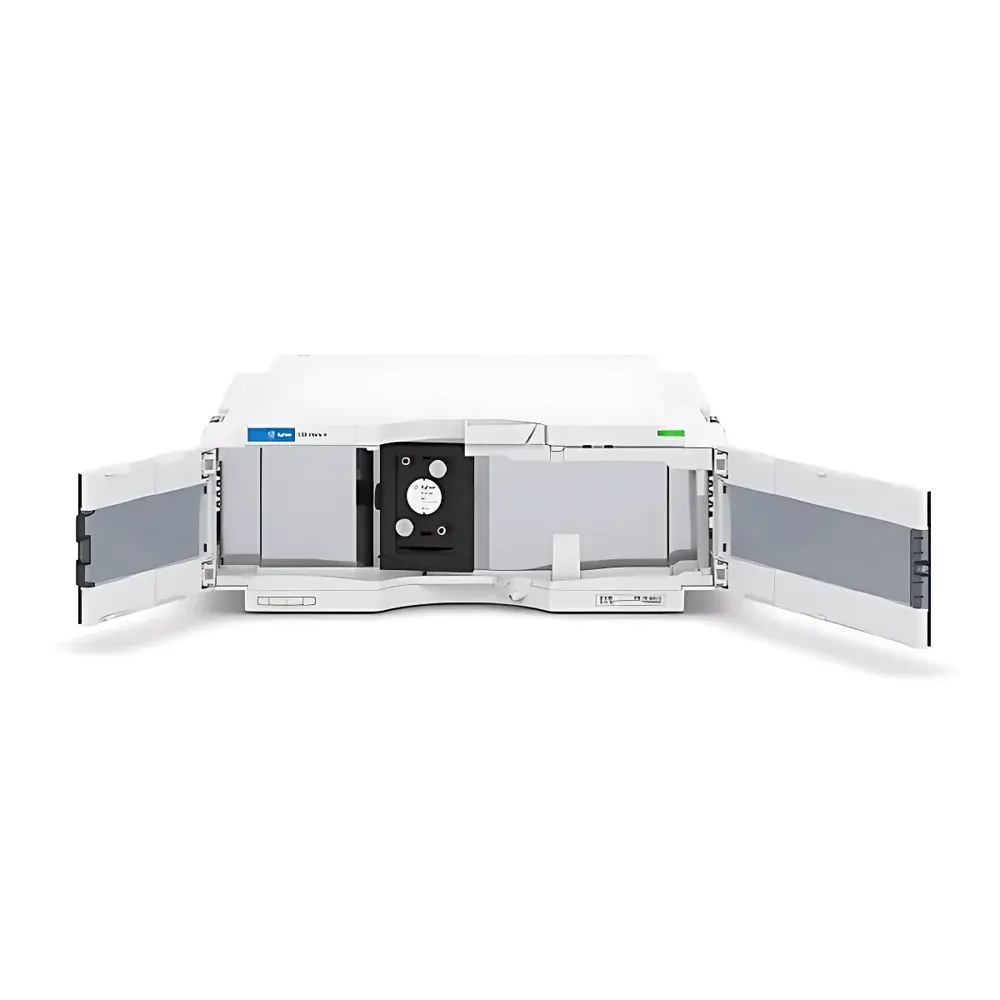
- Front-accessible modular architecture: flow cell, lamp, and PMT assemblies are serviceable without disassembling the detector housing or interrupting system plumbing
Sample Compatibility & Compliance
The detector supports aqueous, organic, and mixed-phase mobile phases across pH 1–12 and temperatures up to 60 °C. Its flow cell accommodates standard 2.1 mm, 3.0 mm, and 4.6 mm ID analytical columns, with optional microbore and capillary configurations available. It complies with ICH Q2(R2) guidelines for analytical method validation where spectral confirmation is required, and its data integrity architecture meets FDA 21 CFR Part 11 requirements when operated within Agilent OpenLab CDS or MassHunter software environments—including electronic signatures, audit trails, and user-level access controls. All firmware and hardware components are CE-marked and conform to IEC 61010-1 safety standards for laboratory instrumentation.
Software & Data Management
Control and data processing are fully integrated via Agilent OpenLab CDS (ChemStation Edition or Modern Version), supporting automated spectral library matching (NIST-compatible format), peak purity evaluation using spectral correlation algorithms, and export of raw spectral matrices (.spc or .csv) for multivariate analysis (PCA, MCR-ALS). The detector generates three concurrent data streams per injection: extracted ion chromatograms (EICs) at user-defined λex/λem, full-scan spectral contour plots, and time-resolved spectral overlays. All metadata—including lamp energy logs, temperature history, and grating position calibration—are embedded in the raw data file and retained through archival compression. Audit trail records capture every parameter change, spectrum acquisition trigger, and calibration event with timestamp, operator ID, and reason-for-change annotation.
Applications
- Pharmaceutical QC/QA: Identification and quantification of fluorescent impurities in APIs (e.g., quinolones, tetracyclines, fluoroquinolones) with spectral confirmation per USP
- Biopharmaceutical characterization: Monitoring tryptophan/tyrosine fluorescence shifts during forced degradation studies to assess higher-order structural changes
- Environmental analysis: Trace-level detection of polycyclic aromatic hydrocarbons (PAHs) in water extracts with spectral deconvolution of overlapping isomers
- Natural products research: Differentiation of structurally similar flavonoids and alkaloids based on excitation–emission matrix (EEM) fingerprints
- Food safety: Screening for mycotoxins (e.g., aflatoxin B1) and vitamin derivatives (e.g., riboflavin) with built-in spectral verification to eliminate false positives
FAQ
Does this detector support post-run spectral reprocessing?
Yes—full-spectrum raw data files retain all wavelength and time-point information, enabling retrospective extraction of alternative λex/λem combinations, background subtraction, and spectral smoothing without re-injection.
Can it be used with non-Agilent HPLC systems?
Yes—the detector features standard analog voltage output (0–1 V), digital RS-232/USB interfaces, and TTL-compatible trigger inputs, allowing seamless integration with third-party LC controllers and data systems via configurable I/O protocols.
What maintenance intervals are recommended for the xenon lamp and flow cell?
Lamp output is continuously monitored; replacement is advised when energy falls below 85% of initial intensity—typically after ≥4000 h of operation. Flow cells require cleaning only if pressure rise exceeds 15% or baseline noise increases significantly; routine rinsing with 20% acetonitrile/water suffices for most applications.
Is spectral calibration traceable to NIST standards?
Yes—factory calibration uses NIST-traceable holmium oxide and didymium oxide filters; users may perform periodic verification using Agilent’s optional calibration kit (G1329-68701), documented per ISO/IEC 17025 requirements.



