
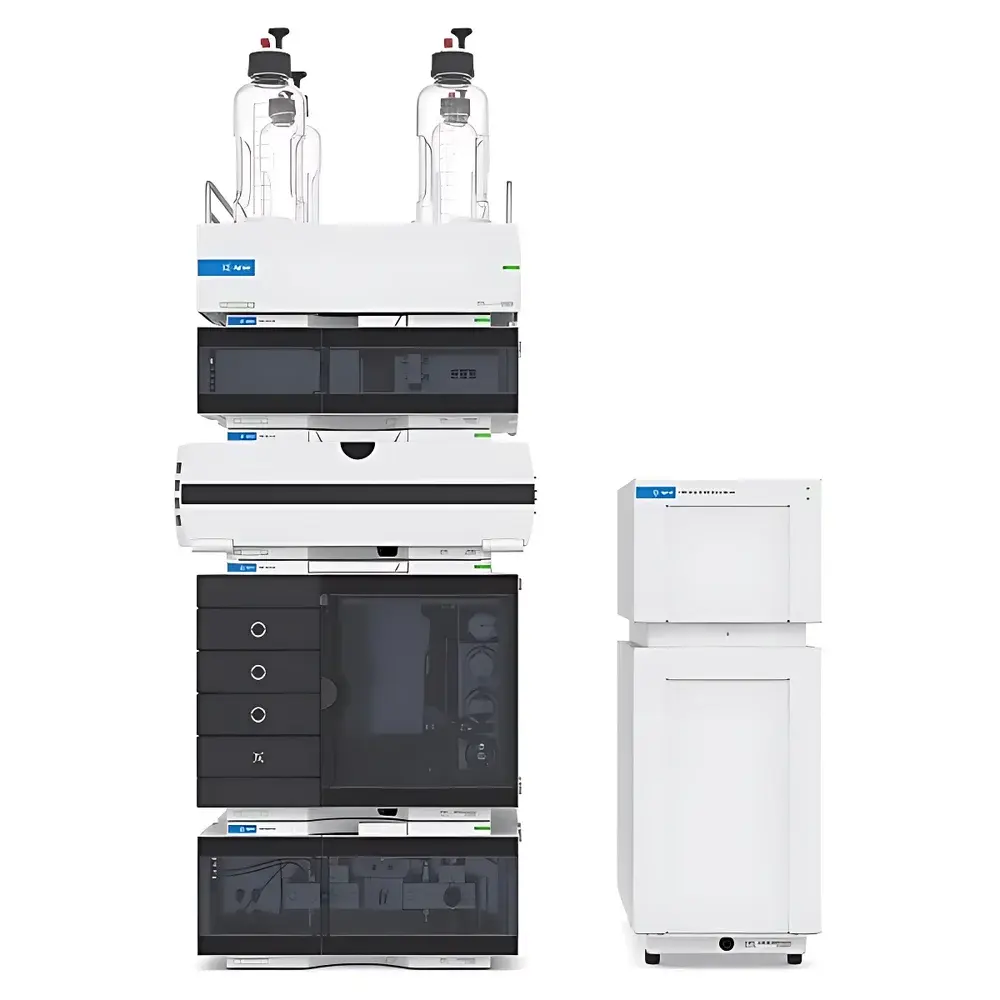
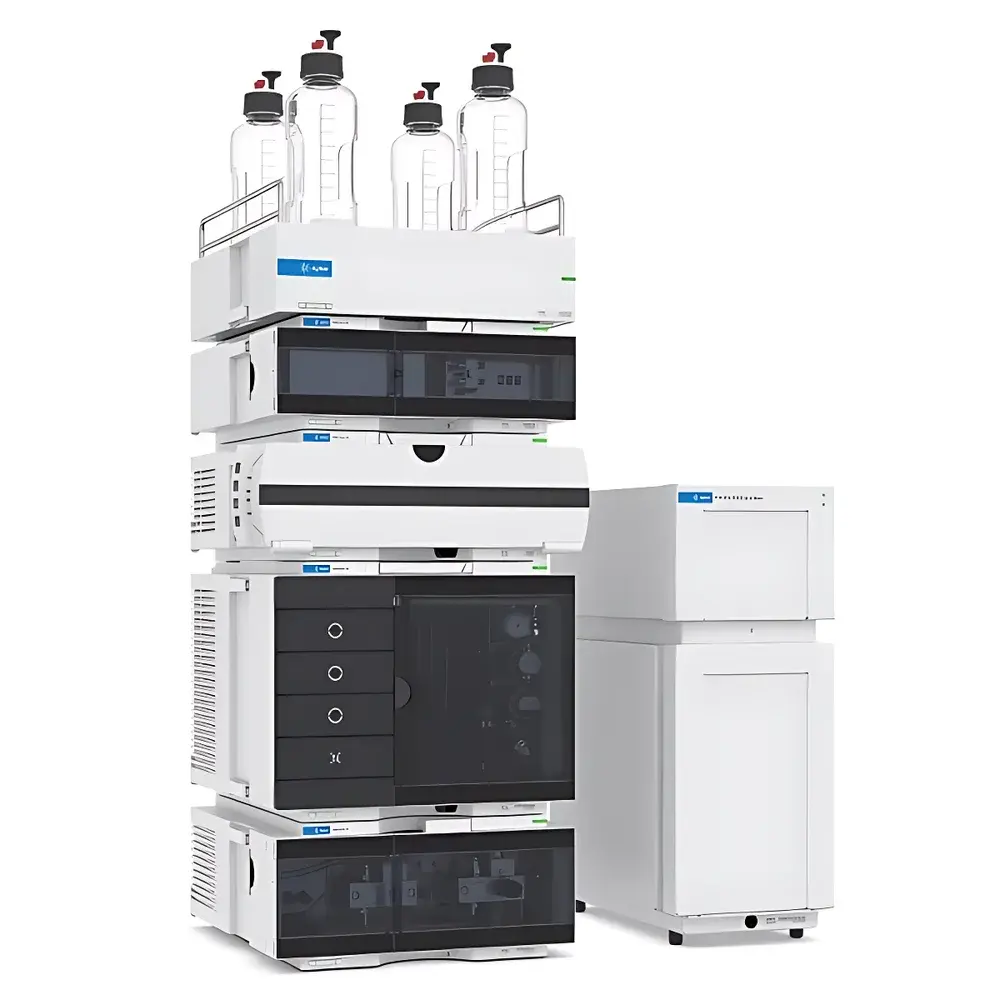
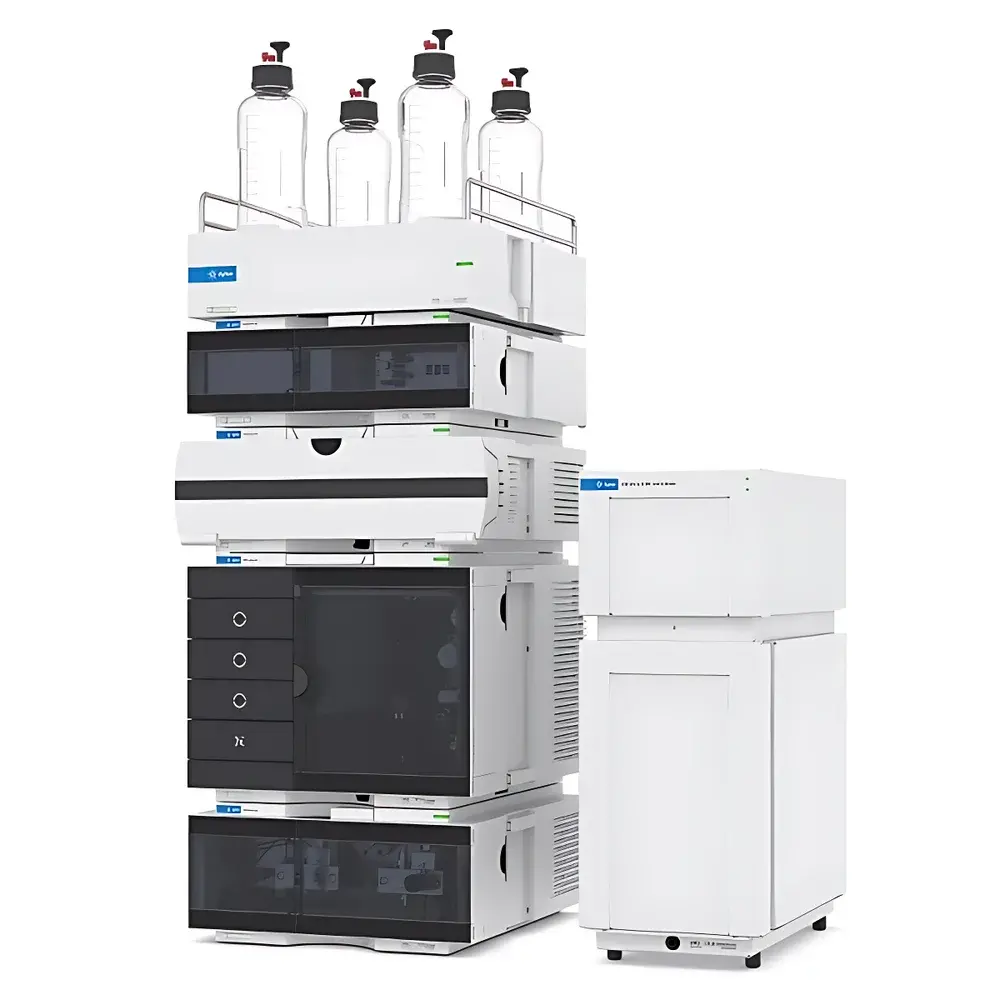
Agilent 1260 Infinity III Supercritical Fluid Chromatograph
| Brand | Agilent Technologies |
|---|---|
| Origin | Germany |
| Manufacturer Type | Original Equipment Manufacturer (OEM) |
| Origin Category | Imported |
| Model | 1260 Infinity III SFC |
| Instrument Type | Analytical |
| Flow Rate Range | 0.001–5 mL/min |
| Maximum System Pressure | 600 bar |
| Detector Options | Evaporative Light Scattering Detector (ELSD) or Selective Ion Monitoring Flame Ionization Detector (SIM-FID) |
Overview
The Agilent 1260 Infinity III Supercritical Fluid Chromatograph (SFC) is a high-performance, modular analytical platform engineered for precision separation of chiral, polar, thermally labile, and low-to-medium molecular weight compounds. It leverages supercritical carbon dioxide (CO2) as the primary mobile phase—enhanced with organic modifiers—to deliver chromatographic resolution and speed unattainable with conventional reversed-phase liquid chromatography (RPLC), while offering orthogonal selectivity to normal-phase LC. Operating at pressures up to 600 bar and flow rates from 0.001 to 5 mL/min, the system supports both analytical-scale method development and preparative-scale screening. Its architecture integrates thermally stable fluidic pathways, pressure-regulated modifier delivery, and real-time density compensation algorithms—ensuring retention time reproducibility and robust gradient fidelity across extended run sequences. Designed for compliance-critical environments, the system meets core requirements for GLP, GMP, and FDA 21 CFR Part 11–enabled workflows when configured with Agilent’s OpenLab CDS software.
Key Features
- FEED (Fast, Efficient, Exact, and Direct) injection technology enabling reproducible sample introduction across a wide volume range (0.1–90 µL in 0.1-µL increments) without hardware reconfiguration or loop swapping
- Dual-zone column oven (G7116A/B) supporting independent temperature control for column and detector compartments—critical for retention time stability in CO2-based separations
- Binary high-pressure pump system with integrated backpressure regulation and dynamic compressibility compensation for consistent flow delivery under varying density conditions
- Modular solvent selection valve supporting up to 3 modifiers on channel A and up to 12 on channel B—enabling complex gradient elution schemes with CO2 and multiple co-solvents
- Column manager with optional RFID-based column ID reader and clustering support for up to 32 columns—facilitating automated method transfer and column tracking
- Agilent Multisampler capable of handling up to 6144 samples per batch with programmable needle wash, temperature-controlled tray, and barcode recognition
Sample Compatibility & Compliance
The 1260 Infinity III SFC demonstrates broad compatibility with pharmaceutical actives, natural products, lipids, synthetic polymers, and food-grade analytes—including compounds prone to degradation under thermal or aqueous conditions. Its use of beverage-grade CO2 eliminates toxic organic solvent waste, aligning with ISO 14001 environmental management principles and reducing solvent disposal costs by 90–93% compared to traditional HPLC. The system supports ASTM D7777 and USP guidelines for SFC method validation and is compatible with ICH Q2(R2) parameters for specificity, linearity, accuracy, and precision. When paired with Agilent’s OpenLab CDS v3.x or higher, it delivers full audit trail functionality, electronic signatures, and secure user access controls compliant with 21 CFR Part 11 and EU Annex 11.
Software & Data Management
Control and data acquisition are managed through Agilent OpenLab CDS, which provides dedicated SFC method templates, real-time pressure/temperature/density monitoring, and automated method conversion tools from existing NP-LC methods. The software supports sequence-driven method optimization—including automated modifier gradient ramping, backpressure profiling, and column switching logic—and exports structured data in .d format for integration with third-party chemometric platforms (e.g., Simca, MATLAB). All raw data, method files, and audit logs are stored in a relational database with configurable retention policies and role-based permissions. Optional integration with Agilent MassHunter enables seamless SFC-MS coupling, including SIM-FID and ELSD signal synchronization with mass spectral acquisition.
Applications
- Chiral purity assessment of pharmaceutical intermediates and APIs under ICH Q5A and Q6A guidance
- Rapid enantiomeric excess (ee) determination in asymmetric synthesis workflows
- Separation of lipid classes (e.g., triglycerides, phospholipids) without derivatization
- Residual solvent analysis in polymer matrices using CO2/methanol gradients
- High-throughput impurity profiling in stability-indicating assays for biologics and small molecules
- Green analytical method development for QC labs seeking EPA Method 8082A-compliant alternatives
FAQ
Is the 1260 Infinity III SFC compatible with existing Agilent 1200-series LC hardware?
Yes—retrofit kits are available to upgrade 1200-series binary or quaternary pumps, autosamplers, and detectors to SFC-capable modules, preserving prior investment while extending functionality.
What CO2 purity grade is recommended for optimal system performance?
Beverage-grade CO2 (≥99.9% purity, certified for residual moisture and hydrocarbon content) is required; industrial-grade gas may cause pump seal degradation and baseline drift.
Can the system operate under isocratic or gradient conditions?
It supports both modes—gradient elution is achieved via precise, pressure-compensated modifier flow control, while isocratic runs maintain constant density through active backpressure regulation.
Does the FEED injector require special maintenance or calibration?
No routine recalibration is needed; the FEED mechanism uses dual-syringe geometry and pressure-balanced aspiration to ensure volumetric accuracy traceable to NIST standards.
How does the system handle column equilibration between runs?
Automated solvent purge cycles and programmable column flushing protocols reduce equilibration time to ≤2 minutes—even after steep modifier gradients—minimizing carryover and improving throughput.






