
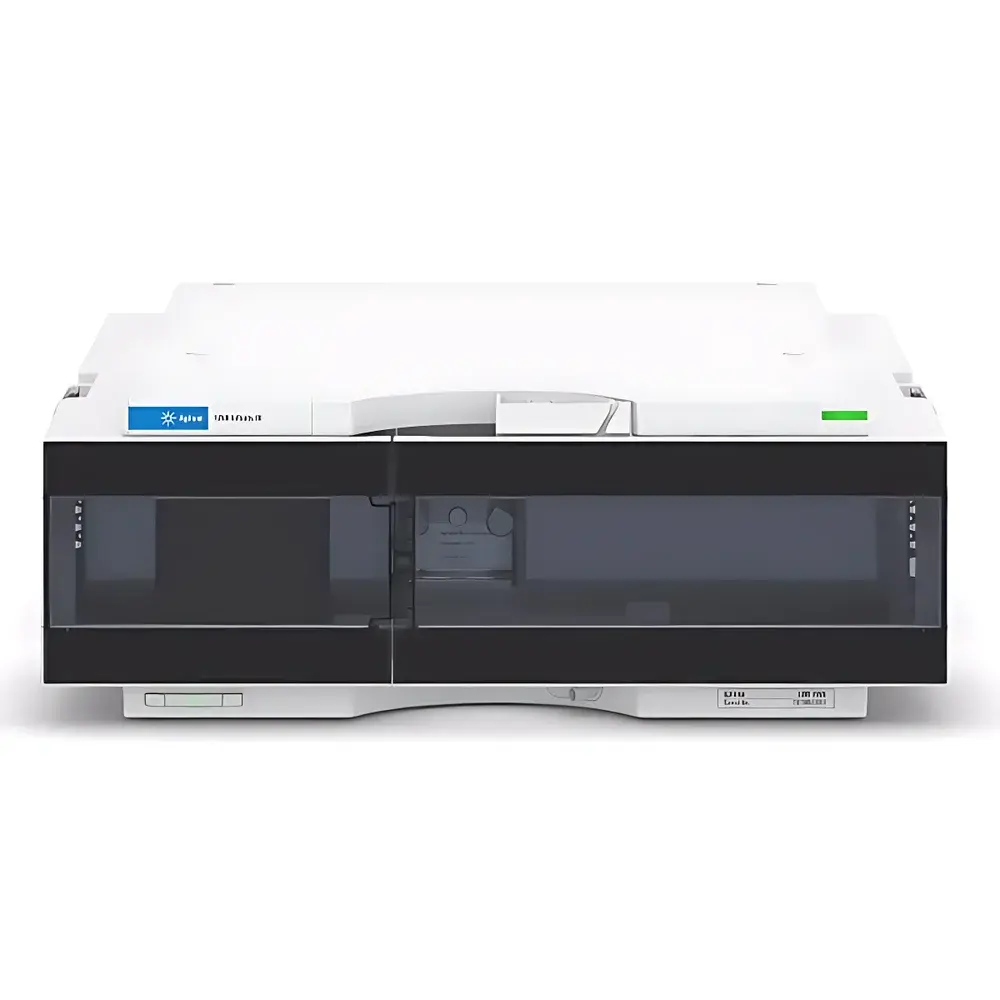
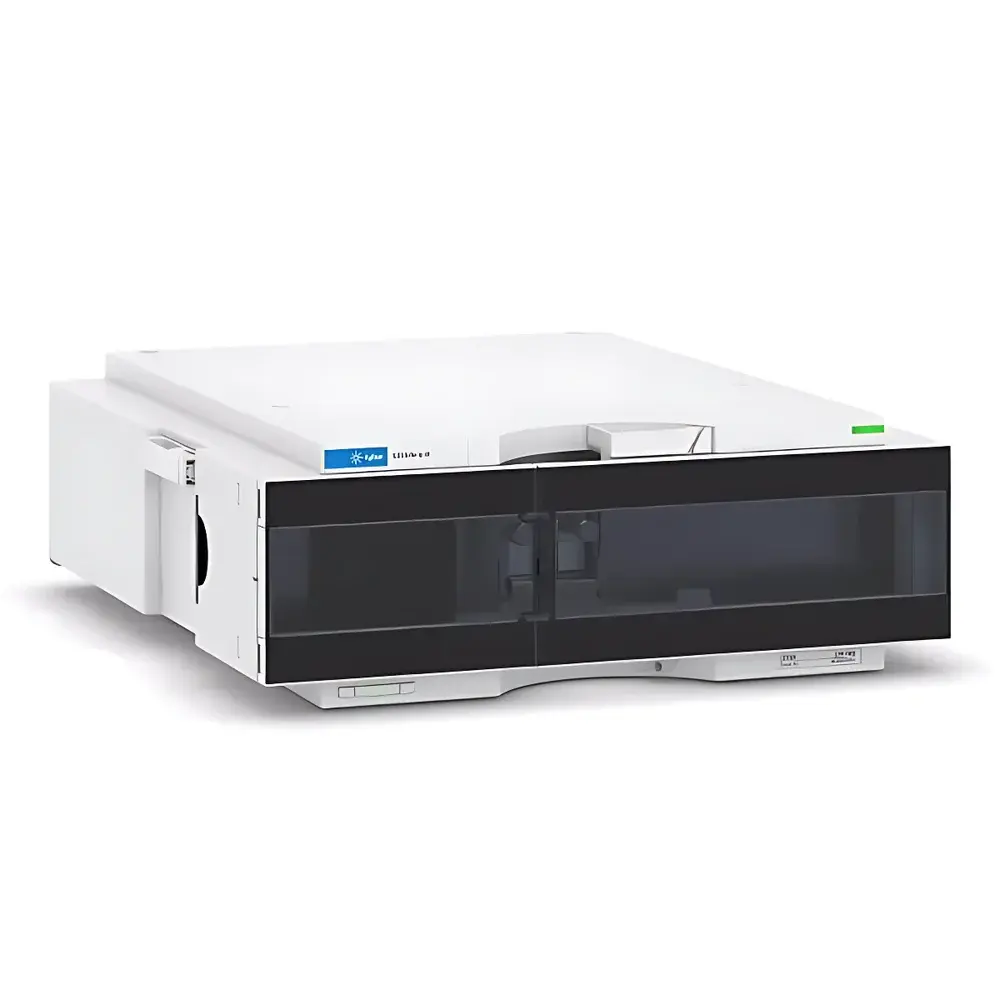
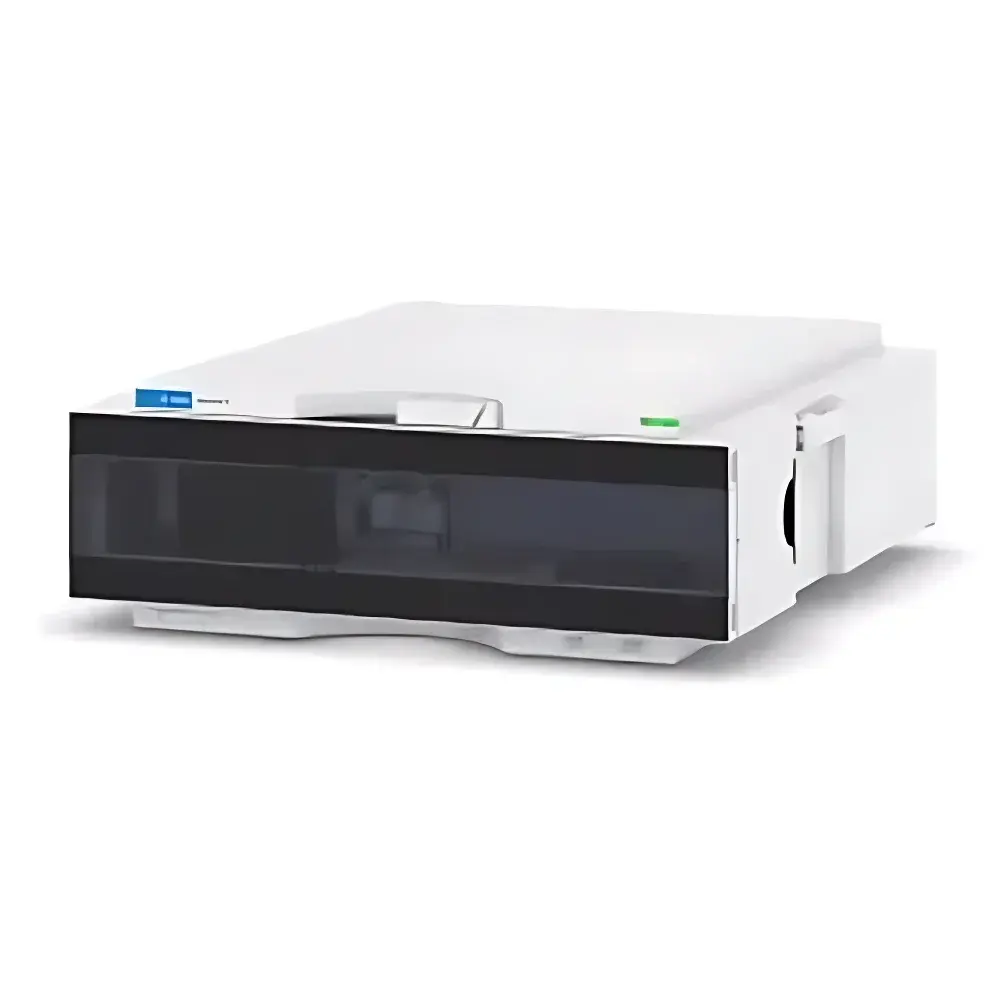
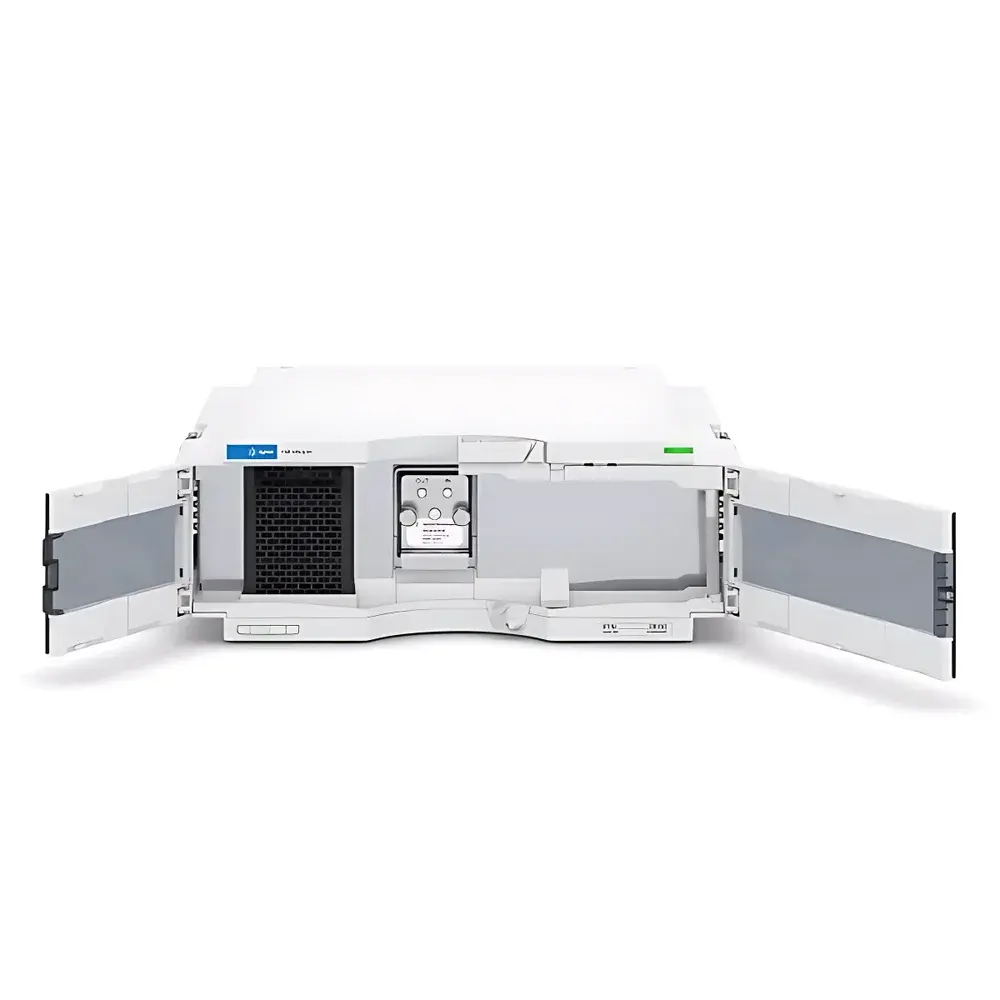
Agilent 1260 Infinity III Variable Wavelength Detector
| Brand | Agilent Technologies |
|---|---|
| Origin | Germany |
| Manufacturer Type | Original Equipment Manufacturer (OEM) |
| Product Category | Imported Instrument |
| Model | 1260 Infinity III Variable Wavelength Detector |
| Compatible System | High-Performance Liquid Chromatography (HPLC) |
| Detector Type | UV-Vis Absorbance Detector |
| Data Acquisition Rate | Up to 120 Hz |
| Dual-Wavelength Mode | Yes |
| Baseline Noise | < ±0.25 × 10⁻⁵ AU |
| Drift | < 0.5 × 10⁻⁴ AU/h |
| Linear Range | > 2.5 AU |
| Wavelength Accuracy | ±1 nm (verified via built-in holmium oxide filter) |
| Temperature Control | Electronic Temperature Control (ETC) with active stabilization |
| Flow Cell Options | 8 interchangeable analytical and preparative flow cells (including 10 mm, 60 mm pathlengths |
| RFID Integration | Yes (for cell/lamp identification and usage traceability) |
| EMF Support | Yes (lamp hours, maintenance alerts, user-defined thresholds) |
Overview
The Agilent 1260 Infinity III Variable Wavelength Detector (VWD) is a high-performance ultraviolet-visible (UV-Vis) absorbance detector engineered for precision, stability, and operational continuity in regulated and research-grade HPLC environments. Operating on the Beer–Lambert principle, it measures analyte concentration by quantifying wavelength-specific light absorption as eluting compounds pass through a flow cell. Designed as a core detection module within the Agilent 1260 Infinity III LC platform, this detector delivers robust performance across method development, quality control, stability-indicating assays, and impurity profiling—particularly where selectivity, low-level quantitation, and multi-analyte resolution are critical.
Key Features
- High-speed data acquisition: Supports up to 120 Hz sampling frequency, enabling accurate peak capture in fast-gradient and UHPLC-compatible separations without undersampling artifacts.
- Dual-wavelength detection: Simultaneously monitors two user-defined wavelengths per analysis, facilitating ratio-based quantitation, peak purity assessment, and co-elution diagnostics without method re-runs.
- Enhanced baseline stability: Achieves ultra-low baseline noise (< ±0.25 × 10⁻⁵ AU) and drift (< 0.5 × 10⁻⁴ AU/h) through active electronic temperature control (ETC), minimizing environmental impact on photometric accuracy.
- Extended linear dynamic range: >2.5 AU enables reliable co-quantitation of major components, process-related impurities, and degradation products in a single injection—reducing need for sample dilution or re-analysis.
- Automated wavelength validation: Integrated holmium oxide filter allows scheduled, traceable, and audit-ready wavelength calibration per ICH Q2(R2) and USP guidelines.
- RFID-enabled component traceability: Each flow cell and lamp carries embedded RFID tags recording serial number, installation date, cumulative usage hours, and calibration history—supporting ALCOA+ data integrity principles.
- Stop-flow spectral scanning: Rapid full-spectrum acquisition (190–600 nm) during stopped-flow mode accelerates method optimization and peak identification without hardware modification.
Sample Compatibility & Compliance
The detector supports standard HPLC mobile phases—including aqueous buffers, acetonitrile, methanol, and THF—across pH 1–12 when used with compatible flow cells (e.g., PEEK or sapphire-window variants). Its design conforms to ISO 9001 manufacturing standards and incorporates features aligned with FDA 21 CFR Part 11 requirements, including electronic signatures, audit trails (via Agilent OpenLab CDS), and configurable EMF alerts for lamp lifetime management. All firmware and calibration routines are documented per GxP and GLP expectations, supporting inspection readiness in pharmaceutical, biotech, and contract testing laboratories.
Software & Data Management
Fully integrated with Agilent OpenLab CDS (ChemStation Edition and OpenLab ECM), the VWD enables automated method transfer, real-time diagnostics, and centralized instrument monitoring. The Lab Advisor software provides predictive maintenance insights—including lamp aging trends, flow cell contamination indices, and signal-to-noise degradation patterns—allowing proactive service scheduling. Raw chromatographic data is stored in vendor-neutral formats (e.g., .D directories compliant with ASTM E1947), ensuring long-term readability and interoperability with third-party processing tools.
Applications
This detector is routinely deployed in pharmacopeial testing (USP, EP, JP), stability studies per ICH Q1–Q5, residual solvent analysis, excipient characterization, natural product fingerprinting, and polymer additive quantification. Its dual-wavelength capability is especially valuable in forced degradation studies, where differential absorbance at two wavelengths helps distinguish structurally related degradants from parent compounds. In QC labs, its reproducible sensitivity supports routine release testing of APIs and finished dosage forms down to sub-ppm levels when paired with optimized column chemistry and injection protocols.
FAQ
What wavelength range does the 1260 Infinity III VWD support?
It operates from 190 nm to 600 nm, with programmable step increments of 1 nm.
Is the detector compatible with legacy Agilent 1200/1220 systems?
Yes, via backward-compatible communication protocols and mechanical mounting interfaces—though full feature utilization (e.g., RFID, ETC diagnostics) requires Infinity III firmware and controller integration.
How is wavelength accuracy verified and documented?
Using the internal holmium oxide filter, which generates characteristic absorption peaks at certified wavelengths (e.g., 241.15 nm, 279.40 nm, 360.95 nm); results are logged automatically into the audit trail.
Can the VWD be used for gradient elution with variable wavelength switching?
Yes—time-programmed wavelength switching allows dynamic adjustment during a run to maximize sensitivity or selectivity for different eluting compounds.
What flow cell options are available for high-pressure or corrosive mobile phases?
Stainless steel, PEEK, and sapphire-window flow cells are offered, with maximum pressure ratings up to 600 bar and chemical resistance validated for aggressive solvents and low-pH buffers.
Related Products




