
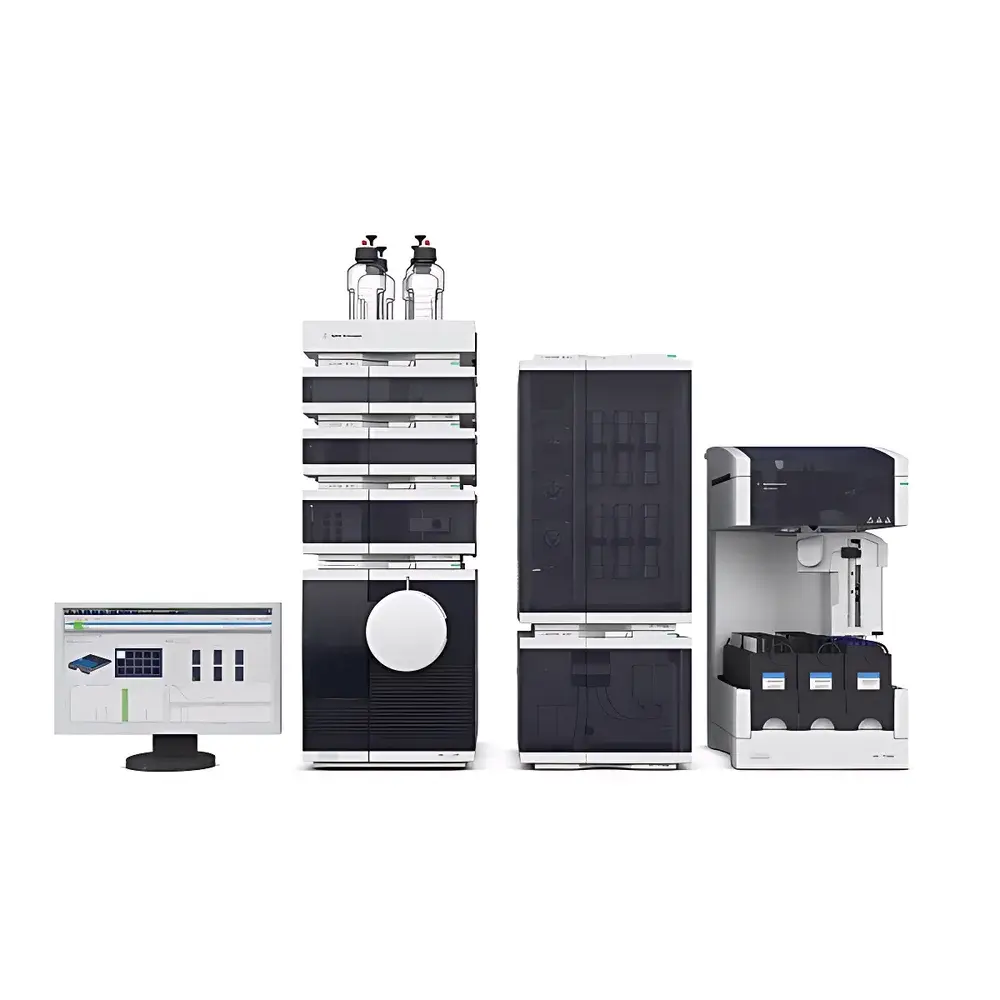
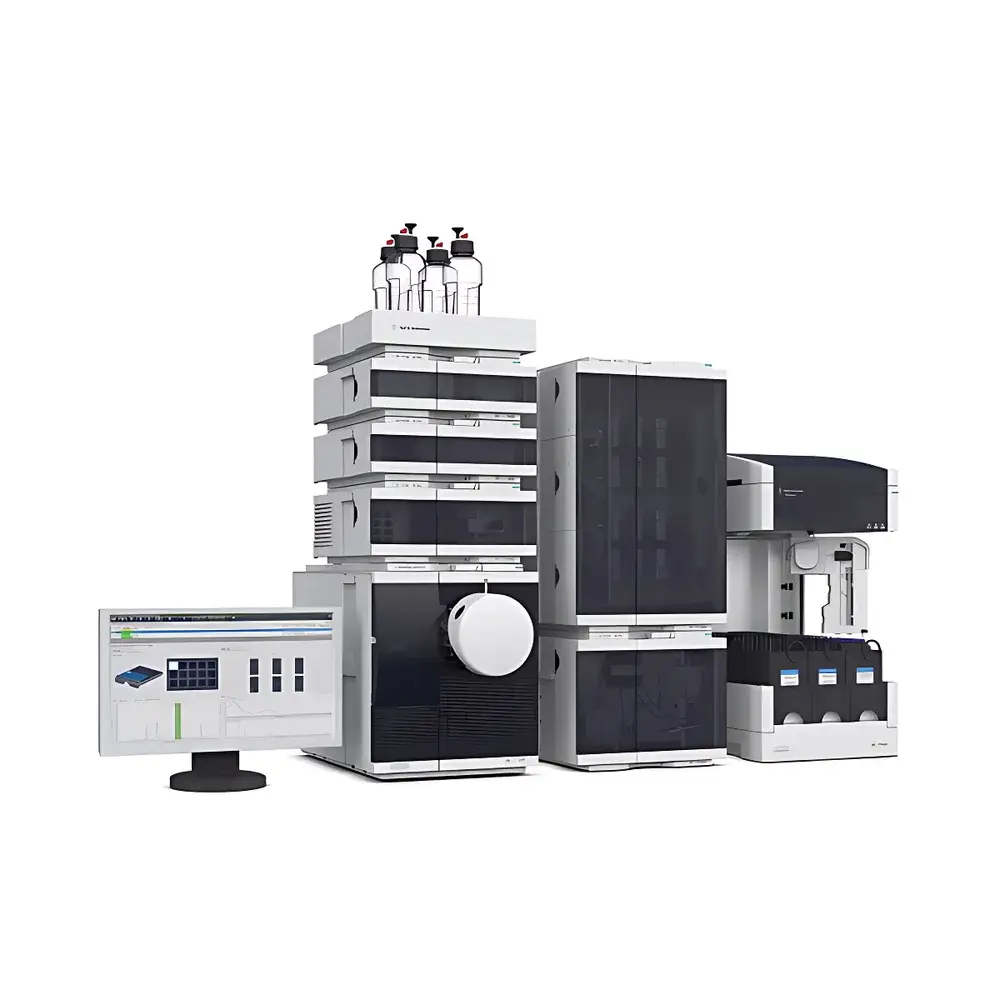
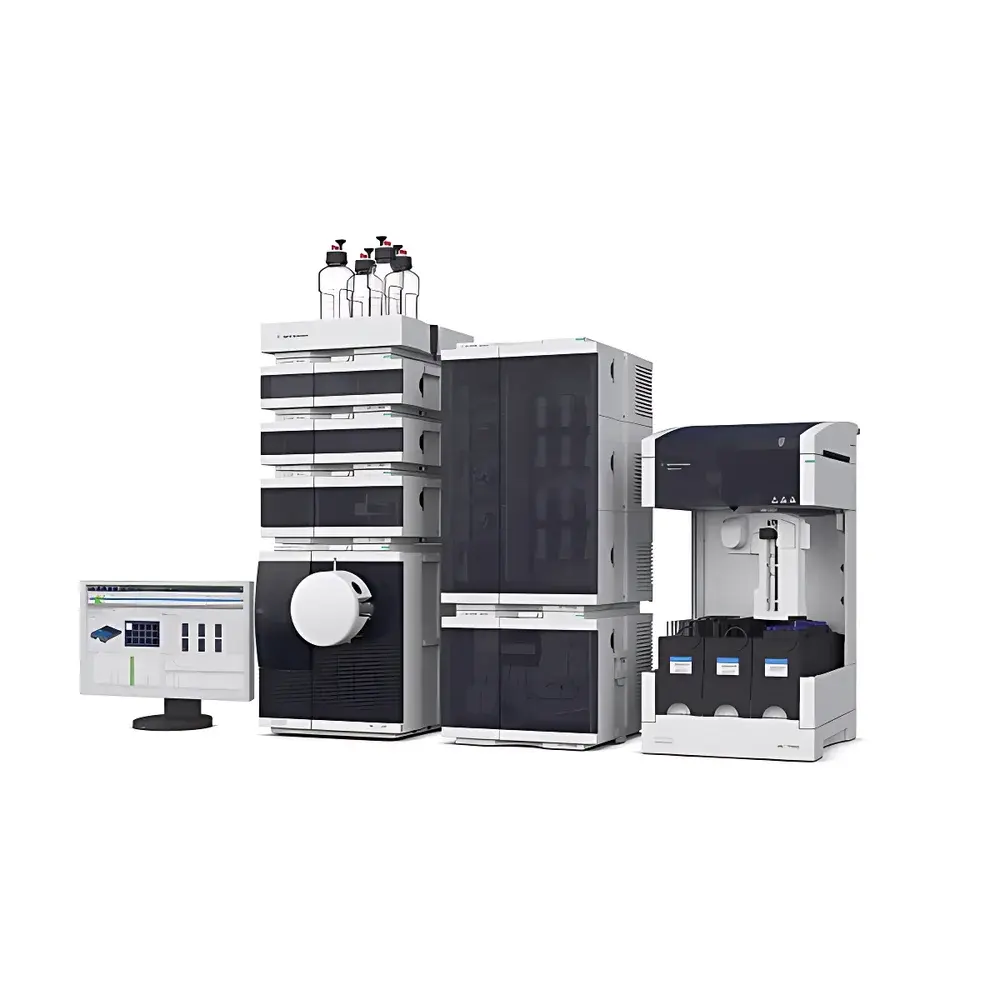
Agilent 1290 Infinity II Automated Preparative LC/MSD System
| Brand | Agilent Technologies |
|---|---|
| Origin | Germany |
| Manufacturer Type | Original Equipment Manufacturer (OEM) |
| Origin Category | Imported |
| Model | 1290 Infinity II Automated Preparative LC/MSD |
| Application Level | Laboratory Grade |
| Instrument Type | High-Pressure Preparative Liquid Chromatography |
| Flow Rate Range | 1–200 mL/min |
| Maximum Operating Pressure | 20–600 bar |
Overview
The Agilent 1290 Infinity II Automated Preparative LC/MSD System is a fully integrated, high-pressure liquid chromatography–mass spectrometry platform engineered for scalable purification of target compounds—from analytical method development directly to gram-scale isolation. Built upon Agilent’s proven Infinity II architecture, the system implements a closed-loop, mass-directed purification workflow grounded in electrospray ionization (ESI) or atmospheric pressure chemical ionization (APCI) coupled with quadrupole mass detection. Its core design principle centers on method transfer fidelity: retention time, selectivity, and peak shape are preserved across scales through consistent column geometry scaling, gradient translation algorithms, and real-time mass-triggered fraction collection. This eliminates empirical re-optimization and supports regulatory-compliant process development under GLP and GMP-aligned laboratory practices.
Key Features
- Automated analytical-to-preparative method translation via Agilent AutoPurify software—leveraging retention time alignment, peak capacity mapping, and dynamic flow/pressure compensation to maintain resolution during scale-up.
- Integrated dual-pump high-pressure LC module with swappable pump heads rated for continuous operation up to 600 bar and flow rates spanning 1–200 mL/min—enabling compatibility with both narrow-bore analytical columns and wide-bore preparative columns (e.g., 10–50 mm ID).
- Five configurable valve slots supporting synchronized control of fraction delay lines, MS flow diverters, and the Agilent 1290 Infinity II Mass Spectrometer Flow Modulator—ensuring precise temporal alignment between UV/MS signal acquisition and physical fraction collection.
- Minimal system dwell volume (< 200 µL) achieved through optimized tubing routing, low-volume mixing chambers, and direct-coupled detector interfaces—reducing band broadening and carryover to < 0.05% (measured per USP ).
- Redundant leak detection architecture: integrated pressure sensors and fluidic integrity monitors at each module (pump, injector, column oven, detector, collector) trigger automatic system shutdown upon anomaly detection—meeting IEC 61000-4-5 surge immunity and ISO 13849-1 PL e safety requirements.
Sample Compatibility & Compliance
The system accommodates a broad range of organic and polar analytes—including small molecules, natural product isolates, synthetic intermediates, and early-stage pharmaceutical candidates—with compatibility across reversed-phase (C18, C8, phenyl-hexyl), HILIC, and mixed-mode stationary phases. It complies with ASTM D7917–22 (standard practice for LC-MS method validation), ISO/IEC 17025:2017 (general requirements for competence of testing laboratories), and supports audit-trail-enabled operation per FDA 21 CFR Part 11 when deployed with Agilent OpenLab CDS ChemStation v2.5 or later. All hardware modules undergo factory calibration traceable to NIST standards; mass accuracy is verified using sodium formate cluster ions (m/z 107.012, 150.999, 221.013) prior to shipment.
Software & Data Management
Agilent OpenLab CDS ChemStation provides a validated, single-platform interface for instrument control, data acquisition, and report generation. The AutoPurify module implements scientifically grounded scaling rules—including linear velocity matching, constant gradient time normalization, and mass-triggered collection thresholds based on extracted ion chromatogram (XIC) signal-to-noise ratio (>10:1). All sequence methods, raw data (.d files), processed results, and audit logs are stored in a relational database with role-based access control (RBAC), electronic signatures, and immutable timestamping. Raw MS data export supports mzML 1.1 format for third-party processing in tools such as XCMS Online or Skyline.
Applications
- Purification of hit compounds from high-throughput screening (HTS) campaigns for SAR expansion.
- Isolation of metabolites and degradation products for structural elucidation by NMR and HRMS.
- Preparative separation of chiral isomers using polysaccharide-based CSPs under SFC-compatible backpressure conditions.
- Gram-scale synthesis support for reference standard preparation in QC labs operating under ISO/IEC 17025 accreditation.
- Process impurity profiling and isolation for forced degradation studies compliant with ICH Q5A(R2) and Q3B(R3).
FAQ
Can this system operate without mass detection for UV-only triggered collection?
Yes—the system supports standalone UV/Vis-triggered fraction collection using Agilent 1260 Infinity II Variable Wavelength Detector signals, with configurable threshold logic and peak-width gating.
Is method transfer validated for regulatory submissions?
Method transfer protocols—including system suitability testing, recovery studies, and robustness assessment per ICH Q2(R2)—are documented in Agilent’s Application Note 5991-8226EN and supported by IQ/OQ/PQ documentation packages.
What column formats are mechanically and hydraulically compatible?
The system accepts standard 1/4″–28 threaded fittings and accommodates columns from 4.6 mm to 50 mm internal diameter, with maximum length of 250 mm and recommended particle sizes of 5–20 µm for preparative use.
How is data integrity maintained during long-duration runs?
All acquisitions employ cyclic redundancy check (CRC)-protected data streaming, local SSD-based buffering, and automatic failover to network-attached storage (NAS) upon network interruption—ensuring zero data loss over multi-day purifications.






