
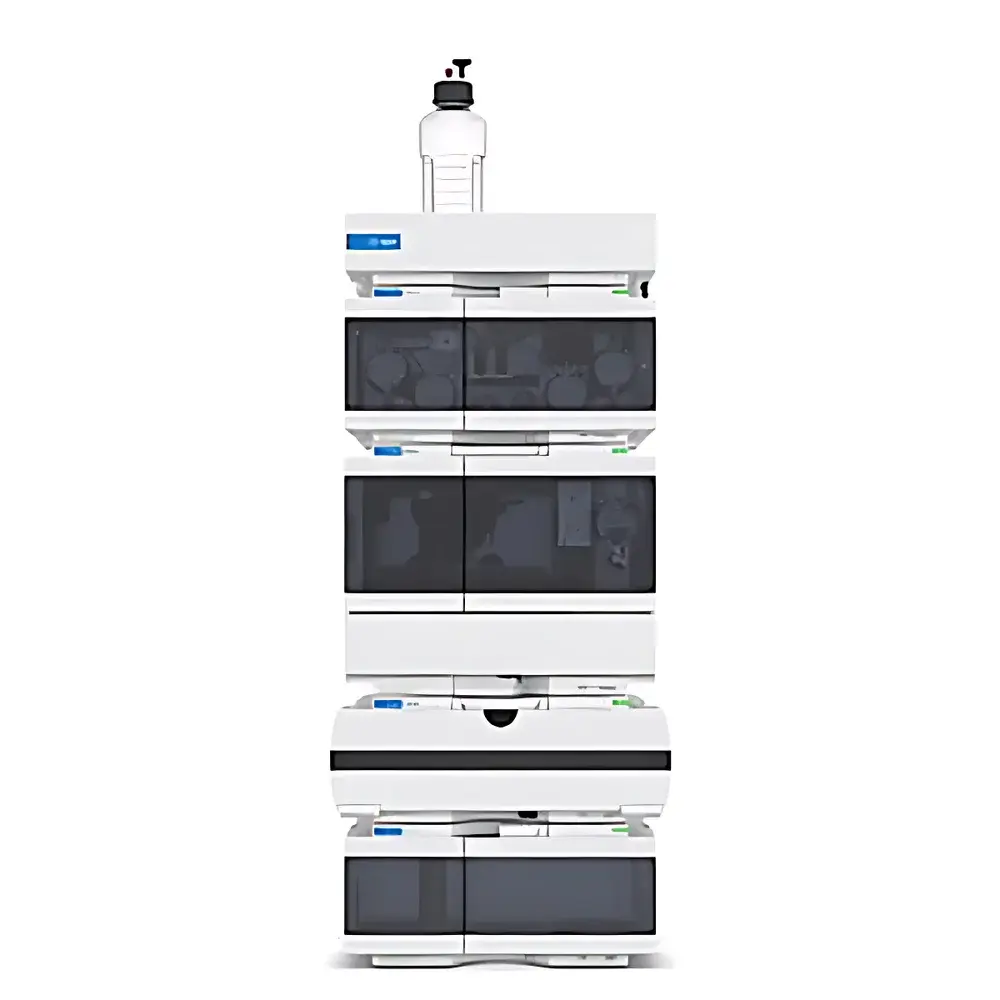
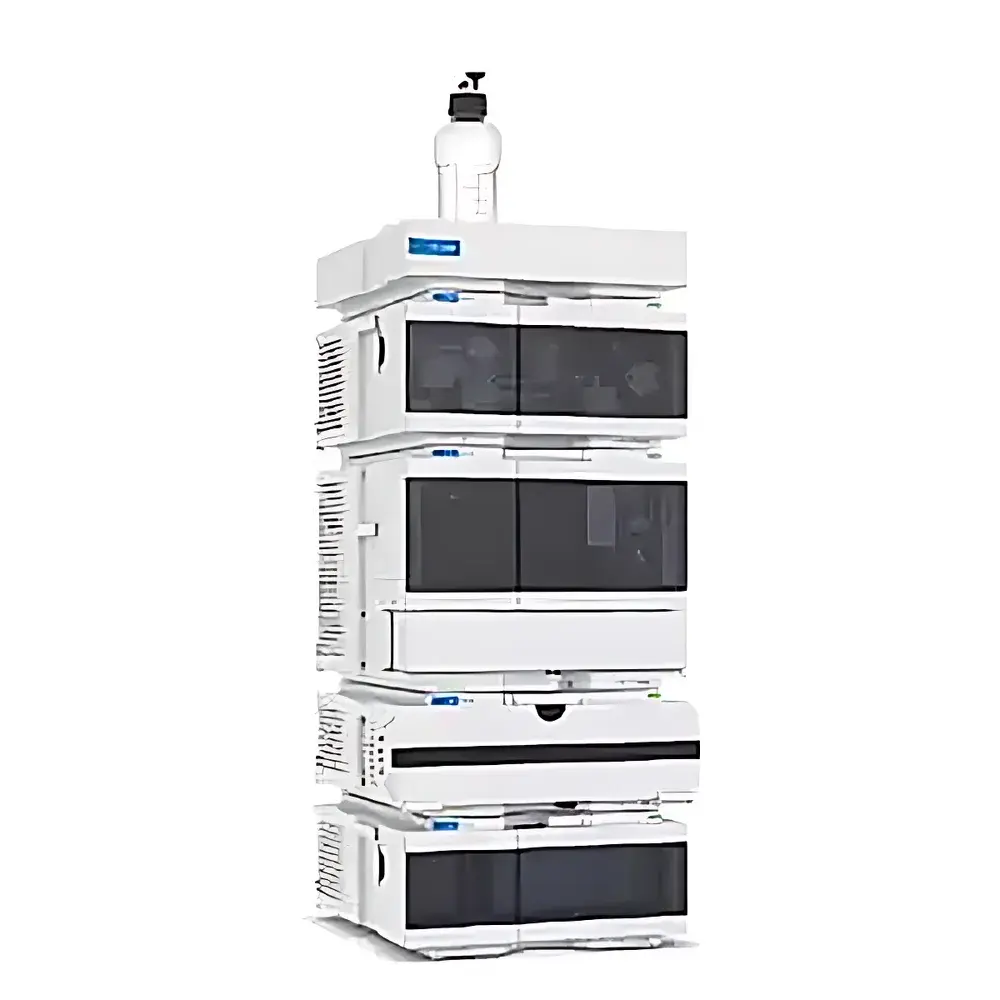
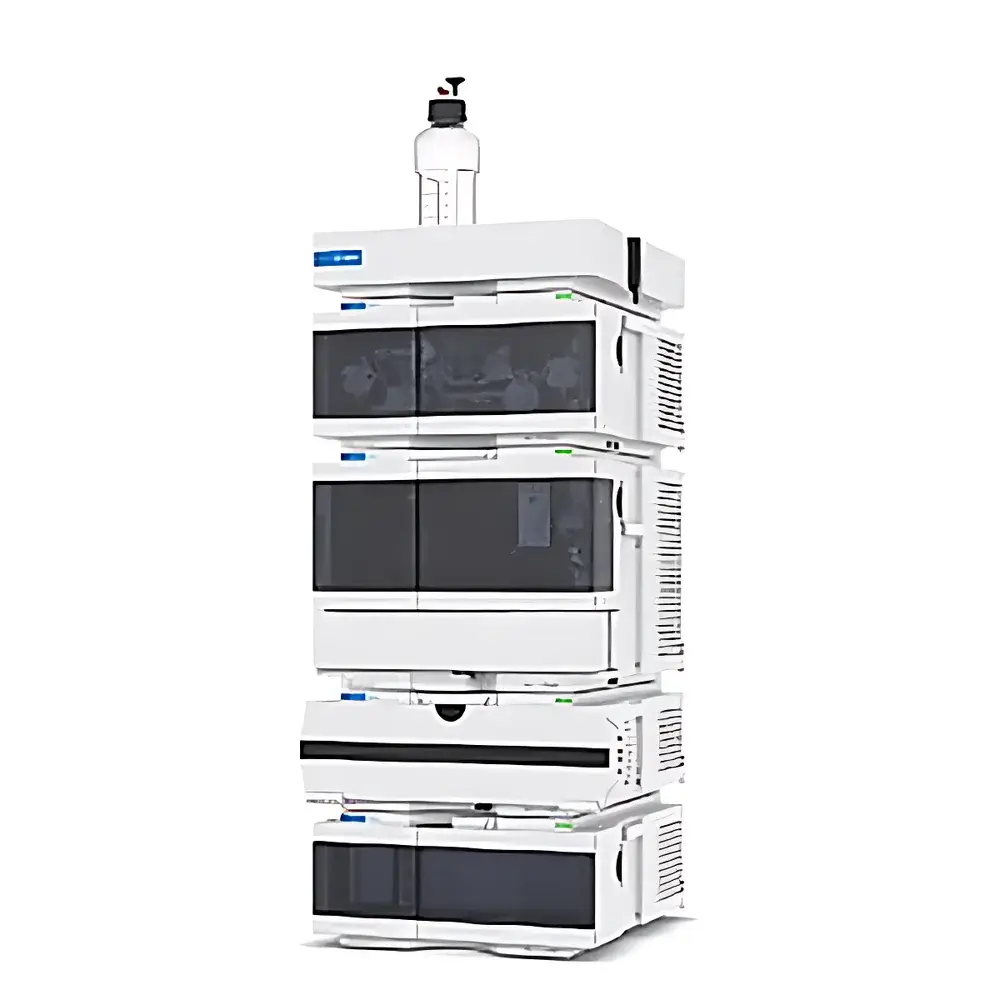
Agilent 1290 Infinity II GPC/SEC System
| Brand | Agilent Technologies |
|---|---|
| Origin | Germany |
| Manufacturer Type | Original Equipment Manufacturer (OEM) |
| Origin Category | Imported |
| Model | 1290 Infinity II GPC/SEC |
| Instrument Type | High-Performance Liquid Chromatograph (HPLC) for Gel Permeation Chromatography / Size Exclusion Chromatography |
| Application Scope | Universal GPC/SEC Analysis |
| Flow Rate Range | Up to 5 mL/min (with G7120A binary pump and G7104A thermostatted column compartment) |
| Maximum Operating Pressure | 1300 bar |
| Injection Volume Range | 0.1–100 µL |
| Temperature Control | Dual-zone thermal management (G7116B thermostatted autosampler and column oven) |
Overview
The Agilent 1290 Infinity II GPC/SEC System is a purpose-engineered high-pressure liquid chromatography platform optimized specifically for gel permeation chromatography (GPC) and size exclusion chromatography (SEC). Unlike general-purpose HPLC systems, this configuration integrates low-diffusion fluidics, ultra-high-pressure capability (up to 1300 bar), and microbore column compatibility to deliver enhanced resolution, reproducibility, and quantitative accuracy in macromolecular characterization. The system operates on the fundamental principle of hydrodynamic volume separation—where polymer chains elute in order of their hydrodynamic radius in solution—enabling precise determination of molecular weight distribution (MWD), polydispersity index (PDI), and structural heterogeneity. Designed for both analytical-scale and trace-level SEC analysis, it supports rigorous quality control in polymer R&D, pharmaceutical excipient characterization, biopolymer profiling, and regulatory-compliant stability studies.
Key Features
- Ultra-low dispersion flow path architecture minimizes band broadening, enabling superior resolution of closely spaced molecular weight fractions—even for low-abundance oligomers or degradation products typically unresolved by conventional GPC.
- Microbore column compatibility (e.g., 2.0 mm or 3.0 mm ID) reduces solvent consumption by up to 80% versus standard 7.8 mm columns, significantly lowering operational costs and waste disposal burden without compromising data fidelity.
- Dual-zone temperature control (via G7116B thermostatted autosampler and column compartment) ensures independent, stable thermal regulation of injection and separation zones—critical for retention time reproducibility across multi-day sequences and temperature-sensitive polymers.
- High-pressure binary pumping (G7120A) delivers precise, pulse-free flow from 0.001 to 5.000 mL/min with ≤0.1% RSD, supporting rapid gradient elution and method scalability from screening to validation.
- Integrated low-volume refractive index (RI) detector (G7167B) features <1.5 µL cell volume and active solvent compensation—essential for high-sensitivity detection in microscale SEC applications with minimal sample loading (as low as 0.1 µL).
- Robust mechanical design and pressure-rated components (1300 bar maximum) allow use of sub-2 µm porous silica or organic monolithic SEC columns, accelerating analysis while maintaining peak symmetry and calibration linearity.
Sample Compatibility & Compliance
The system accommodates a wide range of synthetic and natural macromolecules—including polystyrene, polyethylene glycol, polysaccharides, proteins, and dendrimers—in common SEC solvents (THF, DMF, chloroform, aqueous buffers). Column selection is supported by Agilent’s certified SEC calibration standards and linear column calibration methodology, which eliminates peak distortion due to column misalignment or packing heterogeneity. Fully compliant with FDA 21 CFR Part 11 requirements when operated within Agilent OpenLab GPC software, the platform provides audit-trail-enabled user authentication, electronic signatures, and immutable data archiving—meeting GLP, GMP, and ISO/IEC 17025 laboratory accreditation criteria.
Software & Data Management
Agilent OpenLab GPC software serves as the validated data acquisition and processing environment for this system. It includes automated baseline correction, universal calibration algorithms (Mark–Houwink parameters), multi-detector synchronization (RI, UV, light scattering), and batch processing with customizable reporting templates. All raw data, method files, and audit logs are stored in a relational database with role-based access control. Electronic records comply with ALCOA+ principles (Attributable, Legible, Contemporaneous, Original, Accurate, Complete, Consistent, Enduring, Available) and support full traceability during regulatory inspections.
Applications
- Quantitative assessment of molecular weight distribution in thermoplastics, elastomers, and engineering resins per ASTM D5296 and ISO 16014.
- Stability monitoring of protein therapeutics under stressed conditions (e.g., thermal, oxidative) using aqueous SEC.
- Characterization of polymer additives, surfactants, and nanoparticle dispersants where low-MW impurities impact performance.
- Method development and transfer between research, QC, and contract laboratories under ICH Q5E guidelines.
- Supporting extractables and leachables (E&L) studies in pharmaceutical packaging via SEC-based purity profiling.
FAQ
Can this system be used for both organic and aqueous SEC applications?
Yes—the modular fluidic design allows seamless solvent switching between THF, DMF, chloroform, and aqueous buffers using appropriate column chemistries and detector configurations.
Is method transfer from legacy GPC systems supported?
Agilent provides column equivalency tools and retention time normalization protocols to facilitate robust method migration from older platforms, including Agilent 1100/1200 series and Waters Alliance systems.
What level of data integrity does the OpenLab GPC software provide?
It meets FDA 21 CFR Part 11 and EU Annex 11 requirements through electronic signature enforcement, audit trail logging, and secure database encryption.
Does the system support multi-angle light scattering (MALS) integration?
Yes—it features standardized analog and digital I/O interfaces compatible with third-party MALS, viscometry, and DLS detectors for absolute molecular weight and conformational analysis.
How is column calibration validated on this platform?
Linear column calibration is performed using narrow-standard polystyrene or pullulan reference materials, with software-assisted peak alignment and drift correction to ensure long-term calibration stability.
Related Products





