
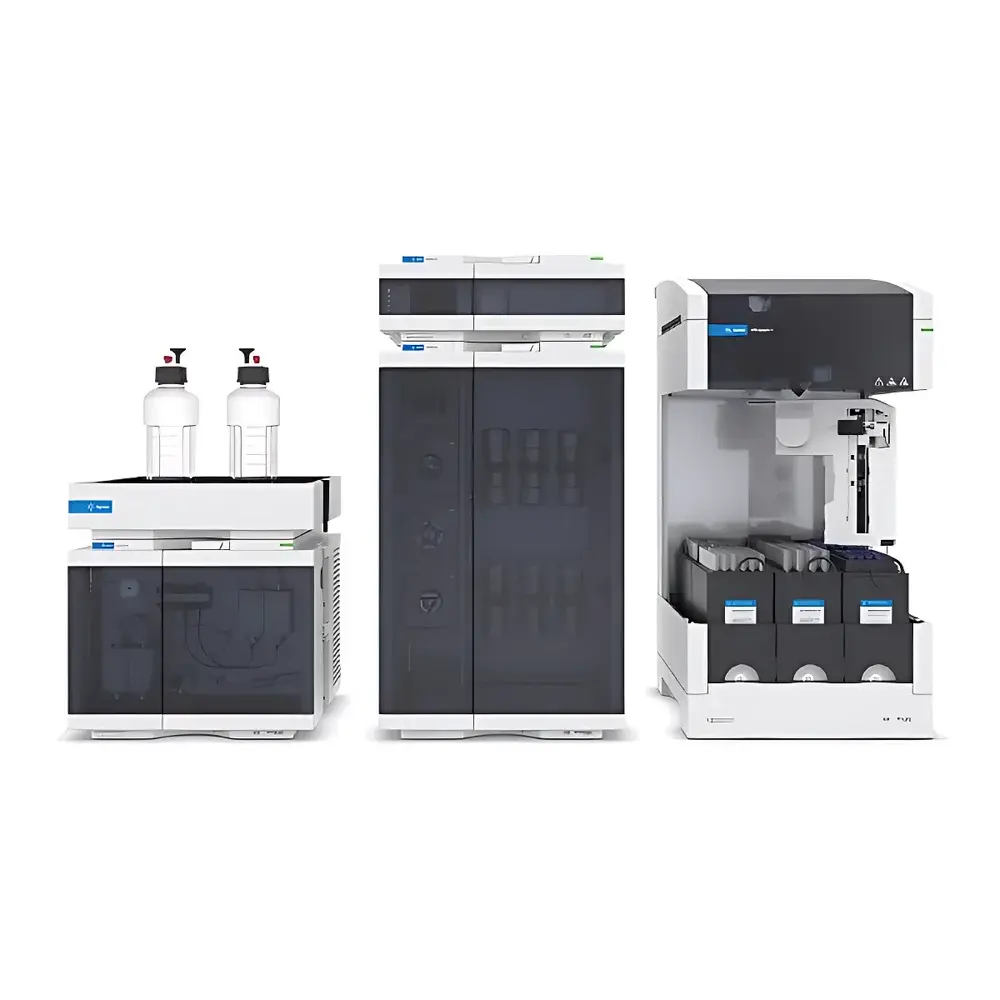
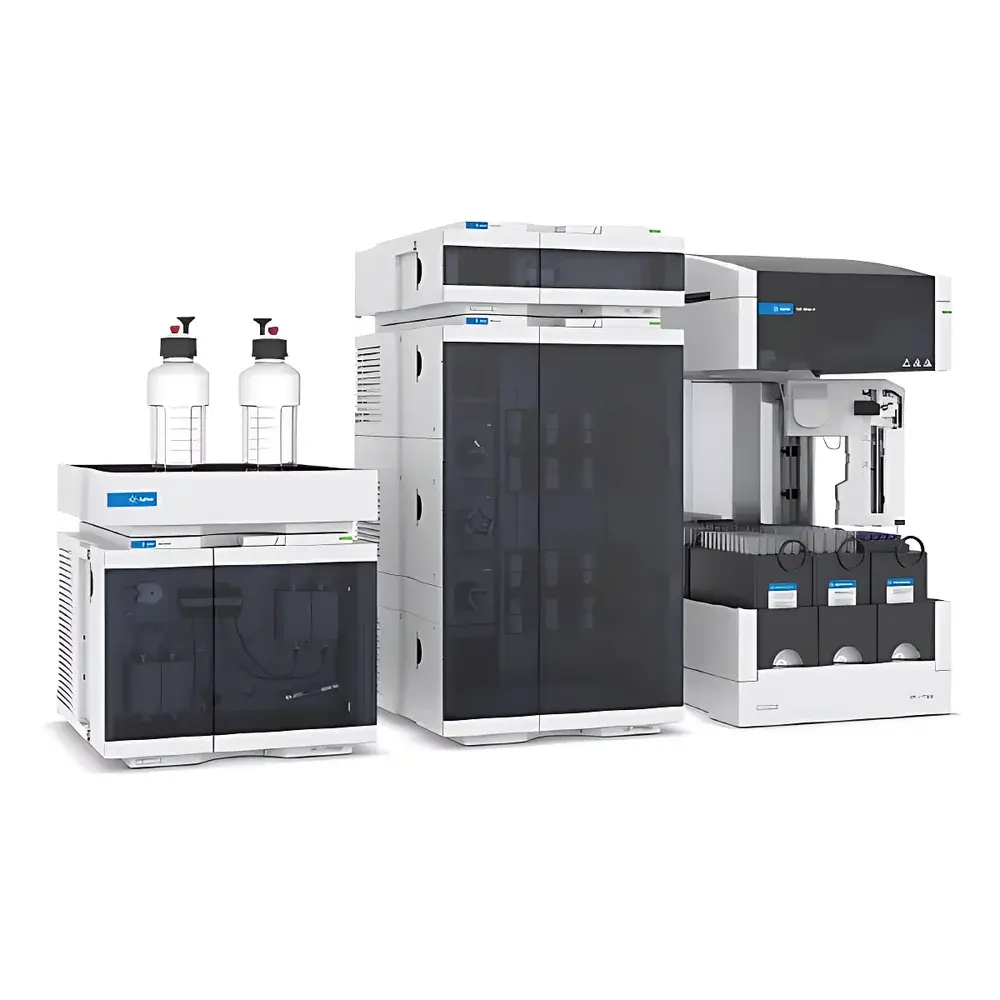
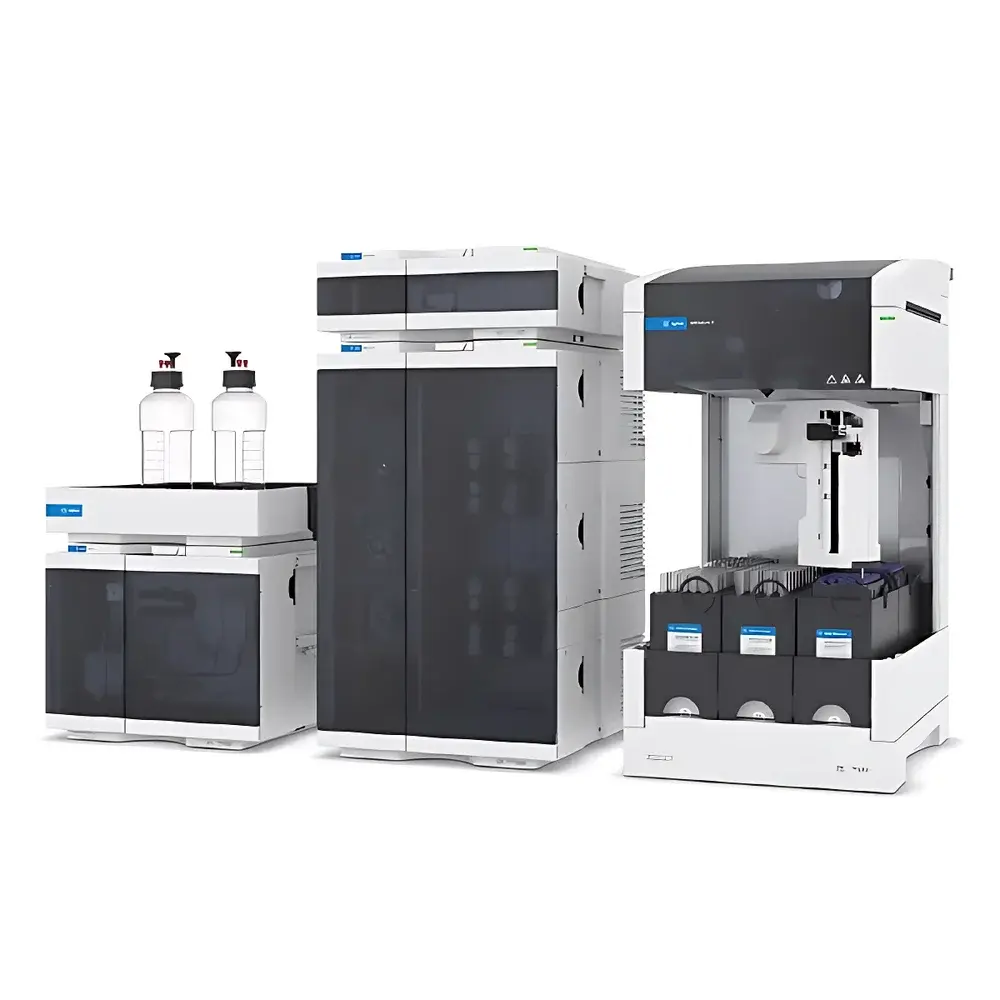
Agilent 1290 Infinity II Preparative Liquid Chromatography System
| Brand | Agilent Technologies |
|---|---|
| Origin | Germany |
| Manufacturer Type | Original Equipment Manufacturer (OEM) |
| Product Category | Imported Instrument |
| Model | 1290 Infinity II Preparative |
| Application Level | Laboratory-Grade |
| Instrument Type | High-Pressure Preparative Liquid Chromatograph |
| Flow Rate Range | 0.01–200 mL/min |
| Flow Accuracy | ≤0.3% RSD |
| Flow Precision | ≤0.3% RSD |
| Maximum Operating Pressure | 600 bar |
| Wavelength Resolution | 0.1 nm |
| Baseline Noise | 2.5 µAU |
| Data Acquisition Rate | 120 Hz |
Overview
The Agilent 1290 Infinity II Preparative Liquid Chromatography System is a high-pressure, modular preparative HPLC platform engineered for robust, scalable purification workflows in analytical development, natural product isolation, and early-stage compound library enrichment. Built upon Agilent’s proven dual-pump architecture and ultra-low-dead-volume fluidic design, the system operates on the fundamental principle of reversed-phase or normal-phase liquid chromatography—separating compounds based on differential partitioning between a mobile phase (gradient or isocratic solvent delivery) and a stationary phase (packed column). Its core capability lies in precise, reproducible fraction collection synchronized with real-time UV detection, enabling targeted isolation of milligram-to-gram quantities from complex mixtures. The system integrates seamlessly into regulated environments through hardware-level safety controls and software traceability features aligned with GLP/GMP expectations.
Key Features
- High-pressure binary pumping system delivering stable flow rates from 0.01 to 200 mL/min at up to 600 bar—compatible with analytical screening columns (4.6–10 mm ID) and preparative columns (10–50 mm ID).
- Modular valve architecture with five configurable slots supporting multi-column switching, fraction delay coil integration, and optional coupling to Agilent 1290 Infinity II MS flow modulators.
- Integrated fraction delay sensor technology that dynamically measures the transit time between the UV detector flow cell and the fraction collector valve—enabling real-time, flow-rate-dependent delay volume calibration to minimize peak dispersion and cross-contamination.
- Automated sample introduction with selectable loop volumes (2, 5, 10, 20, and 90 mL), supporting both single-injection and sequential loading protocols without manual intervention.
- Dual-layer safety architecture: embedded leak sensors in all major fluidic modules automatically shut down pump operation and isolate solvent lines upon detection of micro-leaks—critical for handling large volumes of volatile organic solvents (e.g., acetonitrile, methanol, ethyl acetate).
- Low-dispersion optical path with 0.1 nm wavelength resolution and 2.5 µAU baseline noise at 254 nm ensures high-fidelity UV trace acquisition at 120 Hz, preserving peak shape integrity during fast-gradient separations.
Sample Compatibility & Compliance
The system accommodates a broad range of sample matrices—including synthetic intermediates, biologics digests, plant extracts, and polymer fractions—provided they are soluble in standard HPLC-grade solvents and thermally stable under ambient elution conditions. Column compatibility extends across silica-based C18, phenyl-hexyl, cyano, and amino phases, as well as polymeric and chiral stationary phases rated for ≤600 bar operation. From a regulatory standpoint, the instrument meets mechanical and electrical safety requirements per IEC 61010-1 and supports audit-trail-enabled operation when paired with Agilent OpenLab CDS ChemStation software compliant with FDA 21 CFR Part 11 (electronic records/signatures), ISO/IEC 17025, and ASTM E2500-15 guidelines for analytical instrument qualification.
Software & Data Management
Control and method execution are managed via Agilent OpenLab CDS ChemStation—a validated, role-based chromatography data system offering intuitive method building, sequence definition, and fraction-trigger logic configuration. The software provides full electronic lab notebook (ELN)-ready metadata capture, including injection history, pressure logs, UV spectra, and fraction mapping coordinates. All system events—including pump start/stop, valve actuation, leak alerts, and fraction collection timestamps—are recorded with user attribution and immutable timestamps. Data export adheres to AIA/ANDI standards, facilitating downstream processing in third-party cheminformatics platforms (e.g., ChemAxon, Dotmatics) or LIMS integration via HL7 or RESTful APIs.
Applications
- Purification of synthetic small molecules for structure-activity relationship (SAR) studies and lead optimization in medicinal chemistry.
- Isolation of natural product analogs from crude botanical extracts using gradient UV-triggered fractionation.
- Desalting and buffer exchange of peptides and oligonucleotides prior to mass spectrometric characterization.
- Chiral separation and enantiomeric enrichment of racemic pharmaceutical candidates under preparative SFC or HPLC conditions.
- Method scouting and scale-up support—from analytical method development (using 4.6 mm ID columns) to gram-scale purification (using 21.2 or 30 mm ID columns) within a single, consistent hardware platform.
FAQ
What column dimensions and chemistries are supported?
The system supports columns with internal diameters ranging from 4.6 mm (analytical scouting) to 50 mm (preparative scale), provided they are rated for ≤600 bar operation and compatible with standard HPLC solvents.
How does the fraction delay sensor improve purity and recovery?
By measuring the exact time delay between UV signal apex and physical arrival at the collector valve—and adjusting fraction cut points in real time—the system reduces peak tailing overlap and carryover between adjacent fractions.
Is the system suitable for GMP-regulated environments?
Yes, when operated with Agilent OpenLab CDS ChemStation in 21 CFR Part 11-compliant mode, it supports electronic signatures, audit trails, and instrument qualification documentation (IQ/OQ/PQ) per ASTM E2500.
Can the system be integrated with mass spectrometry?
Yes, via optional Agilent 1290 Infinity II MS flow modulator and dedicated splitter modules—enabling real-time LC-MS monitoring during purification runs.
What maintenance intervals are recommended for pump heads and seals?
Pump heads are designed for tool-free replacement; seal kits should be inspected every 500 hours of operation or after 2000 injections—whichever occurs first—under typical preparative load conditions.




