
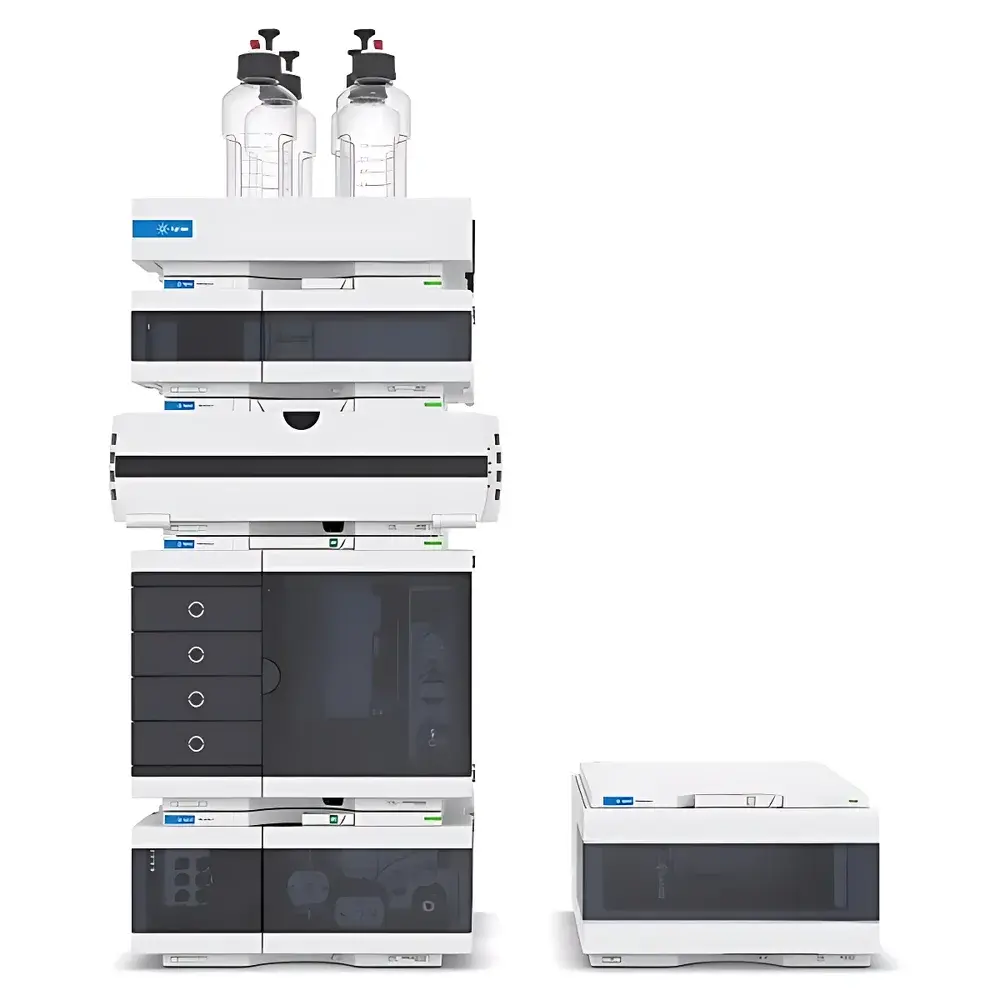
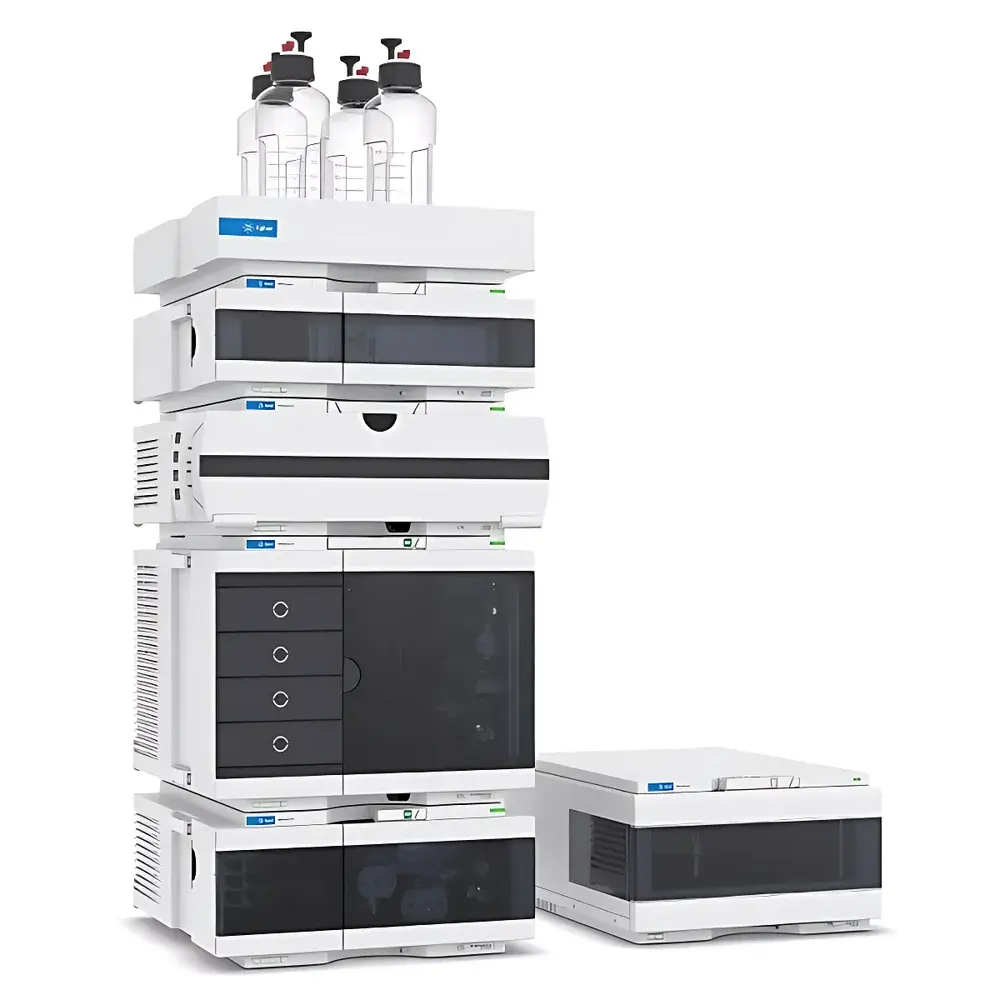
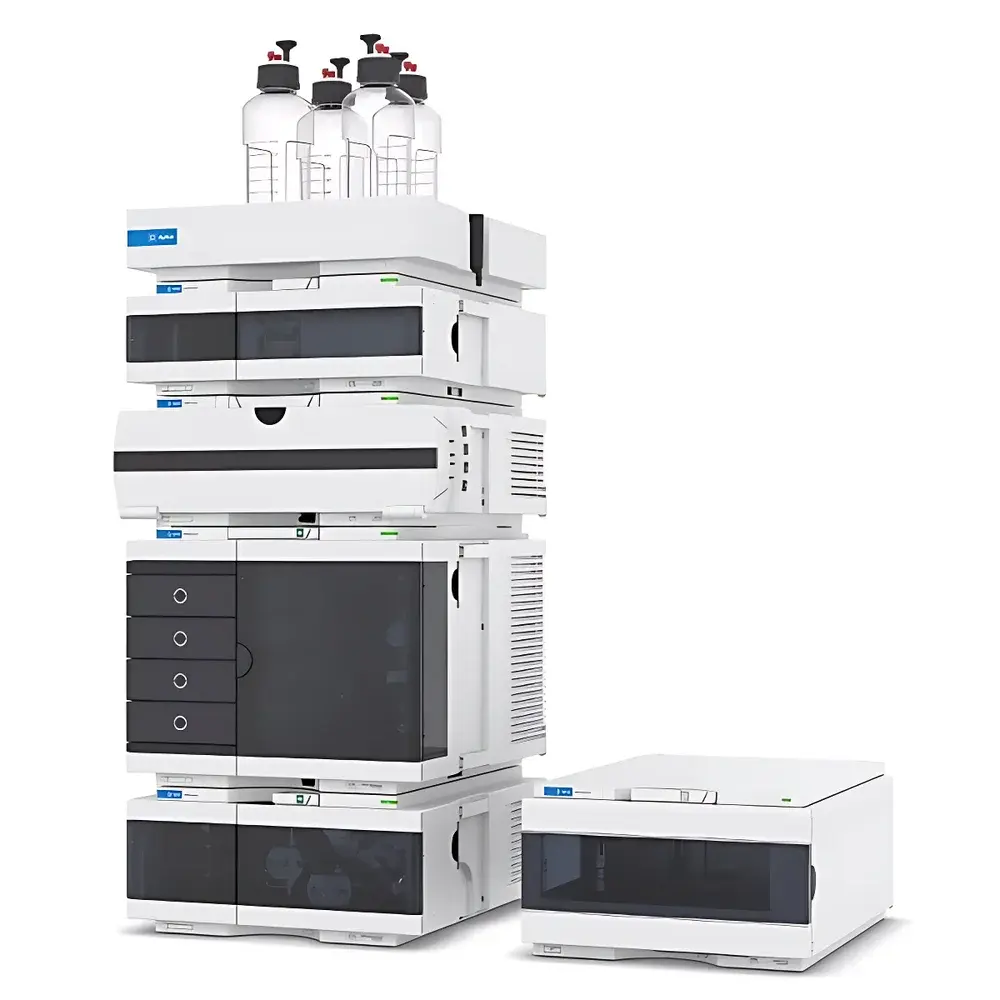
Agilent 1290 Infinity III Analytical Bio-LC Purification System
| Brand | Agilent Technologies |
|---|---|
| Origin | Germany |
| Manufacturer Type | Original Equipment Manufacturer (OEM) |
| Product Origin | Imported |
| Model | 1290 Infinity III Analytical Bio-LC Purification System |
| Flow Rate Range | 0.001–5 mL/min |
| Maximum Operating Pressure | 1300 bar |
Overview
The Agilent 1290 Infinity III Analytical Bio-LC Purification System is an ultra-high-performance liquid chromatography (UHPLC) platform engineered specifically for the analysis and microscale purification of biopharmaceuticals and sensitive biomolecules. Built upon Agilent’s proven 1290 Infinity III architecture, this system integrates full bio-inert fluidic pathways—constructed from titanium, PEEK, and ceramic components—to eliminate metal-catalyzed degradation, adsorption, and surface-induced aggregation. It operates on the fundamental principle of high-pressure liquid chromatography with gradient elution, enabling high-resolution separation under extreme chemical conditions (pH 1–12, high-salt mobile phases up to 2 M ammonium acetate or sodium phosphate). Its 1300 bar pressure capability supports sub-2 µm particle-packed columns, delivering exceptional peak capacity, minimal band broadening, and reproducible retention time stability—critical for characterizing critical quality attributes (CQAs) such as charge variants, glycoforms, and aggregates in monoclonal antibodies, ADCs, and recombinant proteins.
Key Features
- Bio-inert flow path throughout solvent delivery, injection, column compartment, and detection modules—certified for compatibility with acidic, basic, and high-ionic-strength mobile phases
- Ultra-low system dwell volume (< 100 µL) and minimized extra-column dispersion, ensuring high chromatographic efficiency and method scalability across instrument generations
- High-pressure binary or quaternary pumping with active solvent compressibility compensation, supporting precise gradient formation from 0.1% to 99.9% B at flow rates from 0.001 to 5 mL/min
- Temperature-controlled autosampler with refrigerated sample tray (4–40 °C) and low carryover (< 0.002%) for thermolabile biologics
- Integrated fraction collector with real-time delay sensor calibration, refrigerated collection chamber (4–10 °C), and configurable tube formats (glass vials, 96-well plates, or 384-well plates)
- Modular expandability: optional UV/VIS, DAD, FLD, or mass spectrometry interfaces; upgradeable to preparative-scale collection via orthogonal fractionation logic
Sample Compatibility & Compliance
The system is validated for use with a broad spectrum of biopharmaceutical samples—including intact mAbs, antibody-drug conjugates (ADCs), fusion proteins, viral vectors, and oligonucleotides—without compromising structural integrity. All wetted surfaces meet USP Class VI and ISO 10993 biocompatibility standards. The platform supports compliance with regulatory frameworks including ICH Q5, Q6, and Q8; FDA 21 CFR Part 11 (with optional electronic signature and audit trail modules); and EU Annex 11 requirements for computerized systems used in GMP environments. Method transfer protocols are fully documented per ASTM E2657 and ISO/IEC 17025 guidelines, facilitating seamless migration from legacy Agilent 1100/1200/1260 platforms.
Software & Data Management
Controlled by OpenLab CDS 2.x or MassHunter Workstation (for LC/MS configurations), the system provides secure, role-based access control, automated data integrity checks, and embedded electronic lab notebook (ELN) integration. All acquisition, processing, and reporting workflows adhere to ALCOA+ principles (Attributable, Legible, Contemporaneous, Original, Accurate, Complete, Consistent, Enduring, Available). Audit trails record all user actions—including method edits, sequence changes, and fraction collection triggers—with immutable timestamps. Raw data files (.d format) are stored in vendor-neutral, compressed archives compliant with ISO/IEC 27001 information security standards.
Applications
- Characterization of charge heterogeneity (IEX-UHPLC), size variants (SEC-UHPLC), and hydrophobicity profiles (HIC-UHPLC) in therapeutic proteins
- Purification of milligram-scale intermediates for structural biology studies (e.g., NMR, X-ray crystallography)
- Isolation of individual glycoforms for functional activity assays and biosimilarity assessment
- Method development and validation for QC release testing under ICH Q2(R2) guidance
- Orthogonal purity assessment combining UV, MS, and fluorescence detection for forced degradation studies
- Automated fraction re-injection workflows for iterative peak identification and impurity profiling
FAQ
Can this system be used for both analytical characterization and small-scale purification?
Yes—the 1290 Infinity III Analytical Bio-LC Purification System is designed for dual-use: high-resolution analytical separation and targeted micro-purification (typically 0.1–10 mg per run), leveraging its bio-inert hardware and intelligent fraction triggering algorithms.
Is method transfer from older Agilent LC systems supported?
Yes—backward compatibility is ensured through identical dwell volume management, consistent gradient delay compensation, and standardized method export/import protocols across the Infinity III, 1260, and 1290 II platforms.
What regulatory documentation is available for GMP environments?
Agilent provides IQ/OQ/PQ protocols, 21 CFR Part 11 readiness packages, and risk-based validation templates aligned with Annex 15 and ASTM E2500-13.
Does the system support high-salt mobile phases commonly used in ion exchange chromatography?
Yes—its titanium pump heads, ceramic check valves, and PEEK-lined tubing resist corrosion and precipitation, enabling stable operation with up to 2 M salt concentrations across pH 1–12.
How is fraction purity optimized during collection?
The integrated delay sensor dynamically calibrates retention time shifts between detection and collection points, minimizing cross-contamination and maximizing recovery of target peaks with >95% purity in single-pass mode.






