
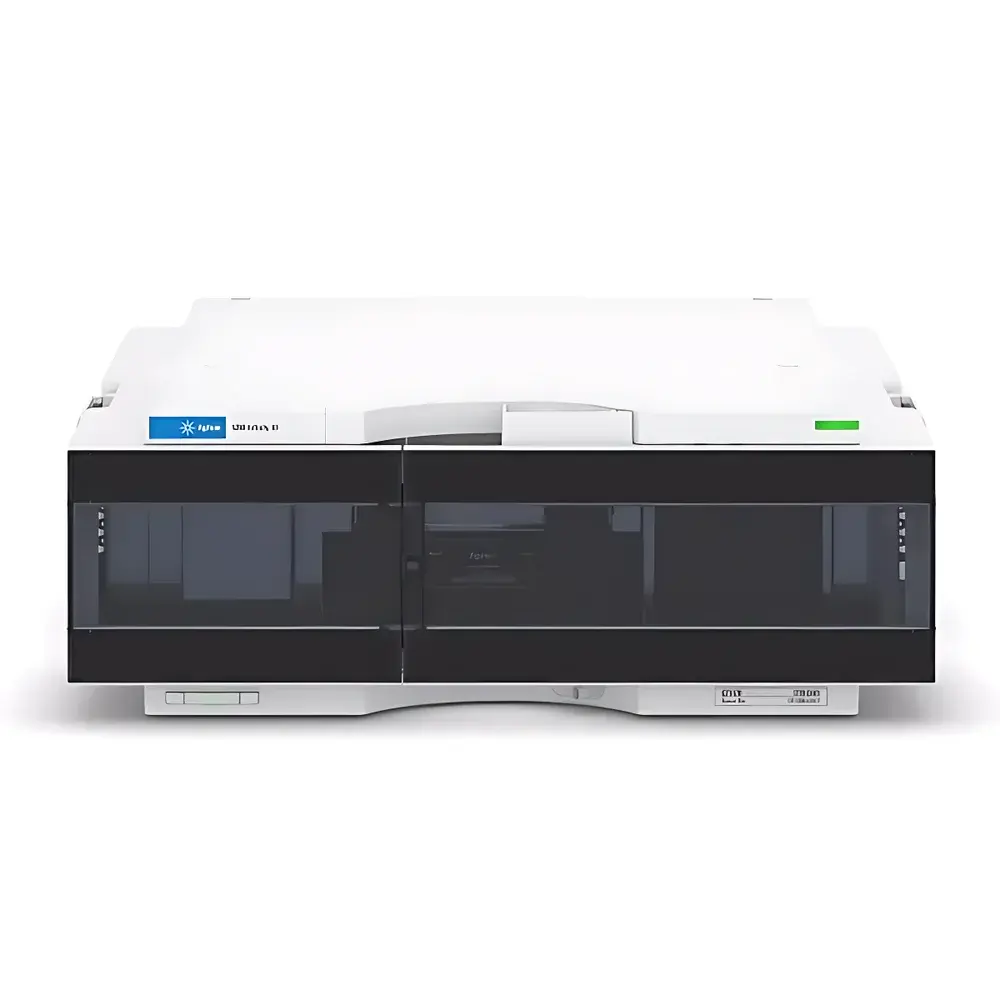
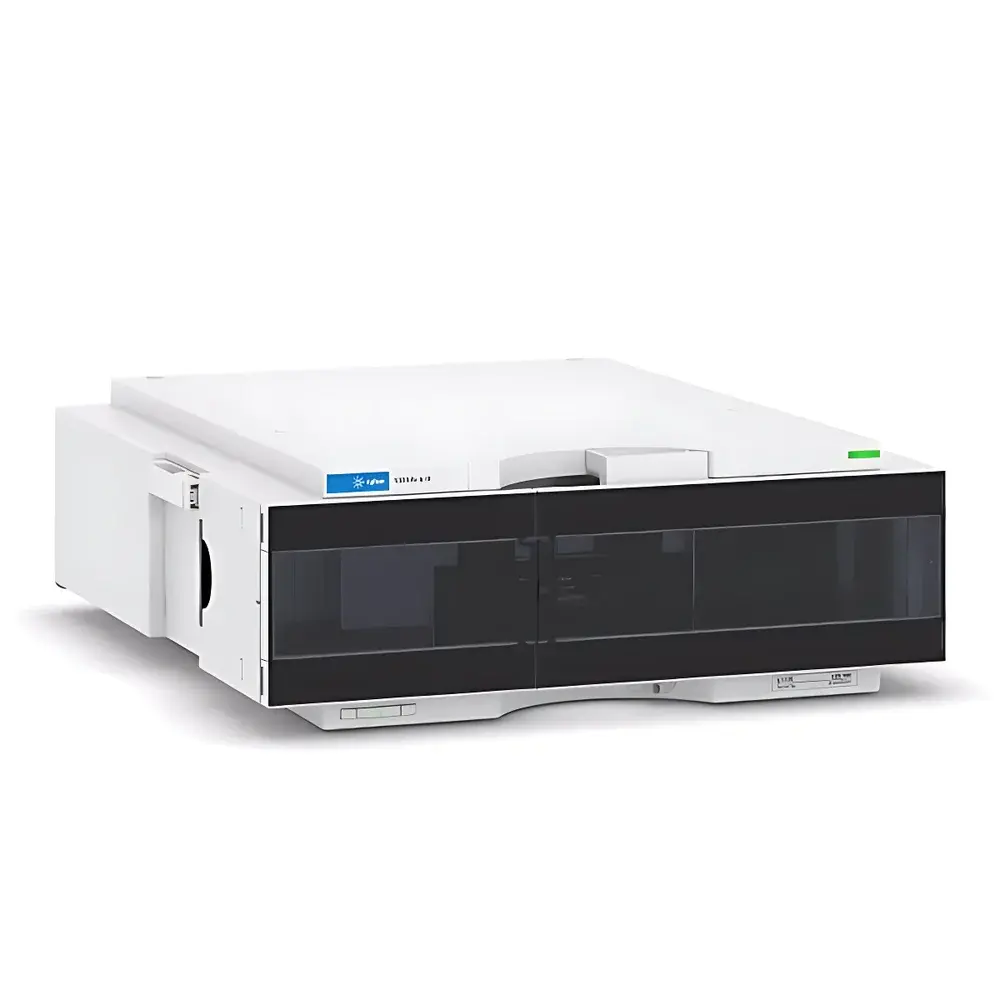
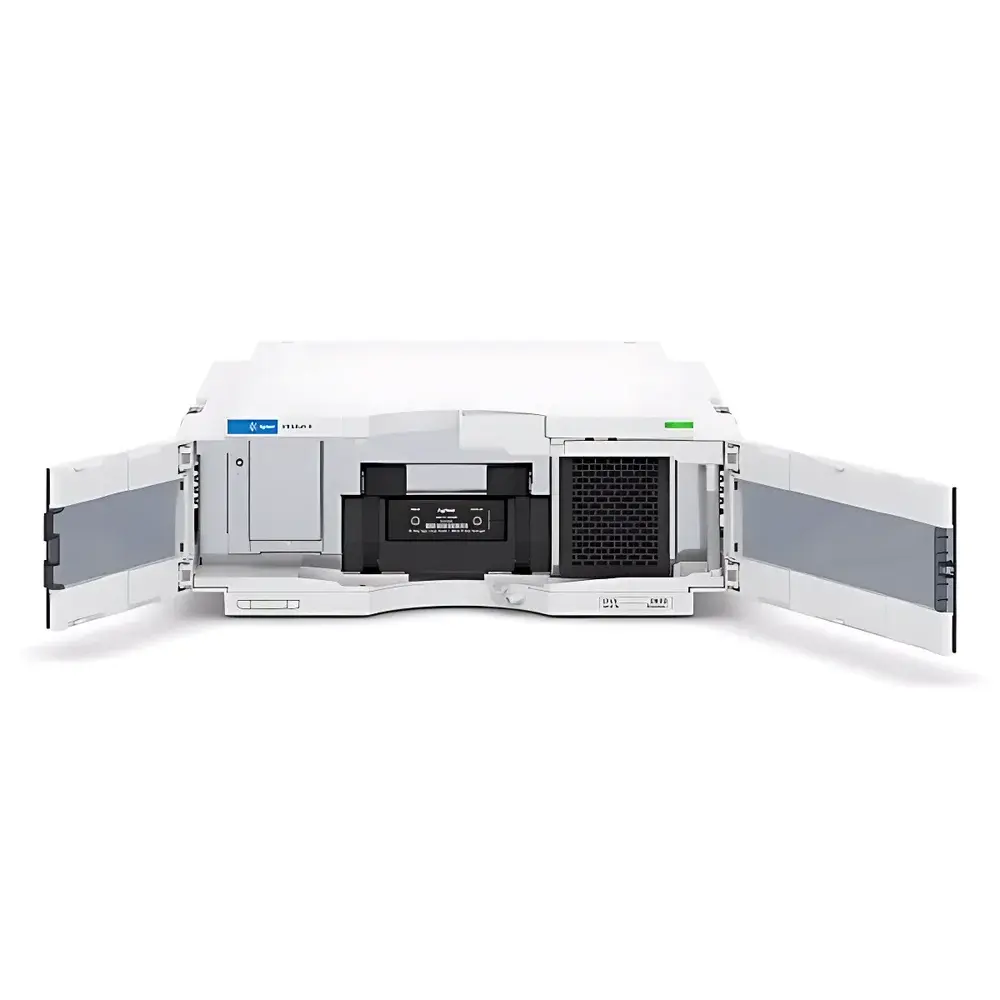
Agilent 1290 Infinity III Diode Array Detector FS
| Brand | Agilent Technologies |
|---|---|
| Origin | Germany |
| Manufacturer Type | Original Equipment Manufacturer (OEM) |
| Product Category | Imported Instrument |
| Model | 1290 Infinity III Diode Array Detector FS |
| Detection Principle | UV-Vis Absorbance Spectroscopy via Photodiode Array |
| Instrument Type | Diode Array Detector (DAD) |
| Noise Level | ±0.6 µAU/cm (with 60 mm pathlength flow cell) |
| Signal Channels | Up to 8 simultaneous wavelength-specific signals |
| Sampling Rate | Up to 240 Hz |
| Flow Cell Options | MaxLight™ cartridge flow cells (10 mm and 60 mm pathlengths) |
| Compliance | Designed for GLP/GMP environments |
Overview
The Agilent 1290 Infinity III Diode Array Detector FS is a high-performance, field-upgradable UV-Vis detection module engineered for ultra-high-performance liquid chromatography (UHPLC) systems. It operates on the principle of simultaneous multi-wavelength absorbance detection across the 190–800 nm spectral range using a 1024-element photodiode array. Unlike single-wavelength detectors, the DAD captures full UV-Vis spectra at each data point—enabling post-run wavelength selection, peak purity assessment, spectral library matching, and quantitative analysis without re-injection. Its optical architecture integrates MaxLight™ waveguide flow cells, which utilize total internal reflection to achieve near-100% light transmission efficiency while eliminating optical path distortion caused by conventional fused-silica cell diffusion effects. This design ensures high spectral fidelity and minimal band broadening—even at UHPLC-relevant flow rates and narrow peak widths (<2 s).
Key Features
- MaxLight™ cartridge flow cells (10 mm and 60 mm pathlengths) deliver exceptional sensitivity and low dispersion: noise ≤ ±0.6 µAU/cm (60 mm cell) and ≤ ±3 µAU (10 mm cell), enabling trace-level quantitation in complex matrices.
- Real-time acquisition at up to 240 Hz supports sub-second peak sampling—critical for resolving co-eluting compounds in fast gradient UHPLC methods.
- RFID-enabled flow cells and deuterium/tungsten lamps provide automatic recognition, usage tracking, calibration history logging, and secure instrument configuration management—enhancing data integrity and regulatory compliance.
- Electronically controlled temperature (ETC) stabilization maintains detector thermal equilibrium across ambient fluctuations (±2 °C), minimizing baseline drift and preserving long-term signal reproducibility.
- Eight independent signal channels allow concurrent monitoring at user-defined wavelengths—including dual-reference or ratiometric measurements—improving selectivity and robustness in method development.
- Optional HDR (High Dynamic Range) upgrade extends linear response from 0.0005–2.0 AU to 0.0005–60 AU—accommodating samples with wide concentration variances without manual attenuation or dilution.
Sample Compatibility & Compliance
The detector is compatible with all standard HPLC/UHPLC mobile phases (including aqueous, organic, and buffer-based solvents) and interfaces seamlessly with Agilent 1290 Infinity III LC systems via proprietary digital I/O and LAN communication. It supports stainless steel, PEEK, and titanium flow cell housings rated for pressures up to 1300 bar. Regulatory readiness includes native integration with Agilent OpenLab CDS software, which provides full 21 CFR Part 11 compliance features—including electronic signatures, role-based access control, immutable audit trails, and automated report generation. The system adheres to ISO/IEC 17025 requirements for analytical instrument qualification and meets ASTM E2656 and USP guidelines for chromatographic detector performance verification.
Software & Data Management
Controlled exclusively through Agilent OpenLab CDS (ChemStation Edition or OpenLab ECM), the DAD enables method-driven acquisition, real-time spectral overlay, automated peak purity evaluation (using both threshold and orthogonal algorithms), and library search against NIST, Wiley, or user-customized spectral databases. All raw spectral data (intensity vs. wavelength vs. retention time) are stored in vendor-neutral .d format, supporting third-party processing tools. Instrument metadata—including lamp hours, flow cell serial numbers, temperature logs, and calibration parameters—is embedded directly into data files, ensuring full traceability during GxP audits.
Applications
This DAD is routinely deployed in pharmaceutical QC/QA laboratories for assay validation, impurity profiling, and stability-indicating method development per ICH Q2(R2). It supports biopharmaceutical characterization (e.g., mAb aggregation analysis via UV spectral deconvolution), environmental contaminant screening (PAHs, pesticides), food authenticity testing (adulterant detection via spectral fingerprinting), and natural product isolation workflows requiring orthogonal confirmation of compound identity. Its high-speed spectral acquisition also facilitates heart-cutting 2D-LC and comprehensive LC×LC applications where spectral consistency across modulation cycles is essential.
FAQ
What is the maximum sampling rate supported by the 1290 Infinity III DAD FS?
Up to 240 Hz—enabling ≥12 data points across a 5-second peak.
Can the detector operate with non-Agilent LC systems?
Yes, via analog voltage output (0–1 V) or digital RS-232/LAN interface, though full feature access (e.g., RFID, ETC, HDR) requires Agilent hardware/software integration.
Is the 60 mm flow cell suitable for standard 4.6 mm ID columns?
It is optimized for low-flow microbore and capillary applications; the 10 mm cell is recommended for 2.1–4.6 mm ID columns to balance sensitivity and peak shape.
How does the MaxLight™ flow cell improve resolution compared to conventional cells?
By eliminating refractive index gradients and thermal lensing effects at the cell walls, it preserves chromatographic resolution—particularly under high-organic mobile phase conditions.
Does the detector support spectral deconvolution for co-eluting peaks?
Yes—OpenLab CDS includes peak purity algorithms based on spectral correlation, target factor analysis, and evolving factor analysis (EFA).



