
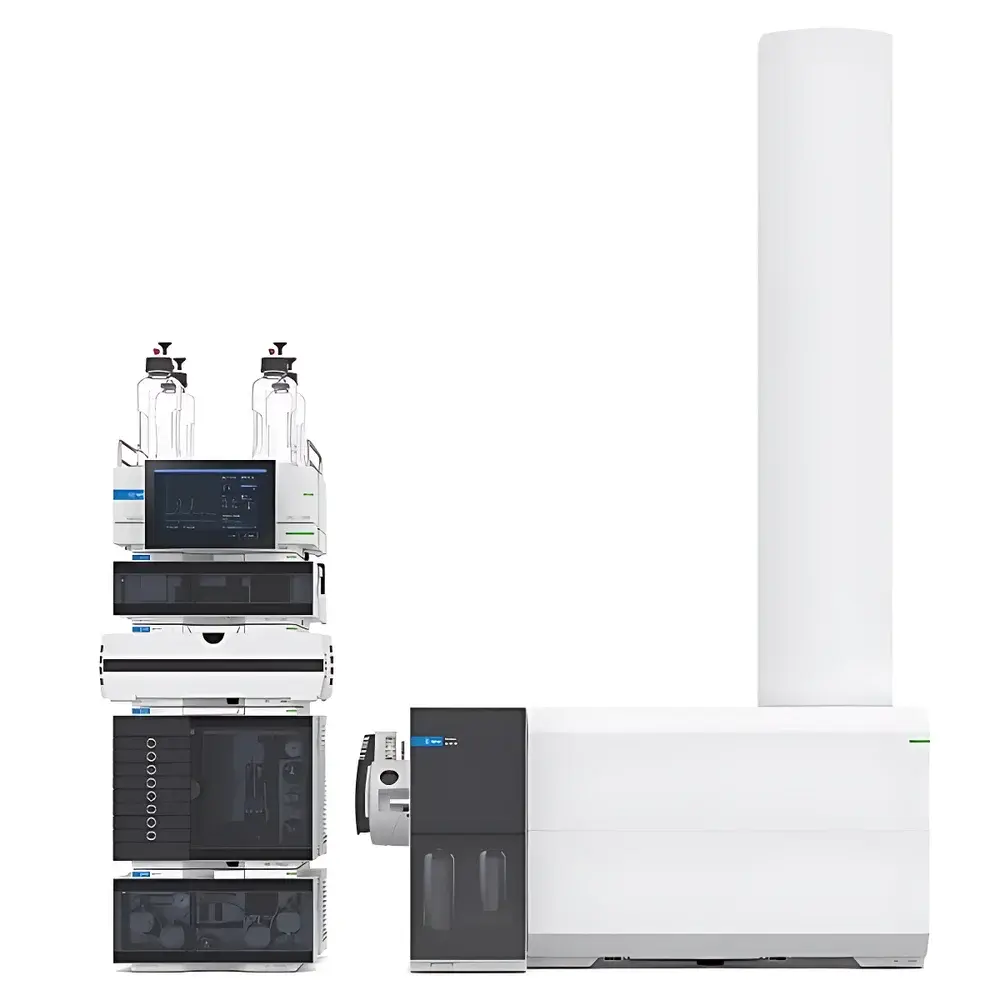
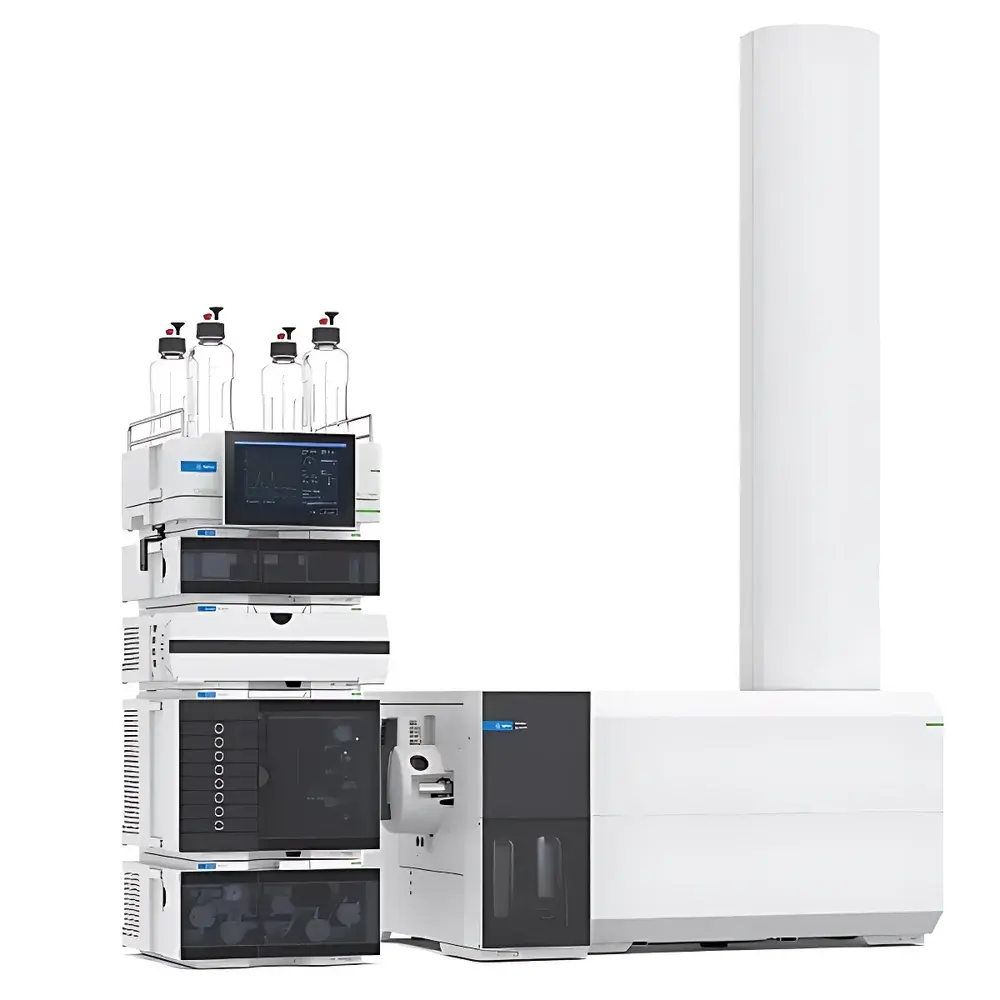
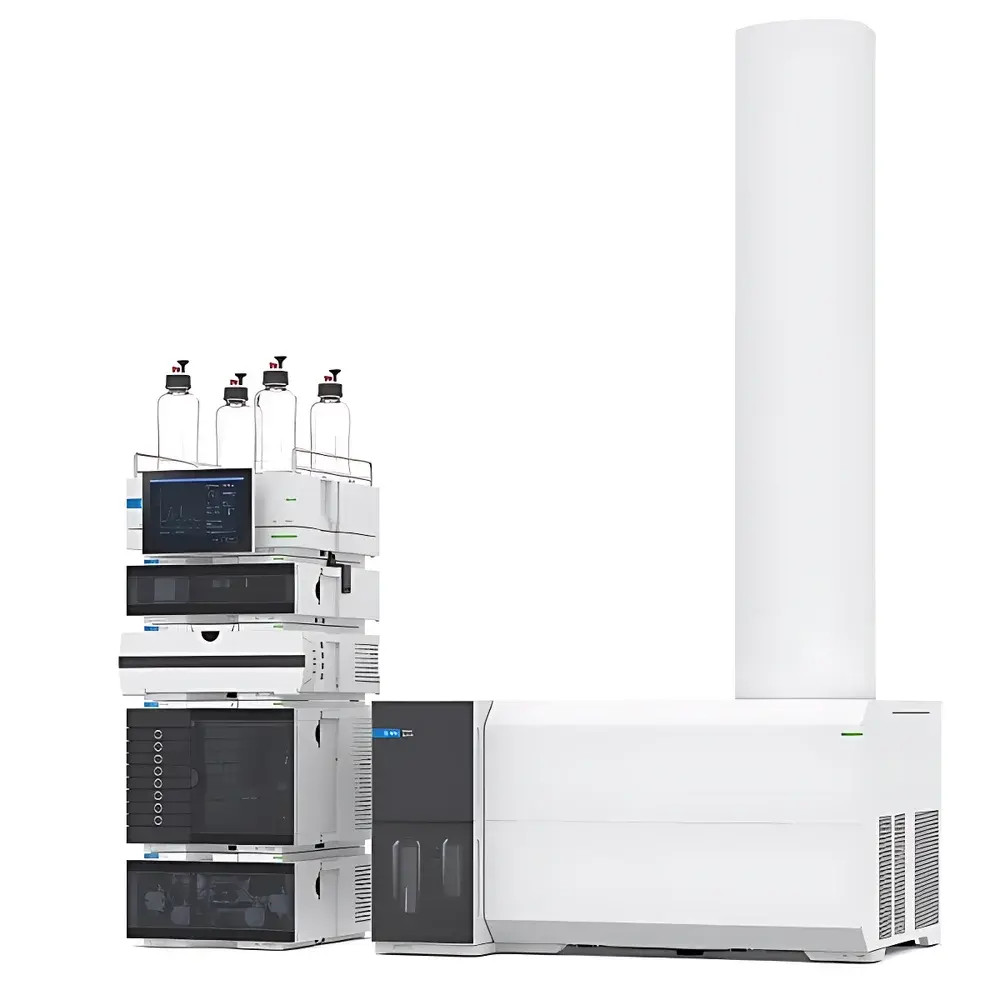
Agilent 1290 Infinity III High-Throughput UHPLC System
| Brand | Agilent Technologies |
|---|---|
| Origin | Germany |
| Manufacturer Type | Original Equipment Manufacturer (OEM) |
| Product Origin | Imported |
| Model | 1290 Infinity III High-Throughput |
| Instrument Type | Conventional High-Performance Liquid Chromatograph (HPLC) / Ultra-High-Performance Liquid Chromatograph (UHPLC) |
| Application Scope | General-Purpose Analytical Instrumentation |
| Flow Rate Range | Up to 5 mL/min (with G7120A & G7104A pumps) |
| Maximum Operating Pressure | 1300 bar |
| Injection Volume Range | 0.1–100 µL (standard) |
| Temperature Control Zones | Dual-zone (G7116A/B) |
| Solvent Selection Capacity | 4 standard, up to 15 with optional Solvent Selection Valve |
| Column ID Reader | Optional |
| Column Capacity | 8 |
| System Dimensions (W × D) | 435 mm × 568 mm |
| Power Supply | 100–240 VAC |
Overview
The Agilent 1290 Infinity III High-Throughput UHPLC System is an engineered platform for ultra-high-speed, high-reproducibility liquid chromatographic analysis under pressures up to 1300 bar. Built upon the core principles of ultra-high-performance liquid chromatography—namely, reduced particle size (<2 µm), minimized system dispersion, and precise gradient delivery—it delivers exceptional resolution, sensitivity, and cycle time reduction without compromising robustness or method transferability. Designed specifically for laboratories requiring maximum sample throughput—such as pharmaceutical QC/QA, biopharmaceutical characterization, clinical research, and contract testing facilities—the system integrates hardware-level pressure resilience, intelligent thermal management, and low-dead-volume fluidics to support demanding applications including fast gradient separations, 2D-LC, and coupled LC/MS workflows. Its architecture conforms to ISO/IEC 17025-aligned operational rigor and supports regulatory compliance frameworks including FDA 21 CFR Part 11 (when paired with compliant software configurations) and GLP/GMP documentation requirements.
Key Features
- 1300-bar pressure capability across all major modules—including the Multisampler, quaternary pump (G7120A), and column compartment—enabling use of sub-2-µm particles (e.g., Agilent ZORBAX RRHD and AdvanceBio columns) for rapid, high-resolution separations.
- Agilent 1290 Infinity III Multisampler with dual-zone temperature control (G7116A/B) maintains samples at 4–40 °C; accommodates up to 16 cooled microtiter plates (6144 positions) or vials, achieving injection cycle times as short as 5 seconds and carryover <9 ppm (e.g., chlorhexidine).
- Low-dispersion pumping system featuring active damping and a delay volume as low as 45 µL ensures precise gradient formation and retention time stability—even at flow rates up to 5 mL/min (with G7120A and G7104A pump heads).
- Agilent InfinityLab Quick Change valve integrated into the column oven enables automated column switching, parallel column regeneration, and solvent flush protocols—reducing downtime and supporting uninterrupted high-throughput operation.
- Agilent 1290 Infinity III Diode Array Detector (DAD) equipped with Max-Light cartridge flow cell delivers enhanced UV sensitivity, baseline stability, and spectral acquisition at up to 240 Hz—critical for peak purity assessment and method development.
- Full LC/MS compatibility with Agilent’s quadrupole, Q-TOF, and triple quadrupole mass spectrometers, ensuring seamless coupling for structural elucidation, quantitation, and metabolite profiling.
Sample Compatibility & Compliance
The system supports diverse sample formats—from standard 2-mL vials and 96-/384-well microplates to custom plate layouts—without hardware modification. Its autosampler design minimizes adsorption and cross-contamination through pressure-assisted needle wash and programmable solvent selection (up to 15 solvents with optional valve). All wetted surfaces are chemically inert (e.g., titanium, sapphire, PEEK, and stainless steel passivated per ASTM F86), ensuring compatibility with aggressive mobile phases (e.g., TFA, HFIP, high-pH buffers). The platform complies with key international standards including ISO 9001 (quality management), ISO/IEC 17025 (testing laboratory competence), and IEC 61000-6-3 (EMC emissions). It has been independently verified by My Green Lab and awarded the ACT Label (Accountability, Consistency, Transparency) for environmental impact across its full lifecycle—covering energy consumption, material sourcing, and end-of-life recyclability.
Software & Data Management
Controlled via OpenLab CDS (ChemStation Edition or EZChrom Edition), the system supports audit-trail-enabled data acquisition, electronic signatures, and customizable reporting templates aligned with ALCOA+ (Attributable, Legible, Contemporaneous, Original, Accurate, Complete, Consistent, Enduring, Available) principles. Agilent Lab Advisor provides real-time diagnostics, predictive maintenance alerts, and remote monitoring—facilitating proactive instrument management and minimizing unplanned downtime. Data integrity is reinforced through secure user role assignment, version-controlled method storage, and encrypted raw data archives compliant with FDA 21 CFR Part 11 requirements when deployed in validated environments. Integration with LIMS and ELN platforms is supported via standard APIs and ASTM E1384-compliant data exchange protocols.
Applications
- High-throughput release testing of pharmaceutical intermediates and final drug products (per USP & Ph. Eur. monographs)
- Peptide mapping and intact protein analysis in biologics development
- Residual solvent and extractables/leachables screening in packaging validation studies
- Metabolomics and lipidomics profiling using 2D-LC and comprehensive gradient methods
- Stability-indicating assays for forced degradation studies under ICH Q1–Q5 guidelines
- Quality-by-Design (QbD) method development with automated parameter optimization
FAQ
What is the minimum injection volume supported by the 1290 Infinity III Multisampler?
The standard configuration supports injection volumes from 0.1 to 100 µL. Extended-range options enable 0.1–900 µL (with extended volume kit) or 0.1–1500 µL (with multi-draw tooling).
Can the system operate with >4 solvents simultaneously?
Yes—using the optional Solvent Selection Valve, up to 15 solvents can be managed in a single method without manual reconfiguration.
Is column identification automated?
An optional RFID-based Column ID Reader allows automatic detection and logging of column type, serial number, and usage history—supporting traceability and preventive maintenance scheduling.
Does the system meet regulatory requirements for GxP environments?
When configured with OpenLab CDS in validated mode and operated under documented SOPs, it satisfies FDA 21 CFR Part 11, EU Annex 11, and ISO/IEC 17025 requirements for data integrity and electronic records.
What thermal control options are available for the autosampler?
The G7116A/B module provides independent dual-zone cooling/heating: one zone for sample storage (4–40 °C), another for injection needle and flow path (10–40 °C), minimizing thermal degradation and viscosity-induced variability.





