
Agilent 1290 Infinity III Multisampler Multifunctional Autosampler
| Brand | Agilent Technologies |
|---|---|
| Origin | Germany |
| Manufacturer Type | Original Equipment Manufacturer (OEM) |
| Product Origin | Imported |
| Model | 1290 Infinity III Multisampler |
| Instrument Type | HPLC Autosampler |
| Maximum Sample Capacity | 6144 samples |
| Operating Pressure Rating | Up to 1300 bar |
| Carryover | < 9 ppm |
| Temperature Control Range (Optional Integrated Chiller/Heater) | 4–40 °C |
Overview
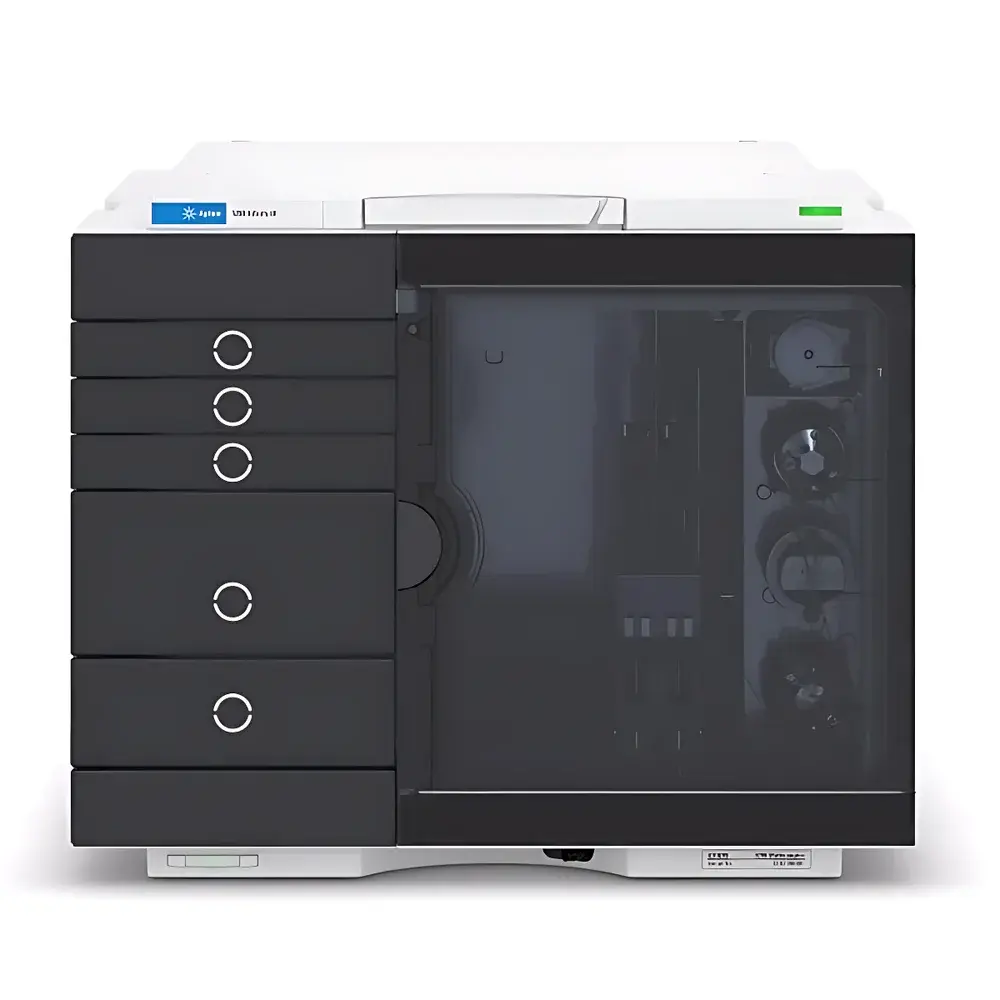
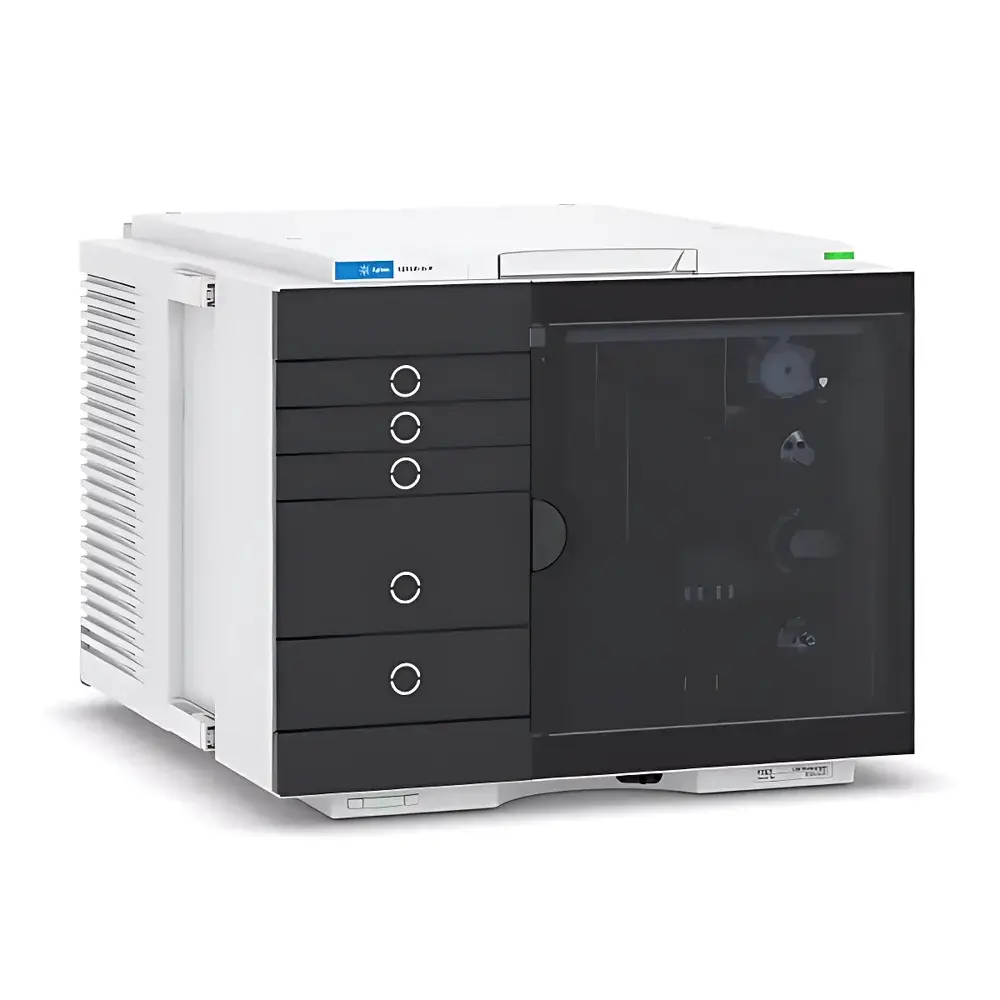
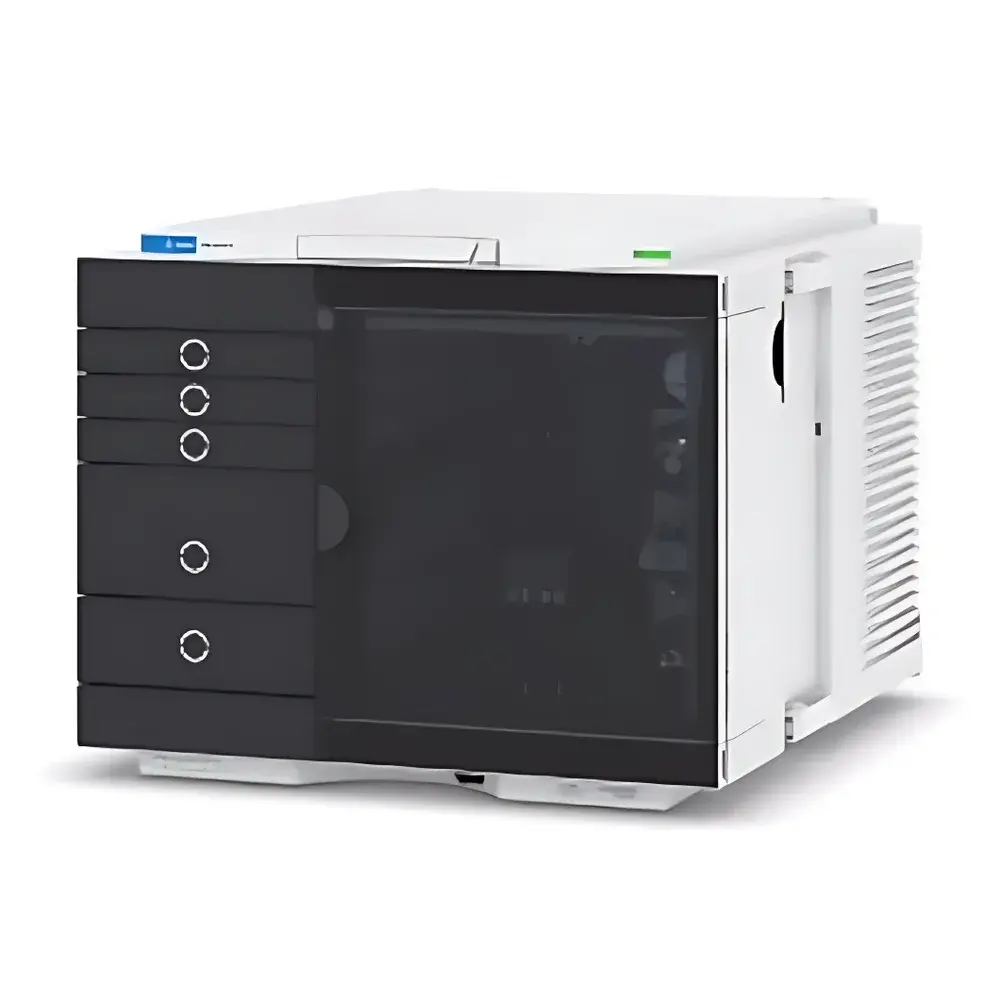
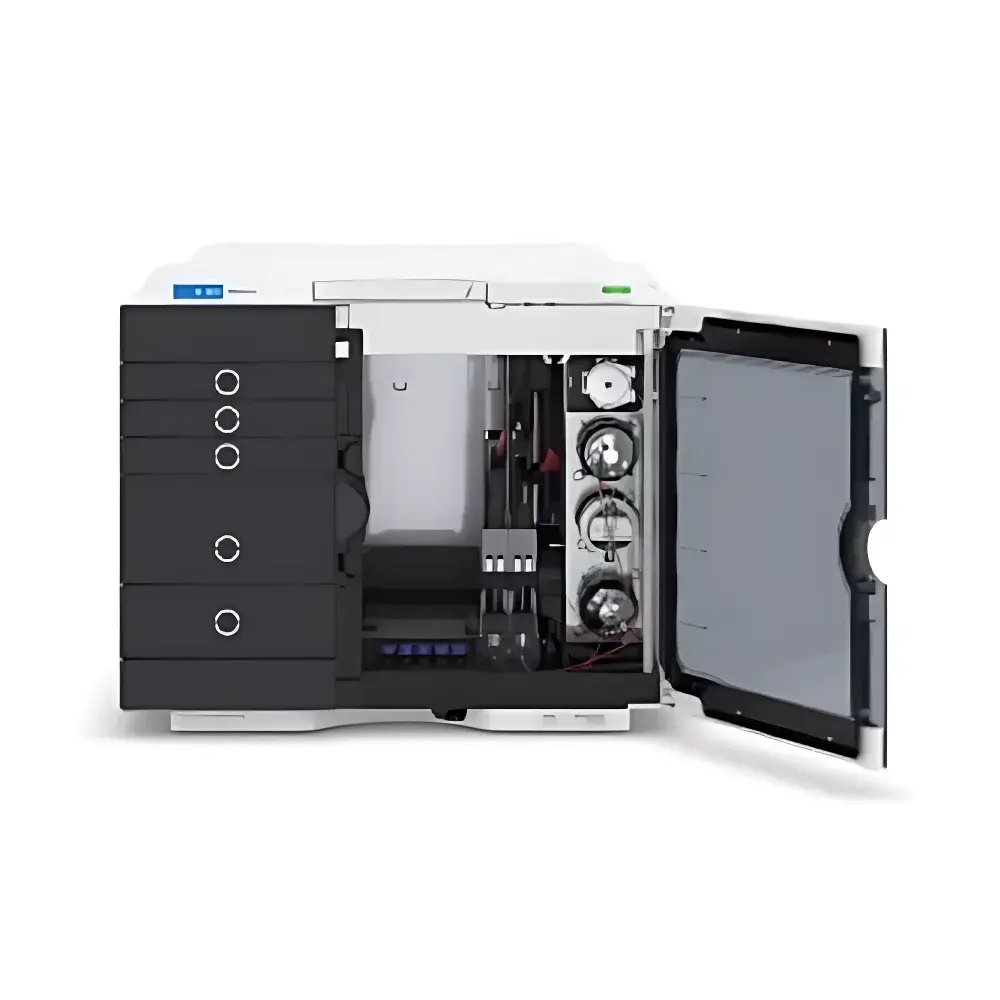
The Agilent 1290 Infinity III Multisampler is a high-performance, multifunctional autosampler engineered for ultra-high-pressure liquid chromatography (UHPLC) and integrated LC system workflows. Designed as a core component of the Agilent 1290 Infinity III LC platform, it operates reliably at pressures up to 1300 bar—enabling compatibility with sub-2-µm particle columns and advanced method development requirements. Its fundamental architecture leverages dual-syringe, dual-needle aspiration and injection technology to decouple sample handling from chromatographic run execution. This parallelization allows full overlap of needle washing, vial sampling, and column injection cycles—effectively eliminating idle time between injections and maximizing instrument uptime. The system’s compact footprint ensures full integration within the standard Agilent LC stack dimensions, preserving valuable bench space without compromising throughput or scalability.
Key Features
- Dual-needle, dual-syringe architecture enables true parallel operation: one needle aspirates while the other injects, reducing cycle time to under 5 seconds for typical UHPLC methods.
- Modular drawer system with three adjustable height settings accommodates diverse container formats—including 2-mL vials, 4-mL vials, 96-well, 384-well, and 1536-well microplates—without mechanical reconfiguration.
- High-capacity microplate drawer supports up to 16 standard microplates (e.g., 384-well), delivering a maximum sample capacity of 6144 positions in a single loading event.
- Advanced carryover mitigation: triple-solvent external needle wash combined with needle seat backflushing achieves residual levels < 9 ppm across a wide range of analytes—including highly retained small molecules and peptides.
- Integrated sample temperature control (optional) maintains precise thermal stability from 4 °C to 40 °C across all drawers, supporting thermally labile compounds and reproducible retention time alignment over extended sequences.
- Intelligent status indication: LED indicators per drawer provide real-time feedback on loading status, active sampling, and error conditions—accessible without software interaction.
Sample Compatibility & Compliance
The 1290 Infinity III Multisampler supports seamless integration with Agilent’s full suite of LC detectors (DAD, MWD, QTOF, Triple Quadrupole) and column compartments. It complies with ISO/IEC 17025 requirements for automated sample handling traceability and is validated for use in regulated environments operating under 21 CFR Part 11, EU Annex 11, and ICH guidelines. All firmware and hardware revisions are documented in Agilent’s formal change control system, supporting GLP/GMP audit readiness. Mechanical handling protocols meet ASTM D7260-21 standards for robotic precision in analytical sample introduction. The system’s closed-loop motion control ensures positional repeatability ±0.1 mm across >100,000 cycles.
Software & Data Management
Controlled via OpenLab CDS (ChemStation Edition or EZChrom Edition), the Multisampler integrates natively with Agilent’s enterprise-scale data management infrastructure. Sequence methods define not only injection parameters but also per-sample temperature setpoints, wash solvent selection, and needle path optimization. Audit trails record every physical actuation—including drawer opening/closing, plate indexing, and syringe movement—with user attribution and timestamping. Raw event logs are exportable in CSV and XML formats for third-party LIMS ingestion. Optional OpenLab ECM support provides electronic signature enforcement, role-based access control, and automated backup to network storage compliant with FDA 21 CFR Part 11 Annex A requirements.
Applications
This autosampler is routinely deployed in pharmaceutical QC/QA labs for batch release testing of APIs and finished dosage forms, where 6144-sample capacity supports large-scale stability studies across multiple timepoints and conditions. In early discovery settings, it enables unattended screening of compound libraries using 1536-well plates coupled with fast-gradient UHPLC-MS workflows. Biopharma applications include intact mAb analysis, peptide mapping, and glycan profiling—where low carryover and thermal stability prevent aggregation artifacts during multi-day runs. Environmental and food safety labs utilize its microplate flexibility for pesticide residue screening across hundreds of commodities in a single sequence.
FAQ
Does the 1290 Infinity III Multisampler require external cooling units for the optional temperature control module?
No—the integrated chiller/heater is self-contained and requires only standard 110–240 V AC power; no external coolant loops or chillers are needed.
Can the system be retrofitted into an existing 1290 Infinity II LC configuration?
Yes—mechanical and electrical interfaces are backward-compatible with Infinity II stacks; firmware update and calibration validation are required post-installation.
Is method transfer supported between different Agilent autosamplers?
Yes—OpenLab CDS preserves method definitions across Agilent autosampler models (e.g., ALS, G1367E, 1290 III), though dwell volume and carryover behavior must be re-verified per platform.
What maintenance intervals are recommended for the dual-needle mechanism?
Agilent recommends preventive maintenance every 6 months or after 10,000 injections, including syringe seal inspection, needle alignment verification, and washer valve performance testing.
How is carryover performance verified during qualification?
Carryover is assessed per USP and ICH Q2(R2) using a high-concentration standard followed by blank injections; acceptance criterion is < 9 ppm measured by UV absorbance or MS signal intensity.





