
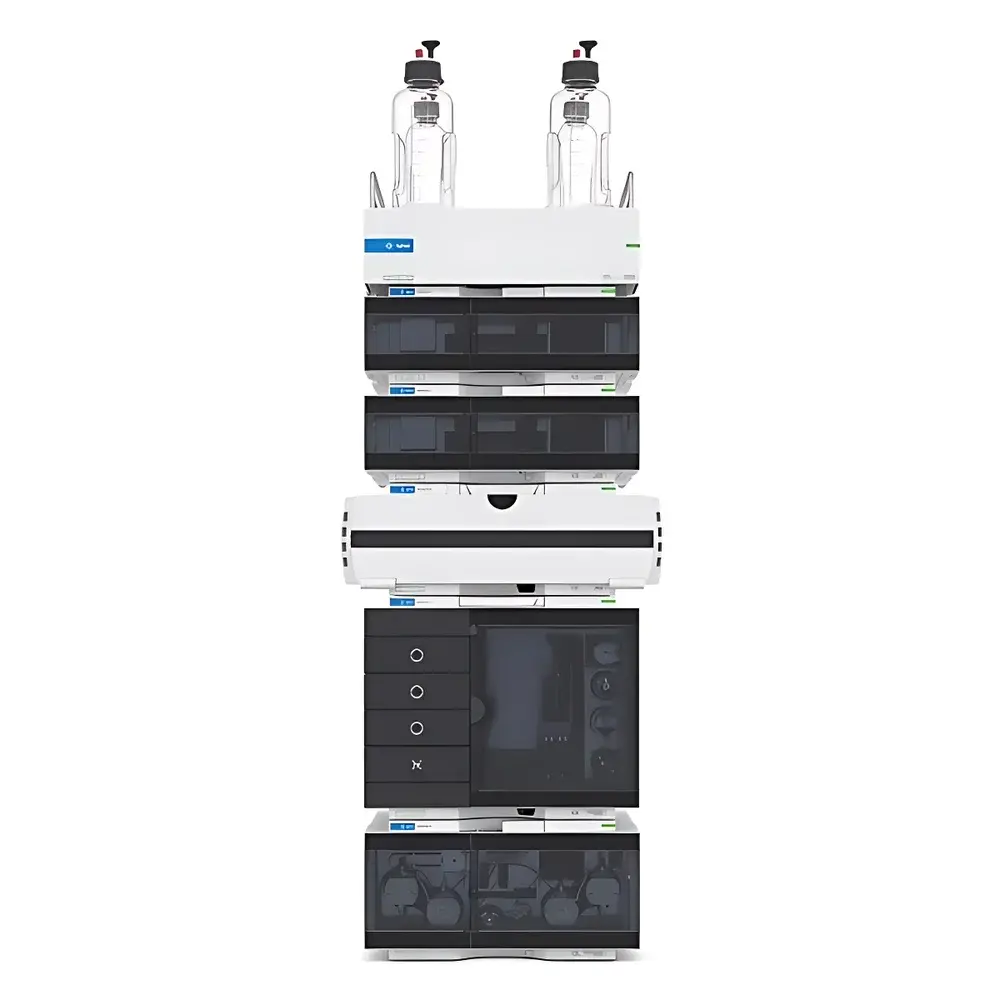
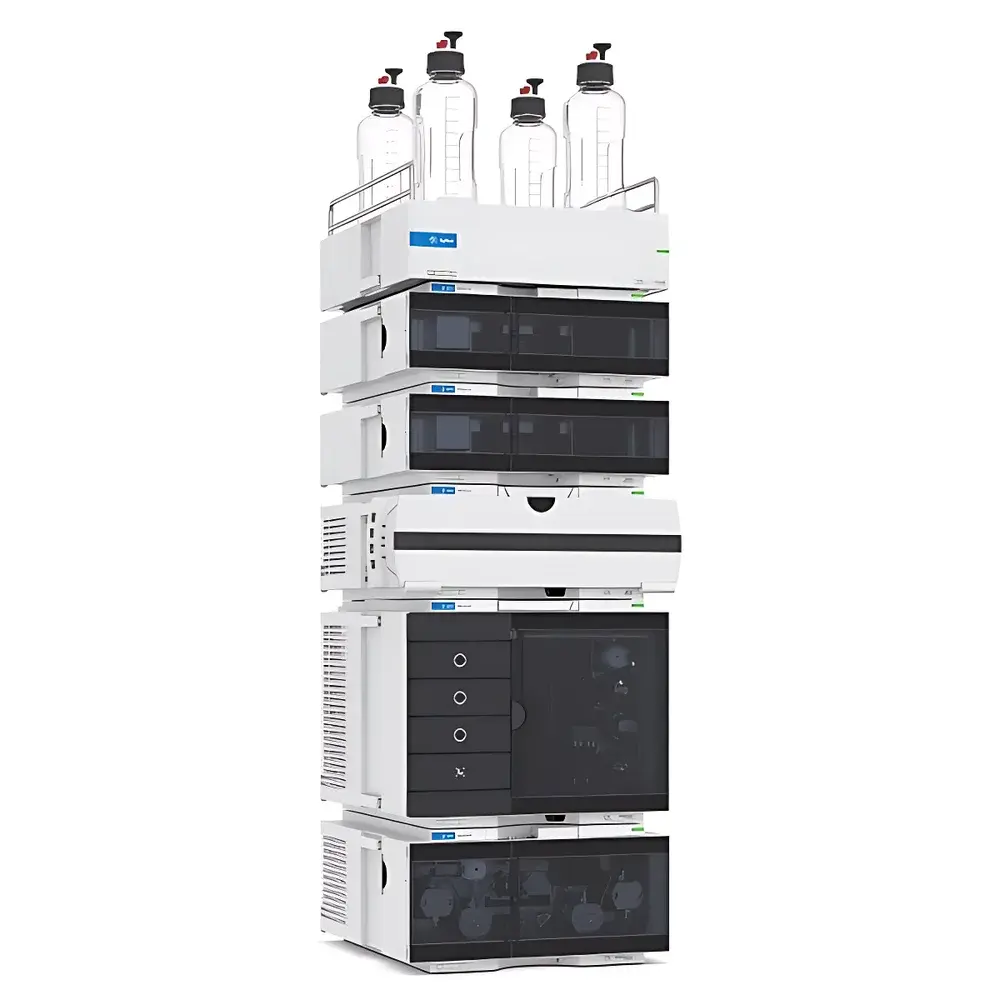
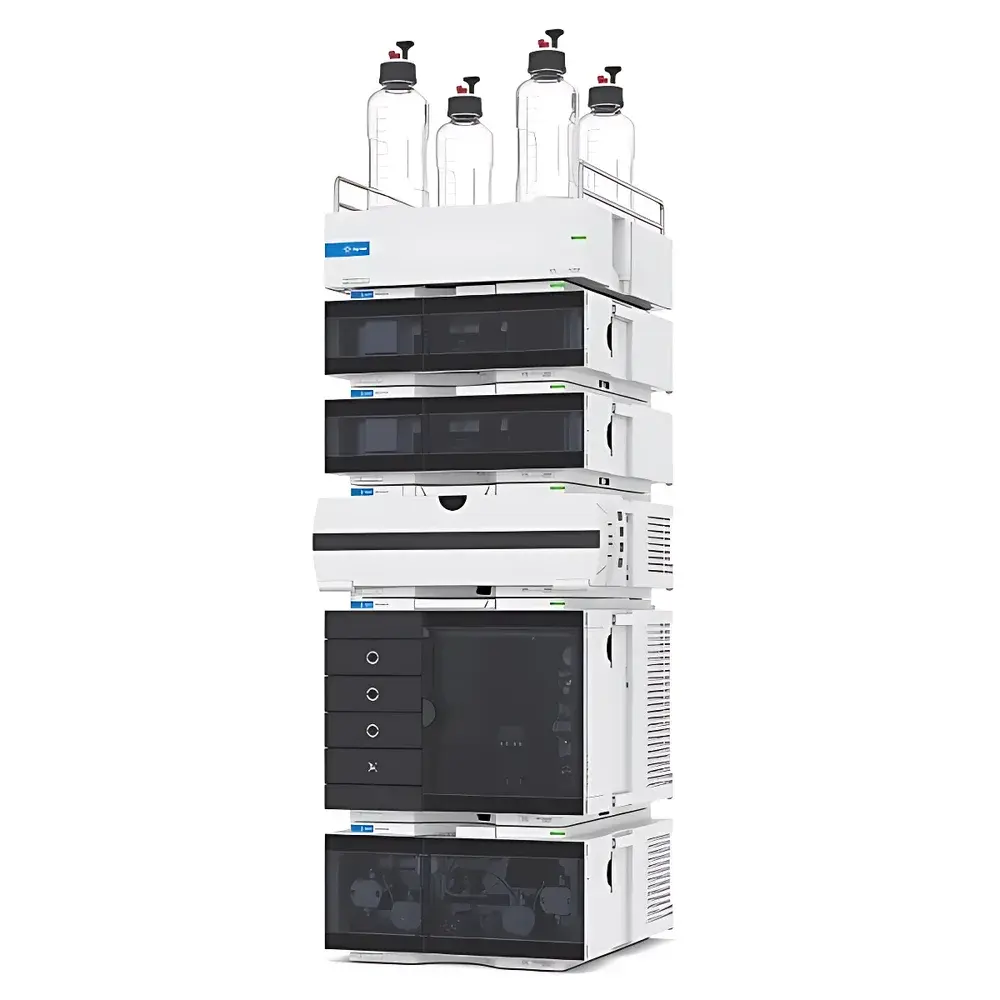
Agilent 1290 Infinity III Wide Dynamic Range Diode Array Detector (DAD)
| Brand | Agilent Technologies |
|---|---|
| Origin | Germany |
| Manufacturer Type | Original Equipment Manufacturer (OEM) |
| Product Origin | Imported |
| Model | 1290 Infinity III Wide Dynamic Range DAD |
| Instrument Type | Diode Array Detector (DAD) |
| Compatible System | Agilent InfinityLab LC Systems |
| Data Acquisition Rate | Up to 120 Hz (DAD FS variant) |
| Linear UV Dynamic Range Extension | 30× vs. conventional DAD |
| Temperature Control | Second-Generation Electronic Temperature Control (ETC) |
| Cell & Lamp Identification | RFID-enabled for audit-trail compliance |
| Flow Cell Pathlengths | Dual-path, optimized for high- and low-concentration analytes |
| Regulatory Support | Designed for GLP/GMP environments |
Overview
The Agilent 1290 Infinity III Wide Dynamic Range Diode Array Detector (DAD) is an advanced photometric detection module engineered for ultra-high-performance liquid chromatography (UHPLC) systems. It implements a dual-flow-cell architecture—integrating two precisely matched diode array detectors equipped with flow cells of differing optical pathlengths—to simultaneously capture absorbance signals across an extended linear UV–Vis range. This hardware-level signal fusion eliminates the need for manual range switching or sample dilution/re-injection, enabling true single-run quantification of analytes spanning concentration differences of up to three orders of magnitude. Based on proven couette-flow optics and high-stability deuterium/tungsten light sources, the detector delivers reproducible spectral acquisition from 190–800 nm with sub-nanometer wavelength accuracy. Its design directly addresses analytical bottlenecks in pharmaceutical impurity profiling, natural product fraction analysis, and QC release testing where co-eluting major components and trace-level degradants must be resolved and quantified within one chromatographic run.
Key Features
- Dual-path, wide-dynamic-range detection architecture: Combines signals from short- and long-path flow cells (e.g., 1 mm and 10 mm) to extend linear dynamic range by 30× compared to standard DAD configurations.
- High-speed spectral acquisition: Supports data collection at up to 120 Hz (DAD FS mode), fully synchronized with sub-2-second gradient UHPLC separations and narrow peak widths (< 3 s FWHM).
- Second-generation Electronic Temperature Control (ETC): Actively stabilizes optical bench temperature to ±0.05 °C, minimizing baseline drift under ambient fluctuations and ensuring consistent mAU-level sensitivity over multi-hour sequences.
- RFID-enabled consumables management: Integrated RFID tags in flow cells and lamps automatically log serial numbers, usage hours, calibration history, and maintenance events—enabling full traceability per ISO/IEC 17025 and FDA 21 CFR Part 11 requirements.
- Optimized optical throughput: High-efficiency holographic gratings and back-thinned CCD arrays deliver >95% quantum efficiency at 254 nm, maximizing signal-to-noise ratio without compromising resolution.
- Seamless integration with Agilent OpenLab CDS and MassHunter: Native support for spectral library matching, peak purity assessment, and multi-wavelength quantitative methods with automatic baseline correction algorithms.
Sample Compatibility & Compliance
The detector is validated for use with standard HPLC/UHPLC mobile phases—including aqueous buffers, acetonitrile, methanol, and THF—and accommodates flow rates from 0.05 to 5.0 mL/min. Its stainless-steel and PEEK-wetted components comply with USP , EP 3.1.1, and ASTM D4327 for chemical resistance. The system meets IEC 61000-4 electromagnetic compatibility standards and operates within Class II laser safety requirements (IEC 60825-1). All firmware and control logic are designed to support audit trails, electronic signatures, and role-based access control as required under GxP-regulated environments. Calibration protocols align with ASTM E275 and ISO 17025 Annex A.2 for photometric accuracy verification.
Software & Data Management
Controlled via Agilent OpenLab CDS v3.x or higher, the detector supports automated method validation workflows including linearity assessment (r² ≥ 0.9999 over 0.001–100 mAU), wavelength accuracy verification (±0.1 nm), and noise/drift monitoring. Spectral data are stored in vendor-neutral .spc and .cdf formats, with optional export to mzML for hybrid LC-DAD-MS correlation. All detector parameter changes—including acquisition rate, slit width, reference wavelength, and smoothing filters—are logged with user ID, timestamp, and reason-for-change fields. Data integrity safeguards include write-once storage options, digital signature binding, and encrypted database backups compliant with ALCOA+ principles.
Applications
- Pharmaceutical stability-indicating assays: Simultaneous quantification of active pharmaceutical ingredient (API), process-related impurities, and degradation products in forced degradation studies.
- Biopharmaceutical purity assessment: Detection of oxidized, deamidated, or fragmented monoclonal antibody variants using spectral deconvolution.
- Food and environmental contaminant screening: Multi-residue analysis of pesticides, mycotoxins, and polycyclic aromatic hydrocarbons (PAHs) in complex matrices.
- Natural product dereplication: Rapid identification of known compounds in crude extracts via spectral library matching against NIST, Wiley, and in-house databases.
- Method transfer between QC and R&D labs: Consistent retention time and peak area reproducibility across instrument platforms due to standardized optical calibration and ETC stabilization.
FAQ
How does the wide dynamic range architecture eliminate the need for re-injection or dilution?
It uses real-time signal fusion from two independent optical paths—short-path for high-concentration peaks and long-path for trace analytes—within a single chromatographic run, preserving stoichiometric relationships and injection volume integrity.
Is the detector compatible with non-Agilent UHPLC systems?
Yes, it supports analog voltage (0–1 V) and digital (LAN) interfaces for third-party LC controllers; however, full ETC synchronization and RFID functionality require Agilent’s 1290 Infinity III LC platform.
What regulatory documentation is provided for IQ/OQ/PQ validation?
Agilent supplies a complete validation package including installation qualification (IQ) checklists, operational qualification (OQ) test protocols with acceptance criteria per ASTM E275, and preventive maintenance schedules aligned with ISO/IEC 17025 clause 6.4.2.
Can spectral data be used for peak purity evaluation in regulated environments?
Yes—OpenLab CDS includes validated peak purity algorithms (e.g., threshold-based angle calculation, target factor analysis) with configurable reporting templates compliant with ICH Q5C and USP .
Does the system support variable bandwidth or adaptive slit control?
No—the slit width is fixed at 4 nm to optimize signal-to-noise while maintaining sufficient spectral resolution for library matching; this configuration is certified per USP for analytical instrument qualification.




