
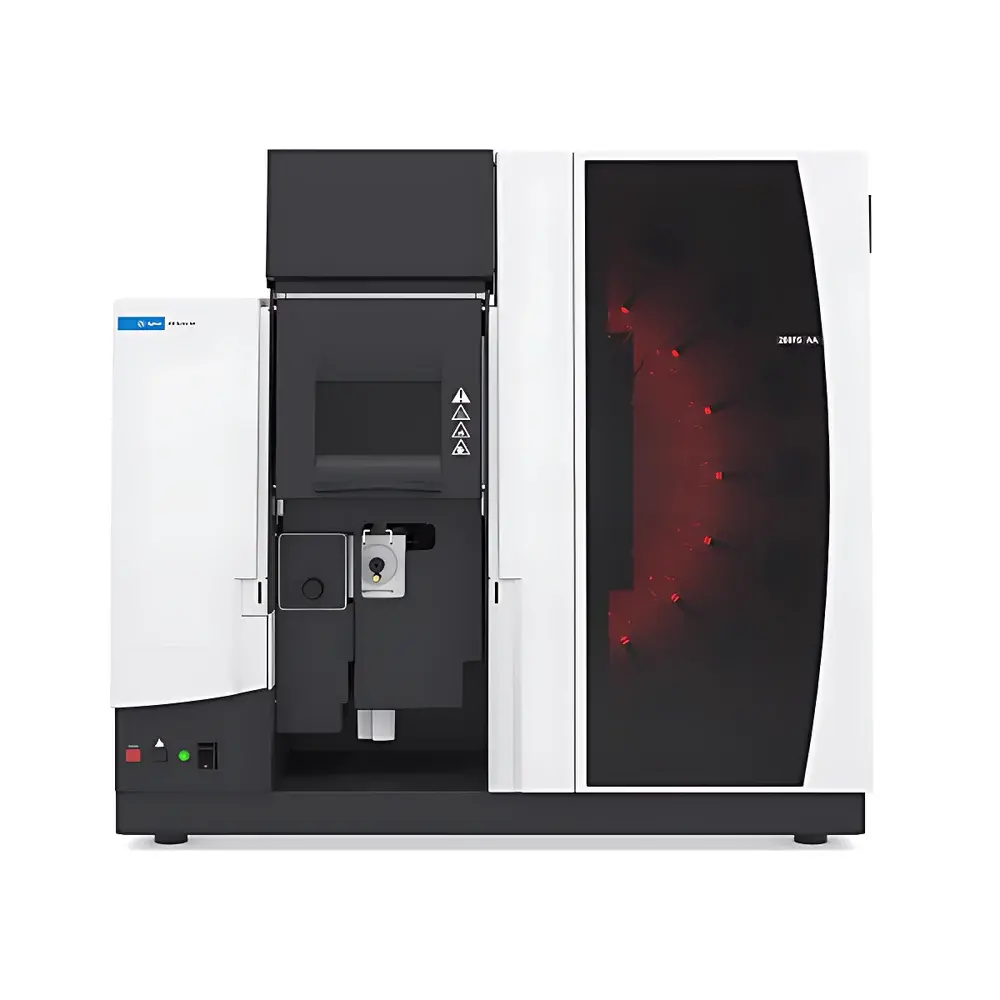
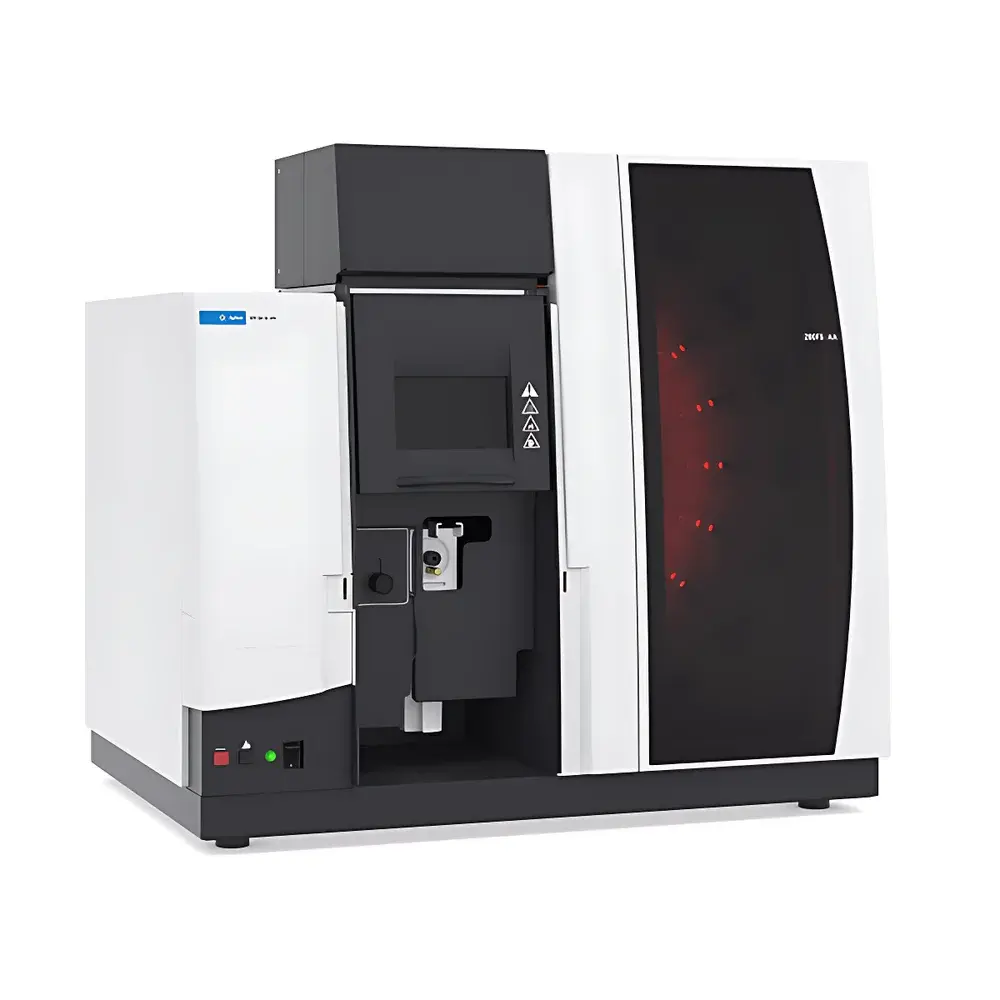
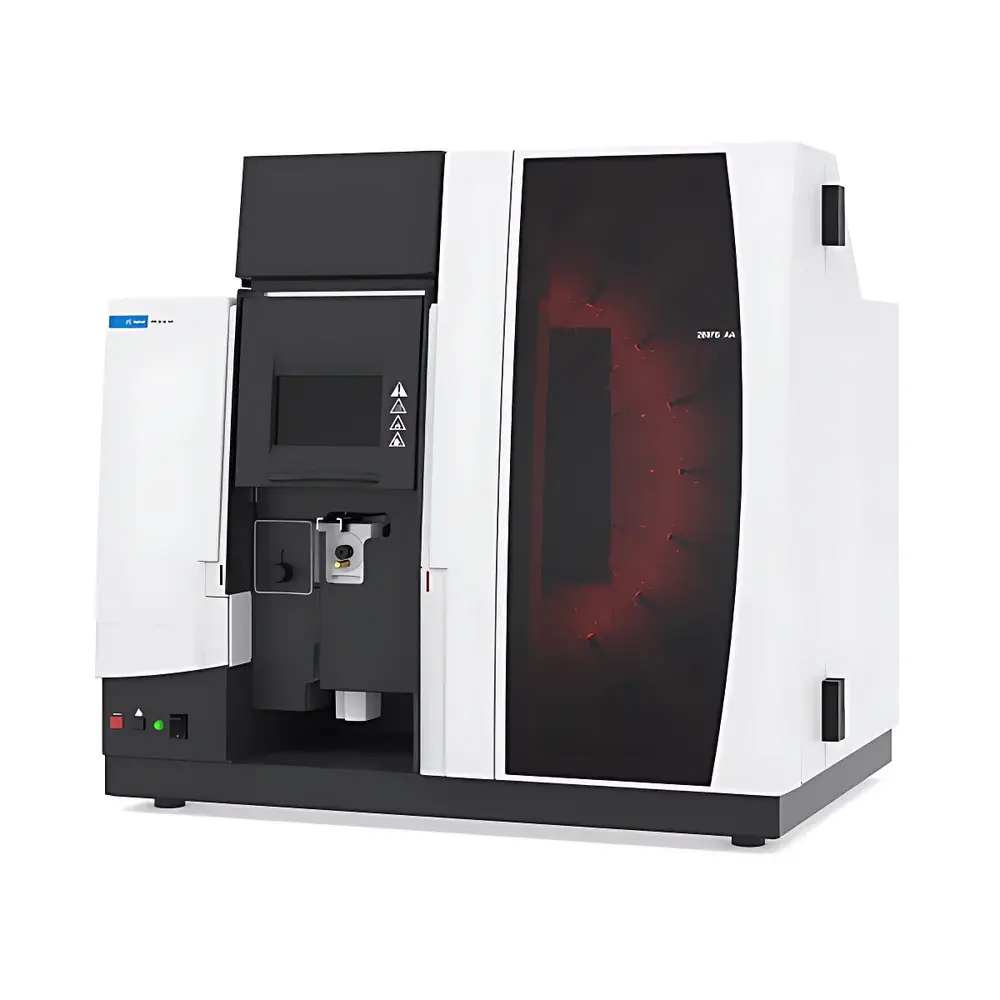
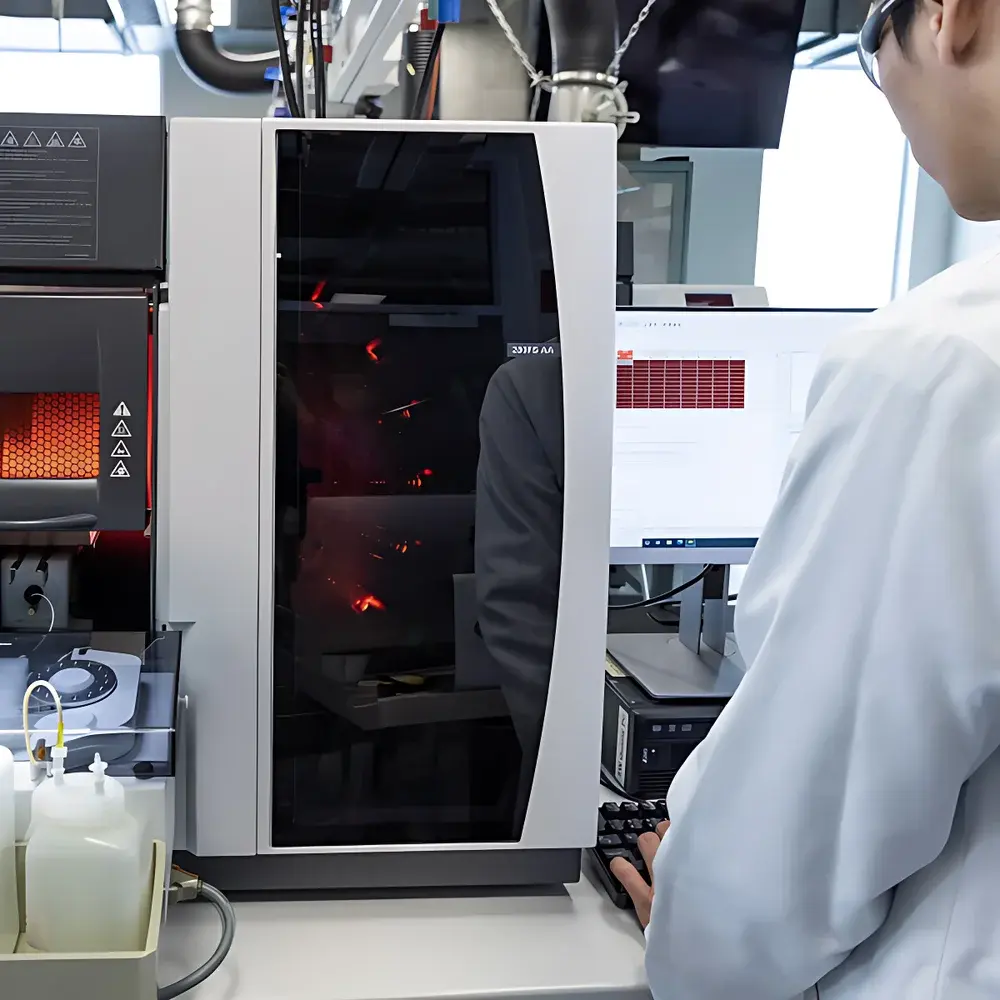
Agilent 280FS AA Fast-Sequence Flame Atomic Absorption Spectrometer
| Brand | Agilent Technologies |
|---|---|
| Origin | Malaysia |
| Manufacturer Type | Original Equipment Manufacturer (OEM) |
| Origin Category | Imported |
| Model | 280FS AA |
| Instrument Type | Flame AAS |
| Monochromator Type | Fixed-grating with high-resolution etched grating |
| Optical System | Dual-beam |
| Detector | Photomultiplier Tube (PMT) |
| Background Correction | Deuterium Lamp (D₂) |
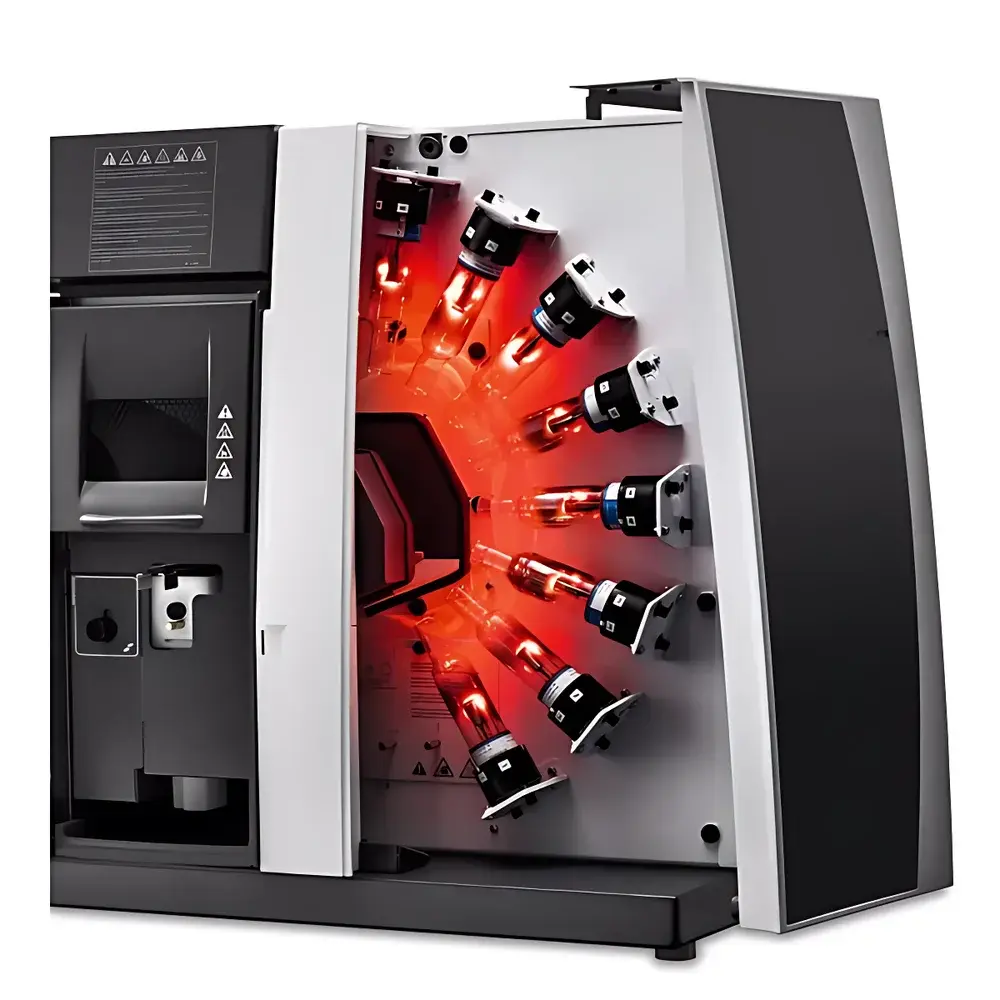
| Lamp Capacity | 8-lamp turret with automatic selection |
| Atomization System | Mark 7 Flame Burner Assembly |
| Sensitivity | >0.9 Abs for 5 mg/L Cu |
| Sample Volume per Analysis | 10 mL |
| Multi-element Throughput | Up to 10 elements per sample in <2 minutes |
| Calibration Automation | SIPS 10/20 Integrated Sample Introduction and Dilution System |
| Software Platform | SpectrAA Method Development Suite |
| Compliance | Designed for GLP/GMP environments |
Overview
The Agilent 280FS AA Fast-Sequence Flame Atomic Absorption Spectrometer is an engineered solution for laboratories requiring high-throughput, multi-element quantification in environmental monitoring, food safety testing, agricultural soil/water analysis, and quality control workflows. Based on the fundamental principle of atomic absorption spectroscopy—where ground-state atoms in a flame absorb characteristic wavelengths of light—the 280FS AA employs a dual-beam optical architecture with a fixed high-resolution etched grating monochromator and photomultiplier tube detection to deliver precise, reproducible absorbance measurements. Its defining innovation lies in Fast-Sequence (FS) operation: unlike conventional single-element flame AAS systems, the 280FS AA sequentially measures up to ten elements from a single 10 mL sample aspiration cycle—without manual lamp changes or recalibration—by leveraging an 8-position automated hollow cathode lamp turret and synchronized wavelength switching. This eliminates sequential sample re-introduction and reduces total analysis time to under two minutes per sample while maintaining linearity, precision (RSD <1.5% at mid-range concentrations), and compliance with ISO 8288, ASTM D1688, and EPA Method 7000B.
Key Features
- Fast-Sequence (FS) multi-element analysis: Simultaneous quantification of up to 10 elements from one sample introduction, minimizing sample consumption and gas usage.
- Mark 7 flame atomization system: Optimized burner head geometry and gas flow dynamics delivering >0.9 Abs sensitivity for 5 mg/L copper standard, ensuring robust detection across diverse matrices.
- Dual-beam optical path with deuterium lamp background correction: Compensates for non-specific absorption and scattering effects in complex samples (e.g., digested soils, acidified beverages, biological extracts).
- UltrAA lamp technology integration: Enhances signal-to-noise ratio by up to 40%, lowering method detection limits (MDLs) without increasing lamp current or thermal noise.
- Precision-Optimized Measurement Time (PROMT): Dynamically adjusts integration time per element—shorter dwell for high-concentration analytes, longer for trace-level signals—maximizing throughput without sacrificing accuracy.
- Automated lamp management: 8-lamp turret with software-controlled selection, alignment, and current optimization reduces operator intervention and lamp wear.
Sample Compatibility & Compliance
The 280FS AA accommodates aqueous and acid-digested samples (HNO₃, HCl, H₂O₂-based digestions per EPA 3050B/3051A) with viscosity ≤5 cP and suspended solids <0.1%. It supports direct analysis of drinking water, leachates, plant tissue digests, and fortified food extracts. The system meets regulatory requirements for routine QA/QC in ISO/IEC 17025-accredited laboratories and is configurable for 21 CFR Part 11 compliance—including electronic signature enforcement, full audit trail logging, and secure user access levels (administrator/operator/analyst). All calibration and QC data are timestamped and linked to instrument parameters, lamp history, and gas pressure logs—enabling full traceability during FDA or EU EMA inspections.
Software & Data Management
Controlled by the SpectrAA software platform, the 280FS AA provides a validated method development environment with pre-configured templates for common applications (e.g., heavy metals in rice, Ca/Mg/K in fertilizers, Na/K in dairy). SpectrAA supports automated calibration curve generation (linear, quadratic, weighted), QC flagging (control chart rules per Westgard), and report export in PDF, CSV, and LIMS-compatible XML formats. Integration with Agilent’s SIPS 10/20 modules enables fully automated calibration preparation—from single stock dilution (200× online dilution, RSD <2%) to internal standard addition (e.g., Sc or Y for matrix-matched correction) and modifier dosing (e.g., La for phosphate interference suppression).
Applications
- Environmental labs: Quantification of Pb, Cd, Cr, Ni, Zn, Cu, Mn, Fe, Ca, Mg in wastewater, sediment extracts, and air particulate filters.
- Food & beverage: Routine testing of essential minerals (Ca, Mg, Fe, Zn) and contaminants (As, Pb, Cd) in raw ingredients, finished products, and packaging leachates.
- Agricultural testing: Soil extract analysis (Mehlich-3, DTPA) for micronutrient bioavailability assessment and fertilizer formulation verification.
- Pharmaceutical excipient screening: Elemental impurity profiling per ICH Q3D guidelines using nitric acid digestion and FS-AAS quantification.
- Academic research: Teaching labs benefit from intuitive SpectrAA wizards and built-in uncertainty propagation tools aligned with EURACHEM/CITAC guidance.
FAQ
How does Fast-Sequence mode differ from traditional flame AAS multi-element analysis?
Fast-Sequence eliminates the need for multiple sample introductions or external accessories like rotating prism assemblies. It achieves true multi-element measurement from one aspiration by synchronizing lamp selection, wavelength positioning, and detector integration—all within a single flame dwell period.
Is the 280FS AA compatible with hydride generation or graphite furnace accessories?
No—the 280FS AA is a dedicated flame-only platform. For hydride-forming elements (As, Se, Sb) or ultra-trace analysis, Agilent recommends pairing with the 240Z or 280Z graphite furnace systems, which share the same SpectrAA software and lamp infrastructure.
What level of operator training is required to achieve optimal performance?
SpectrAA includes context-sensitive help, embedded video tutorials, and method validation checklists. Most users achieve GMP-compliant operation within two days of hands-on training, supported by Agilent’s global Field Application Scientist network.
Can the system be integrated into a laboratory information management system (LIMS)?
Yes—via ASTM E1384-compliant ASCII output or optional OPC UA server module, enabling bidirectional data exchange with major LIMS platforms including LabWare, Thermo Fisher SampleManager, and STARLIMS.
Does the Mark 7 atomizer support alternative fuel gases such as propane or acetylene/oxygen mixtures?
The Mark 7 burner is optimized for air-acetylene flames. Propane is not supported due to insufficient thermal energy for complete atomization of refractory elements (e.g., Al, Si, Ti); acetylene/oxygen operation requires additional safety interlocks and is not certified for this model.
Related Products





