
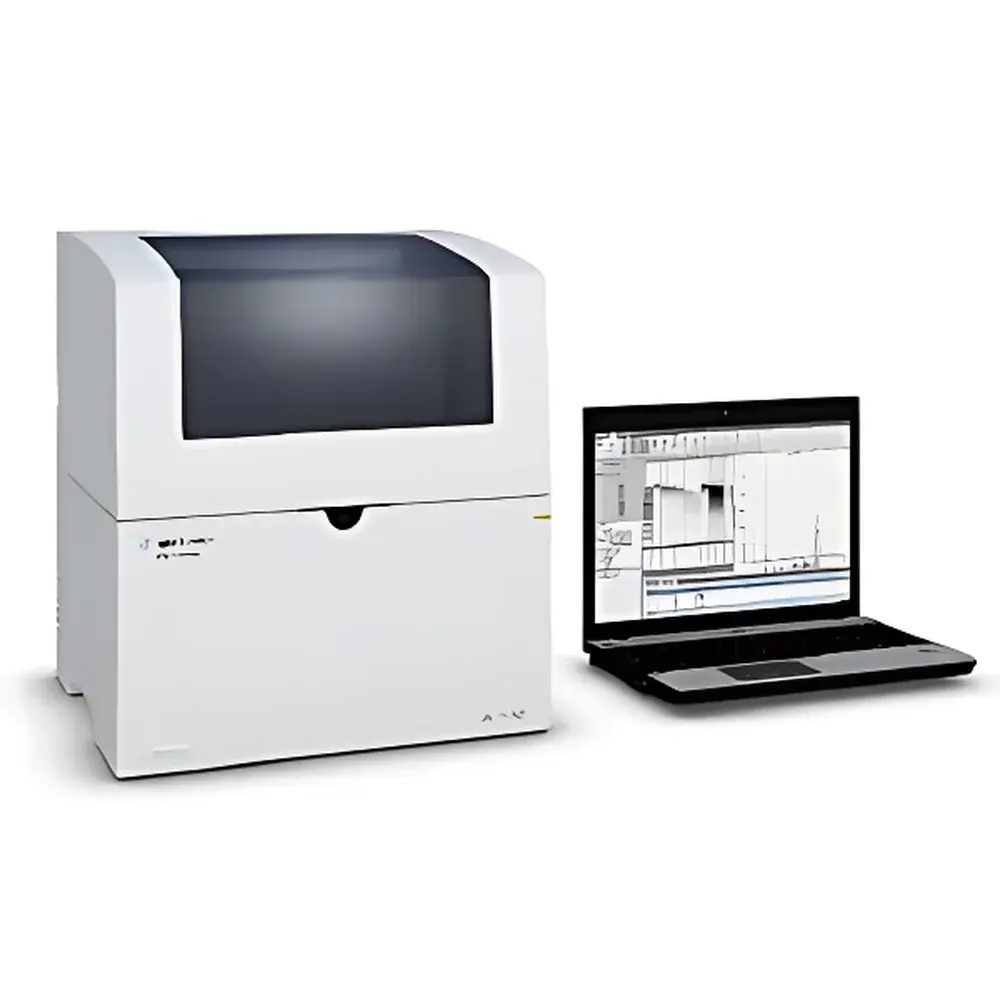
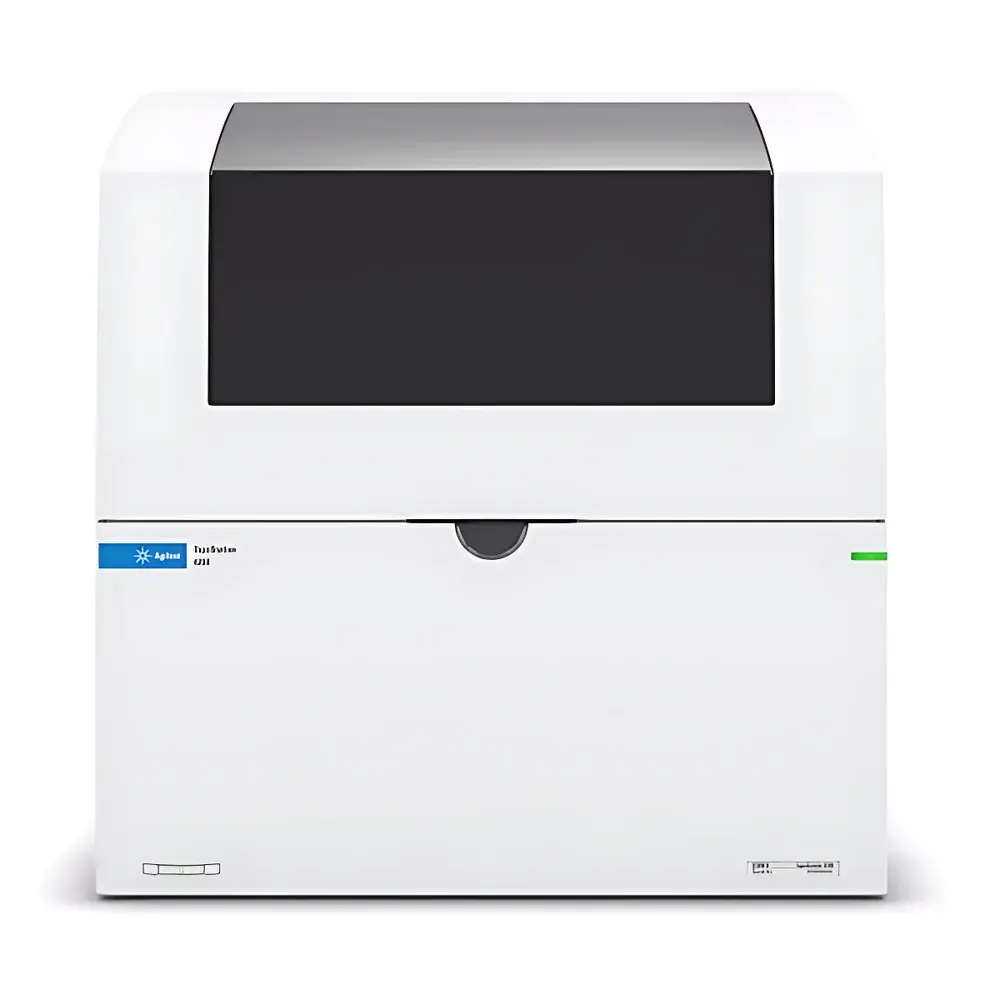
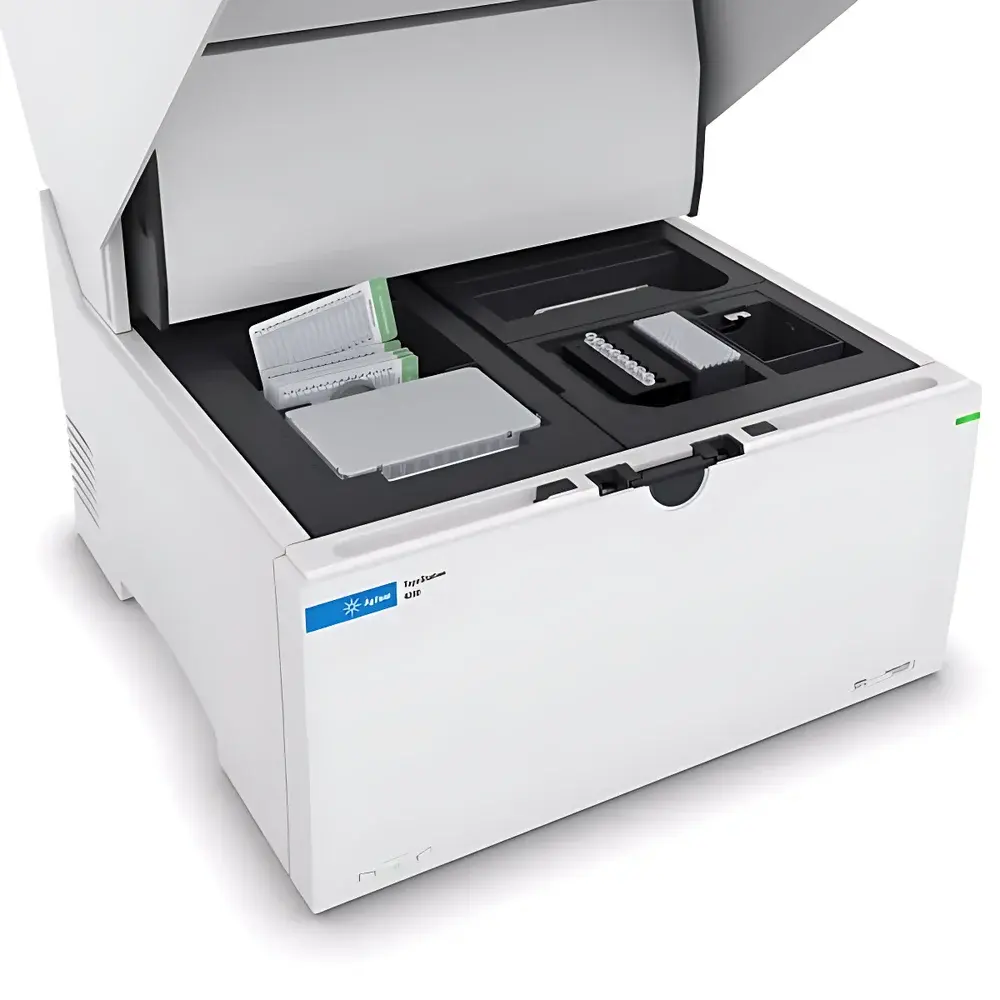
Agilent 4200 TapeStation Automated Electrophoresis System
| Brand | Agilent Technologies |
|---|---|
| Origin | Germany |
| Manufacturer Type | Original Equipment Manufacturer (OEM) |
| Product Category | Imported Instrument |
| Model | 4200 TapeStation |
| Instrument Type | Nucleic Acid Quality Control Electrophoresis System |
| Sample Capacity | 1–96 samples per run |
| Voltage/Current | 100–240 VAC, 50–60 Hz |
| Dimensions (W × D × H) | 435 mm × 510 mm × 445 mm |
| Power Consumption | 50 VA |
| Weight | 25.5 kg |
| Sample Volume Requirement | 1–2 µL per assay |
Overview
The Agilent 4200 TapeStation Automated Electrophoresis System is a fully integrated, walk-away nucleic acid quality control platform engineered for precision, reproducibility, and scalability in high-throughput molecular biology laboratories. Based on Agilent’s validated ScreenTape technology—a microfluidic electrophoresis format employing pre-cast, single-use polyacrylamide-based gel lanes—the system delivers automated capillary electrophoretic separation without traditional slab gels or manual staining. Unlike conventional agarose or polyacrylamide gel electrophoresis, the 4200 TapeStation performs real-time fluorescence detection during migration, enabling quantitative assessment of DNA and RNA integrity, concentration, and size distribution in a closed, contamination-controlled environment. Its design supports end-to-end QC workflows critical to next-generation sequencing (NGS), biobanking, mRNA vaccine development, and regulated biotherapeutic manufacturing—where consistent, auditable, and low-variability data are essential for process validation and regulatory submissions.
Key Features
- Fully automated sample loading, electrophoresis, detection, and data analysis—no manual pipetting, staining, or imaging required
- ScreenTape consumables with 16 independent, pre-filled electrophoretic lanes; eliminates cross-contamination and inter-sample carryover
- Flexible run configuration: process any number of samples from 1 to 96 per run without reconfiguration or wasted capacity
- Ultra-rapid analysis: 1–2 minutes per sample; full 96-well run completed in ≤90 minutes
- Minimal sample consumption: only 1–2 µL of total RNA, genomic DNA, cfDNA, or cDNA required per assay
- Standardized quality metrics: RNA Integrity Number equivalent (RINe), DNA Integrity Number (DIN), and %cfDNA calculated using algorithmically validated, instrument-specific calibration curves
- Self-maintenance diagnostics and guided service routines reduce downtime and extend mean time between failures (MTBF)
- ACT (Accountability, Consistency, Transparency) certified by My Green Lab—verified lifecycle environmental impact assessment covering materials, energy use, packaging, and end-of-life recyclability
Sample Compatibility & Compliance
The 4200 TapeStation accepts all Agilent ScreenTape assays—including Genomic DNA, High Sensitivity DNA, RNA ScreenTape, and cfDNA ScreenTape—enabling seamless transition between DNA and RNA QC within a single instrument platform. It supports diverse sample types: fragmented genomic DNA (e.g., FFPE-derived), intact total RNA (including ribosomal RNA profiles), small RNA, and low-input cfDNA. The system complies with laboratory quality management frameworks including ISO/IEC 17025 for testing laboratories and supports GLP/GMP-aligned documentation practices. Audit trail functionality, user access controls, and electronic signature readiness align with FDA 21 CFR Part 11 requirements when deployed with Agilent’s compliant software configurations. All ScreenTape assays are developed and verified per ICH Q5A and USP guidelines for nucleic acid characterization in biopharmaceutical applications.
Software & Data Management
Controlled via Agilent TapeStation Software (v6.x or later), the system provides intuitive method setup, real-time run monitoring, and automated report generation in PDF and CSV formats. Raw electropherogram data, lane-by-lane peak integration, and QC metric calculations are stored in a secure, timestamped database with full version history. The software supports LIMS integration through standard ASTM E1384-compliant interfaces and enables batch-level metadata tagging for traceability across sample batches, operators, and instrument usage logs. Data export includes RINe/DIN values, fragment size distribution histograms, molar concentration estimates, and pass/fail flags based on user-defined thresholds—facilitating automated decision gates in QC-driven workflows.
Applications
The 4200 TapeStation is widely deployed in core genomics facilities, CMC labs for mRNA vaccine development, clinical trial biobanks, and QC release testing for oligonucleotide therapeutics. Key use cases include: NGS library qualification prior to sequencing (assessing adapter ligation efficiency and fragmentation bias); RNA integrity verification for single-cell RNA-seq and spatial transcriptomics; cfDNA sizing and quantification in liquid biopsy assay development; and stability-indicating QC of plasmid DNA and in vitro transcribed mRNA. Its ability to generate standardized, publication-ready electropherograms—without gel photography artifacts or subjective band scoring—makes it a preferred platform for regulatory filings requiring objective, instrument-based nucleic acid characterization.
FAQ
Is the 4200 TapeStation compatible with third-party nucleic acid extraction kits?
Yes—no extraction method restrictions apply, provided input material meets recommended purity (A260/A280 ≥ 1.8; A260/A230 ≥ 2.0) and concentration ranges specified in each ScreenTape assay guide.
Can ScreenTape assays be reused?
No—each ScreenTape is designed for single-use only. However, partial utilization (e.g., running 24 samples on a 96-lane tape) is supported; unused lanes remain sealed and stable for up to 72 hours post-opening under refrigerated storage.
Does the system support 21 CFR Part 11 compliance out of the box?
The base instrument and software meet technical prerequisites; full Part 11 compliance requires implementation of site-specific procedural controls, electronic signature policies, and audit trail review protocols as defined in Agilent’s GxP Implementation Guide.
What maintenance is required beyond routine cleaning?
Annual performance verification using Agilent-provided calibration standards is recommended; no optical alignment or fluidic recalibration is needed due to the solid-state, fixed-optics architecture.
How does TapeStation compare to Bioanalyzer or Fragment Analyzer systems in terms of throughput and cost per sample?
With 96-sample capacity, sub-2-minute per-sample runtime, and no chip priming or buffer replenishment, the 4200 TapeStation achieves higher effective throughput and lower labor cost per sample than microchip-based platforms—particularly at mid-to-high sample volumes (>24 samples/run).



