
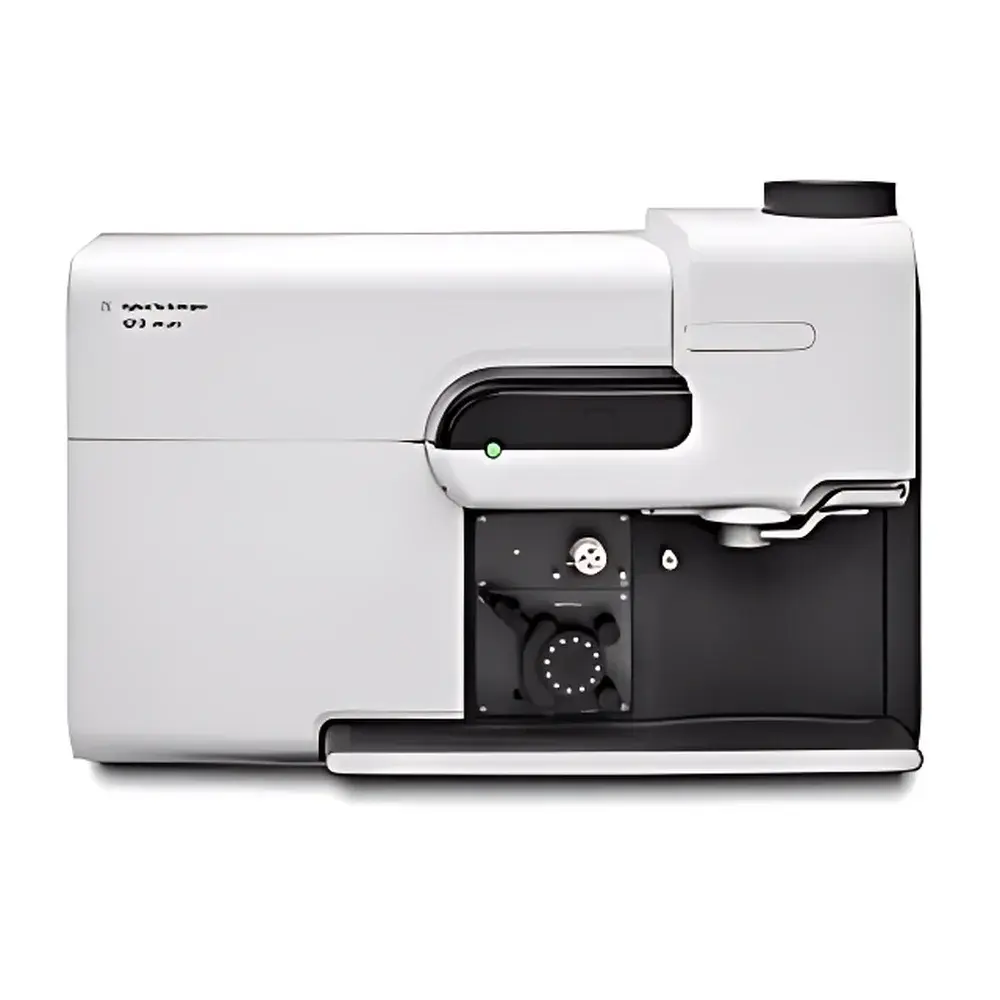
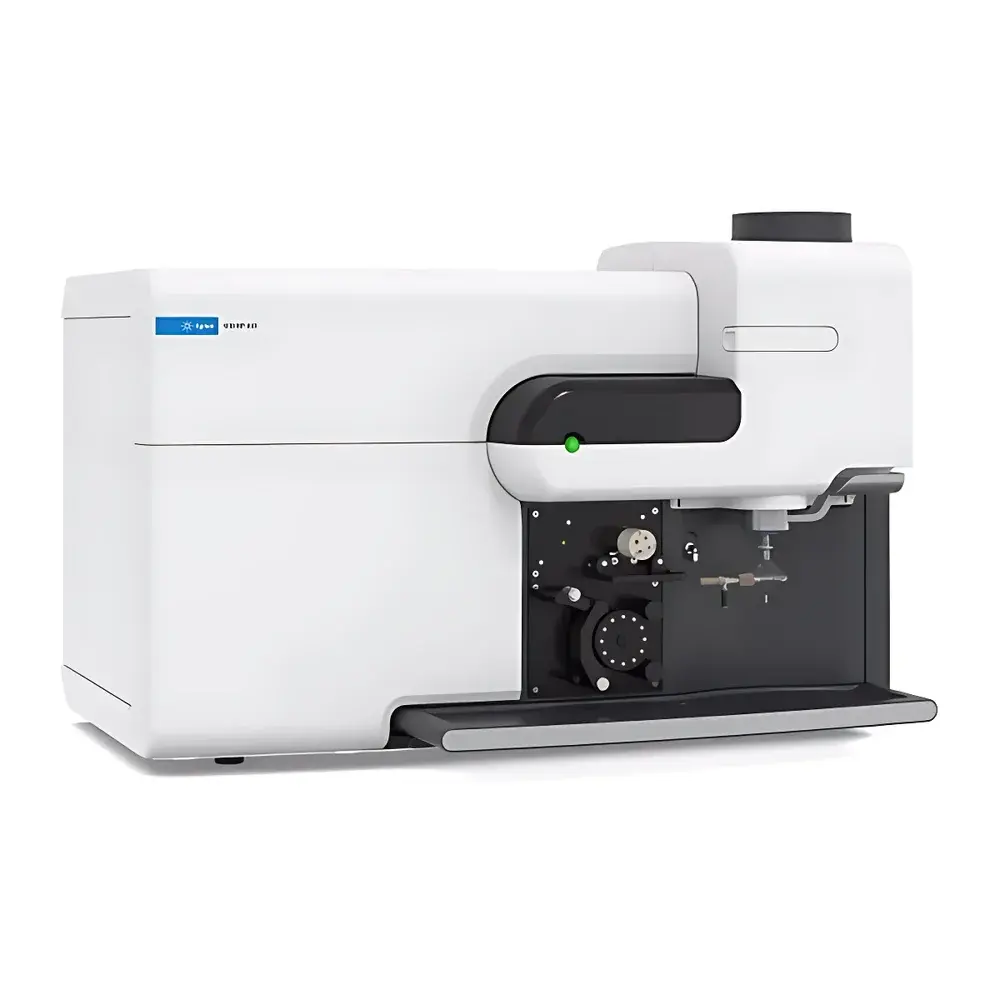
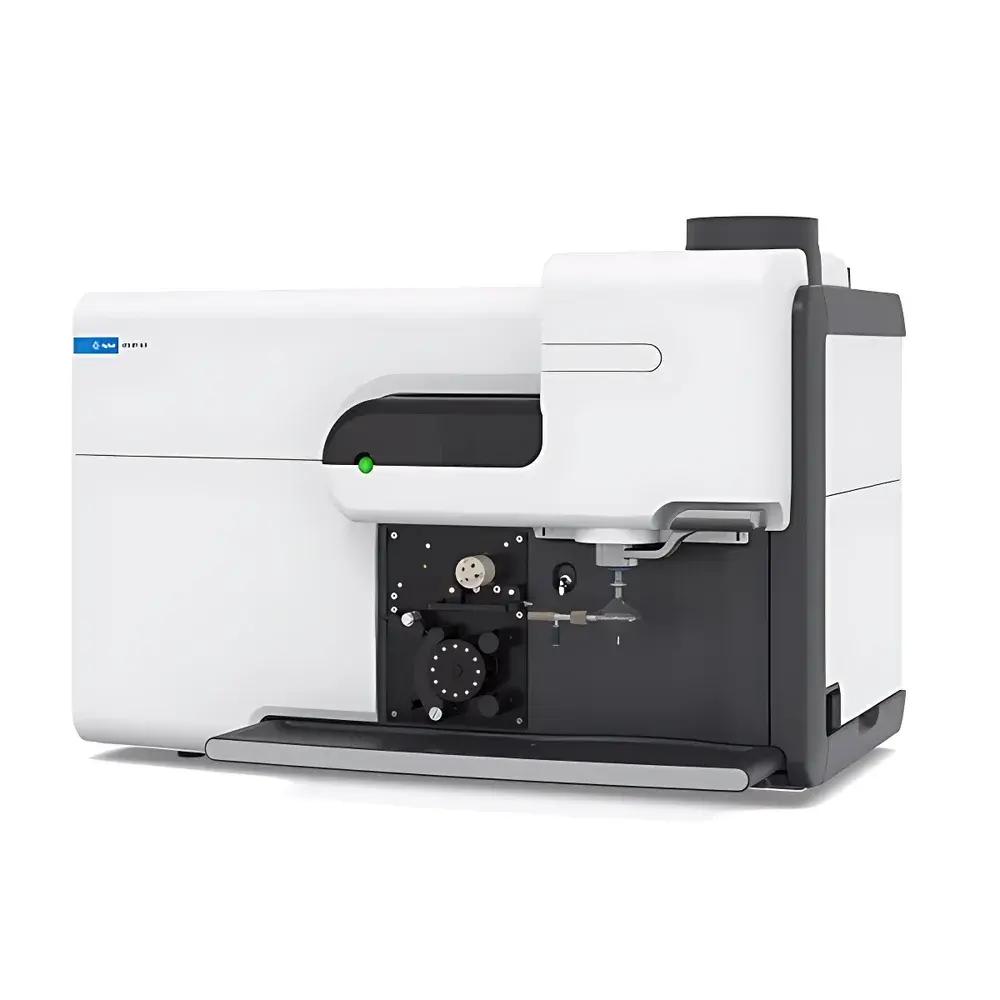
Agilent 4210 MP-AES Microwave Plasma Atomic Emission Spectrometer
| Brand | Agilent Technologies |
|---|---|
| Origin | Malaysia |
| Manufacturer | Agilent Technologies |
| Import Status | Imported |
| Model | 4210 |
| Pricing | Available upon Request |
Overview
The Agilent 4210 MP-AES is a benchtop microwave plasma atomic emission spectrometer engineered for elemental analysis of liquid samples across environmental, food & beverage, petrochemical, agricultural, and mining laboratories. Unlike conventional flame-based techniques, the 4210 MP-AES employs a nitrogen-based microwave-induced plasma (MIP) operating at 27.12 MHz, generating temperatures exceeding 5,000 K to fully atomize and excite elements—including refractory metals such as B, P, S, As, and Se—without requiring flammable gases (e.g., acetylene or nitrous oxide). This air-cooled, nitrogen-sustained plasma source eliminates combustion hazards, reduces infrastructure requirements, and enables deployment in central labs, mobile units, or remote field sites with standard electrical supply and compressed air. Detection limits routinely achieve sub-ppb (ng/L) levels for over 70 elements—including alkali, alkaline earth, transition, and non-metals—with linear dynamic ranges spanning up to 6 orders of magnitude. The system is designed for high reproducibility (<2% RSD for replicate measurements), minimal spectral interferences, and compatibility with aqueous and low-viscosity organic matrices.
Key Features
- Flame-free operation using ambient air and nitrogen gas—no acetylene, propane, or N2O required
- Integrated 27.12 MHz solid-state microwave generator with automatic impedance matching for stable plasma ignition and maintenance
- Robust axial-view optical path with echelle grating and CCD detector for simultaneous multi-element detection from 167–785 nm
- Modular hardware architecture supporting plug-and-play accessories: IsoMist temperature-controlled spray chamber, advanced valve system (AVS-4), and optional humidifier for high-salt or ethanol-rich samples (e.g., wine, biodiesel)
- Self-diagnostic routines and real-time status monitoring via front-panel LED indicators and Ethernet-connected health dashboard
- Low power consumption (<1.5 kW during operation) and compact footprint (70 × 60 × 55 cm) suitable for space-constrained environments
Sample Compatibility & Compliance
The 4210 MP-AES accommodates direct analysis of diluted aqueous standards, digested environmental samples (EPA Method 200.7/6020B), biofuels (ASTM D8351-22), wine and grape must (OIV Resolution OENO 521A-2022), and industrial process streams with total dissolved solids (TDS) up to 0.2%. Sample introduction utilizes a standard concentric glass nebulizer and cyclonic spray chamber; optional accessories extend robustness for high-ethanol (≥15% v/v) or high-salt (>0.5% NaCl) matrices. The instrument complies with ISO/IEC 17025:2017 requirements for analytical competence and supports audit-ready documentation for GLP and GMP-regulated workflows. Full traceability is enabled through electronic logbooks, user-access-level controls, and 21 CFR Part 11–compliant data integrity features when paired with Agilent’s MP Expert software.
Software & Data Management
MP Expert software provides an integrated platform for method setup, acquisition, quantitation, and reporting—all accessible via intuitive graphical interface. Preconfigured application methods—including ASTM D8351-22 for biodiesel metals, OIV-compliant wine analysis templates, and EPA 200.7 workflows—are preloaded and validated. Software capabilities include automated background correction, internal standard normalization (e.g., Y or Sc), multi-point calibration with forced zero intercept, QC sample scheduling, and customizable pass/fail criteria per analyte. Data files adhere to ASTM E1382-compliant .csv and .xml formats; raw spectra and processed results are stored with full metadata (operator ID, timestamp, instrument parameters, accessory configuration). Remote instrument control, email alerts for completion or fault conditions, and secure cloud backup options are available via optional Agilent OpenLab CDS integration.
Applications
The 4210 MP-AES delivers validated performance in regulated and routine testing scenarios. In biodiesel quality assurance, it quantifies Na, K, Ca, Mg, P, and Al per ASTM D8351-22 to ensure compliance with EN 14214 and ASTM D6751 specifications—critical for preventing injector fouling and catalyst poisoning. For oenology, it measures Cu, Fe, Mn, Zn, and Pb in wine at sub-µg/L levels, supporting authenticity verification and spoilage risk assessment under OIV guidelines. In food safety, it screens for toxic elements (As, Cd, Pb, Hg) in infant formula, cereals, and dietary supplements aligned with EU Commission Regulation (EC) No 1881/2006. Additional applications include catalyst residue analysis in petrochemical feedstocks, wear metal monitoring in lubricants (ASTM D5185), and multi-element profiling of soil extracts (ISO 11466).
FAQ
Does the 4210 MP-AES require external cooling water or chiller systems?
No—the plasma torch and detector are air-cooled; only ambient airflow and standard laboratory ventilation are required.
Can the instrument analyze solid samples directly?
No—samples must be in solution form. Solid matrices require acid digestion (e.g., EPA 3050B, 3051A) or microwave-assisted digestion prior to analysis.
Is method validation support available for regulatory submissions?
Yes—Agilent provides application notes, ICP-MS cross-validation data, and technical documentation aligned with ISO/IEC 17025 and FDA guidance for method transfer and verification.
What maintenance intervals are recommended for routine operation?
Nebulizer cleaning every 8–10 hours of operation; torch inspection every 200 hours; annual preventive maintenance by certified Agilent service engineers.
How does MP-AES compare to ICP-OES in terms of detection limits and operational cost?
MP-AES achieves comparable detection limits for most elements (except Li, Be, U) at ~30–50% lower consumables cost and zero flammables handling overhead—ideal for mid-throughput labs prioritizing safety and TCO optimization.




