
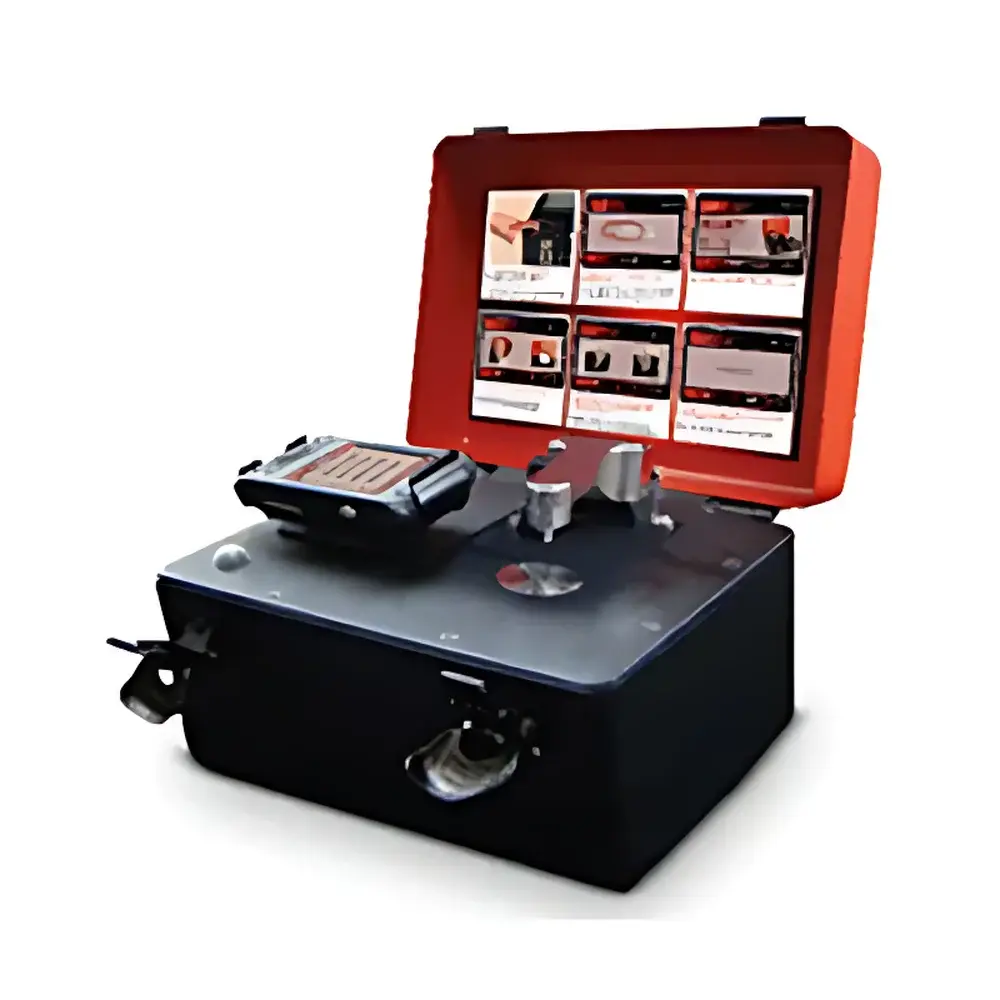
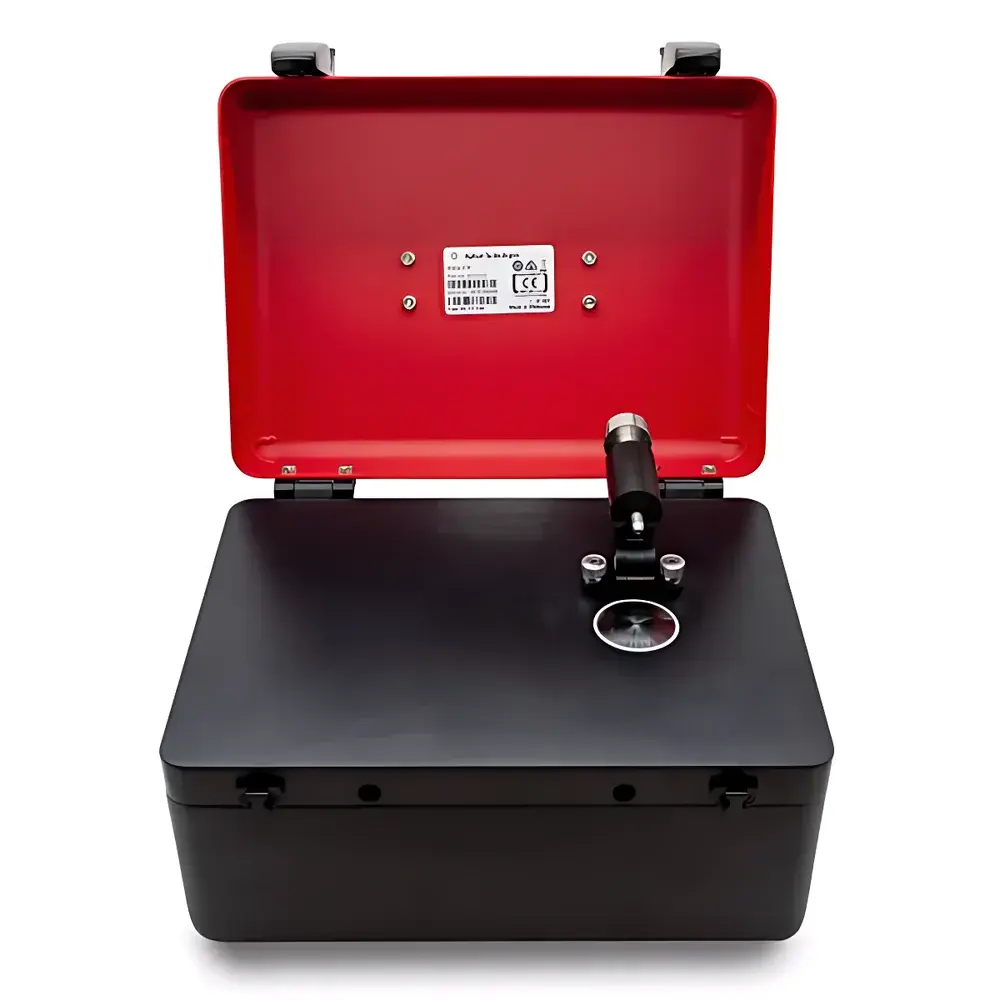
Agilent 4500 Series Portable FTIR Spectrometer
| Brand | Agilent Technologies |
|---|---|
| Origin | Malaysia |
| Manufacturer Type | Manufacturer |
| Origin Category | Imported |
| Model | 4500 |
| Instrument Type | Portable |
| Instrument Principle | Fourier Transform Infrared (FTIR) |
| Spectral Range | 4000–650 cm⁻¹ |
| Dimensions (W×H×D) | 29 cm × 19 cm × 22 cm |
| Weight | 6.8 kg |
| Power Supply | Internal rechargeable battery (up to 4 h operation) / 100–240 VAC, 50/60 Hz |
| Software | MicroLab FTIR and MicroLab Expert |
| Sample Types | Solids, pellets, liquids, pastes, powders, gels |
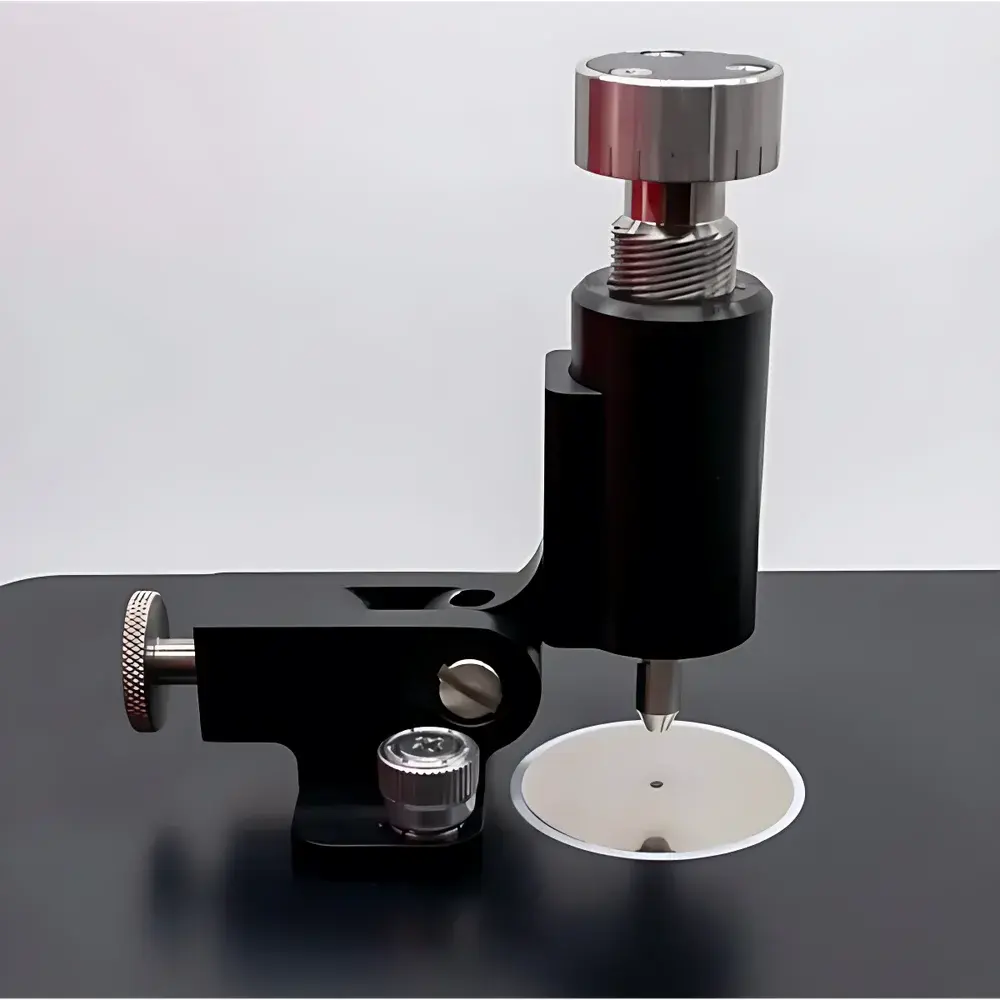
| Sampling Interfaces (Fixed Options) | Diamond ATR (1×, 3×, or 5× reflection), Multireflection ZnSe ATR, TumblIR, DialPath |
| Library Support | Application-specific spectral libraries pre-installed |
Overview
The Agilent 4500 Series Portable FTIR Spectrometer is an engineered solution for field-deployable molecular identification and quantitative analysis based on Fourier Transform Infrared spectroscopy. Unlike benchtop FTIR systems, the 4500 series integrates a permanently aligned interferometer, thermoelectrically cooled DTGS detector, and robust optical path design optimized for mechanical stability under non-laboratory conditions—including vibration, temperature fluctuation, and variable ambient lighting. Its core measurement principle relies on Michelson interferometry coupled with rapid-scan acquisition and digital signal processing to generate high-fidelity absorbance spectra across the mid-infrared range (4000–650 cm⁻¹). This enables functional group identification, polymer characterization, contaminant screening, and compound verification without sample preparation in most cases—making it particularly suitable for forensic labs conducting on-scene evidence triage, quality control personnel inspecting raw materials at supplier sites, and regulatory inspectors verifying food authenticity or pharmaceutical excipients in transit.
Key Features
- Durable, fully integrated portable architecture weighing only 6.8 kg, with IP54-rated enclosure for dust and splash resistance during field deployment.
- Thermally stabilized optical bench minimizing drift over extended acquisition periods—even after transport or temperature shifts between 10–40 °C.
- Multiple fixed-sampling interface options: Diamond ATR (1×, 3×, or 5× reflection geometry) for solids, powders, gels, and viscous liquids; ZnSe multireflection ATR for aggressive solvents; TumblIR for high-throughput liquid analysis requiring only two window wipes per sample; and DialPath for transmission-mode analysis without cuvettes or alignment.
- Built-in rechargeable lithium-ion battery supporting up to four hours of continuous spectral acquisition, plus universal AC input (100–240 VAC, 50/60 Hz) for lab or vehicle-based operation.
- Pre-aligned, maintenance-free interferometer with no moving mirrors—eliminating routine recalibration and reducing long-term sensitivity degradation.
Sample Compatibility & Compliance
The Agilent 4500 supports direct analysis of unprepared or minimally prepared samples including tablets, films, fibers, resins, oils, aqueous solutions, suspensions, and illicit substances. It complies with ASTM E1421 (Standard Guide for Describing and Measuring Performance of Fourier Transform Mid-Infrared (FT-MIR) Spectrometers) and ISO 17025 requirements for method validation when used with documented procedures. For regulated environments—including pharmaceutical manufacturing (cGMP), forensic laboratories accredited to ISO/IEC 17025, and food safety inspection—the system supports audit-trail-enabled software configurations (MicroLab Expert) compliant with FDA 21 CFR Part 11 for electronic records and signatures. Optional password-protected user roles, instrument usage logging, and spectral metadata embedding ensure traceability required for GLP/GMP workflows.
Software & Data Management
MicroLab FTIR provides intuitive, method-driven operation—guiding users through calibration, background collection, sample measurement, and interpretation via step-by-step prompts in English, Spanish, German, French, Japanese, and Chinese. MicroLab Expert extends functionality with advanced chemometric tools (PCA, PLS regression), customizable reporting templates, and secure database integration. All spectral data are stored in standardized JCAMP-DX format, enabling interoperability with third-party spectral libraries (e.g., NIST, ATR-FTIR Polymer Library, Forensic Drug Library). Spectral search algorithms support hit-quality scoring, threshold-based match filtering, and hierarchical library navigation—critical for rapid unknown identification in time-sensitive scenarios such as customs inspection or crime scene analysis.
Applications
- Forensic science: Identification of narcotics, cutting agents, explosives residues, and counterfeit pharmaceuticals using validated library matches and spectral subtraction techniques.
- Food and agriculture: Detection of adulterants (e.g., melamine in milk powder), verification of oil authenticity (olive, palm), and quantification of moisture or fat content in grains and dairy products.
- Polymers and plastics: Rapid grade identification, additive screening (plasticizers, flame retardants), and degradation assessment of recycled materials.
- Chemical manufacturing: Raw material verification, in-process reaction monitoring (via ATR flow cells), and cleaning validation swab analysis.
- Environmental field testing: On-site detection of hydrocarbon contaminants in soil or water extracts, and identification of microplastics in environmental samples.
FAQ
Is the Agilent 4500 Series compliant with FDA 21 CFR Part 11 for electronic records?
Yes—when configured with MicroLab Expert and appropriate administrative controls (audit trail, electronic signatures, role-based access), the system meets technical and procedural requirements for regulated environments.
Can the 4500 perform quantitative analysis?
Yes—using built-in calibration curves, external standards, or chemometric models (PLS, PCR) developed in MicroLab Expert, it supports quantitative determination of analytes in complex matrices.
What is the typical spectral resolution achievable with the 4500?
The instrument delivers nominal resolution of 4 cm⁻¹ standard, with optional firmware upgrades supporting 2 cm⁻¹ for enhanced peak discrimination in congested spectral regions.
How does the DialPath interface differ from conventional transmission cells?
DialPath eliminates the need for matched cuvettes, fluid handling, or precise pathlength control—instead using a fixed-gap, multi-pass internal reflection geometry that provides effective pathlengths equivalent to 10–50 mm transmission cells while maintaining ATR-like ease of use.
Are spectral libraries included with the instrument?
Yes—pre-installed application-specific libraries include Forensic Drug ID, Polymer ID, Food Authenticity, and Hazardous Chemical Screening, all curated and validated by Agilent Applications Scientists.





