
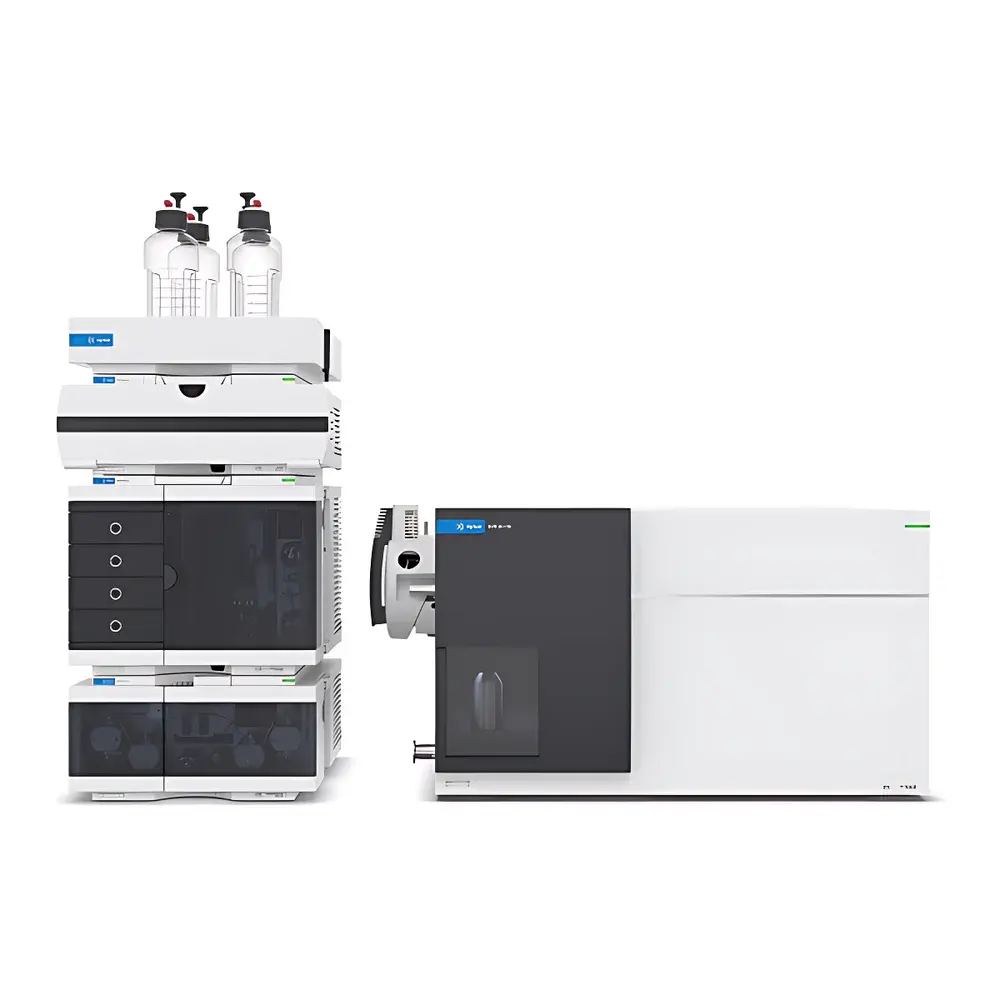
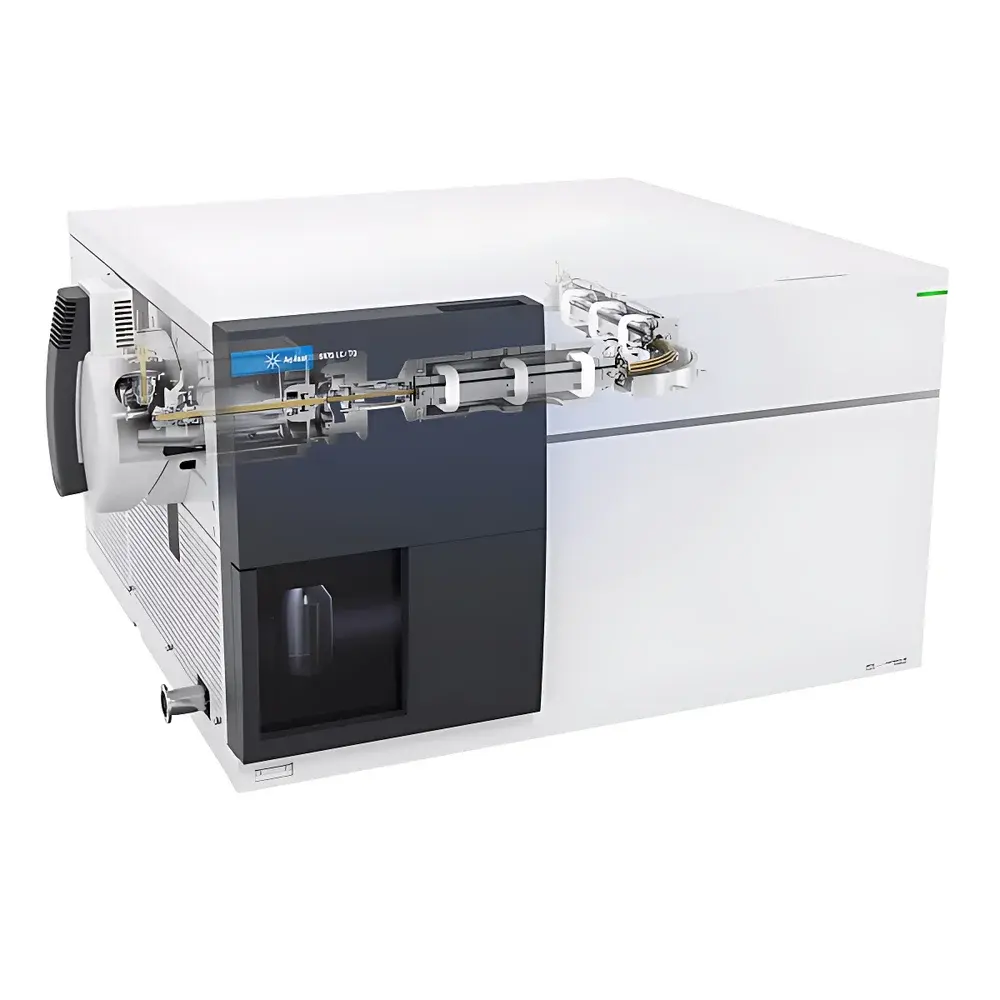
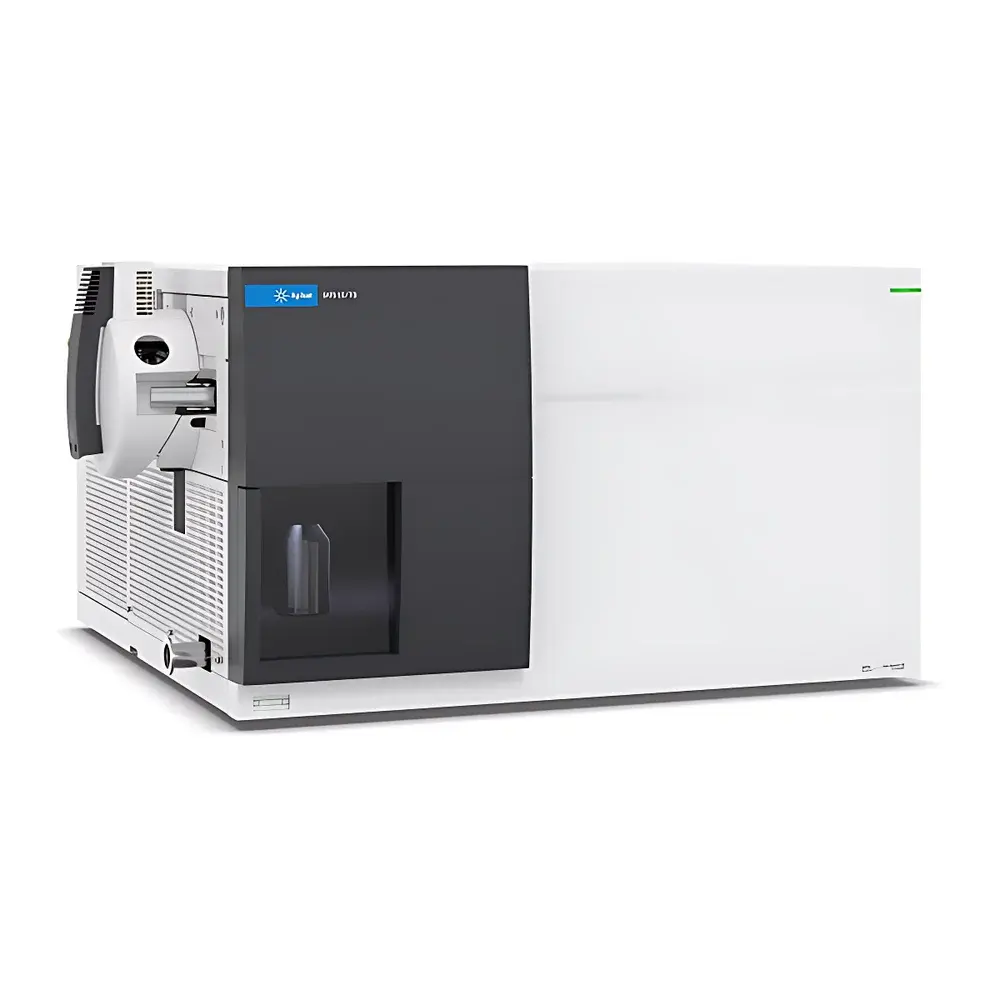
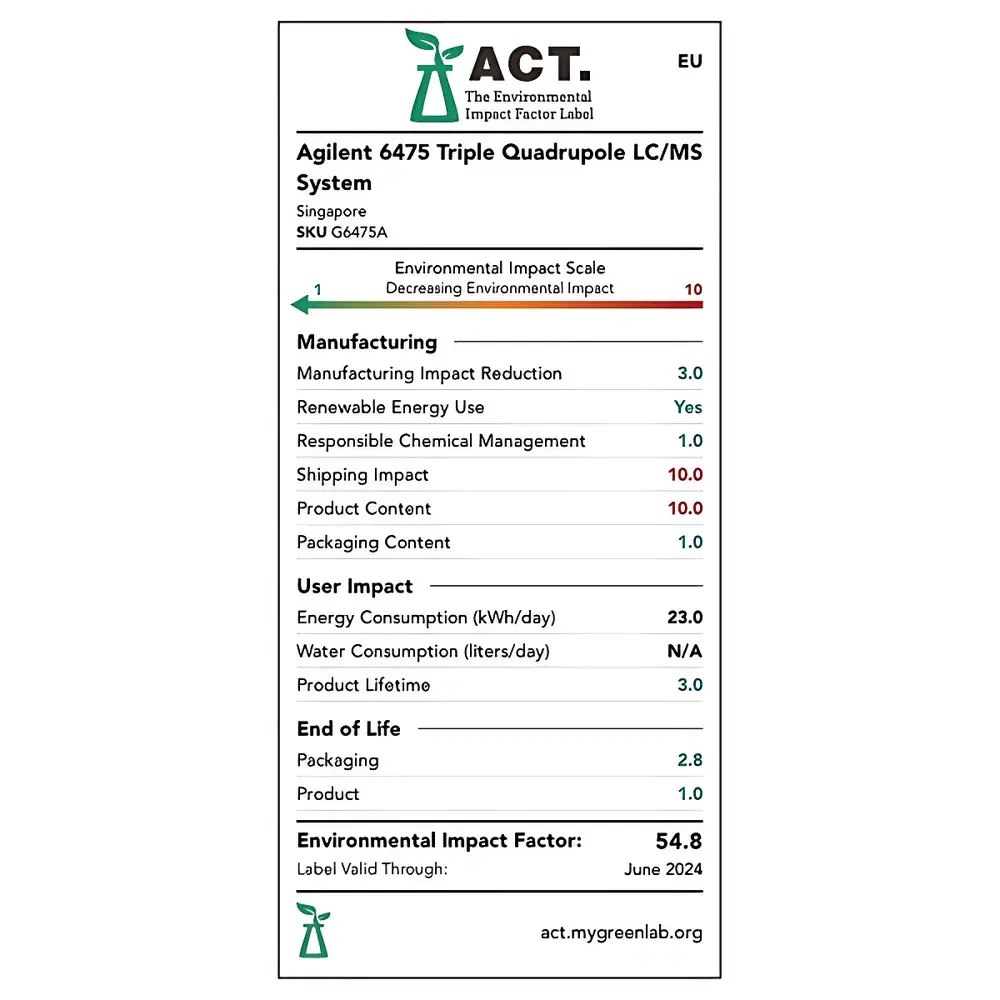
Agilent 6470B Triple Quadrupole LC/MS System
| Brand | Agilent Technologies |
|---|---|
| Origin | Singapore |
| Manufacturer | Agilent Technologies |
| Import Status | Imported |
| Model | 6470B |
| Instrument Type | Triple Quadrupole (TQ) |
| Application Scope | General-Purpose |
| Mass Range | m/z 5–3000 |
| Sensitivity | < 4 fg on-column ritalin (reserpine), < 4 ppt in solution |
| Resolution Modes | Narrow = 0.4 Da, Unit = 0.7 Da, Wide = 1.2 Da, Widest = 2.5 Da |
| Pressure Range | Not applicable (vacuum-operated system) |
| Ion Sources | Agilent Jet Stream (AJS), Electrospray Ionization (ESI), Atmospheric Pressure Chemical Ionization (APCI), Multi-Mode Ionization (MMI) |
Overview
The Agilent 6470B Triple Quadrupole LC/MS System is a high-performance liquid chromatography–tandem mass spectrometry platform engineered for precision quantitative analysis across regulated, clinical, environmental, and life science laboratories. It operates on the fundamental principle of tandem mass spectrometry—where analyte ions are selectively filtered in Q1, fragmented in a curved collision cell (Q2), and product ions are detected in Q3—enabling highly selective and sensitive multiple reaction monitoring (MRM). Designed for robustness under sustained operational loads, the system integrates vacuum-stable architecture with advanced ion optics and high-efficiency ion transmission pathways. Its wide mass range (m/z 5–3000) supports analysis of small molecules, metabolites, peptides, and moderately sized proteins, while its sub-femtogram on-column sensitivity ensures reliable detection in trace-level applications such as PFAS monitoring, pesticide residue screening, and therapeutic drug monitoring.
Key Features
- Agilent Jet Stream (AJS) ion source: Delivers enhanced desolvation efficiency and improved ionization stability across diverse compound classes and mobile phase conditions.
- Curved collision cell geometry: Minimizes neutral background and improves signal-to-noise ratio by reducing unfragmented precursor ion transmission to Q3.
- ±20 kV high-energy dynode detector: Enables extended dynamic range (>5 orders) and low-picoampere detection thresholds without saturation.
- VacShield vacuum shield technology: Allows routine maintenance—including capillary cleaning and source component replacement—without breaking vacuum, reducing instrument downtime by up to 70% versus conventional systems.
- Multi-source compatibility: Interchangeable ESI, APCI, MMI, and AJS sources support method flexibility without hardware reconfiguration.
- Triggered MRM (tMRM): Combines quantitative MRM transitions with real-time acquisition of product ion spectra for retrospective identification, library matching, and structural confirmation—all within a single injection.
Sample Compatibility & Compliance
The 6470B accommodates samples from complex biological matrices (plasma, urine, tissue homogenates), environmental extracts (water, soil, air particulates), and pharmaceutical formulations. Its robust front-end design tolerates moderate levels of salts, buffers, and organic modifiers common in reversed-phase and HILIC separations. The system meets critical regulatory requirements for data integrity and auditability: built-in electronic signature support, role-based user access control, full audit trail logging, and configurable electronic records retention align with US FDA 21 CFR Part 11, EU Annex 11, and ISO/IEC 17025 documentation standards. Routine operation complies with GLP and GMP workflows when integrated with Agilent OpenLab CDS or MassHunter software under validated configurations.
Software & Data Management
Controlled via Agilent MassHunter Workstation Software (version B.09.00 or later), the 6470B supports method development, acquisition, processing, and reporting in a unified interface. Quantitative workflows leverage QuanBrowser for MRM optimization, peak integration, calibration curve generation, and QC pass/fail evaluation. All raw data files (.d format) are stored with embedded metadata including instrument parameters, sequence logs, and user actions. Data archiving, versioning, and export comply with laboratory information management system (LIMS) interoperability standards (e.g., ASTM E1467, ANSI/NIST ITL 10-1). Optional MassHunter Quantitative Analytics with IQ/OQ/PQ templates facilitates instrument qualification in regulated environments.
Applications
- Environmental analysis: Quantification of per- and polyfluoroalkyl substances (PFAS), polycyclic aromatic hydrocarbons (PAHs), and emerging contaminants in drinking water and wastewater.
- Clinical toxicology: High-throughput quantification of drugs of abuse, antiepileptics, and immunosuppressants in human biofluids.
- Pharmaceutical development: Impurity profiling, degradation product identification, and pharmacokinetic (PK) sample analysis.
- Food safety: Screening and confirmation of mycotoxins, veterinary drug residues, and allergenic protein markers.
- Academic research: Targeted metabolomics, lipidomics, and peptide quantification using stable isotope-labeled internal standards.
FAQ
What is the typical maintenance interval for the 6470B under continuous operation?
Under standard usage (8 h/day, 5 days/week), source cleaning is recommended every 2–4 weeks depending on sample matrix complexity; vacuum pump oil changes occur every 6 months.
Does the system support scheduled polarity switching during a single LC run?
Yes—polarity switching is fully programmable within MassHunter methods, enabling simultaneous positive/negative ion mode acquisition without compromising cycle time.
Can the 6470B be operated in a networked multi-user environment with centralized data storage?
Yes—MassHunter supports SQL Server-based central data repositories, enabling concurrent access, role-based permissions, and automated backup policies.
Is the 6470B compatible with UHPLC systems operating at >1000 bar?
The system interfaces seamlessly with Agilent 1290 Infinity II and other commercial UHPLC platforms via standard LC-MS interfaces; no pressure limitations apply to the MS front end.
How does tMRM differ from traditional MRM in terms of data acquisition strategy?
tMRM dynamically triggers product ion scans only when predefined MRM transitions exceed intensity thresholds—reducing data file size while retaining identification capability without sacrificing quantitative precision.





