
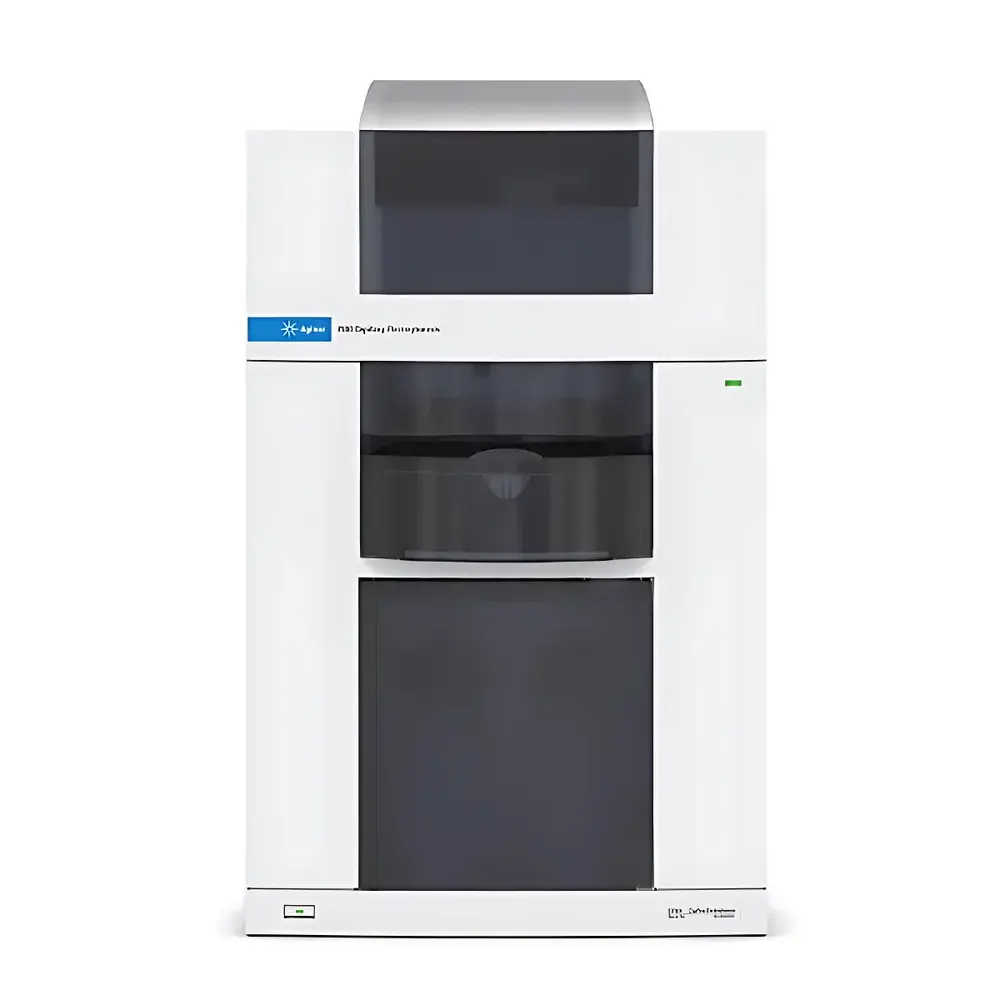
Agilent 7100 Capillary Electrophoresis System
| Brand | Agilent Technologies |
|---|---|
| Origin | Germany |
| Manufacturer Type | Original Equipment Manufacturer (OEM) |
| Product Origin | Imported |
| Model | 7100 |
| Instrument Category | Capillary Electrochromatography (CEC) |
| Sample Analysis Scope | Organic Compounds |
Overview
The Agilent 7100 Capillary Electrophoresis System is a high-performance, modular CE platform engineered for precision separation of charged analytes—including small organic molecules, peptides, oligonucleotides, and inorganic ions—based on electrophoretic mobility under an applied electric field. Unlike conventional liquid chromatography, CE achieves separations in fused-silica capillaries (typically 50–100 µm ID) filled with electrolyte buffer, where analyte migration velocity depends on charge-to-size ratio, electroosmotic flow (EOF), and field strength. The 7100 system leverages extended-pathlength detection capillaries (up to 100 cm effective optical path) to enhance UV-Vis absorbance sensitivity by up to 4× compared to standard 50-cm capillaries, while maintaining robust thermal management via Peltier-controlled cartridge temperature regulation (±0.1 °C stability). Its architecture supports standalone operation, seamless integration as a front-end separation module for Agilent mass spectrometers (e.g., 6230 TOF, 6550 Q-TOF), and orthogonal coupling with HPLC systems for comprehensive 2D separation strategies.
Key Features
- Extended-pathlength capillary detection optics for improved UV-Vis sensitivity without derivatization
- Automated buffer replenishment system enabling unattended, high-throughput runs (up to 96 samples per batch with optional autosampler)
- Multi-mode operational capability: capillary zone electrophoresis (CZE), micellar electrokinetic chromatography (MEKC), capillary gel electrophoresis (CGE), capillary isoelectric focusing (cIEF), and capillary electrochromatography (CEC)
- Plug-and-play interface compatible with all Agilent MS platforms via standardized CE-MS coupling kits (including sheath-liquid and coaxial interfaces)
- Self-diagnostic firmware with real-time capillary resistance monitoring, voltage integrity checks, and pressure/flow validation
- Regulatory-compliant method setup and audit trail generation aligned with FDA 21 CFR Part 11 requirements
Sample Compatibility & Compliance
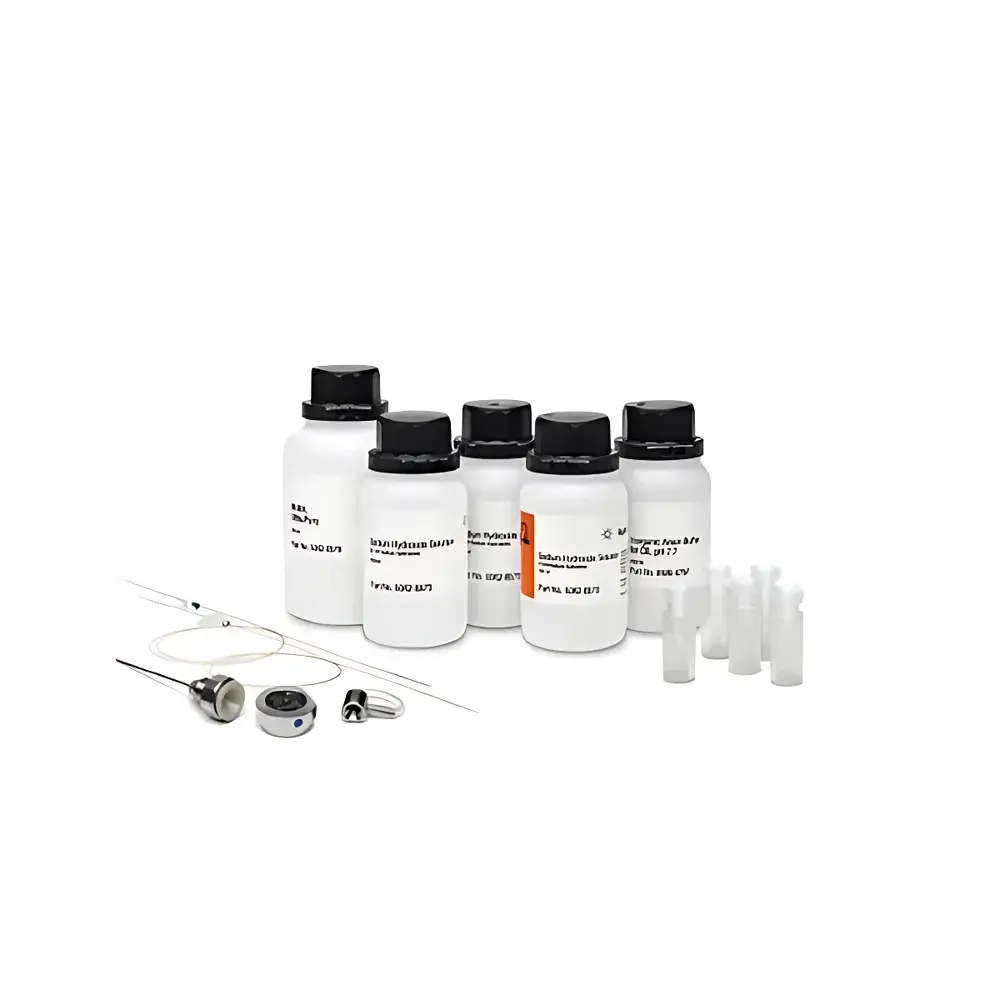
The Agilent 7100 accommodates a broad range of organic and ionic analytes—including nucleic acid fragments (e.g., antisense oligonucleotides, siRNA, CRISPR guide RNAs), pharmaceutical counterions, amino acids, organic acids, and basic/acidic drugs. It complies with ISO/IEC 17025 calibration traceability standards for analytical instrumentation and supports GLP/GMP workflows through electronic signatures, user access control, and immutable audit logs. Method development for ion analysis is facilitated by Agilent’s validated CE Ion Analysis Starter Kits, pre-optimized for common anion/cation applications per ASTM D4327 and USP guidelines. For oligonucleotide characterization, the system meets ICH Q5A/Q5B recommendations for purity profiling and impurity identification when coupled with appropriate detection (e.g., UV at 260 nm or LIF via third-party Picometrics SAS modules).
Software & Data Management
Controlled via Agilent OpenLab CDS CE Edition software, the 7100 provides intuitive method building, sequence scheduling, and real-time electropherogram visualization. Data files adhere to ASTM E1947-compliant .cef format, ensuring interoperability with third-party processing tools (e.g., PeakFit, ChromaTOF). All raw data, method parameters, instrument logs, and user actions are stored in a relational database with timestamped, role-based access. Audit trails include full change history for methods, sequences, and report templates—fully compliant with 21 CFR Part 11 Subpart B requirements for electronic records and signatures. Optional data archiving modules support automated backup to network drives or LTO tape systems.
Applications
- Therapeutic oligonucleotide purity assessment (identity, size variants, depurination products)
- Chiral separation of pharmaceutical intermediates using cyclodextrin-modified buffers
- Counterion profiling in APIs per ICH Q2(R2) validation protocols
- Quality control of heparin and low-molecular-weight heparins (LMWHs)
- Environmental anion analysis (NO₃⁻, SO₄²⁻, F⁻) in drinking water per EPA Method 300.0
- CE-MS hyphenation for intact protein charge variant mapping and post-translational modification analysis
FAQ
Does the Agilent 7100 support capillary gel electrophoresis for DNA fragment analysis?
Yes—it accepts commercially available replaceable polymer sieving matrices and supports temperature-stabilized CGE protocols for sizing DNA ladders up to 10 kbp.
Can the system be validated for GMP-regulated environments?
Yes—full IQ/OQ/PQ documentation packages, along with 21 CFR Part 11-compliant software configuration and electronic signature modules, are available upon request.
Is LIF detection natively integrated?
No—LIF requires external laser excitation and detection hardware; Agilent partners with Picometrics Technology SAS to provide validated LIF solutions compatible with the 7100 optical interface.
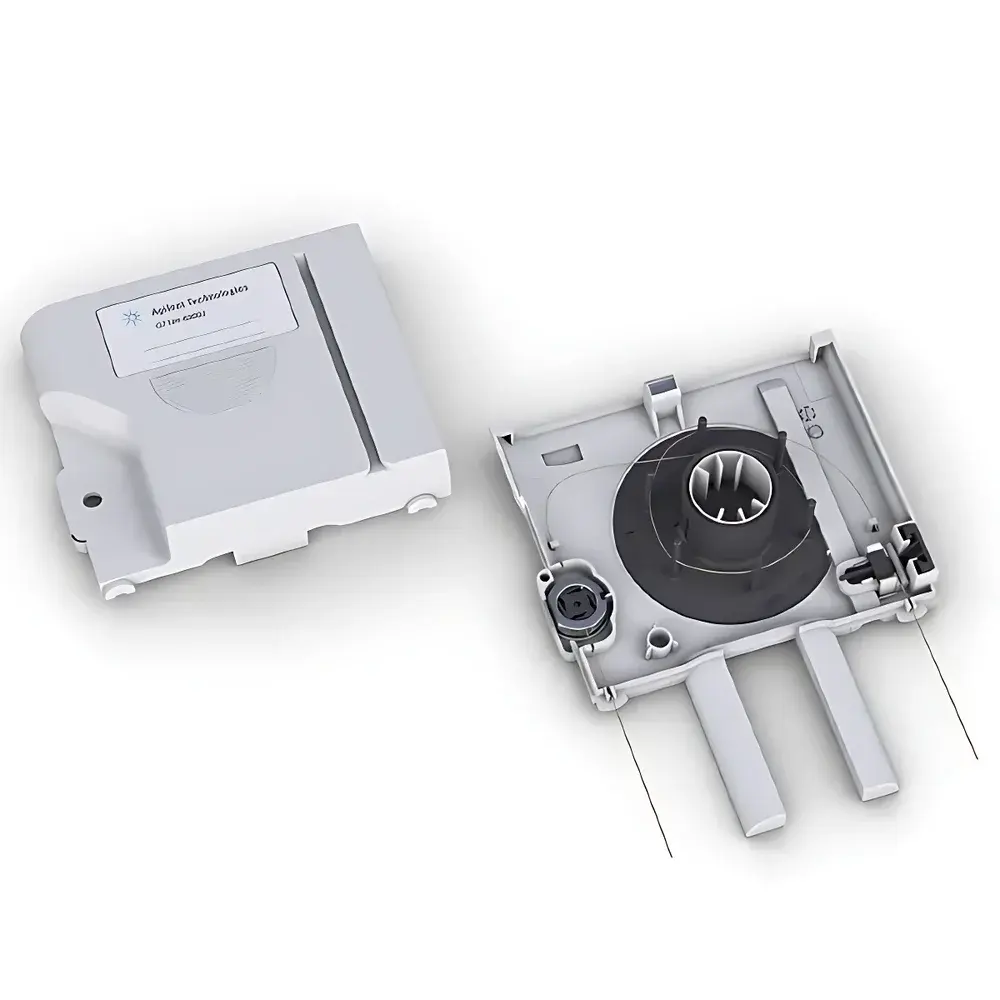
What maintenance intervals are recommended for capillary cartridges?
Capillaries should be inspected after every 200–300 injections; routine cleaning with NaOH (0.1 M) followed by water and buffer flushes extends lifetime to >1,000 runs under optimized conditions.
How does the buffer replenishment system improve reproducibility?
It maintains consistent pH and ionic strength across long sequences by automatically replacing depleted buffer zones, minimizing EOF drift and migration time variability (RSD < 0.5% over 48 h).




