
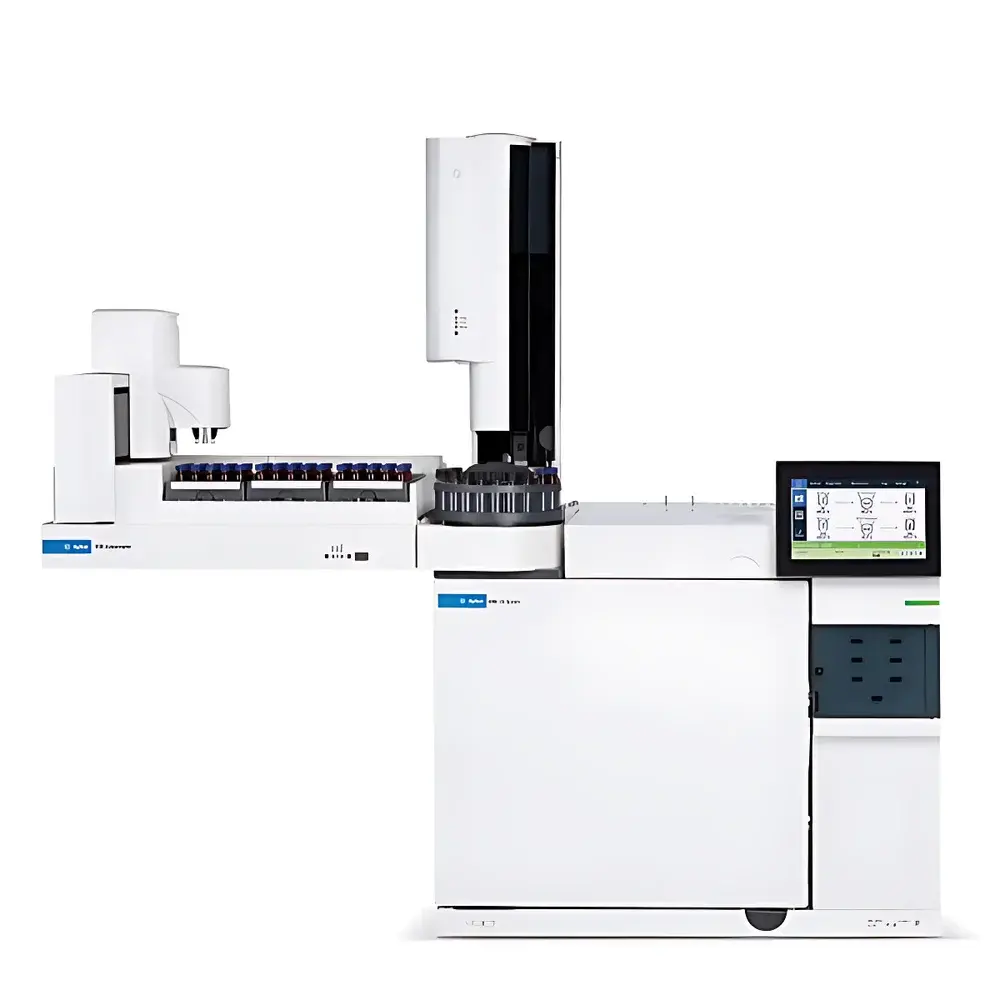
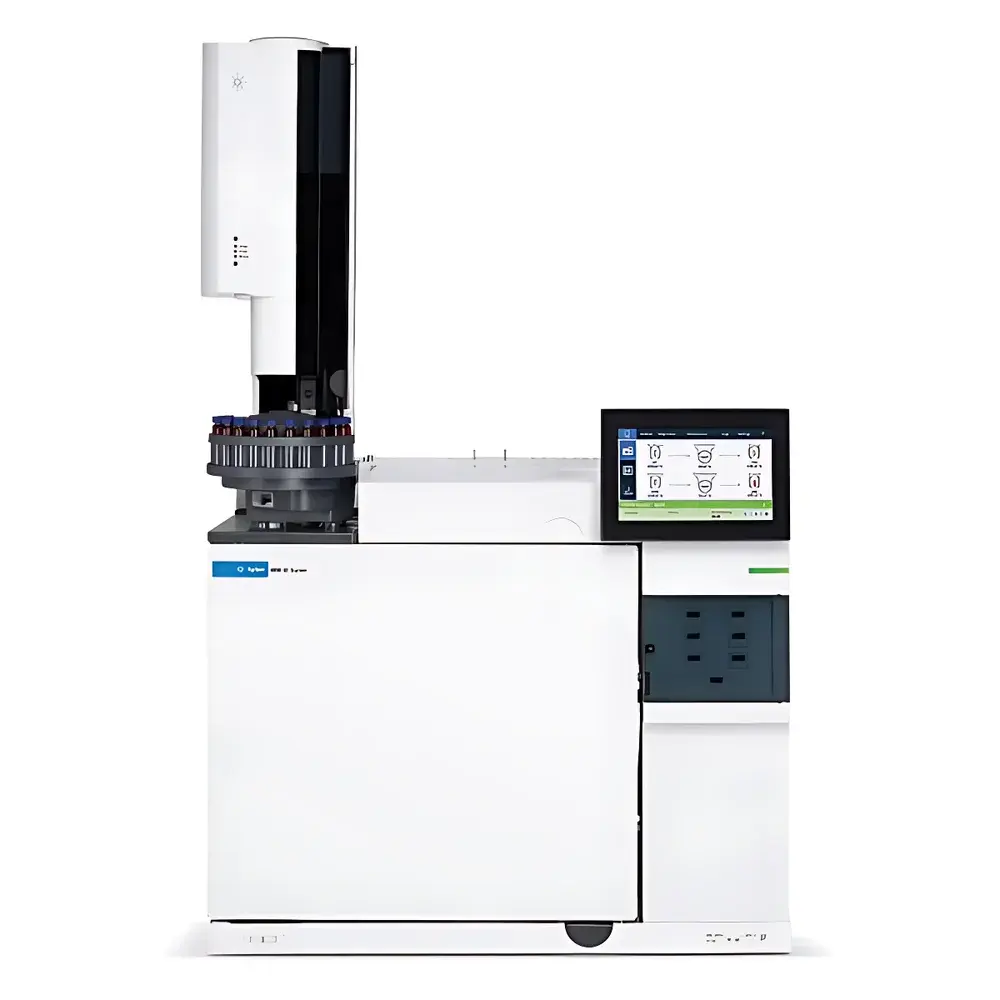
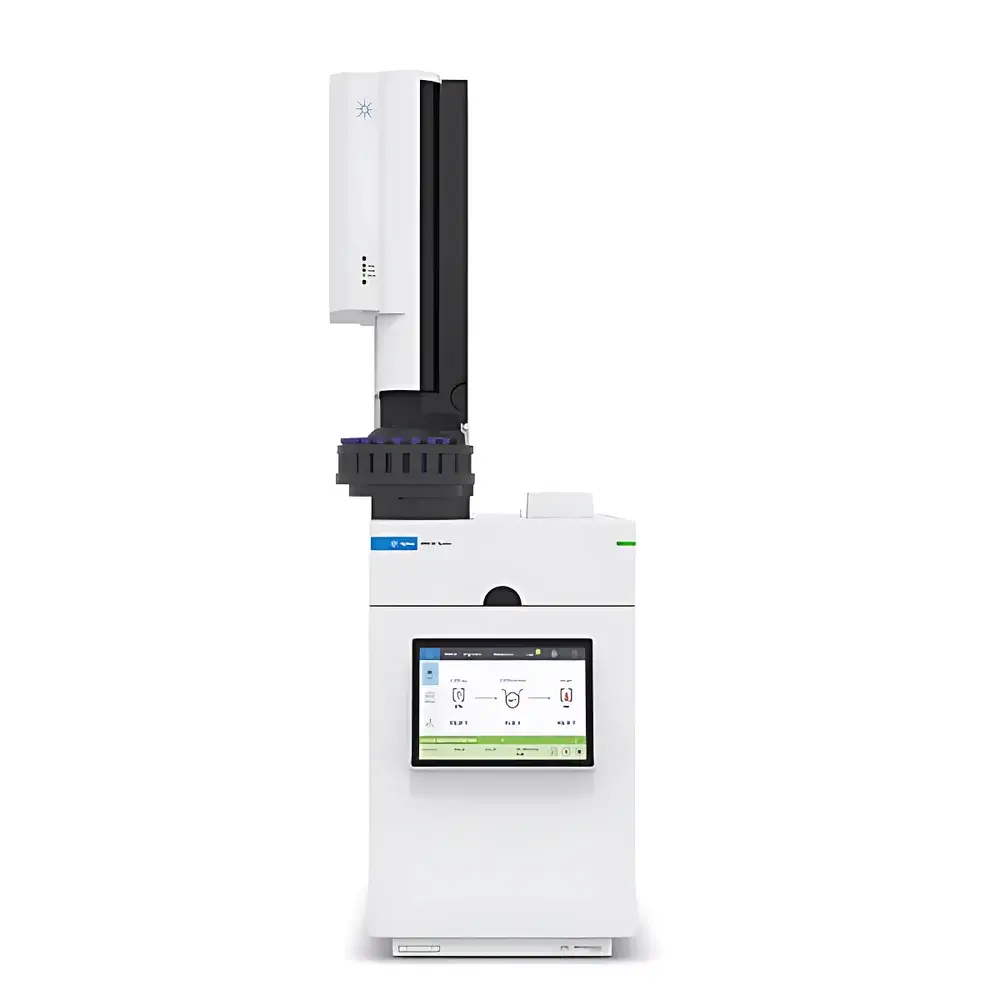
Agilent 7693A Automatic Liquid Sampler (ALS) for GC and GC/MS Systems
| Brand | Agilent Technologies |
|---|---|
| Origin | Shanghai, China |
| Manufacturer Type | Original Equipment Manufacturer (OEM) |
| Regional Classification | Domestic (China-manufactured) |
| Model | 7693A |
| Instrument Type | Gas Chromatography Autosampler |
| Pricing | Upon Request |
Overview
The Agilent 7693A Automatic Liquid Sampler (ALS) is a high-precision, modular autosampling platform engineered for seamless integration with Agilent gas chromatography (GC) and gas chromatography–mass spectrometry (GC/MS) systems. Designed around a robust syringe-based liquid injection architecture, the 7693A implements precise micro-volume dispensing using positive displacement syringes and inert sample pathways to ensure reproducible analyte transfer, minimal carryover (<0.01%), and exceptional retention time stability across extended unattended runs. Its core functionality centers on automated, programmable liquid-phase sample introduction into GC inlets—supporting split, splitless, on-column, and cool-on-column injection modes—while maintaining compliance with method validation requirements for regulated environments.
Key Features
- Modular scalability: Start with a 16-position sample tower and expand incrementally to a 150-position chilled or heated sample tray—enabling up to 72 hours of continuous operation without manual intervention.
- Dual-tower configuration: Supports simultaneous operation of two independent sample towers, effectively doubling throughput by enabling parallel vial access and overlapping injection cycles.
- Triple-layer injection technology: Integrates automated internal standard addition directly within the syringe path—eliminating manual spiking errors and ensuring stoichiometric consistency for quantitation via internal standard calibration.
- Integrated sample conditioning: Optional heater/mixer module maintains precise temperature control (4–150 °C) and orbital mixing (100–1200 rpm) for viscous, thermally labile, or particulate-containing samples—improving homogeneity and reducing adsorption losses.
- Barcode-enabled traceability: Integrated barcode reader validates vial identity at pickup; configurable error-handling logic triggers alerts, skips misidentified vials, or halts sequences per user-defined SOPs—supporting ALCOA+ data integrity principles.
- Priority sample override: Allows urgent samples to be inserted into an active sequence without interrupting ongoing injections—critical for QC release testing or environmental emergency response protocols.
- Thermal management flexibility: Entire sample tray can be actively cooled to 4 °C or heated to 80 °C, accommodating volatile analytes, high-boiling compounds, or ambient-sensitive standards.
Sample Compatibility & Compliance
The 7693A accommodates standard 12 × 32 mm, 15 × 45 mm, and 20 × 75 mm screw-thread or crimp-top vials—including amber glass, polymer-coated, and low-binding formats. It supports aqueous, organic, and mixed-solvent matrices, as well as derivatized extracts and biological fluid supernatants. The system meets key regulatory expectations for analytical instrument qualification: it supports IQ/OQ/PQ documentation templates, generates full audit trails (including syringe plunger position, dwell time, wash cycle logs), and complies with FDA 21 CFR Part 11 requirements when operated with Agilent OpenLab CDS software configured for electronic signatures and role-based access control. Method transfer compatibility is validated per ICH Q2(R2) guidelines, and routine operation aligns with ISO/IEC 17025:2017 clause 7.2.2 (method validation) and USP Analytical Instrument Qualification.
Software & Data Management
Controlled exclusively via Agilent OpenLab CDS (ChemStation Edition or OpenLab ECM), the 7693A enables centralized method deployment, real-time status monitoring, and comprehensive event logging. All injection parameters—including volume (0.1–100 µL), injection speed, needle penetration depth, wash solvent selection (up to 3 solvents), and purge cycles—are fully programmable and version-controlled. Audit trail records capture timestamped operator actions, hardware state changes, and error events with immutable hashing. Data export conforms to ASTM E1382-21 (Standard Guide for Laboratory Information Management Systems) and supports LIMS integration via HL7 or ODBC protocols. Sequence reprocessing retains original acquisition metadata, satisfying GLP/GMP traceability mandates.
Applications
The 7693A delivers consistent performance across environmental analysis (EPA Methods 502.2, 524.4, 8260D), pharmaceutical residual solvent testing (ICH Q3C), petrochemical hydrocarbon profiling (ASTM D5501, D6730), food safety screening (pesticides, mycotoxins), and clinical toxicology (blood alcohol, volatiles). Its dual-tower capability is particularly advantageous for high-volume contract laboratories performing batch-release testing under cGMP, while the triple-layer injection module ensures accuracy in forensic quantitative workflows requiring deuterated internal standards.
FAQ
Can the 7693A be used with non-Agilent GC systems?
Yes—via analog/digital I/O interface and customizable trigger protocols, though full feature support (e.g., priority override, barcode feedback) requires Agilent GC firmware integration.
What is the typical carryover rate for polar analytes like amines or organic acids?
<0.01% after three consecutive wash cycles using 5% isopropanol/water followed by acetonitrile—verified per ASTM D7594-20 Annex A2.
Is the 7693A compliant with ISO/IEC 17025 accreditation requirements?
Yes—the system supports documented IQ/OQ/PQ, traceable calibration records, and full audit trail generation required for laboratory accreditation.
How does the dual-tower configuration affect method transfer between instruments?
Method parameters remain identical; only sequence file structure differs—OpenLab CDS provides automated conversion tools for cross-platform migration.
Does the barcode reader support GS1 DataMatrix and Code 128 symbologies?
Yes—both linear (Code 128) and 2D (DataMatrix) formats are natively supported, with configurable decoding sensitivity and retry logic.
Related Products





