
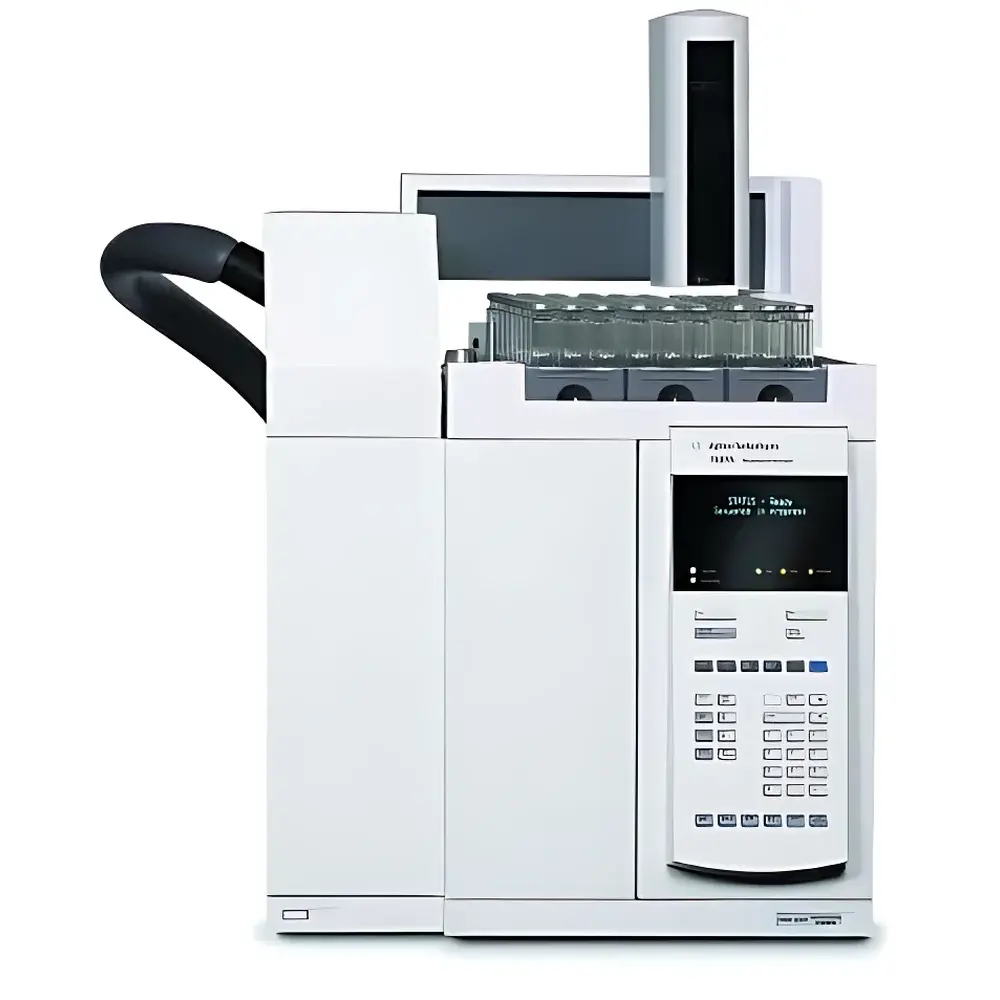
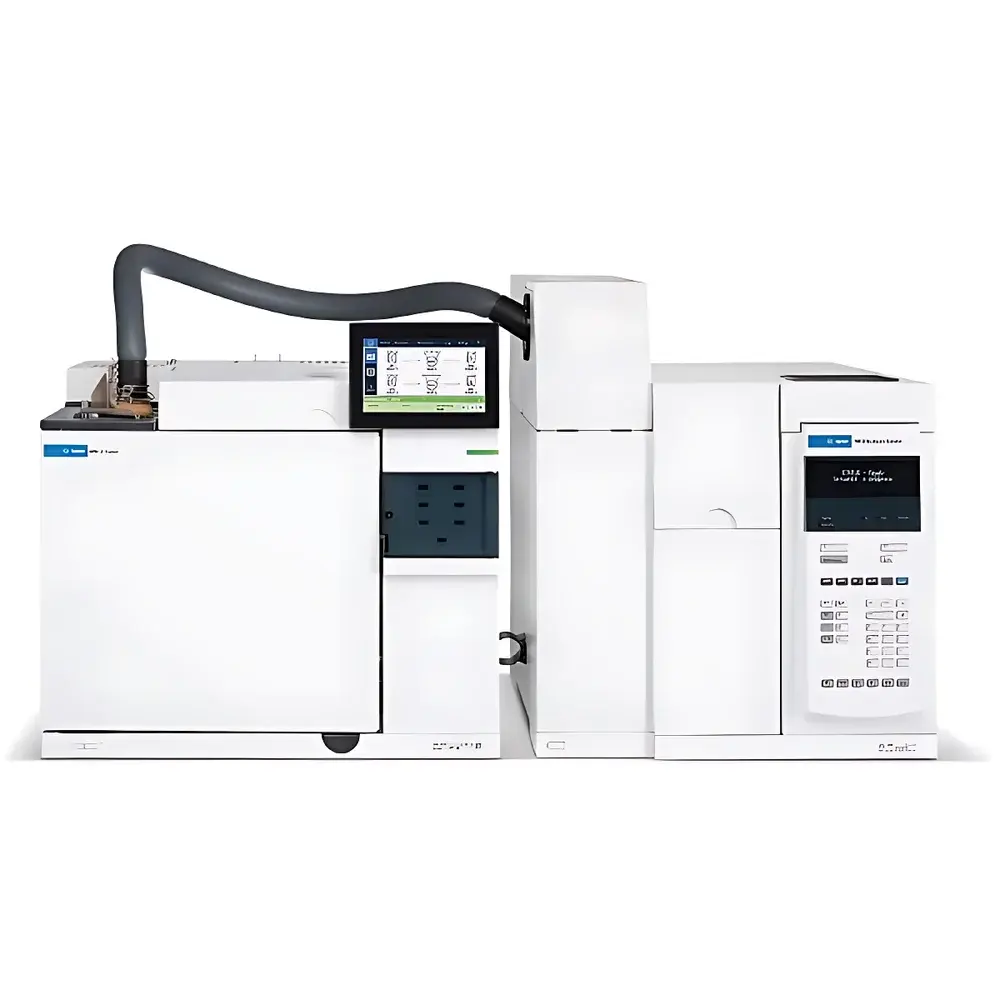
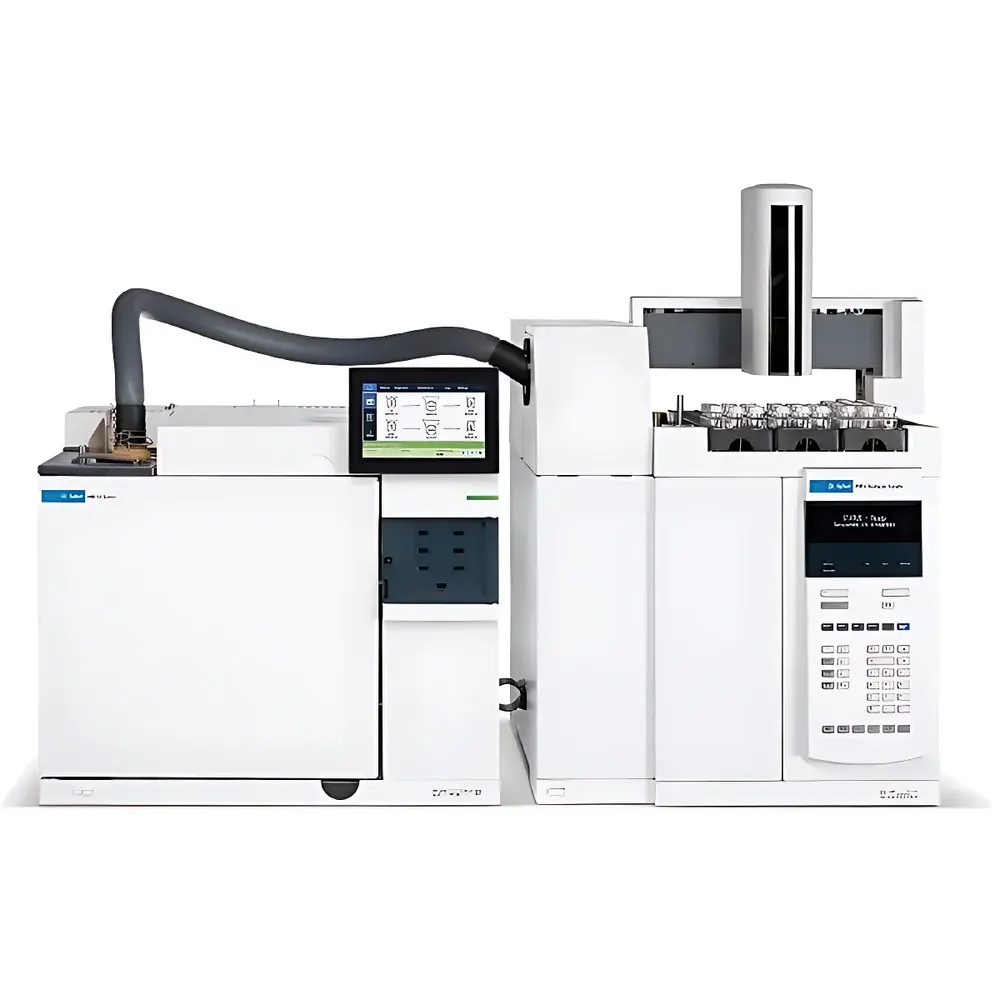
Agilent 7697A Headspace Autosampler
| Brand | Agilent Technologies |
|---|---|
| Origin | Shanghai, China |
| Manufacturer Type | Original Equipment Manufacturer (OEM) |
| Country of Origin | China |
| Model | 7697A |
| Instrument Type | Gas Chromatography Headspace Sampler |
| Maximum Sample Capacity | 12 vials (standard configuration) |
| Sample Vial Sizes Supported | 10 mL, 20 mL, 22 mL |
| Temperature Control Range (Transfer Line) | 35–250 °C (off to 250 °C) |
| Temperature Control Range (Valve & Loop) | 35–210 °C (off to 210 °C) |
| Temperature Control Range (Oven/Chamber) | 35–210 °C (off to 210 °C) |
| Pressure Control | Electronic Pressure Control (EPC) for valve and loop |
| Leak Detection | Automated vial leak check during pressurization |
| Operating Modes | Single Extraction, Multiple Headspace Extraction (MHE), Multiple Headspace Concentration (MHC) |
| MHE/MHC Cycles | Up to 100 cycles per vial |
| Method Development Support | Cross-platform method conversion and rapid re-optimization |
| Software Compatibility | Agilent OpenLab CDS, Agilent MassHunter, Waters Empower™ 2/3 |
| Barcode Reader | Integrated for sample tracking |
| Carrier Gas Options | Helium, Nitrogen, Hydrogen (H₂-safe design) |
| Peak Area Reproducibility | <1.5% RSD (standard mode) |
| Interfacing | Direct GC inlet coupling via transfer line interface |
Overview
The Agilent 7697A Headspace Autosampler is a precision-engineered, fully automated sampling system designed for integration with gas chromatography (GC) platforms—particularly the Agilent 7890 GC series. It operates on the principle of equilibrium headspace analysis, where volatile and semi-volatile analytes partition between a liquid or solid sample matrix and the gaseous phase above it. By thermally equilibrating sealed vials under controlled temperature and pressure conditions, the 7697A extracts representative vapor-phase aliquots for injection into the GC column. Its inert flow path—constructed from silanized glass, deactivated stainless steel, and high-purity PTFE components—minimizes surface adsorption, catalytic degradation, or analyte loss, ensuring quantitative integrity across diverse compound classes including residual solvents, environmental VOCs, flavor/aroma compounds, and pharmaceutical impurities.
Key Features
- Automated vial leak detection: Performs real-time pressure integrity verification during vial pressurization—eliminating manual calibration and preserving analytical precision without sacrificing throughput.
- Hydrogen-compatible architecture: Certified for safe operation with H₂ as carrier gas, supporting faster GC separations and reduced operational costs while maintaining full compliance with laboratory safety protocols.
- Priority sample positioning: Three dedicated priority slots enable immediate insertion and analysis of time-critical samples mid-sequence without interrupting ongoing runs.
- Dynamic pressure compensation: Compensates for ambient barometric fluctuations across multi-site or multi-lab deployments, ensuring inter-laboratory result consistency and method transfer robustness.
- Multi-cycle extraction capability: Supports both Multiple Headspace Extraction (MHE) and Multiple Headspace Concentration (MHC) modes—up to 100 cycles per vial—to enhance sensitivity for trace-level analytes or improve recovery from complex matrices.
- Modular thermal control: Independent, EPC-regulated temperature zones for transfer line (35–250 °C), valve/loop (35–210 °C), and oven chamber (35–210 °C), each extendable to 300 °C when used with the 111-position sample tray.
- Barcode-enabled sample traceability: Integrated barcode reader captures vial IDs prior to thermal equilibration, synchronizing physical sample handling with electronic audit trails in compliant data systems.
Sample Compatibility & Compliance
The 7697A accommodates standard 10 mL, 20 mL, and 22 mL crimp-top or screw-cap headspace vials without adapters—reducing consumable complexity and cross-contamination risk. Its design conforms to ISO/IEC 17025 requirements for testing laboratories and supports GLP/GMP workflows through secure user access controls, electronic signatures, and full audit trail generation when operated via Agilent OpenLab CDS software. The system meets ASTM D3699 (residual solvents in ethanol), USP <467> (residual solvents), and ICH Q2(R2) validation guidelines. Hydrogen compatibility adheres to NFPA 55 and local gas cabinet safety standards. All firmware and method parameters are version-controlled and exportable for regulatory submission packages.
Software & Data Management
Native control is provided through Agilent OpenLab CDS and MassHunter Quantitative Analysis software, offering full method development, sequence management, real-time monitoring, and automated report generation. Third-party interoperability includes Waters Empower™ 2 and Empower™ 3 via ASTM E1381-compliant drivers, enabling centralized instrument management in hybrid-lab environments. Method development tools support rapid translation of legacy headspace methods (e.g., from Agilent 7693A or other vendors) using only three input parameters: vial volume, equilibration temperature, and partition coefficient estimates. All acquisition metadata—including vial pressure logs, temperature ramp profiles, leak test outcomes, and barcode timestamps—are embedded in raw data files (.D format) and retained in the database for 21 CFR Part 11-compliant review and reprocessing.
Applications
- Pharmaceutical quality control: Residual solvent analysis per ICH Q3C guidelines in APIs and finished dosage forms.
- Environmental testing: EPA Method 502.2 and 8260D-compliant analysis of volatile organic compounds (VOCs) in water, soil, and wastewater.
- Food & beverage safety: Quantification of ethanol, acetaldehyde, diacetyl, and off-flavor compounds in beverages, dairy, and fermented products.
- Polymers & packaging: Migration testing of extractables and leachables from plastic containers, films, and closures.
- Forensic toxicology: Blood alcohol concentration (BAC) and volatile drug screening using headspace-GC-FID or GC-MS.
FAQ
Does the 7697A require routine calibration for leak detection?
No—the automated vial leak check is performed dynamically during pressurization and requires no scheduled calibration or reference standards.
Can the 7697A operate independently of an Agilent GC?
Yes—it supports standalone operation via front-panel keypad or remote control through third-party CDS platforms, including Waters Empower™.
Is method transfer from older Agilent headspace systems supported?
Yes—Agilent’s Method Translation Tool enables direct import and parameter mapping from 7693A, 7697A, and legacy G1888 systems with minimal optimization.
What is the maximum allowable vial pressure during equilibration?
The system supports pressures up to 30 psi (207 kPa) with programmable ramp and hold profiles, configurable per method step.
How does the 7697A ensure reproducibility when ambient lab temperature fluctuates?
Its internal pressure compensation algorithm adjusts vial pressurization setpoints in real time based on measured atmospheric pressure, maintaining consistent headspace phase composition across varying environmental conditions.
Related Products





