
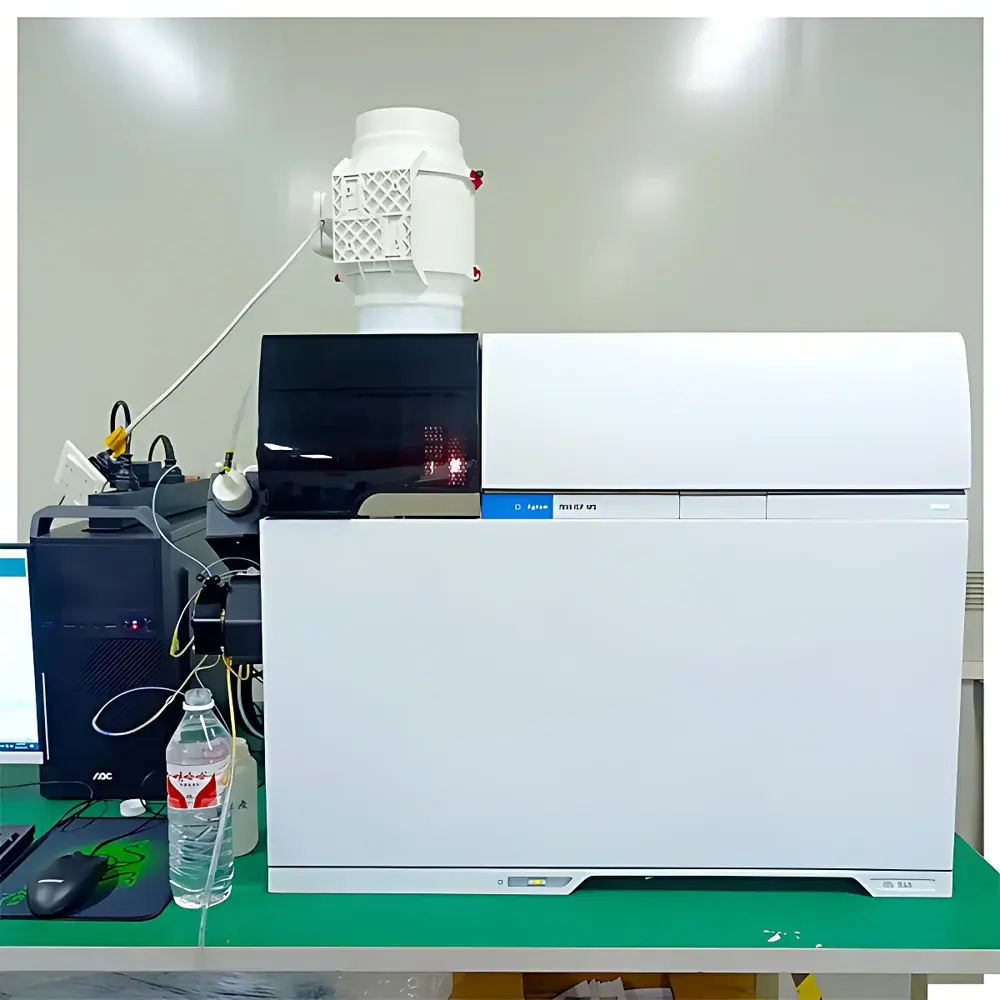
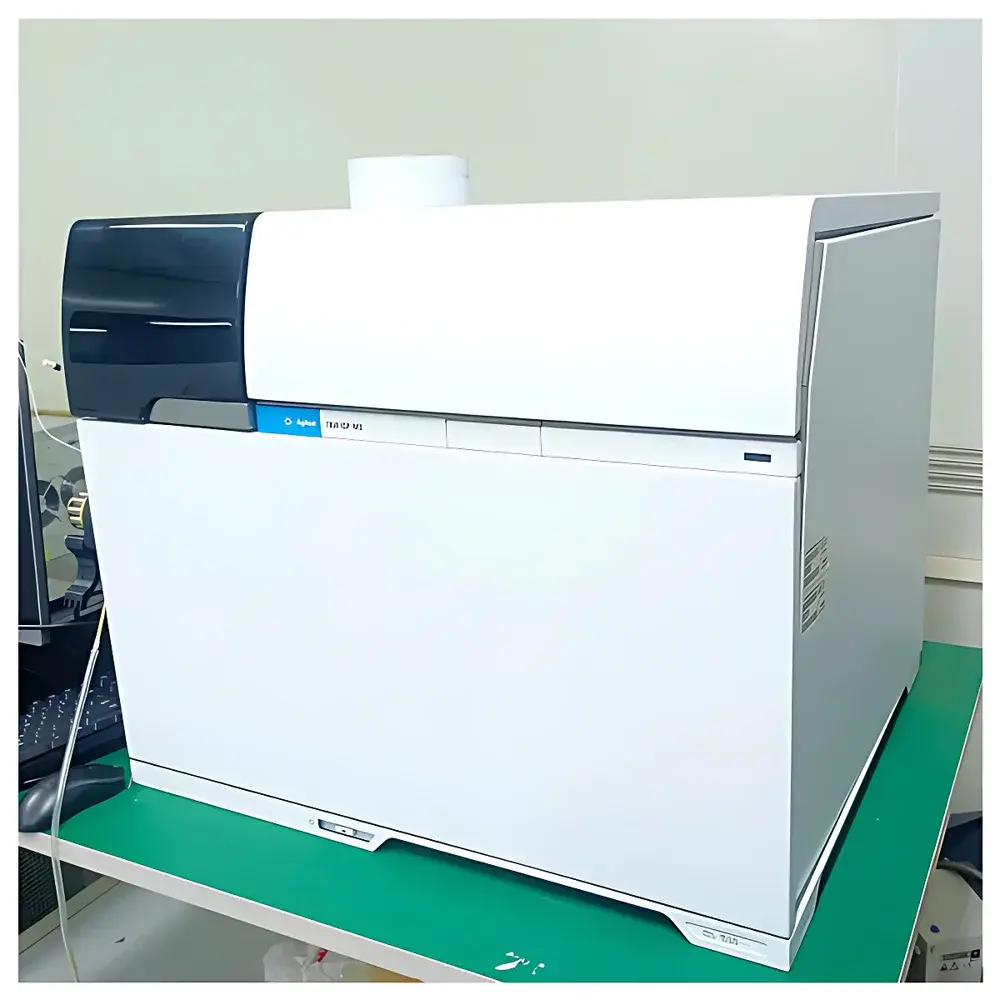
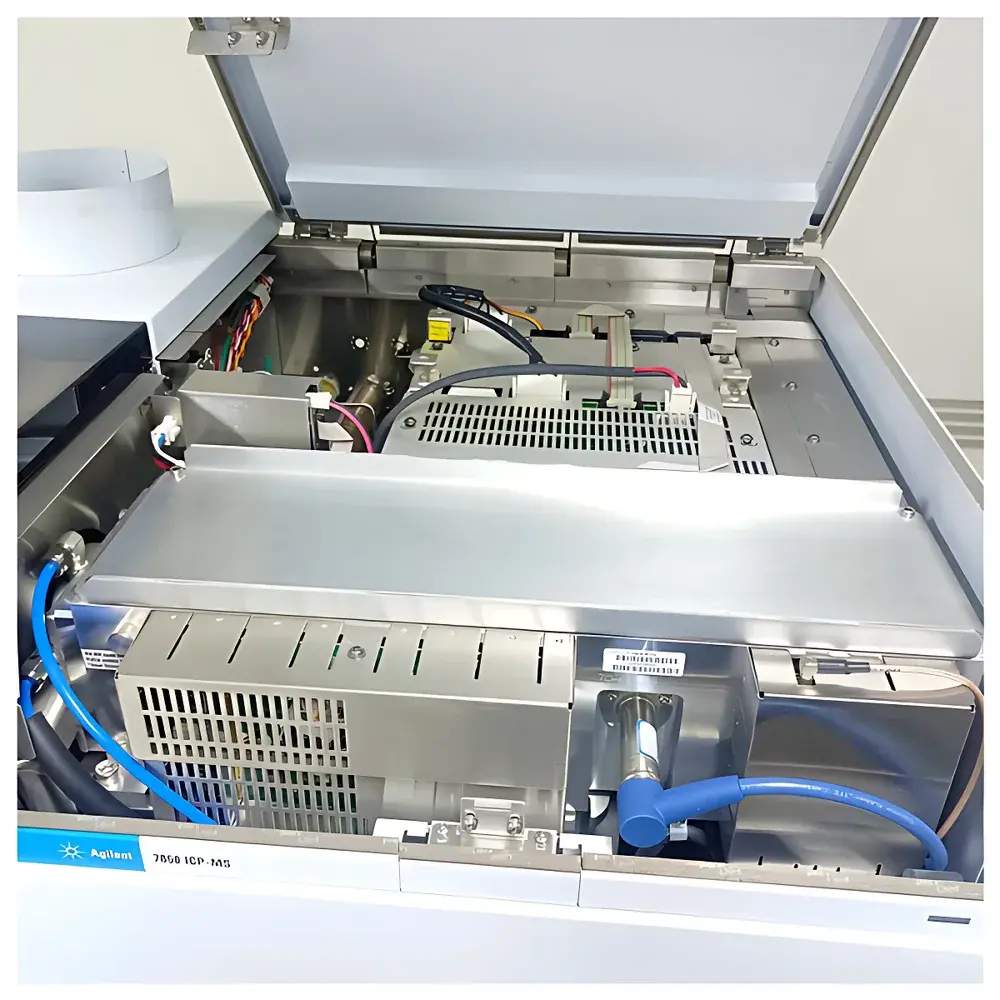
Agilent 7850 Inductively Coupled Plasma Mass Spectrometer
| Brand | Agilent Technologies |
|---|---|
| Origin | Malaysia |
| Manufacturer Type | Authorized Distributor |
| Origin Category | Imported |
| Model | 7850 |
| Instrument Type | Quadrupole ICP-MS |
| Application Environment | Laboratory |
| Mass Range (amu) | 5–260 |
| Unit Mass Resolution (amu) | 0.5 |
| Detection Limit (ng·L⁻¹) | 10 |
| Sensitivity (Mcps / mg·L⁻¹) | 10 |
| Short-Term Stability (RSD %) | 3 |
| Long-Term Stability (RSD %) | 5 |
Overview
The Agilent 7850 Inductively Coupled Plasma Mass Spectrometer (ICP-MS) is a high-performance quadrupole-based analytical platform engineered for robust, high-throughput elemental analysis of complex, high-matrix samples in regulated and research laboratory environments. It operates on the fundamental principle of ion generation via high-temperature argon plasma (≈7,000–10,000 K), followed by mass separation using a radiofrequency-driven quadrupole mass filter and detection via secondary electron multiplier. Designed to address persistent challenges in routine ICP-MS workflows—including polyatomic interference, signal suppression from elevated total dissolved solids (TDS), and method development overhead—the 7850 integrates hardware innovations such as the Ultra-High Matrix Introduction (UHMI) system and helium-mode collision cell with semi-mass calibration, enabling direct analysis of samples with up to 25% TDS without manual dilution or matrix-matched calibration standards.
Key Features
- Ultra-High Matrix Introduction (UHMI) system: Enables direct nebulization of samples containing up to 25% total dissolved solids via argon gas dilution at the spray chamber inlet—eliminating error-prone manual dilution and preserving analyte integrity.
- Helium-mode collision cell with semi-mass correction: Dynamically suppresses polyatomic interferences (e.g., 40Ar16O+, 40Ar40Ar+) and doubly charged ion species (e.g., 138Ba2+) without requiring kinetic energy discrimination tuning or external mass calibration references.
- IntelliQuant automated screening: Performs real-time, untargeted elemental survey across the full mass range (5–260 amu) and generates periodic table heatmaps to flag concentration outliers, unknown elements, or unexpected spectral features.
- Outlier Condition Formatting (OCF): Applies user-defined logic rules to highlight results exceeding pre-specified concentration thresholds, recovery limits, or internal standard deviation criteria—reducing manual data review burden.
- Early Maintenance Feedback (EMF): Monitors critical consumable usage (e.g., torch hours, cone lifetime, pump oil status) and sensor-derived operational parameters; delivers traffic-light–coded alerts (green/yellow/red) aligned with preventive maintenance schedules per Agilent’s service protocols.
- ICP Go mobile interface: Browser-based, responsive UI for remote batch setup, run monitoring, and status checks—compatible with tablets and smartphones, supporting walk-up operation and multi-instrument oversight.
Sample Compatibility & Compliance
The Agilent 7850 accepts liquid samples introduced via standard concentric or microflow nebulizers, compatible with acidic (including HCl-stabilized matrices for Hg, Ag, Mo), saline, organic-aqueous, and high-TDS environmental, geological, clinical, and industrial digests. Its UHMI architecture maintains stable plasma ignition and ion transmission even under extreme matrix loading conditions where conventional systems require >100-fold dilution. The instrument supports compliance with ISO/IEC 17025, ASTM D5673 and D7089, USP <232>/<233>, and EPA Methods 200.8 and 6020B. Full audit trail, electronic signature support, and 21 CFR Part 11–compliant software modules (via MassHunter Regulatory Edition) are available for GLP/GMP-regulated laboratories conducting elemental impurity testing or environmental monitoring.
Software & Data Management
Controlled exclusively through Agilent MassHunter Workstation Software (version B.09.00 or later), the 7850 provides integrated acquisition, processing, reporting, and database archiving capabilities. Method templates include pre-validated SOPs for regulatory applications (e.g., pharmaceutical elemental impurities, drinking water metals). All raw data files (.d format) retain full metadata—including EMF logs, IntelliQuant spectra, OCF flags, and collision cell operating parameters—for traceable reprocessing. Data export complies with LIMS-friendly formats (CSV, XML, PDF/A-2), and custom report builders support configurable layouts aligned with internal QA documentation requirements.
Applications
- Regulatory elemental impurity testing in pharmaceutical APIs and excipients per ICH Q3D guidelines.
- Multi-element quantification in high-salinity seawater, brines, and geothermal fluids without dilution.
- Trace metal analysis in biological tissues, blood, and urine following microwave-assisted acid digestion.
- Quality control of semiconductor-grade chemicals and high-purity reagents (e.g., HF, HNO₃).
- Environmental monitoring of contaminated soils and sediments via aqua regia or hydrofluoric acid leachates.
- Geochemical fingerprinting of rare earth elements (REEs) in mineral concentrates with variable silicate and phosphate loadings.
FAQ
Does the Agilent 7850 require matrix-matched calibration standards for high-TDS samples?
No. The UHMI system and helium collision cell enable accurate quantification without matrix-matched calibrants, leveraging internal standardization and interference-free mass selection.
Can the 7850 analyze mercury in HCl-preserved samples without introducing new interferences?
Yes. The instrument’s optimized interface design and collision cell operation allow stable Hg measurement in up to 10% v/v HCl, with no observable increase in 202Hg35Cl+ or other chloride adducts.
What is the maximum recommended total dissolved solids (TDS) concentration for routine operation?
25% w/w TDS is the validated upper limit for continuous analysis using UHMI; performance verification (e.g., sensitivity drift, oxide ratio) is advised for each new matrix type.
Is MassHunter Regulatory Edition included with the base configuration?
MassHunter Quantitative Analysis is standard; Regulatory Edition with 21 CFR Part 11 compliance features is available as an optional licensed module.
How does the semi-mass correction function differ from traditional mass calibration?
It applies dynamic, real-time offset adjustment to the quadrupole RF/DC ratio based on reference peak positions—maintaining mass accuracy across extended runs without interrupting analysis for full mass calibration.
Related Products




