
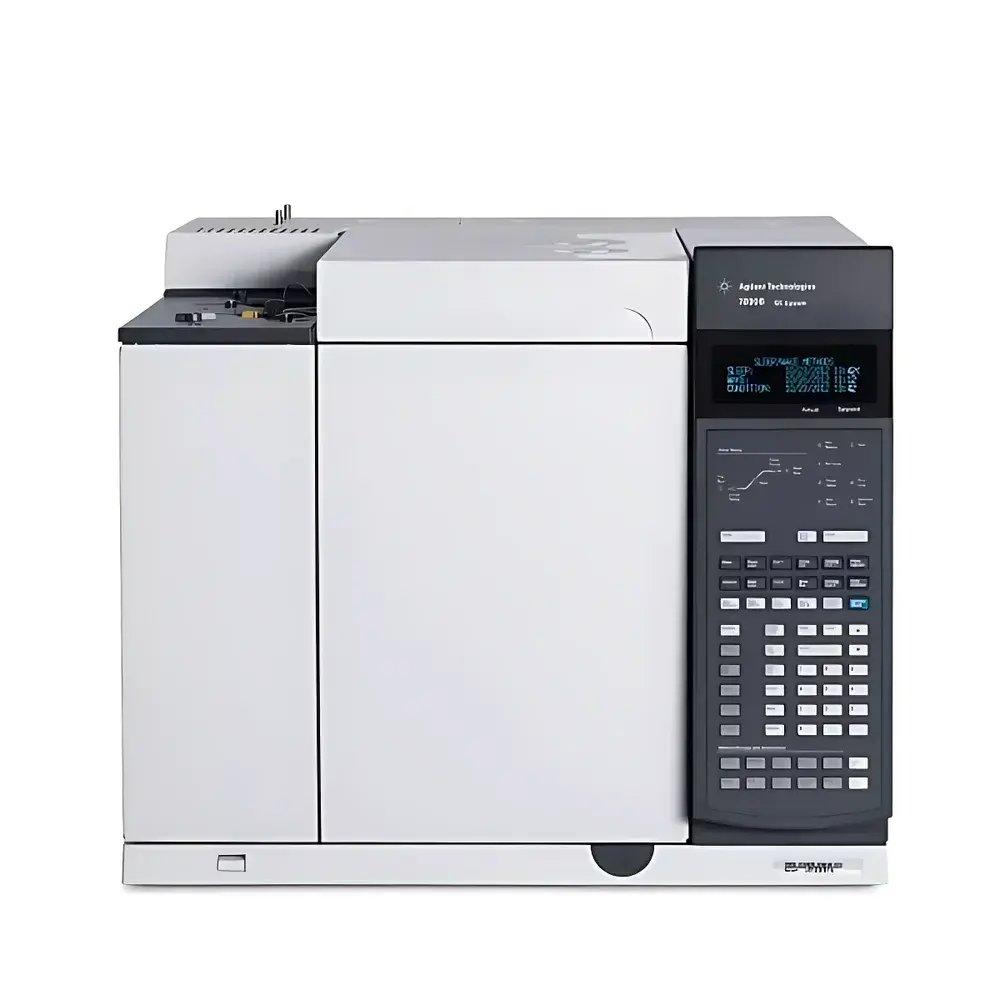
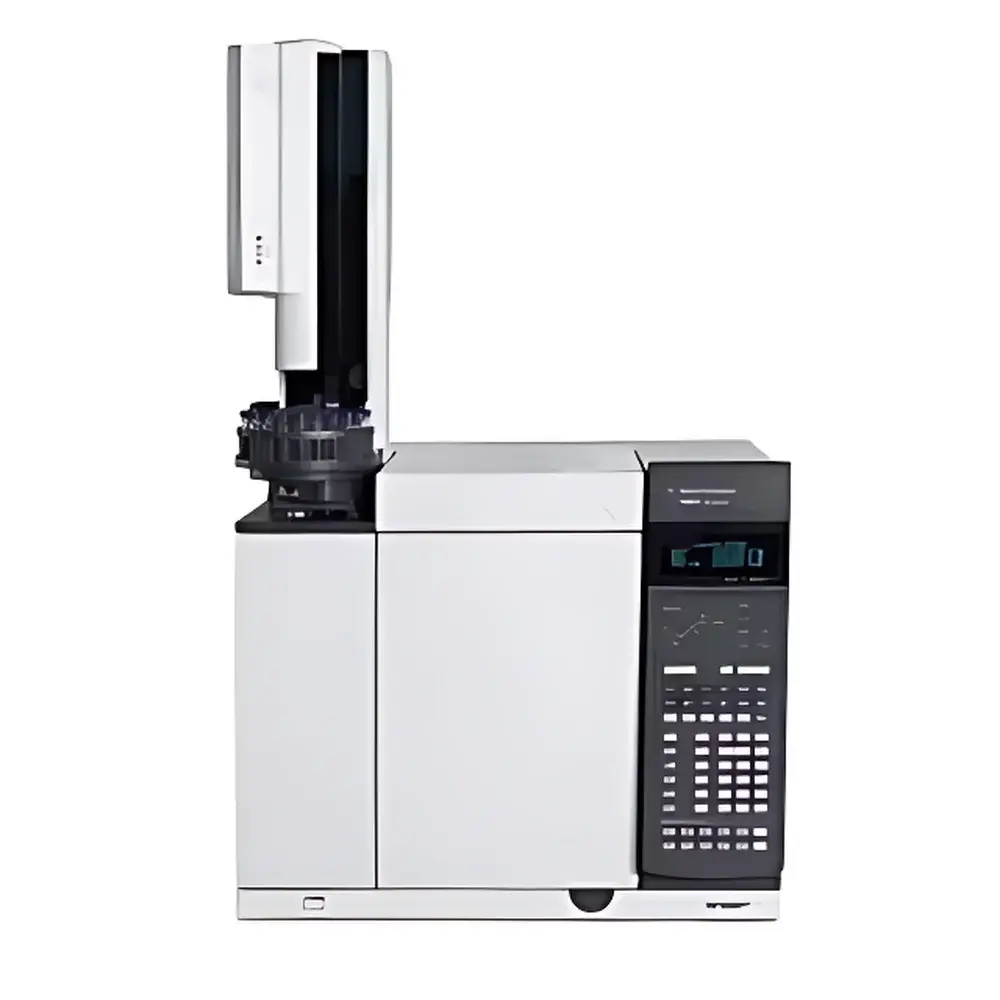
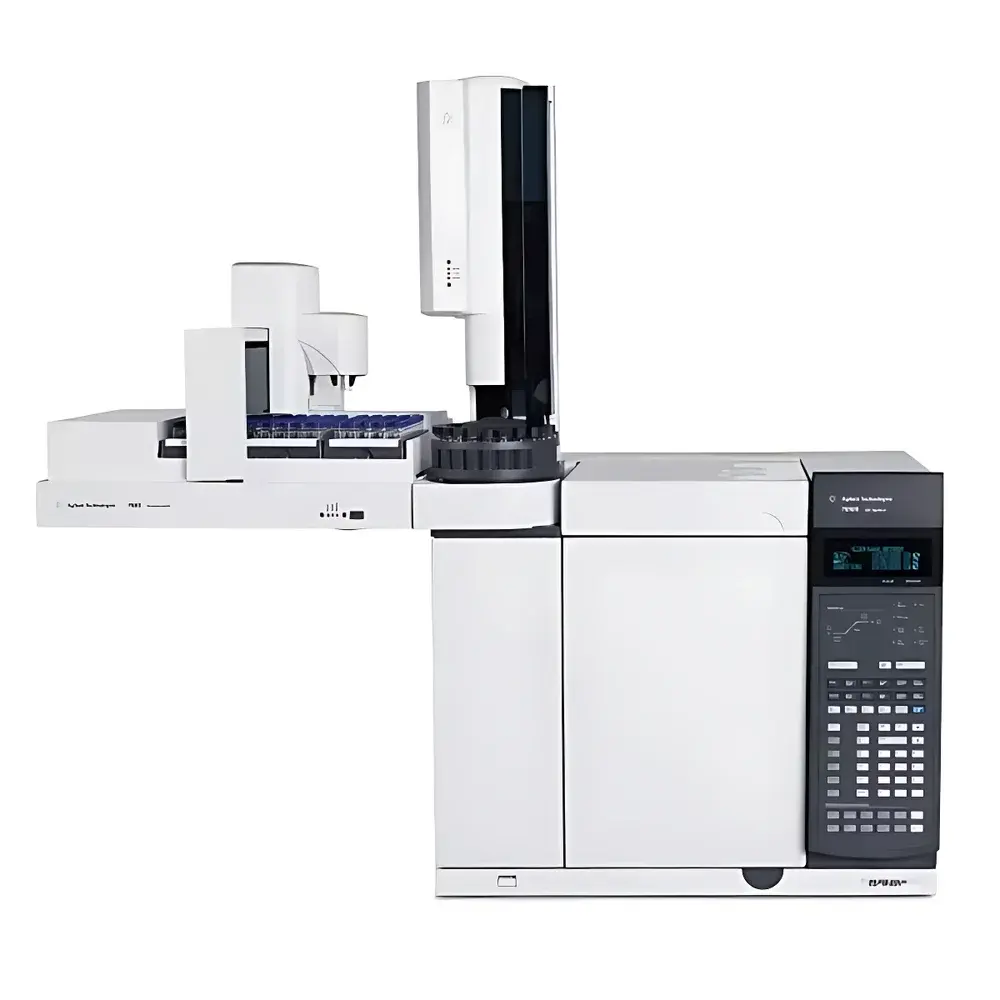
Agilent 7890B Gas Chromatograph
| Brand | Agilent |
|---|---|
| Origin | USA |
| Model | 7890B |
| Instrument Type | Laboratory Gas Chromatograph |
| Temperature Control Range | 400 °C |
| Oven Ramp Rate | 0.1–120 °C/min |
| Cooling Mechanism | Low Thermal Mass (LTM) module enables rapid column heating and cooling |
| Carrier Gas Flow Range & Control | 0–1200 mL/min |
| Carrier Gas Pressure Range & Control | up to 970 kPa |
| Injector Maximum Operating Temperature | 400 °C |
| Injector Pressure Setting Range | up to 970 kPa |
| Total Injector Flow Setting Range | 0–200 mL/min (N₂), 0–1000 mL/min (H₂ or He) |
Overview
The Agilent 7890B Gas Chromatograph is a high-performance, laboratory-grade analytical instrument engineered for precision, reproducibility, and long-term operational stability in routine and regulated environments. Based on over four decades of Agilent’s chromatography expertise, the 7890B implements advanced gas chromatographic principles—separation via differential partitioning of analytes between a mobile phase (pressurized carrier gas) and a stationary phase (capillary column)—under precisely controlled thermal and pneumatic conditions. Its core architecture integrates Electronic Pressure Control (EPC) across all gas flow paths, ensuring sub-millibar pressure regulation and enabling retention time reproducibility better than ±0.005 min under validated methods. The system supports both split/splitless, cool-on-column, and programmed temperature vaporizing (PTV) injection modes through configurable inlet modules, and accommodates a wide range of detector types—including FID, TCD, ECD, NPD, and mass spectrometers—making it suitable for applications ranging from petrochemical fingerprinting to environmental residue screening.
Key Features
- Low Thermal Mass (LTM) oven technology reduces cycle times by enabling rapid column heating (up to 120 °C/min) and active cooling without external chillers—ideal for high-throughput labs requiring <60-second inter-run intervals.
- Advanced Electronic Pressure Control (EPC) delivers precise, digitally regulated carrier gas flow and pressure across all inlets and detectors, supporting method transfer integrity and compliance with ISO/IEC 17025 and ASTM D3606, D5504.
- Microfluidic Flow Technology (CFT) allows dynamic flow routing and backflushing within a single column set-up, improving peak shape, reducing column contamination, and minimizing sample preparation steps.
- Retention Time Locking (RTL) ensures consistent retention times across instruments, columns, and days—critical for multi-site method validation and long-term stability monitoring per USP and ICH Q2(R2).
- Large Volume Oven (LVO) accommodates up to six independently controllable valves and multiple columns, facilitating complex multidimensional GC (GC×GC) and heart-cutting configurations without hardware modification.
- Inert Flow Path—treated metal surfaces, deactivated liners, and low-bleed consumables—preserve labile compounds and extend column lifetime while enhancing signal-to-noise ratios for trace-level detection.
Sample Compatibility & Compliance
The 7890B accepts liquid, gaseous, and volatile solid samples introduced via standard syringe injection, 7693 ALS autosampler, 7697A headspace sampler, or thermal desorption units. It complies with key regulatory frameworks including FDA 21 CFR Part 11 (when paired with OpenLab CDS), EU Annex 11, and GLP/GMP data integrity requirements. All EPC parameters are audit-trail enabled; method files support electronic signatures and version control. System suitability testing (SST) templates align with USP , EP 2.2.46, and ISO 17025 clause 7.7, ensuring documented performance verification prior to sample analysis.
Software & Data Management
Controlled exclusively through Agilent OpenLab CDS (ChemStation Edition or OpenLab ECM), the 7890B supports fully automated sequence execution, real-time diagnostics, and integrated calibration management. The software provides built-in tools for peak integration optimization, baseline correction, and spectral deconvolution (when coupled to MS). Method transfer utilities—including RTL migration wizards and EPC parameter scaling—facilitate cross-platform deployment. All raw data, audit logs, and instrument status reports are stored in secure, timestamped, and tamper-evident formats compliant with ALCOA+ principles.
Applications
The 7890B serves as a foundational platform across pharmaceutical QC (residual solvents, extractables/leachables), environmental testing (EPA Methods 8260D, 8270E, 502.2), food safety (pesticide multiresidue, flavor volatiles), and energy analytics (hydrocarbon typing, natural gas composition). Its modular inlet design supports derivatization-free analysis of polar compounds (e.g., organic acids, alcohols), while LTM-enabled fast GC protocols meet ASTM D7213 for rapid biodiesel profiling. Routine labs leverage its robustness for 24/7 operation; research facilities use its CFT and LVO capabilities for method development in complex matrices.
FAQ
Does the 7890B support helium-free operation?
Yes—integrated hydrogen and nitrogen carrier gas modules, combined with H₂ leak detection and pressure-compensated flow algorithms, enable full method conversion from He to alternative gases without sacrificing resolution or retention time stability.
Can the 7890B be integrated into a networked laboratory environment?
Yes—it features native Ethernet connectivity, supports LDAP authentication, and interoperates with LIMS via ASTM E1384 and HL7 interfaces when deployed with OpenLab ECM.
What maintenance intervals are recommended for routine operation?
Injector liner replacement every 100–200 injections; column trimming every 500–1000 runs; EPC sensor calibration annually or after major hardware service—documented in Agilent’s Preventive Maintenance Guide (P/N G1891-90001).
Is method validation support available for regulated industries?
Yes—Agilent provides IQ/OQ/PQ protocols, system suitability test packages, and 21 CFR Part 11 compliance documentation kits upon request.
How does the LTM module affect column lifetime?
Rapid thermal cycling does not compromise column integrity when using Agilent J&W certified columns rated for ≥1000 thermal cycles; accelerated aging studies confirm no measurable degradation in resolution or bleed profile after 5,000 LTM-driven ramps.
Related Products






