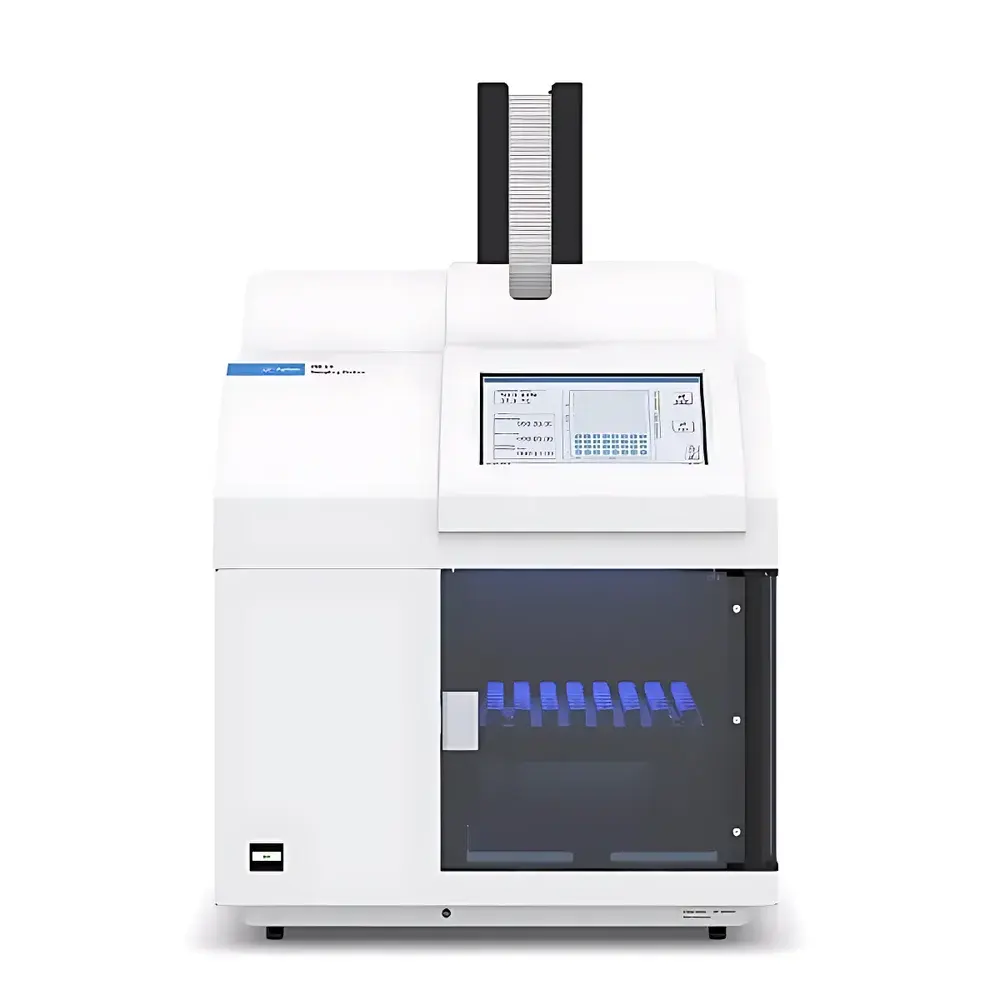
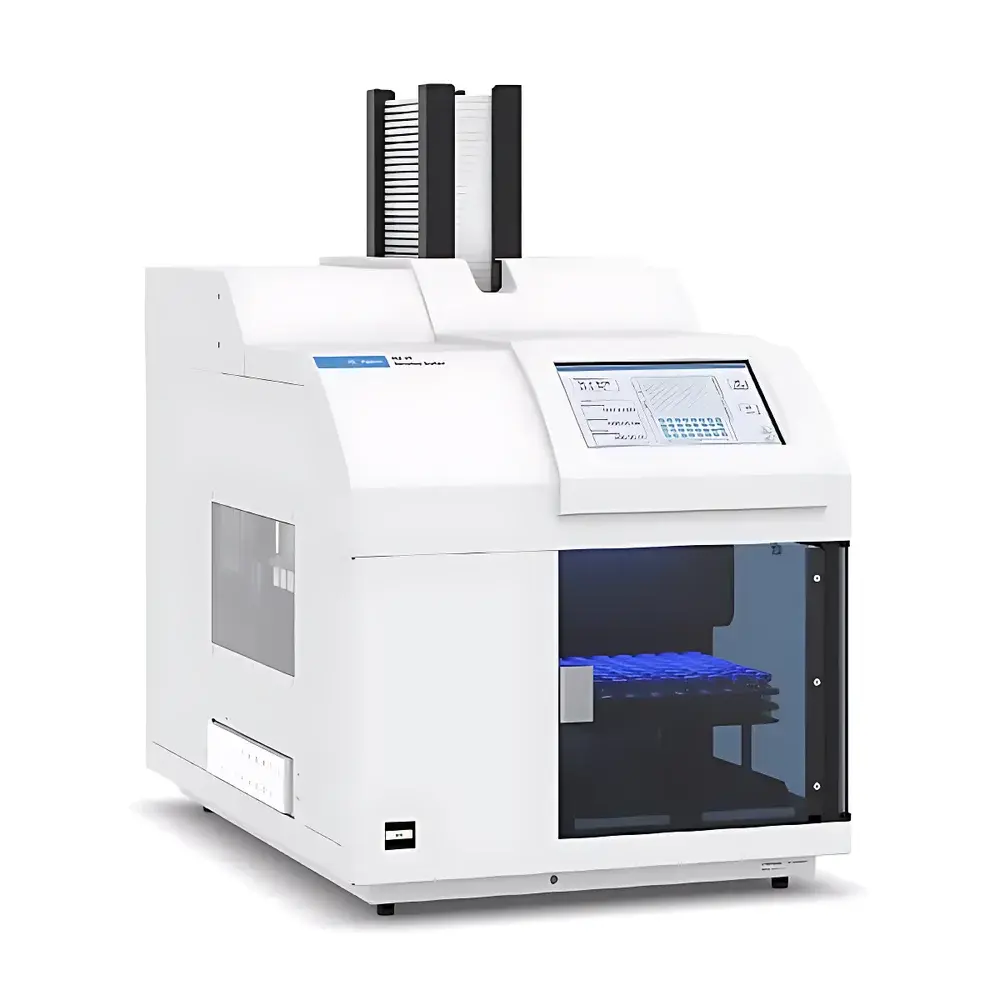
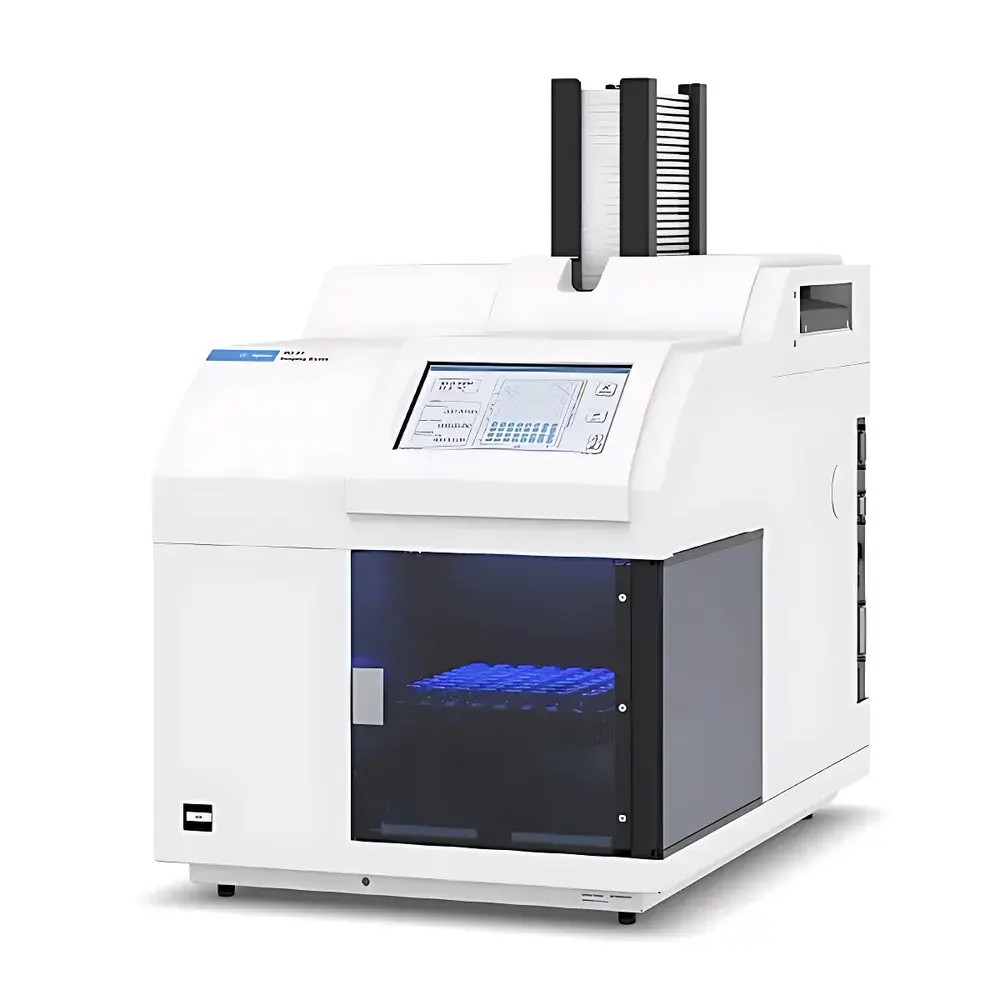
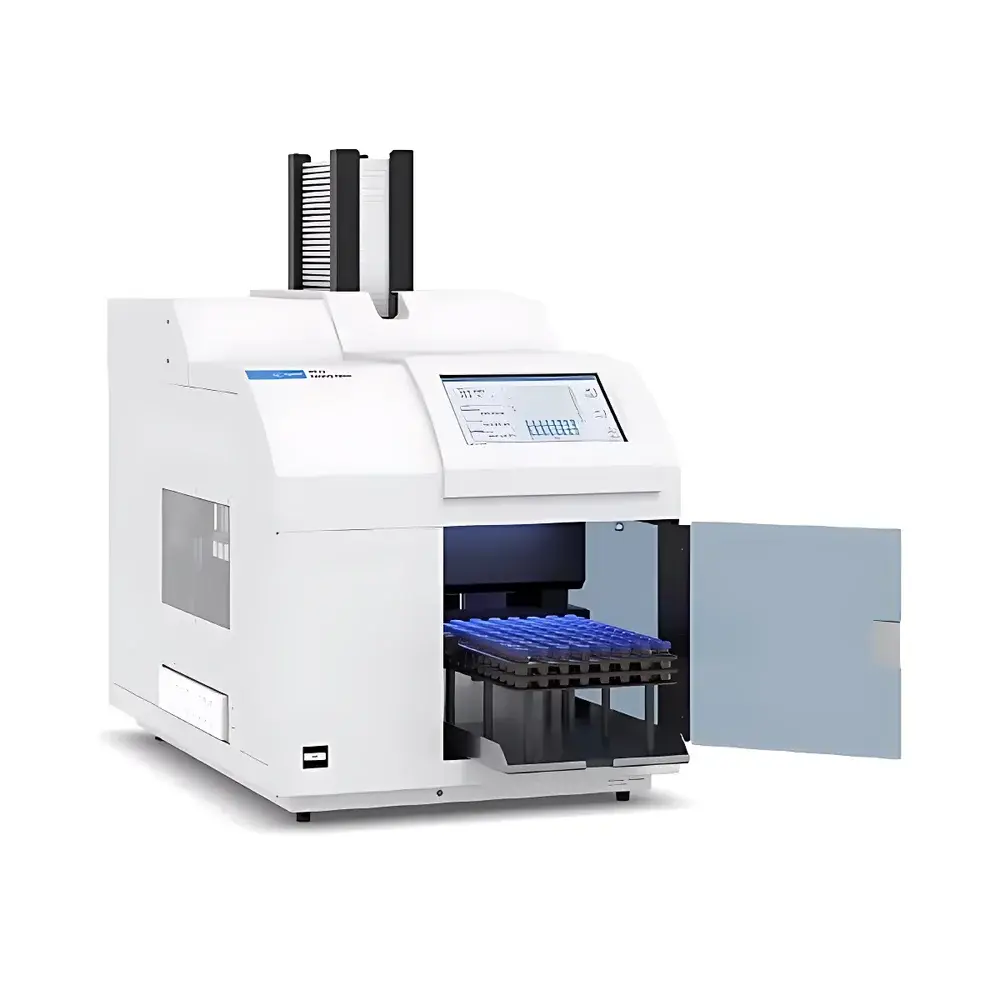
Agilent 850-DS Automated Sampling Station for Dissolution Testing
| Brand | Agilent Technologies |
|---|---|
| Origin | Imported |
| Manufacturer Type | Original Equipment Manufacturer (OEM) |
| Instrument Type | Online Sampling System |
| Model | 850-DS |
| Compliance | Compatible with USP <711>, <724>, and ASTM D8239-22 |
| Pump Architecture | Integrated Rotary Piston Pump |
| Filtration | Optional 8-channel Whatman/Cytiva filter plate module |
| Sample Interface | Direct-to-HPLC vial tray (Agilent 1260/1290-compatible format) |
| Method Support | USP Apparatus 1 (Basket), 2 (Paddle), 3 (Reciprocating Cylinder), 5 (Paddle-over-Disk), 6 (Rotating Cylinder), and 7 (Reciprocating Holder) |
Overview
The Agilent 850-DS Automated Sampling Station is an online, integrated sampling platform engineered for pharmaceutical dissolution testing in compliance with current regulatory expectations. It operates on the principle of timed, programmable aspiration from dissolution vessels under controlled hydrodynamic conditions—ensuring representative sample acquisition without perturbing vessel fluid dynamics or temperature stability. Designed to interface directly with Agilent’s 708-DS Dissolution Apparatus and third-party USP-compliant systems—including Apparatus 1, 2, 3, 5, 6, and 7—the 850-DS replaces manual sampling workflows with a validated, audit-ready automation solution. Its architecture supports continuous operation across extended dissolution profiles (e.g., 24–72 h studies), enabling high-fidelity kinetic data capture for immediate downstream analysis via HPLC or UV-Vis spectrophotometry. The system is built to meet GLP/GMP operational requirements, including full traceability of sampling events, time-stamped log files, and hardware-level interlocks that prevent out-of-sequence or invalid sampling.
Key Features
- Programmable multi-speed peristaltic-free rotary piston pump delivering precise volumetric accuracy (±1.5% CV at 1–10 mL volumes) across variable time-point intervals—from 1-minute to 24-hour increments.
- Integrated filtration module accepting standardized 8-channel Whatman/Cytiva filter plates (0.45 µm or 0.22 µm PVDF or nylon membranes), minimizing carryover and eliminating manual filter replacement between time points.
- Compact benchtop footprint (<40 cm depth) housing pump, tubing manifold, filtration unit, and sample carousel—designed to co-locate with dissolution apparatuses without requiring auxiliary cabinets or external controllers.
- Direct-to-HPLC sample delivery: accommodates Agilent-standard 100-position vial trays (12 × 75 mm) compatible with 1260/1290 Infinity II autosamplers; eliminates secondary transfer, reducing contamination risk and analyst handling time.
- Method-flexible solvent compatibility: validated for aqueous buffers, organic-aqueous mixtures, and surfactant-containing media (e.g., SDS, polysorbate 80) up to 2% w/v without clogging or flow degradation.
- Real-time status monitoring via front-panel LCD and Ethernet-enabled remote control through Agilent OpenLab CDS or third-party LIMS integration.
Sample Compatibility & Compliance
The 850-DS maintains strict adherence to pharmacopeial standards governing dissolution methodology and data integrity. It supports all USP-defined apparatus configurations and meets the mechanical and procedural criteria outlined in USP (Dissolution) and (Drug Release). Its sampling timing resolution (±0.5 s), volume repeatability, and temperature-stable fluid path design ensure compliance with ICH Q5C stability guidance and FDA expectations for dissolution method validation. All firmware and control logic are structured to support 21 CFR Part 11-compliant electronic records—including user authentication, audit trails, and immutable event logging—making it suitable for regulated QC laboratories undergoing FDA, EMA, or PMDA inspections. The system undergoes factory calibration verification against NIST-traceable volumetric standards, with documentation provided per IQ/OQ protocol templates.
Software & Data Management
Control and configuration are managed through Agilent’s dedicated Dissolution Control Software (DCS), a Windows-based application supporting method creation, sequence scheduling, real-time sampling visualization, and automated report generation. DCS logs every sampling event—including vessel ID, time point, volume aspirated, filter channel used, and error flags—with SHA-256 hashing for data integrity verification. Export formats include CSV, XML, and PDF reports compliant with ALCOA+ principles (Attributable, Legible, Contemporaneous, Original, Accurate, Complete, Consistent, Enduring, Available). Integration with OpenLab CDS enables direct injection parameter handoff to HPLC methods, synchronizing dissolution time points with chromatographic run sequences. Optional API access allows bidirectional communication with enterprise LIMS or MES platforms for centralized workflow orchestration.
Applications
- Regulatory batch release testing of immediate- and extended-release solid oral dosage forms (tablets, capsules, pellets).
- Comparative dissolution profiling (e.g., reference-listed drug vs. generic product) per FDA Guidance for Industry on Bioequivalence Studies.
- Formulation development support—evaluating polymer erosion kinetics, pH-dependent release, or surfactant-mediated solubilization.
- Stability-indicating dissolution assays coupled to HPLC-UV or LC-MS for degradant quantification.
- Multi-vessel parallel testing using 850-DS with Agilent 708-DS or NanoDis systems for enhanced throughput in formulation screening.
FAQ
Is the 850-DS compatible with non-Agilent dissolution apparatuses?
Yes—it interfaces with any USP-compliant dissolution system equipped with standardized sample port fittings (¼”-28 UNF or M6 threads) and temperature-controlled vessel manifolds.
Can sampling intervals be adjusted during an ongoing run?
No—intervals are fixed at method initialization to preserve data integrity and audit trail consistency; dynamic reconfiguration requires pausing and revalidating the sequence.
What filtration options are supported beyond the standard 8-channel plate?
Custom filter plate adapters are available for 4-, 12-, or 24-channel configurations; membrane material selection (PVDF, nylon, PTFE) must align with solvent compatibility guidelines.
Does the system support temperature-compensated volume delivery?
Volume delivery is calibrated at 37 °C; no real-time thermal compensation is applied, as per USP recommendation to maintain constant vessel temperature and rely on gravimetric calibration at operating temperature.
How is carryover mitigated between samples?
The system employs triple-rinse cycles with dissolution medium prior to each aspiration, plus post-sample flush paths routed to waste; rinse volume and dwell time are programmable per method.