
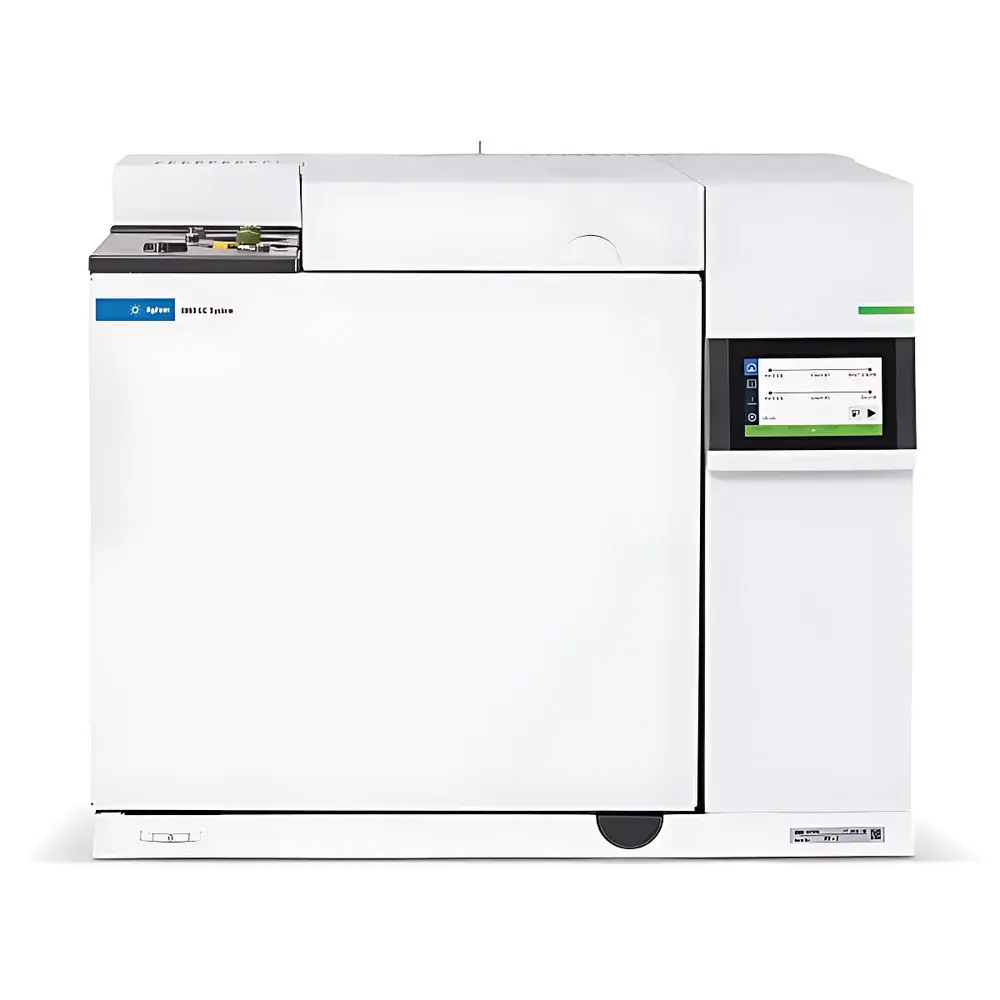
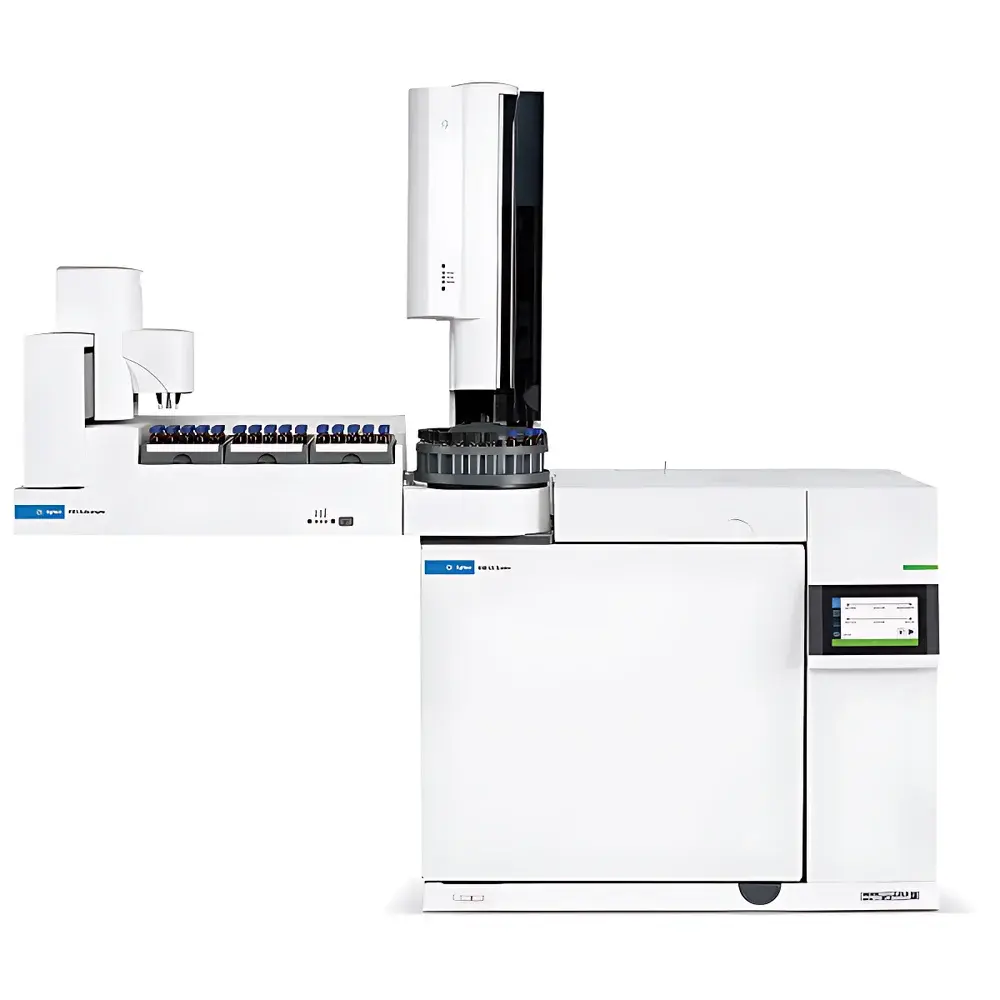
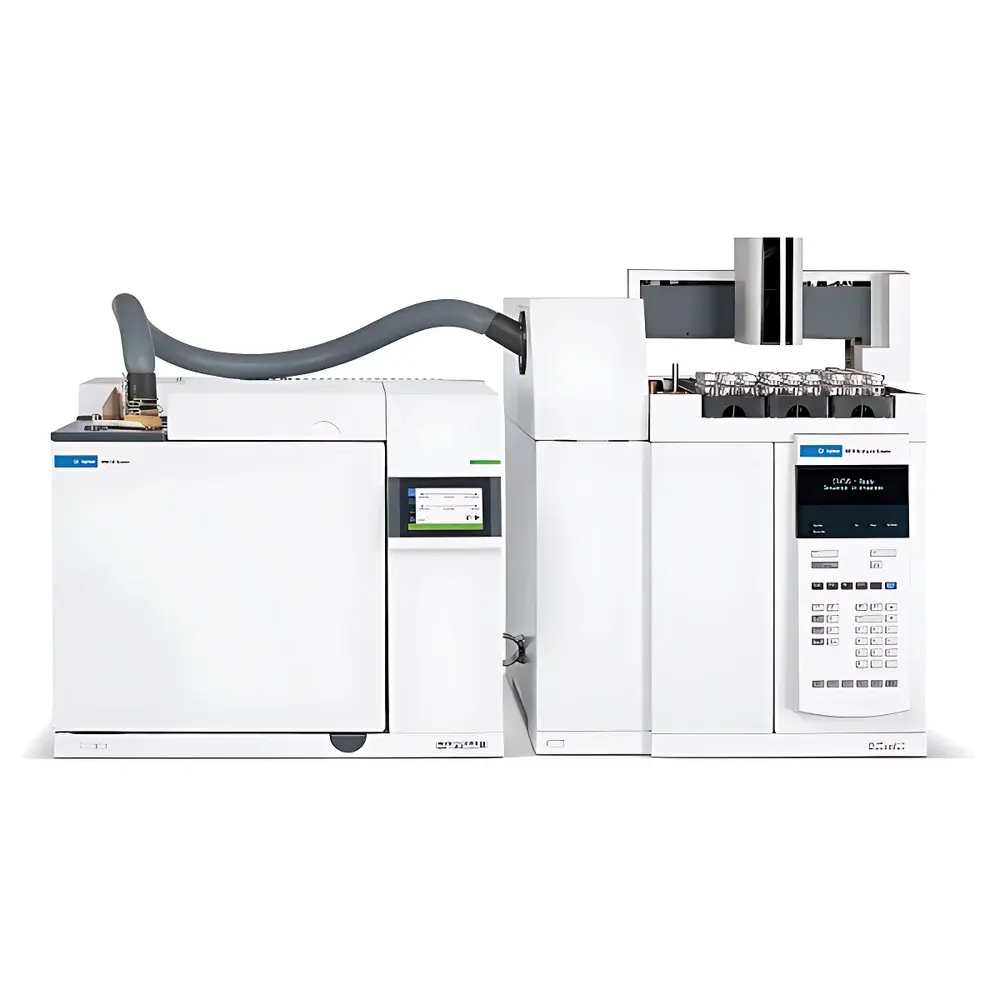
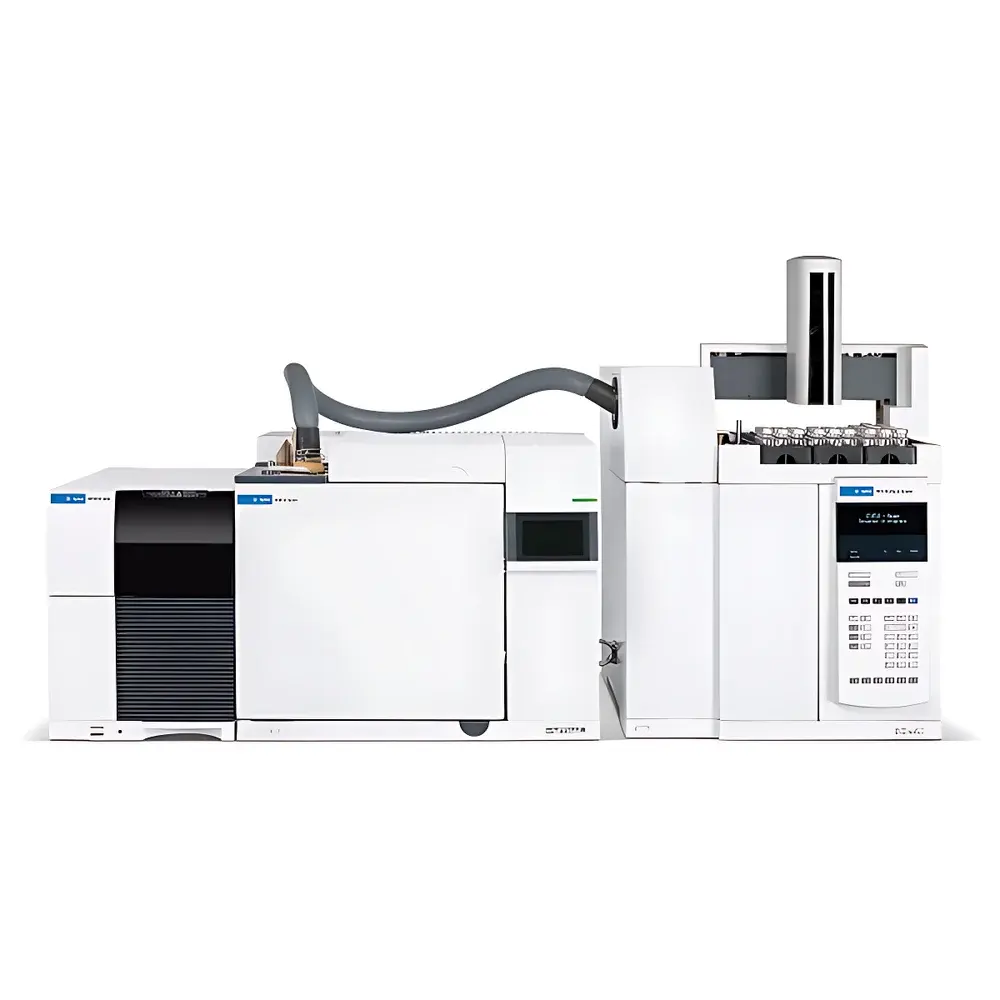
Agilent 8860 GC System
| Brand | Agilent Technologies |
|---|---|
| Origin | Shanghai, China |
| Manufacturer Type | Manufacturer |
| Regional Classification | Domestic (China) |
| Model | 8860 GC |
| Instrument Type | Laboratory Gas Chromatograph |
| Application Scope | General-Purpose |
| Temperature Control Range | +8 °C above ambient to 425 °C |
| Maximum Ramp Rate | 75 °C/min |
| Cooling Rate | 300 °C to 50 °C in 5.7 min (at 25 °C ambient) |
Overview
The Agilent 8860 GC System is a benchtop gas chromatograph engineered for precision, robustness, and operational continuity in high-throughput routine laboratories. It operates on the fundamental principle of gas–solid or gas–liquid partition chromatography, where volatile and semi-volatile analytes are separated based on differential partitioning between a mobile phase (carrier gas) and a stationary phase (capillary column), followed by detection using universal or selective detectors. Designed for compliance-driven environments—including QC labs in pharmaceuticals, environmental testing, petrochemical QA, and food safety—the 8860 GC integrates sixth-generation microfluidic electronic pressure control (EPC) architecture to deliver exceptional retention time stability (<0.06% RSD), peak area reproducibility (<2% RSD), and resistance to common gas-phase contaminants such as moisture, particulates, and hydrocarbon oils. Its modular design supports up to two inlet ports, three valves, and three detectors—including optional single-quadrupole mass spectrometry (GC/MS)—enabling method flexibility without hardware reconfiguration.
Key Features
- Sixth-generation microfluidic EPC architecture across all inlets and detectors—ensuring sub-psi pressure resolution (0.01 psi), real-time temperature/pressure compensation, and long-term drift suppression.
- Intuitive 7-inch color touchscreen interface with embedded diagnostics: real-time status monitoring, signal visualization, configuration access, and guided maintenance workflows.
- Browser-based remote user interface compatible with Agilent OpenLab CDS—enabling method editing, sequence management, instrument health assessment, and diagnostic execution from any network-connected device, including off-site locations.
- Automated system suitability checks: blank run evaluation (baseline drift, ghost peaks, baseline rise), detector performance verification (calibration standard response), and leak detection via integrated pressure decay algorithms.
- Helium conservation module and Hydrogen Sensor Module Series 2—providing continuous H₂ leak monitoring with automatic gas shutoff and biannual calibration intervals—enhancing lab safety and regulatory alignment.
- Retention Time Locking (RTL) compatibility across Agilent GC platforms—ensuring method transfer fidelity between instruments using identical columns and methods per ASTM D7213 and USP .
Sample Compatibility & Compliance
The 8860 GC accommodates a broad range of sample matrices—including aqueous extracts, organic solvents, headspace vials, and thermal desorption tubes—when paired with appropriate inlet configurations (split/splitless, PTV, or cool-on-column). Its FID features auto-ranging capability across seven decades (10⁷), minimizing manual dilution for trace-level or highly concentrated analytes; the TCD delivers drift-free baselines without reference gas or potentiometer adjustment. The system meets key regulatory expectations for data integrity: full audit trail support in OpenLab CDS (aligned with FDA 21 CFR Part 11), GLP/GMP-compliant electronic records, and documented lifecycle environmental impact verified by My Green Lab’s ACT Label (Accountability, Consistency, Transparency). All firmware and software updates undergo formal change control per ISO/IEC 17025:2017 Annex A.3 requirements.
Software & Data Management
Agilent OpenLab CDS serves as the primary acquisition and reporting platform, supporting multi-instrument control, sequence scheduling, automated calibration, and customizable report generation. For labs requiring simplified workflows, DA Express software provides streamlined peak integration, calibration curve fitting, and PDF report export—without full audit-trail functionality. Both packages support retention time locking, method validation templates, and export to LIMS via ASTM E1384-compliant formats. Raw data files (.D format) are stored with embedded metadata (inlet/detector parameters, column history, environmental conditions), enabling retrospective analysis and forensic traceability. Electronic signatures, role-based access control, and secure database encryption meet ISO 13485 and ICH M7 data governance standards.
Applications
The 8860 GC is routinely deployed in regulated and non-regulated settings for residual solvent analysis (ICH Q3C), pesticide screening (EPA Method 8081/8270), hydrocarbon profiling (ASTM D5186), fatty acid methyl ester (FAME) quantification (EN 14103), and impurity profiling in active pharmaceutical ingredients (APIs). Its rapid cool-down (300 °C → 50 °C in 5.7 min) and high ramp rate (75 °C/min) reduce cycle times for temperature-programmed methods, while dual-inlet capability enables simultaneous analysis of complementary sample types—e.g., headspace volatiles and liquid-injected organics—within a single sequence. Valve switching modules support heart-cutting, backflushing, and multidimensional GC configurations for complex matrix separation.
FAQ
Is the Agilent 8860 GC compatible with third-party data systems?
Yes—via OpenLab CDS export modules supporting ASTM E1384, CSV, and XML formats; direct LIMS integration requires vendor-specific middleware.
What carrier gases are supported, and how does EPC manage gas purity variations?
Helium, hydrogen, and nitrogen are fully supported; the sixth-generation EPC compensates for ambient temperature and barometric pressure fluctuations and includes built-in particulate/moisture filtration to maintain flow stability.
Can the 8860 GC be upgraded to GC/MS post-purchase?
Yes—hardware-ready for Agilent 5977B MSD integration; requires MS source installation, vacuum system upgrade, and OpenLab CDS MS license.
Does the system support unattended operation over weekends?
Yes—full sequence automation, email alerts for anomalies, and remote diagnostic access enable 24/7 operation under validated SOPs.
How often must the hydrogen sensor module be calibrated?
Every six months, as confirmed by internal self-test routines and documented calibration certificates per ISO/IEC 17025.





