
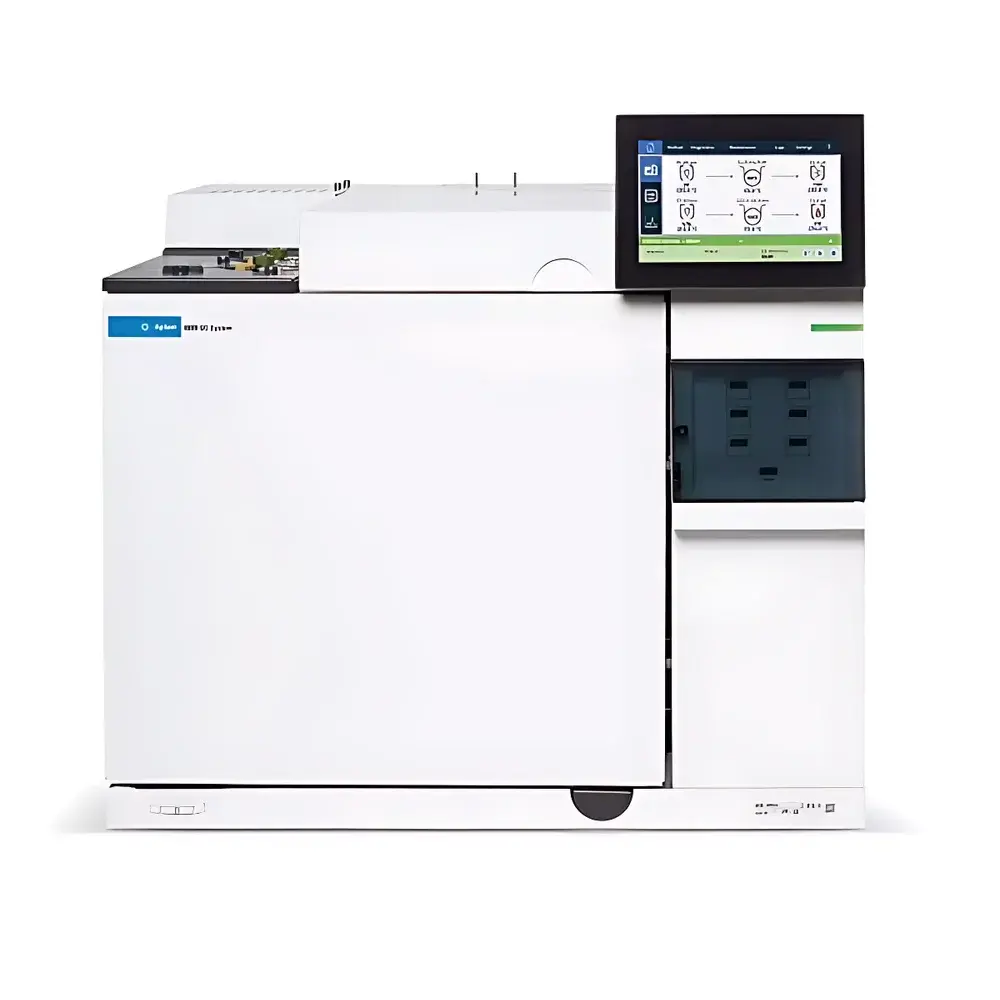
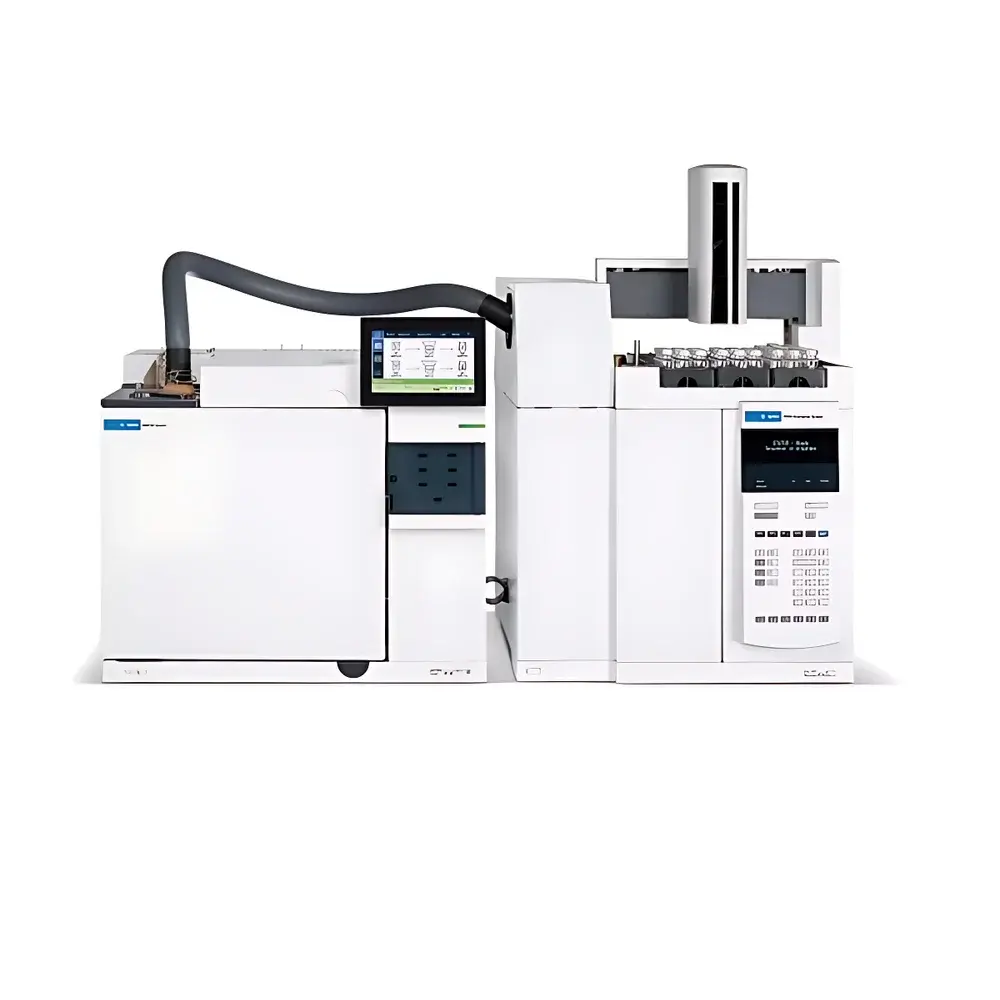
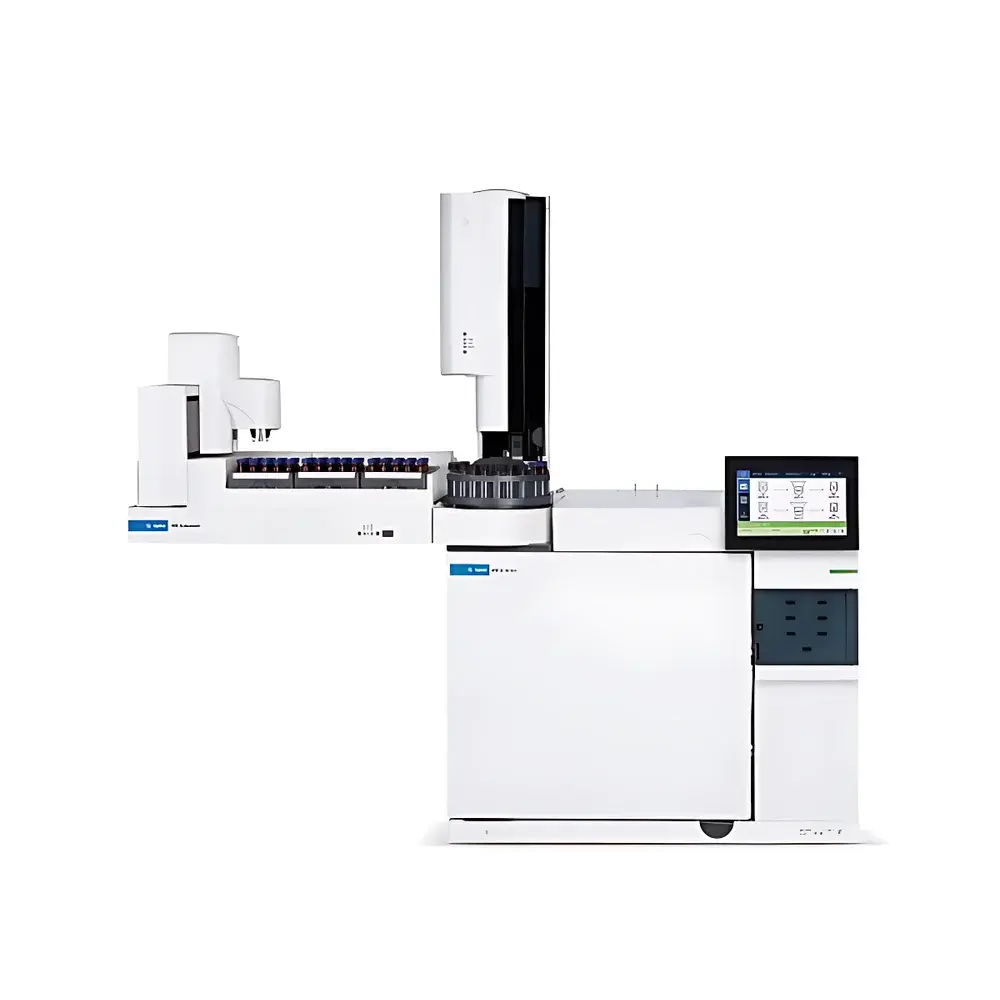
Agilent 8890 Gas Chromatograph System
| Brand | Agilent Technologies |
|---|---|
| Origin | USA |
| Model | 8890 GC |
| Instrument Type | Laboratory Gas Chromatograph |
| Application Scope | General-Purpose |
| Regulatory Compliance | Designed for GLP/GMP environments |
| EPC Generation | 6th-Generation Microflow Electronic Pressure Control |
| Detector Options | FID, TCD, SCD, NCD, MS-compatible |
| Flow Control Architecture | Capillary Flow Technology (CFT) with Microplate Flow Path |
| Column Management | Smart Column Key integration enabled |
| Carrier Gas Flexibility | Helium-sparing modes, hydrogen safety monitoring, alternative carrier gas support (H₂, N₂, He) |
Overview
The Agilent 8890 Gas Chromatograph System is a high-performance, network-connected analytical platform engineered for precision, reliability, and operational continuity in regulated laboratory environments. Based on proven capillary gas chromatography principles, the system separates volatile and semi-volatile compounds using temperature-programmed elution through fused-silica capillary columns, with detection achieved via universal or element-selective detectors—including flame ionization (FID), thermal conductivity (TCD), sulfur chemiluminescence (SCD), and nitrogen chemiluminescence (NCD). Its core architecture integrates sixth-generation microflow electronic pressure control (EPC), delivering sub-millibar pressure stability and real-time flow optimization across varying column dimensions and carrier gas types. Designed for method robustness and long-term reproducibility, the 8890 GC meets the technical and documentation requirements of ISO/IEC 17025, ASTM D3606/D5504, USP , and ICH Q2(R2) guidelines for method validation.
Key Features
- 6th-generation microflow EPC architecture—resistant to particulate, moisture, and hydrocarbon contamination—extends maintenance intervals and enhances baseline stability.
- Capillary Flow Technology (CFT) modules enable advanced multidimensional configurations: heart-cutting (GC-GC), comprehensive two-dimensional GC (GC×GC) with flow modulators, and programmable column backflushing (pre-, mid-, and post-column).
- Intelligent, browser-based user interface accessible locally or remotely via secure HTTPS; supports live system health dashboards, event log review, and guided diagnostic testing.
- Integrated touchscreen display with visual system status reporting, method editing capability, and step-by-step maintenance workflows—including leak checks, detector tuning, and inlet liner replacement.
- Single-filament TCD with zero-reference gas path and auto-balancing circuitry delivers drift-free baselines during valve-switching sequences.
- FID with auto-ranging amplification achieves linear dynamic range from sub-ppb to percent-level concentrations in a single injection—eliminating manual range switching.
- Helium conservation system with real-time H₂ sensor integration, pressure-compensated alternative carrier gas algorithms, and automated gas-switching logic reduces operational cost and improves lab safety.
- Smart Column Key compatibility—RFID-enabled column cartridges store manufacturer-recommended parameters (e.g., max temp, flow rate, polarity), enabling automatic method preloading and traceable column lifecycle tracking.
Sample Compatibility & Compliance
The Agilent 8890 GC accommodates liquid, gaseous, and headspace samples across pharmaceutical, environmental, petrochemical, food & beverage, and forensic applications. It supports standard autosamplers (e.g., PAL3, ALS) and specialized inlets including split/splitless, PTV, and cool-on-column. All hardware and firmware are designed to align with Good Laboratory Practice (GLP) and Good Manufacturing Practice (GMP) frameworks. Audit trail functionality, electronic signatures, and secure data handling are fully enabled when paired with Agilent OpenLab CDS software—validated for compliance with FDA 21 CFR Part 11, EU Annex 11, and ISO 13485 requirements.
Software & Data Management
Control and data acquisition are managed through Agilent OpenLab CDS (ChemStation Data System), a validated, scalable platform supporting instrument control, sequence management, peak integration, calibration curve generation, and report export in PDF, CSV, or XML formats. The system supports role-based access control, configurable audit trails with immutable timestamps, and electronic signature enforcement. Remote monitoring and troubleshooting are facilitated via embedded web server capabilities—no additional client software required. Data integrity safeguards include automatic backup scheduling, checksum verification, and tamper-evident file storage.
Applications
- Residual solvent analysis per ICH Q3C in pharmaceutical APIs and formulations.
- VOC and SVOC profiling in soil, water, and air matrices (EPA Methods 8260, 8270, TO-17).
- Hydrocarbon group-type analysis (HTA) and simulated distillation (ASTM D5292, D2887) in refinery streams.
- Fatty acid methyl ester (FAME) quantification in biodiesel (EN 14103, ASTM D6584).
- Sulfur speciation in fuels and natural gas (ASTM D5453, D2622).
- Flavor and fragrance compound profiling in food extracts and essential oils.
FAQ
Is the Agilent 8890 GC compatible with mass spectrometry detection?
Yes—the system features standard GC/MS interface ports and timing synchronization protocols for seamless integration with Agilent 5977B/5975C MSDs and third-party quadrupole or time-of-flight mass spectrometers.
Does the 8890 GC support unattended operation over extended periods?
Yes—when configured with an autosampler and validated methods, the system supports multi-day sequences with automated shutdown, column bake-out, and system readiness alerts.
Can legacy methods developed on older Agilent GC platforms be migrated to the 8890?
Yes—OpenLab CDS provides backward-compatible method import tools and parameter mapping utilities to ensure consistent retention times and peak resolution across instrument generations.
What carrier gases are supported, and how is hydrogen safety managed?
Helium, hydrogen, and nitrogen are supported. Integrated hydrogen sensors monitor ambient concentration; if thresholds exceed 10% LEL, the system triggers audible/visual alarms and can initiate automatic shutdown via relay output.
How does the Smart Column Key enhance method transfer and regulatory compliance?
Each key stores immutable metadata (column ID, dimensions, phase chemistry, usage count, and thermal history), enabling automatic parameter recall, version-controlled method templates, and auditable column lifecycle documentation per ALCOA+ principles.




