
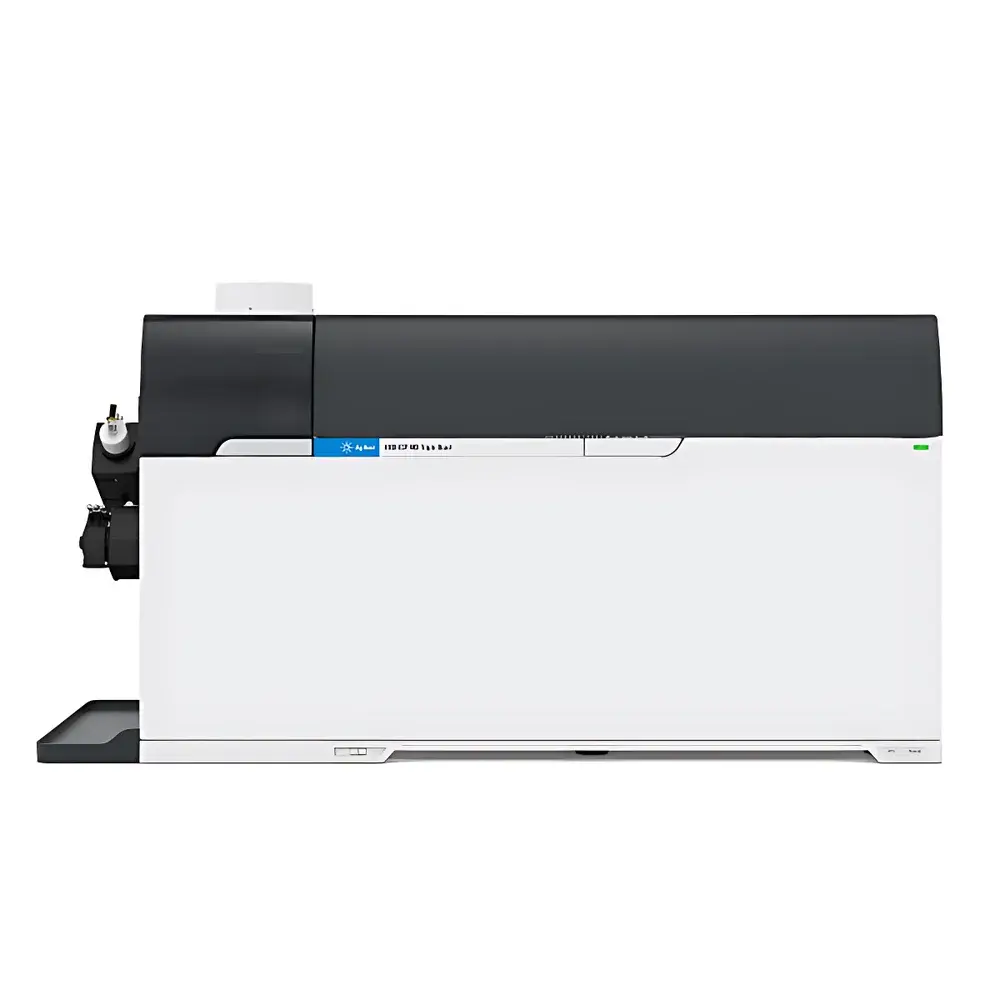
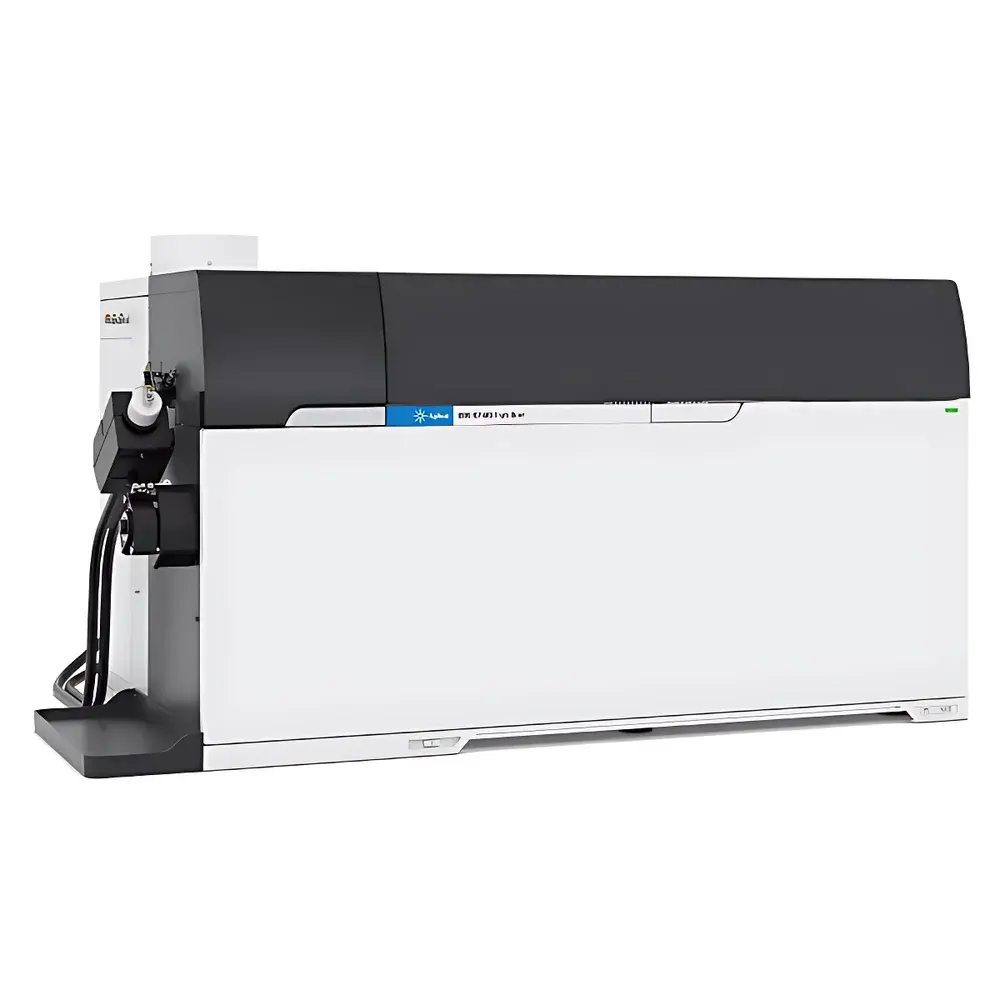
Agilent 8900 Triple Quadrupole ICP-MS/MS
| Brand | Agilent Technologies |
|---|---|
| Origin | Singapore |
| Manufacturer Type | Original Equipment Manufacturer (OEM) |
| Origin Category | Imported |
| Model | 8900 |
| Instrument Type | Quadrupole-based Triple Quadrupole Mass Spectrometer |
| Application Environment | Laboratory |
Overview
The Agilent 8900 Triple Quadrupole ICP-MS/MS is a purpose-engineered inductively coupled plasma mass spectrometer designed for ultra-trace elemental analysis in complex matrices. Unlike conventional single-quadrupole ICP-MS systems, the 8900 implements true tandem mass spectrometry (MS/MS) architecture—featuring two independent quadrupole mass filters (Q1 and Q2) flanking a pressurized collision/reaction cell (CRC). This configuration enables selective mass filtering before and after ion–gas reactions, allowing precise control over reaction chemistry to eliminate isobaric interferences that cannot be resolved by high-mass-resolution or kinetic energy discrimination alone. The instrument operates at unit mass resolution (1 u) with optimized ion transmission efficiency under high-vacuum conditions across both quadrupole stages. Its core application domain includes semiconductor-grade chemical purity certification, high-purity material qualification (e.g., Li-ion battery cathode precursors), nuclear fuel cycle monitoring, and environmental speciation studies where polyatomic, isobaric, or doubly charged ion overlaps compromise data integrity.
Key Features
- Triple quadrupole MS/MS architecture with independently tunable Q1 and Q2 mass filters for sequential mass selection
- Four-channel reaction gas delivery system supporting rapid switching between He, H2, O2, NH3, CH4, and mixed gases for tailored interference removal
- Helium-mode collision cell operation enabling robust suppression of common polyatomic interferences (e.g., 40Ar16O+ on 56Fe+, 40Ar12C+ on 52Cr+)
- Ultra-high matrix introduction (UHMI) capability permitting direct analysis of samples with up to 25% total dissolved solids (TDS)
- Stable plasma operation with low oxide ratio (CeO+/Ce+ < 1.5%) ensuring consistent sensitivity and minimal spectral drift during extended runs
- Predefined method templates for routine applications—including Si, P, S, Cl, and F analysis—reducing method development time and operator dependency
- Flexible scan modes: precursor ion scan, product ion scan, neutral loss scan, and multiple reaction monitoring (MRM) for reaction mechanism studies
Sample Compatibility & Compliance
The Agilent 8900 accommodates liquid samples introduced via standard nebulizers (e.g., MicroMist, PFA-ST), desolvating systems (e.g., Aridus III), and laser ablation interfaces (e.g., NWR213). It supports direct analysis of acids (HNO3, HCl, HF), organic solvents (after appropriate dilution and matrix matching), and high-salt digests without prior separation. Regulatory compliance includes full alignment with ISO/IEC 17025:2017 method validation requirements, ASTM D5673 (trace metals in water), USP / (elemental impurities in pharmaceuticals), and EPA Method 6020B. Data acquisition and audit trails conform to FDA 21 CFR Part 11 requirements when operated with Agilent MassHunter Software v10.1 or later under validated laboratory information management system (LIMS) integration.
Software & Data Management
Control and data processing are performed using Agilent MassHunter Workstation Software, which provides integrated instrument control, real-time spectrum visualization, and quantitative workflow automation. The software supports GLP/GMP-compliant features including electronic signatures, user role-based access control, secure audit trail logging, and version-controlled method archiving. All raw data files (.d format) retain full metadata—including dwell times, reaction gas flows, Q1/Q2 settings, and detector voltages—for retrospective reprocessing. Batch processing tools enable automated calibration curve generation, internal standard correction, and isotope ratio calculation per ASTM E2926 guidelines.
Applications
- Ultra-trace analysis of Si, P, S, Cl, and F in high-purity acids (e.g., electronic-grade HNO3, HF) per SEMI C37 standards
- Quantification of transition metals and rare earth elements in lithium cobalt oxide (LiCoO2) and NMC cathode materials
- Detection of 129I and 99Tc in spent nuclear fuel reprocessing streams
- Speciation analysis of As, Se, and Cr species following HPLC-ICP-MS/MS hyphenation
- Characterization of metal-containing nanoparticles via single-particle ICP-MS/MS with size-calibrated dwell times
- Isotopic ratio measurements for geochemical fingerprinting (e.g., Pb, Sr, Nd isotopes) with reduced polyatomic background
FAQ
How does ICP-MS/MS differ from high-resolution ICP-MS in interference removal?
ICP-MS/MS resolves interferences through selective ion–molecule reactions in the CRC, whereas high-resolution ICP-MS relies solely on mass dispersion. MS/MS is particularly effective for isobars with identical nominal mass but different elemental composition (e.g., 40Ca+ vs. 40Ar+), which cannot be separated even at 10,000+ mass resolution.
Can the Agilent 8900 analyze non-metallic elements such as sulfur and phosphorus?
Yes—the 8900 is specifically engineered for challenging non-metals. Using O2 reaction gas in MS/MS mode, 32S+ is converted to 48SO+, while interfering 16O2+ remains unreactive, enabling sub-pg/g detection limits in aqueous standards.
Is UHMI compatible with all sample introduction systems?
UHMI performance is optimized with the optional high-efficiency sample introduction kit (HSI Kit), including a quartz torch with extended injector and chilled spray chamber. Standard glassware may require dilution for TDS >5%.
Does the system support regulatory-compliant reporting for pharmaceutical applications?
When configured with MassHunter’s GxP module and operated under documented SOPs, the 8900 meets USP and ICH Q2(R2) validation criteria for elemental impurity testing in drug substances and products.





