
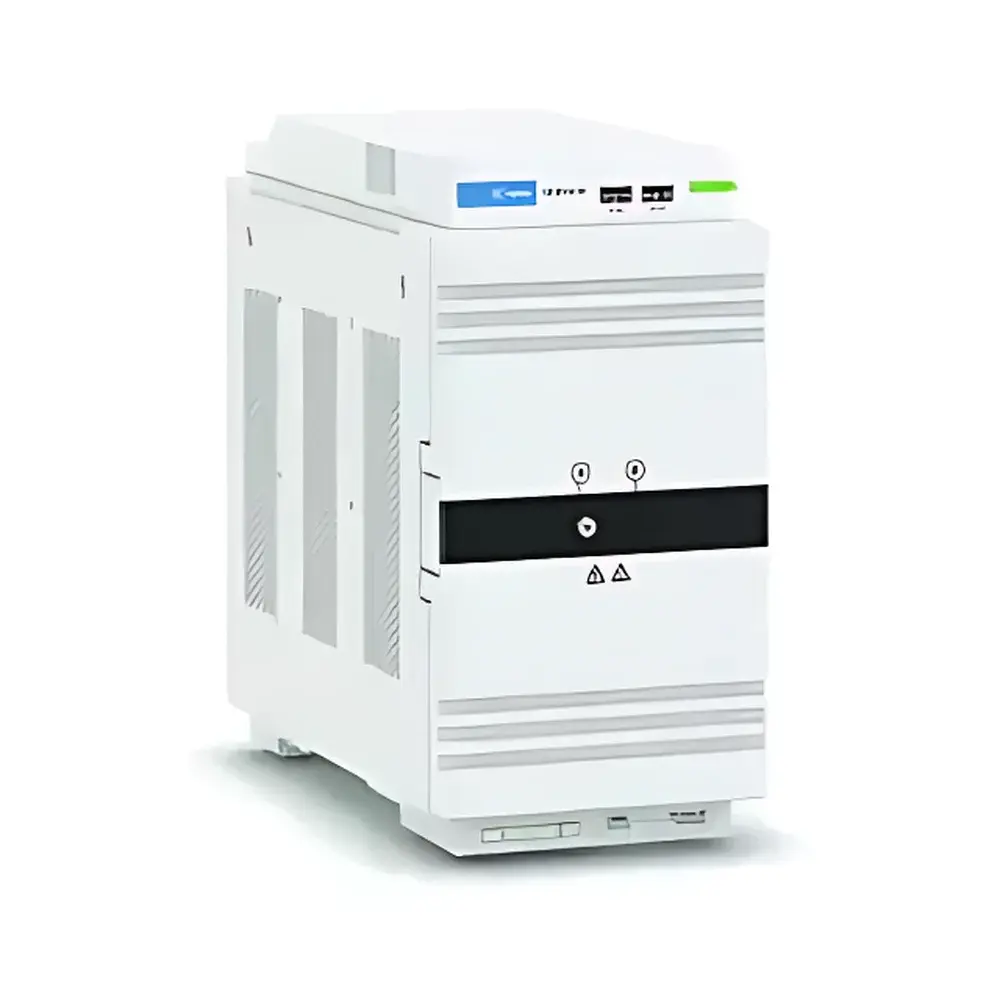
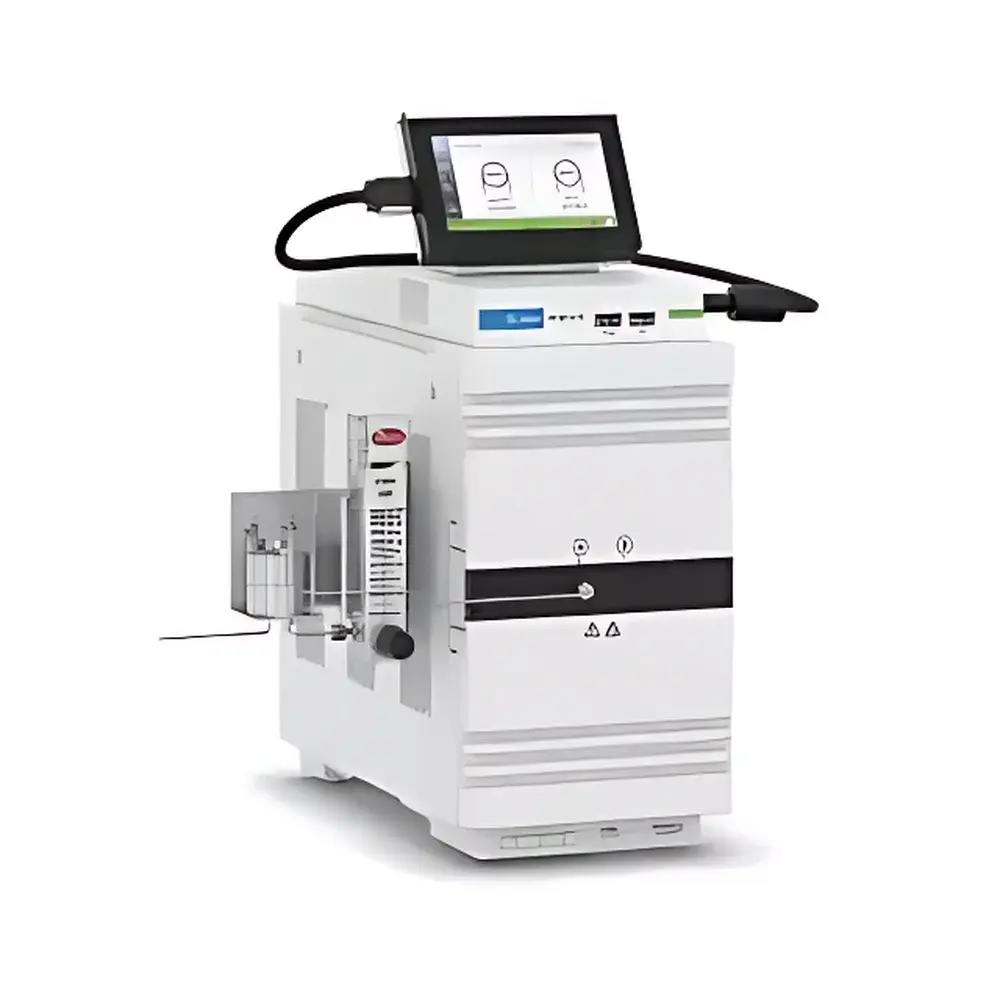
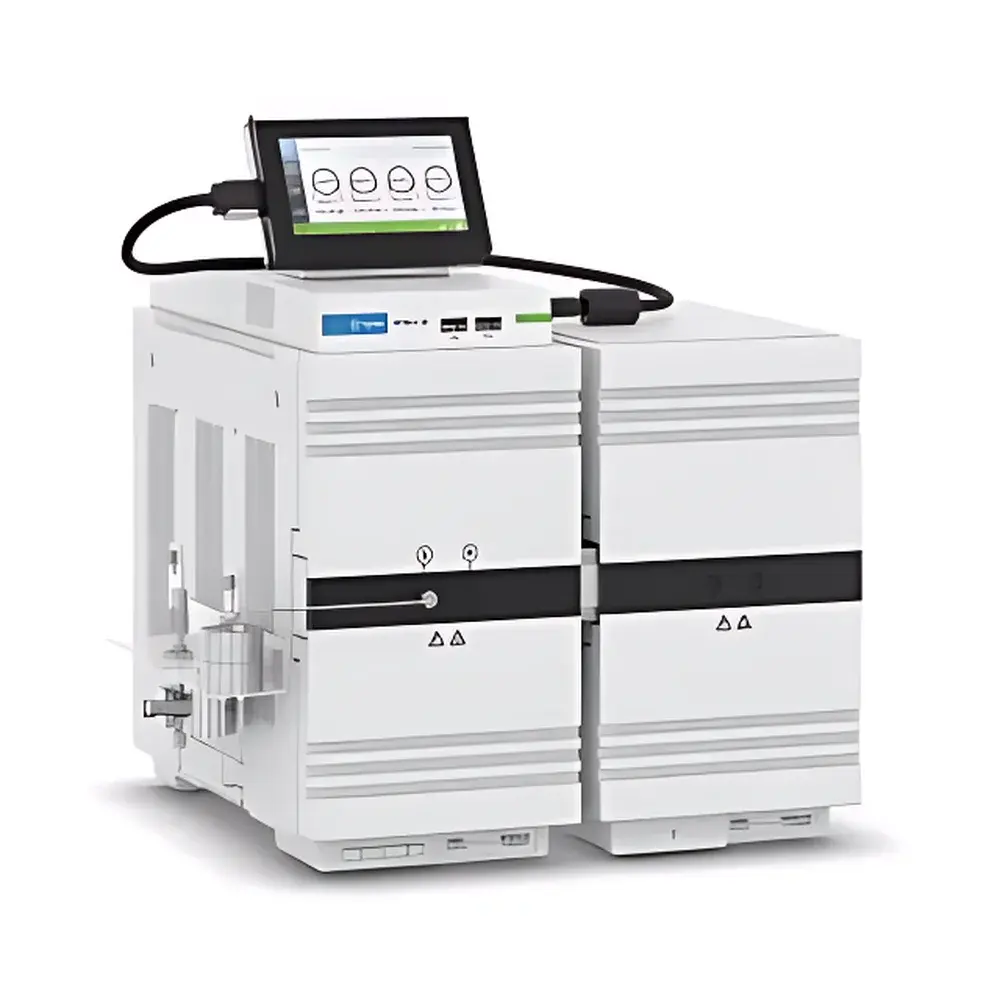
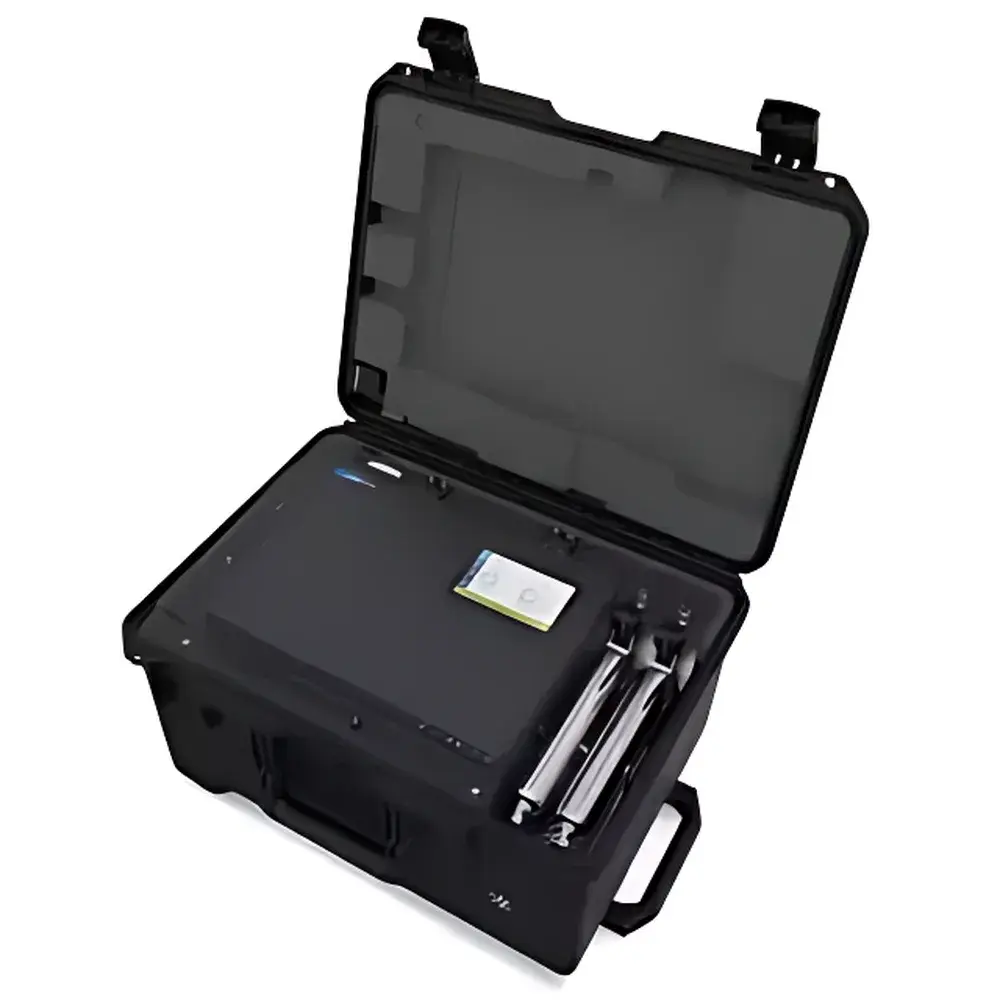
Agilent 990 GC Portable Micro Gas Chromatograph
| Brand | Agilent Technologies |
|---|---|
| Origin | Shanghai, China |
| Manufacturer Type | Original Equipment Manufacturer (OEM) |
| Product Origin | Domestic (China) |
| Model | 990 GC |
| Detection Limit | 0.5 ppm (on WCOT capillary column) |
| Repeatability | RSD < 0.5% for 1 mol% propane on WCOT column under isothermal and isobaric conditions |
| Carrier Gases | Helium, Hydrogen, Nitrogen, Argon |
| Column Oven Max Temperature | 180 °C |
| Injector Max Temperature | 110 °C |
| TCD Linear Dynamic Range | 10⁵ (0.5 ppm to 5%) |
| TCD Concentration Range | 0.5 ppm to 100% |
| Inlet Pressure Rating | 100 kPa (14.5 psi) |
| Sample Loop | Micro-machined, fixed-volume, non-split |
| Detector Type | Micromachined Dual-Channel Thermal Conductivity Detector (TCD) |
| Maximum Independent Channels | 4 |
| Column Types Supported | WCOT, PLOT, Micro-packed (Hayesep D, Carboxen) |
| Peak Area Reproducibility | < 0.5% RSD |
| Environmental Certification | My Green Lab ACT Label (Accountability, Consistency, Transparency) |
Overview
The Agilent 990 GC Portable Micro Gas Chromatograph is a field-deployable, MEMS-based analytical platform engineered for high-fidelity gas composition analysis under non-laboratory conditions. Unlike conventional benchtop GC systems, the 990 GC employs microfabricated thermal conductivity detection (TCD) and precision-engineered microfluidic sample introduction to deliver laboratory-grade chromatographic separation in a compact, low-power architecture. Its core measurement principle relies on differential thermal conductivity between carrier gas and analyte molecules passing through a micromachined dual-channel sensor — eliminating the need for reference gas compensation and enabling sub-ppm detection sensitivity across multiple compound classes. The system operates isothermally, with independent temperature control of inlet, column oven, and detector zones, ensuring retention time stability critical for unattended or mobile deployment. Designed for continuous operation in environments ranging from upstream wellhead monitoring to battery safety testing labs, the 990 GC complies with fundamental physical constraints of portable instrumentation while maintaining metrological traceability to NIST-traceable standards via calibrated injection loops and certified column chemistries.
Key Features
- MEMS-based dual-channel micro-TCD with <0.5 ppm detection limit on WCOT columns (e.g., CP-Sil 5 CB), 2 ppm on PLOT columns, and 10 ppm on micro-packed Hayesep D/Carboxen columns
- Four independently configurable analysis channels — each comprising dedicated injector, carrier gas flow path, column, and detector — supporting parallel or sequential multi-stream analysis
- Heated, inert stainless-steel sample pathway with 5 µm particulate filtration and 110 °C maximum inlet temperature, compatible with reactive species including H2S and mercaptans
- Integrated backflush capability: pressure-point actuated reverse flow eliminates late-eluting heavy compounds, reducing cycle time to as low as 30 seconds without column cooling delays
- Low-resource operation: consumes only ~10% of the electrical power and carrier gas volume required by standard laboratory GCs — helium, hydrogen, nitrogen, or argon selectable per channel
- ACT-certified environmental profile (My Green Lab): verified lifecycle impact assessment covering materials sourcing, energy use, and end-of-life recyclability
- Modular hardware design: identical channel modules interchangeable between lab-bound and mobile configurations, supporting rapid re-deployment and method portability
Sample Compatibility & Compliance
The Agilent 990 GC supports direct analysis of permanent gases (H2, O2, N2, CH4, CO, CO2), light hydrocarbons (C1–C6), sulfur compounds (H2S, COS, mercaptans), and battery off-gas components (e.g., ethylene, propylene, HF). Its inert flow path — constructed from electropolished stainless steel with passivated internal surfaces — ensures minimal adsorption or catalytic decomposition of active analytes. The system is routinely validated against ASTM D1945 (natural gas analysis), ISO 6974 (gas chromatographic determination of natural gas composition), GPA 2261 (pipeline quality specifications), and USP for residual solvent profiling. When operated with audit-ready software configuration, it meets GLP/GMP data integrity requirements per FDA 21 CFR Part 11 for electronic records and signatures, including full audit trail logging of method parameters, calibration events, and raw data modifications.
Software & Data Management
Control and data acquisition are managed via Agilent’s GC Navigator software, a Windows-based application supporting method development, real-time chromatogram visualization, automated peak integration, and customizable reporting templates. All raw chromatographic data (including baseline-corrected detector voltage vs. time) are stored in vendor-neutral .cdf format compliant with ASTM E1947 and ISO/IEC 17025 digital record retention guidelines. Software features include automatic calibration curve generation with weighted linear regression, forced retention time alignment across batches, and export to LIMS-compatible CSV, XML, or PDF formats. For remote or embedded applications, the instrument supports Modbus TCP and OPC UA protocols for integration into SCADA or MES platforms. Audit trails record user identity, timestamp, parameter changes, and data export actions — all tamper-evident and exportable for regulatory review.
Applications
- Natural gas and refinery gas analysis: Quantitative determination of C1–C5 hydrocarbons, CO2, N2, and H2S per GPA 2261 and ISO 6974; calorific value calculation and Wobbe index derivation
- Drilling fluid gas logging (MWD/LWD): Real-time detection of formation gases during drilling operations using heated sampling lines and pressure-regulated vaporization of LPG streams
- Fuel cell hydrogen purity testing: Detection of CO, CO2, CH4, and hydrocarbons at sub-ppm levels per ISO 8573-7 and SAE J2719 standards
- Lithium-ion battery safety testing: Analysis of vent gas composition (H2, CO, CO2, C2H4, PF5-derived HF) during thermal runaway simulation
- Environmental emissions monitoring: Continuous stack gas analysis for VOCs and permanent gases in compliance with EPA Method 18 and EN 15267-3
- Chemical process optimization: Near-line monitoring of reactor effluents, distillation overheads, and synthesis gas streams with <2-minute cycle times
FAQ
What carrier gases are supported, and how does gas choice affect detection sensitivity?
Helium provides optimal resolution for complex mixtures; hydrogen delivers fastest analysis and highest TCD sensitivity but requires leak-tight plumbing; nitrogen offers cost-effective operation with moderate sensitivity; argon is used primarily for specialized applications involving helium interference.
Can the 990 GC perform quantitative analysis without external calibration standards?
No — quantitative accuracy requires periodic calibration using certified gas standards traceable to NIST or equivalent national metrology institutes; however, relative response factors can be established for known compound families to reduce calibration frequency.
Is the system suitable for analyzing liquefied petroleum gas (LPG) samples directly?
Yes — when equipped with the Agilent vaporizer sampling option, which controls pressure and temperature during phase transition to ensure representative gas-phase sampling without fractionation.
How is data integrity maintained during unattended field operation?
All acquisitions include embedded timestamps, instrument configuration fingerprints, and digital signatures; raw data files are write-once/read-many (WORM) by default and support cryptographic hash verification for forensic auditability.
Does the 990 GC support method transfer from conventional GC platforms?
Yes — retention time indexing, column dimension normalization, and linear velocity matching enable robust translation of ASTM or ISO methods to the micro-GC platform with validation per ICH Q2(R2) guidelines.




