
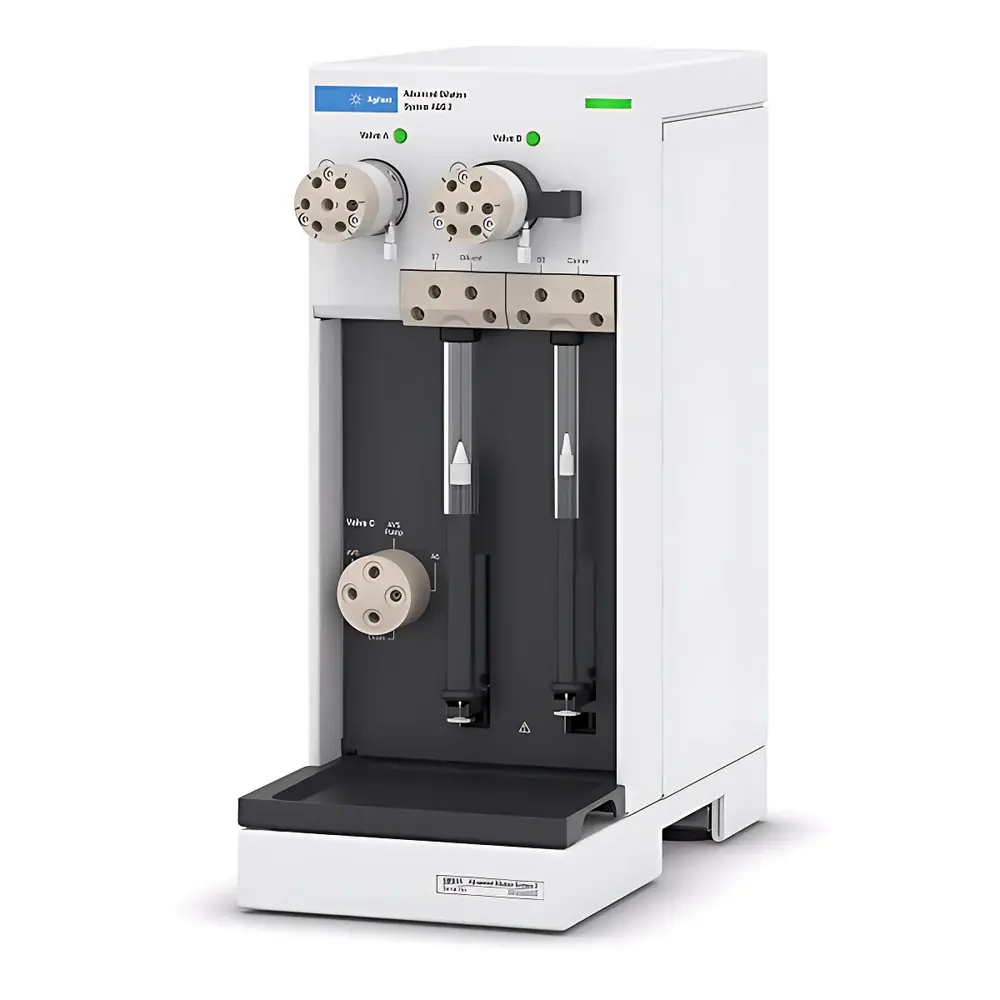
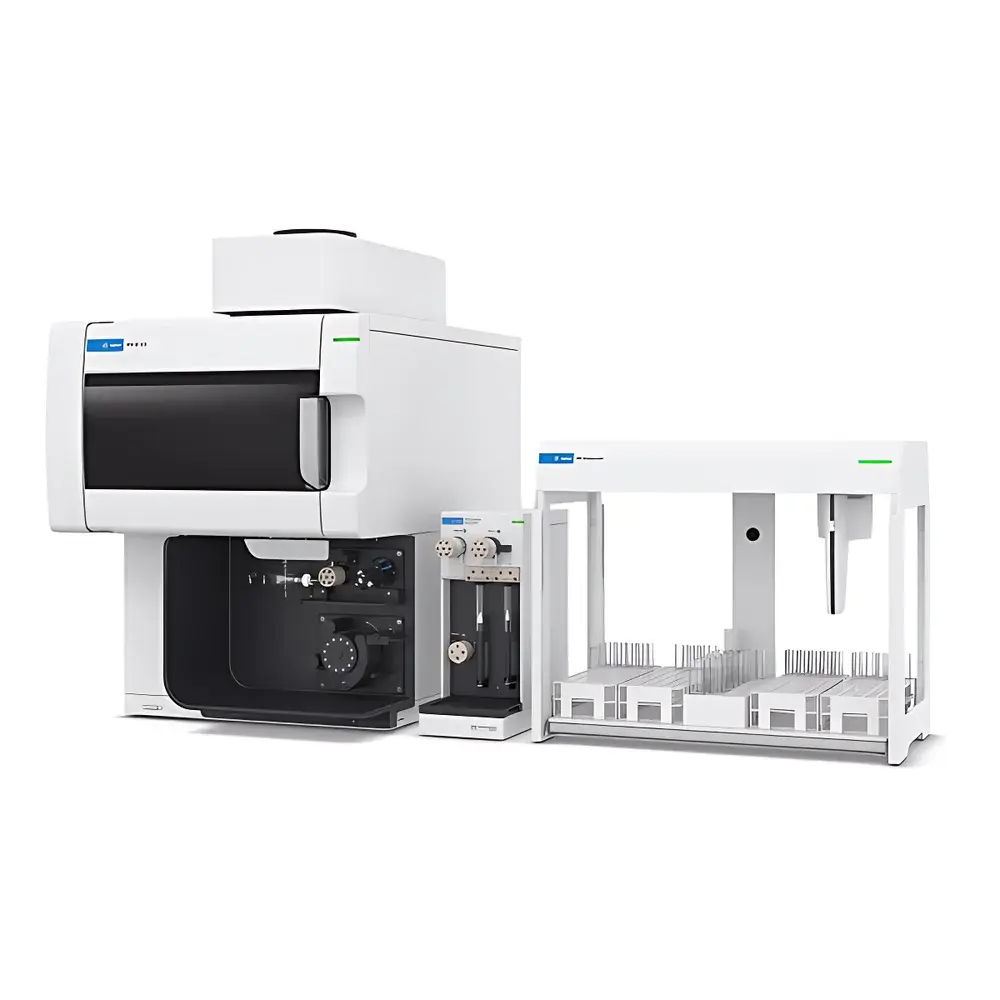
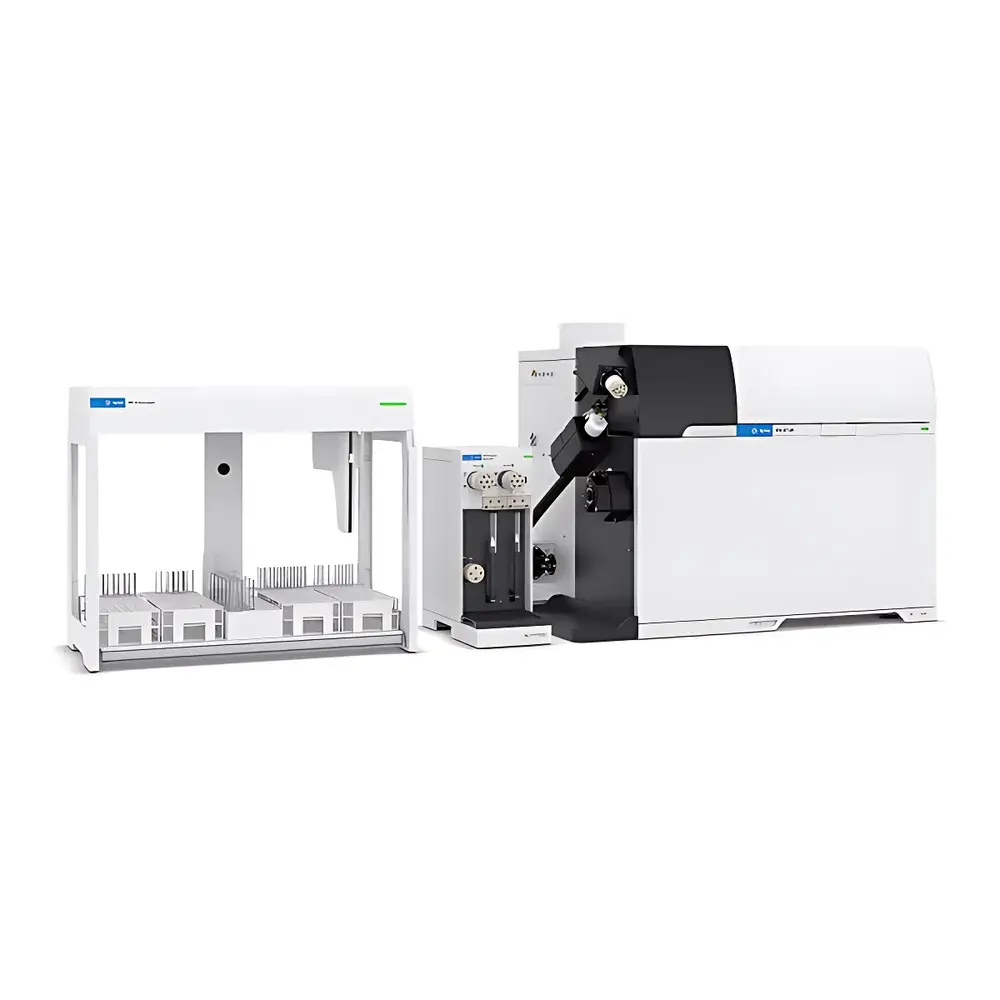
Agilent ADS 2 Advanced Dilution System
| Brand | Agilent Technologies |
|---|---|
| Origin | Malaysia |
| Manufacturer Type | Original Equipment Manufacturer (OEM) |
| Origin Category | Imported |
| Model | ADS 2 |
| Pricing | Available upon Request |
Overview
The Agilent ADS 2 Advanced Dilution System is a fully integrated, software-controlled liquid handling platform engineered for precision dilution automation in inductively coupled plasma optical emission spectroscopy (ICP-OES) and mass spectrometry (ICP-MS) laboratories. Operating on a dual-pump peristaltic architecture with high-accuracy syringe-driven metering valves, the ADS 2 implements programmable serial and parallel dilution protocols to deliver traceable, reproducible sample and standard preparation. Its core function is to eliminate manual pipetting variability while maintaining strict volumetric accuracy across dilution factors up to 400×—critical for compliance with ISO/IEC 17025, ASTM D5683, and USP / elemental impurity testing requirements. Designed as a native hardware extension of Agilent’s ICP Expert and MassHunter software suites, the ADS 2 operates under full instrument control logic, enabling closed-loop feedback between analytical results and real-time dilution decision-making.
Key Features
- Automated calibration standard preparation: Generates multi-level calibration curves from stock solutions using algorithm-driven dilution factor optimization—no manual calculation required.
- Intelligent range-adaptive dilution: Detects out-of-range analyte signals during acquisition and triggers on-the-fly secondary dilution without interrupting sequence execution.
- Bypass mode for undiluted samples: Enables direct sample introduction when concentrations fall within linear dynamic range—reducing cycle time and carrier gas consumption.
- Customizable element-specific dilution rules: Users define per-analyte override thresholds to suppress unnecessary dilution for high-sensitivity or low-background elements (e.g., Li, Be, Sc).
- Real-time fluid path visualization: Animated schematic interface displays directional flow of sample, internal standard, rinse solution, diluent, and carrier gas—supporting method validation and troubleshooting.
- Early maintenance alert system: Embedded usage counters track valve actuations, pump revolutions, and tubing wear; status indicators use traffic-light color coding (green/yellow/red) for predictive servicing.
- Hardware self-test suite: Validates pump performance, valve timing, pressure integrity, and fluid detection sensor response prior to run initiation—ensuring operational readiness.
Sample Compatibility & Compliance
The ADS 2 supports aqueous, acidic (HNO₃, HCl), and organic (methanol, isopropanol) matrices commonly encountered in environmental, pharmaceutical, and geochemical analysis. It accommodates sample volumes from 100 µL to 5 mL and handles viscosity ranges up to 2.5 cP without flow deviation. All wetted components—including fluoropolymer tubing, PEEK manifolds, and sapphire-coated metering valves—are chemically inert and compliant with FDA 21 CFR Part 11 requirements for electronic records and signatures. The system meets GLP/GMP audit readiness standards through built-in electronic logbooks, user-accessible audit trails, and configurable permission levels for method editing, run execution, and data export.
Software & Data Management
Tightly embedded within Agilent’s ICP Expert (v7.5+) and MassHunter (v5.0+) platforms, the ADS 2 leverages native method editors to define dilution strategies alongside instrument parameters. All dilution events—including primary/secondary dilution decisions, bypass triggers, and failure recovery actions—are timestamped and recorded in the raw data file (.d format). Result summarization algorithms automatically select optimal replicate measurements per element based on RSD, signal-to-noise ratio, and internal standard recovery—exportable to CSV, PDF, or LIMS via MassHunter Quantitative Analysis or OpenLab CDS integration. Software updates are delivered through Agilent’s secure firmware portal with version-controlled release notes and validation documentation.
Applications
- Environmental monitoring: Automated dilution of groundwater, wastewater, and soil leachates per EPA Method 200.8 and ISO 17294-2.
- Pharmaceutical quality control: Preparation of elemental impurity standards and diluted drug product digests compliant with ICH Q3D guidelines.
- Geochemical analysis: High-precision dilution of acid-digested rock and sediment samples for major/minor/tracer element quantification.
- Reference material certification: Reproducible generation of multi-point calibration sets for CRM assignment studies.
- Method development labs: Rapid iteration of dilution schemes to optimize detection limits and linear dynamic range without manual reconfiguration.
FAQ
Can the ADS 2 be retrofitted to legacy Agilent ICP-OES or ICP-MS systems?
Yes—the ADS 2 interfaces via standard RS-232 and Ethernet connections and is compatible with Agilent 5100/5110/5800/5900 ICP-OES and 7700/7800/8800/8900 ICP-MS systems running supported firmware versions.
Does the system support external LIMS integration?
Yes—through MassHunter’s OpenLab CDS bridge or custom API endpoints, enabling bidirectional sample ID exchange, result push, and instrument status polling.
What maintenance intervals are recommended for routine operation?
Per Agilent’s Preventive Maintenance Guide: tubing replacement every 3 months (or 500 runs), valve cleaning every 6 months, and full fluid path decontamination after high-matrix sample batches.
Is method transfer between different ADS 2 units supported?
Yes—methods, including dilution logic, calibration templates, and result summarization rules, are stored as portable .xml files and can be imported/exported across instruments without revalidation.
How does the ADS 2 handle high-salt or suspended particulate samples?
It includes an optional inline filtration module (0.45 µm PTFE) and programmable ultrasonic probe activation for pre-injection particle dispersion—both controllable via MassHunter method scripts.
Related Products







