
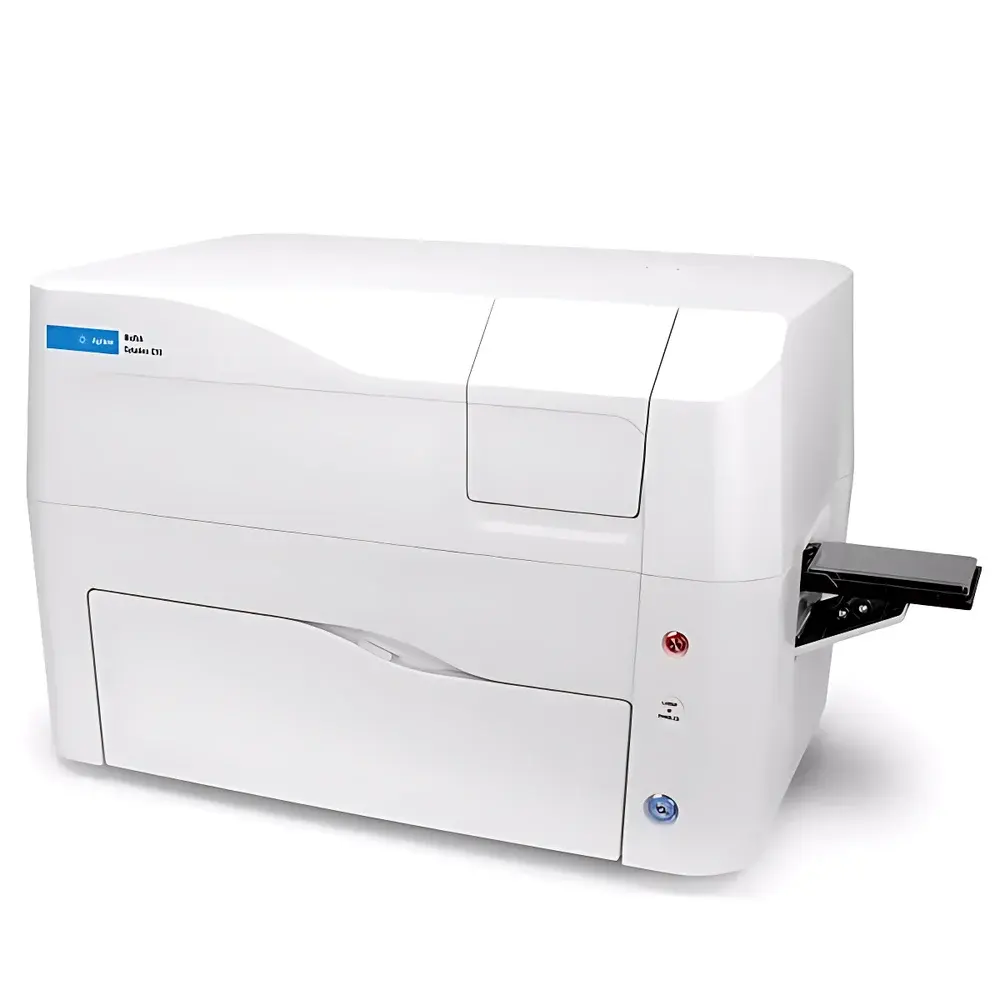
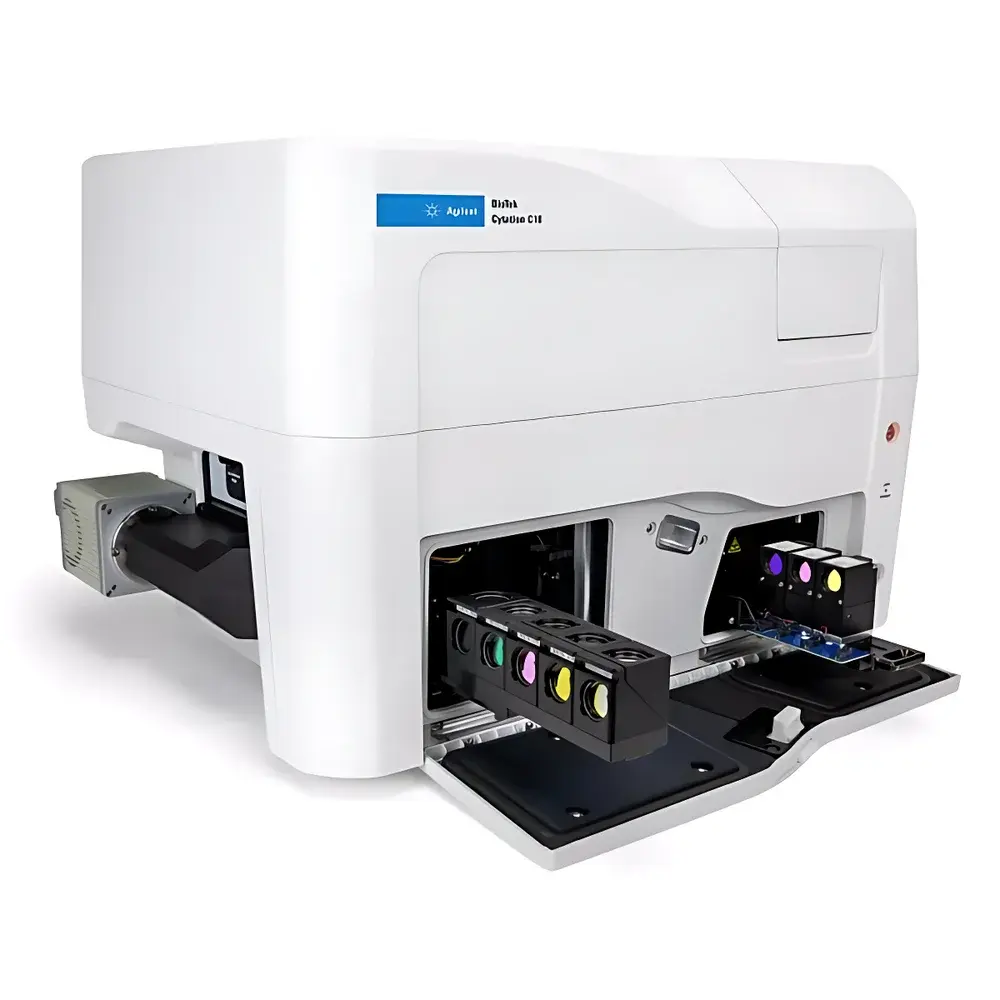
Agilent BioTek Cytation C10 Confocal Microplate Imaging System
| Brand | Agilent Technologies |
|---|---|
| Origin | USA |
| Manufacturer | Agilent Technologies |
| Import Status | Imported |
| Model | Cytation C10 |
| Resolution | 16-bit |
| Laser Sources | 6-color solid-state lasers |
| Fluorescence Detector | Hamamatsu ORCA-fusion BT sCMOS camera |
| Confocal Module | Spinning-disk confocal |
| Scanning Mode | XYZ motorized stage |
| Optical Zoom | 1.25×–60× |
| Microscope Host | Agilent BioTek |
| Excitation Source | 1000 mW laser system |
| Software & Workstation | Gen5 v3.11+ |
| Vibration-Isolation Platform | 49 cm × 71 cm dedicated optical table |
Overview
The Agilent BioTek Cytation C10 Confocal Microplate Imaging System is a fully integrated, benchtop platform engineered for quantitative, high-content cellular imaging and multimodal microplate detection. It combines spinning-disk confocal microscopy with widefield fluorescence, brightfield, and phase contrast optics—within a single, automated microplate reader architecture. Unlike conventional laser-scanning confocals, the Cytation C10 employs a high-speed, low-phototoxicity spinning-disk design with precision-matched pinholes and dual-path optical routing, enabling true optical sectioning of live or fixed specimens in standard 6–1536-well microplates. Its core measurement principle relies on spatially resolved fluorescence signal acquisition via synchronized disk rotation and sCMOS-based photon capture—delivering subcellular resolution while maintaining compatibility with kinetic, time-lapse, and environmental control workflows. The system is purpose-built for laboratories requiring reproducible, publication-grade imaging without the complexity, cost, or footprint of traditional upright or inverted confocal platforms.
Key Features
- Spinning-disk confocal module with selectable Deep Sectioning Disk (DSD) providing 60 µm optical sectioning depth—optimized for thick 3D cultures, organoids, and tissue explants.
- 6-color solid-state laser excitation (405/488/523/561/640/730 nm) with tunable bandwidth and intensity control for multiplexed immunofluorescence, FRET, and spectral unmixing applications.
- Hamamatsu ORCA-fusion BT scientific CMOS camera (16-bit dynamic range, >95% quantum efficiency at 500 nm) coupled to Olympus UPLSAPO objective lenses (10×–60×, NA 0.4–1.42) for high-sensitivity, low-noise image acquisition.
- Motorized XYZ stage with sub-micron positioning repeatability and programmable z-step intervals (0.1–20 µm), supporting tile scanning, Z-stacking, and multi-site time-lapse acquisition.
- Integrated environmental control unit (ECU) with independent temperature regulation (25–45 °C ±0.2 °C), CO2 (0–20% ±0.1%), and O2 (0.1–21% ±0.2%) monitoring—validated per ISO 13485 and compatible with GLP-compliant cell culture protocols.
- Modular four-grating monochromator (excitation/emission bandwidth 1–50 nm adjustable) supporting absorbance, fluorescence intensity, polarization, TRF, and luminescence detection alongside imaging—enabling multimodal assay validation and hit-picking workflows.
Sample Compatibility & Compliance
The Cytation C10 supports standard ANSI/SBS-compliant microplates (6–1536-well), chambered coverslips, and glass-bottom plates. Its water-immersion objective design minimizes spherical aberration in aqueous media, improving signal-to-noise ratio for live-cell imaging and reducing photobleaching by up to 40% compared to air objectives under equivalent exposure conditions. All optical components—including Semrock bandpass filters and Olympus apochromatic objectives—are certified to ISO 10110 surface quality standards. The system complies with IEC 61000-6-3 (EMC) and IEC 61000-6-2 (immunity), and its Gen5 software supports 21 CFR Part 11 compliance through electronic signatures, audit trails, and role-based access control—fully traceable for FDA-regulated QC/QA environments.
Software & Data Management
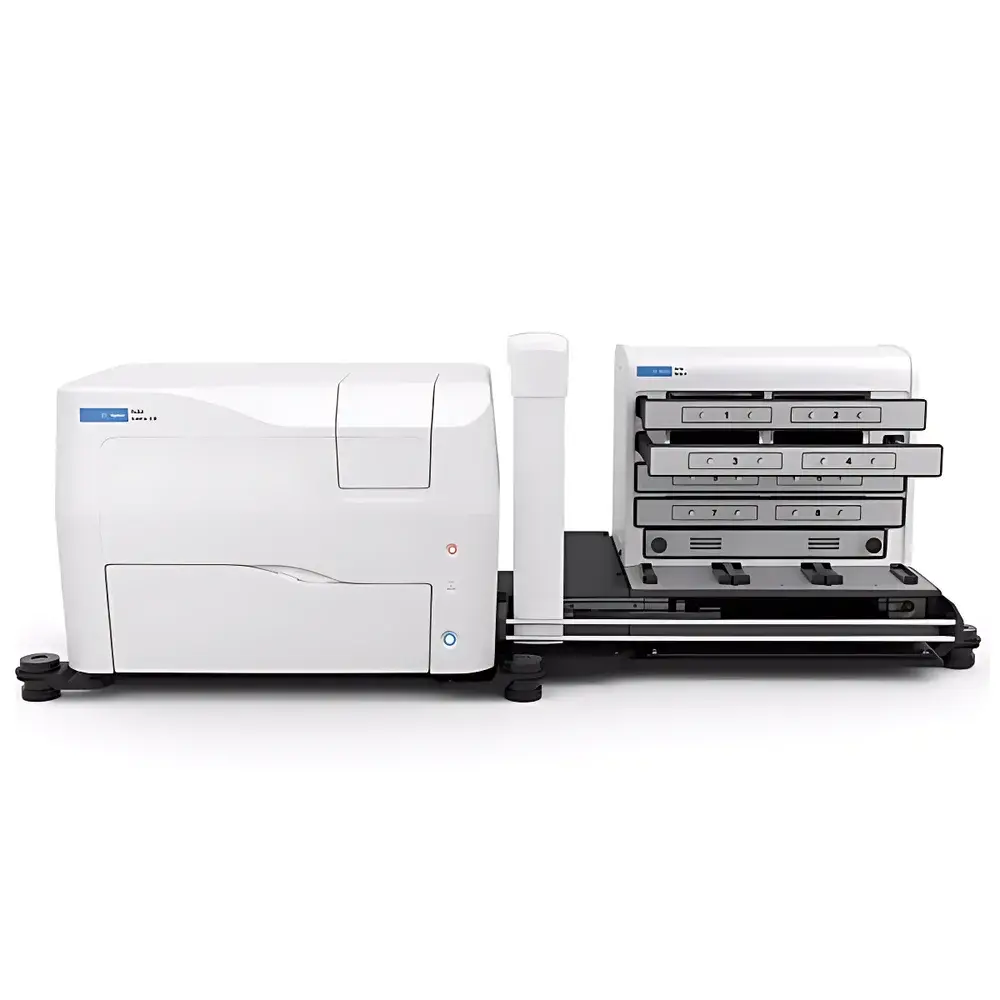
Gen5 v3.11+ provides unified control of imaging, detection, and environmental parameters via an intuitive, workflow-driven interface. Image analysis modules include automated cell segmentation (using machine learning-enhanced thresholding), subcellular compartment quantification (nucleus/cytoplasm/membrane), colocalization (Pearson’s/Manders’ coefficients), and 3D volume rendering. Raw data is stored in TIFF/OME-TIFF format with embedded metadata (EXIF, OME-XML) compliant with FAIR principles. Batch processing supports parallel analysis across multiple plates, with export options for CSV, HDF5, and .czi-compatible formats. Integration with Agilent BioSpa 8 enables fully autonomous multi-plate, multi-timepoint experiments—with scheduling, humidity control, and media exchange logs archived within the same audit trail.
Applications
The Cytation C10 is routinely deployed in academic core facilities, biopharma R&D labs, and contract research organizations for applications including: high-content screening of kinase inhibitors using phospho-protein translocation assays; longitudinal tracking of mitochondrial morphology in neurodegenerative disease models; 3D spheroid viability and invasion profiling under hypoxic gradients; CRISPR-Cas9 editing efficiency validation via HDR/NHEJ reporter systems; and label-free phase contrast + fluorescence co-registration for stem cell differentiation monitoring. Its multimodal architecture eliminates instrument handoff between plate readers and microscopes—reducing inter-system variability and accelerating assay development cycles.
FAQ
Does the Cytation C10 support live-cell imaging over extended durations?
Yes—the integrated ECU, low-phototoxicity spinning-disk optics, and water-immersion objectives enable stable, long-term (≥72 h) time-lapse imaging with minimal thermal drift or cellular stress.
Can Gen5 software perform deconvolution or AI-based segmentation?
Gen5 includes GPU-accelerated constrained iterative deconvolution and offers optional integration with third-party deep learning frameworks (e.g., CellProfiler, ilastik) via open API and TIFF export.
Is the system compatible with third-party microplate handlers or robotic arms?
Yes—Cytation C10 supports standard SLIM/ANSI-compliant deck interfaces and communicates via RS-232, Ethernet/IP, and LabVIEW-compatible drivers for seamless LIMS and automation integration.
What regulatory documentation is provided for GxP environments?
Agilent supplies IQ/OQ/PQ protocols, calibration certificates traceable to NIST standards, and full 21 CFR Part 11 validation packages—including risk assessments and change control records.
How is optical alignment maintained during routine operation?
The system features factory-aligned, sealed optical pathways with no user-serviceable collimation points; annual preventive maintenance includes laser power calibration, pinhole centering verification, and sCMOS sensor flat-field correction.




