
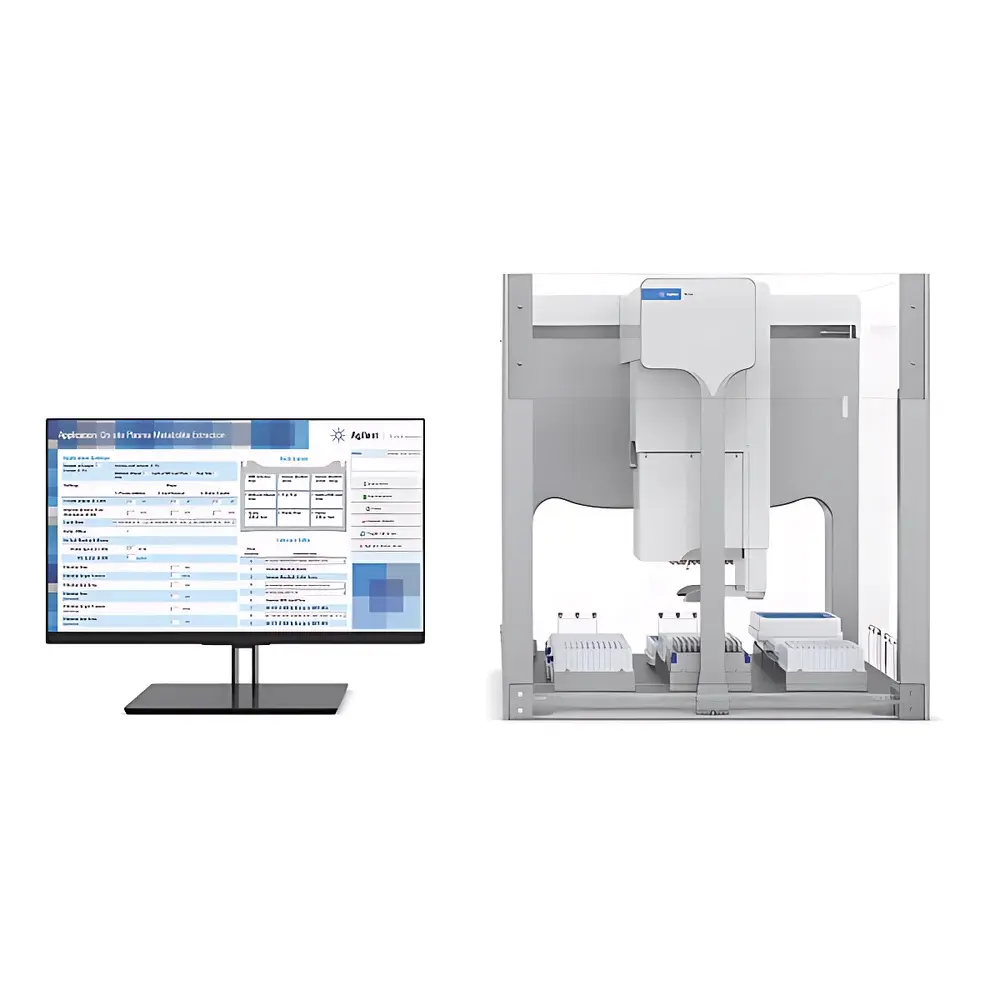
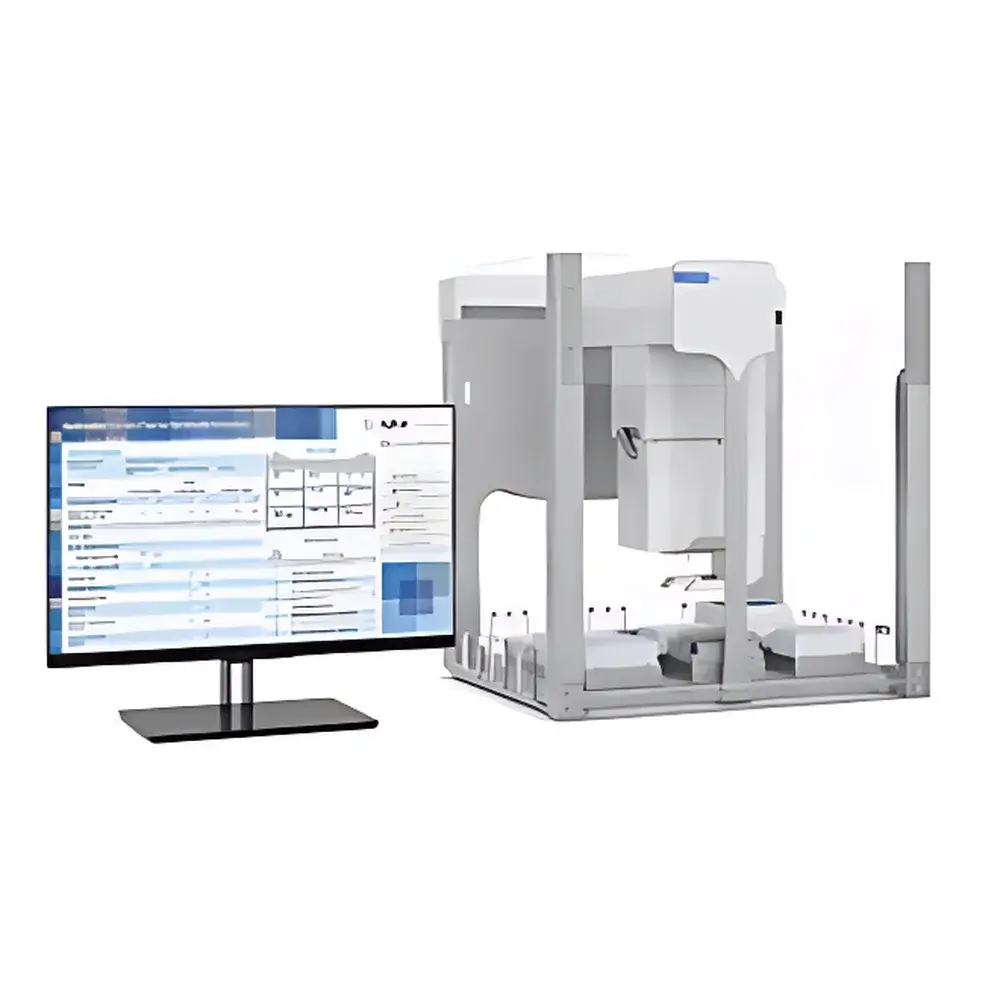
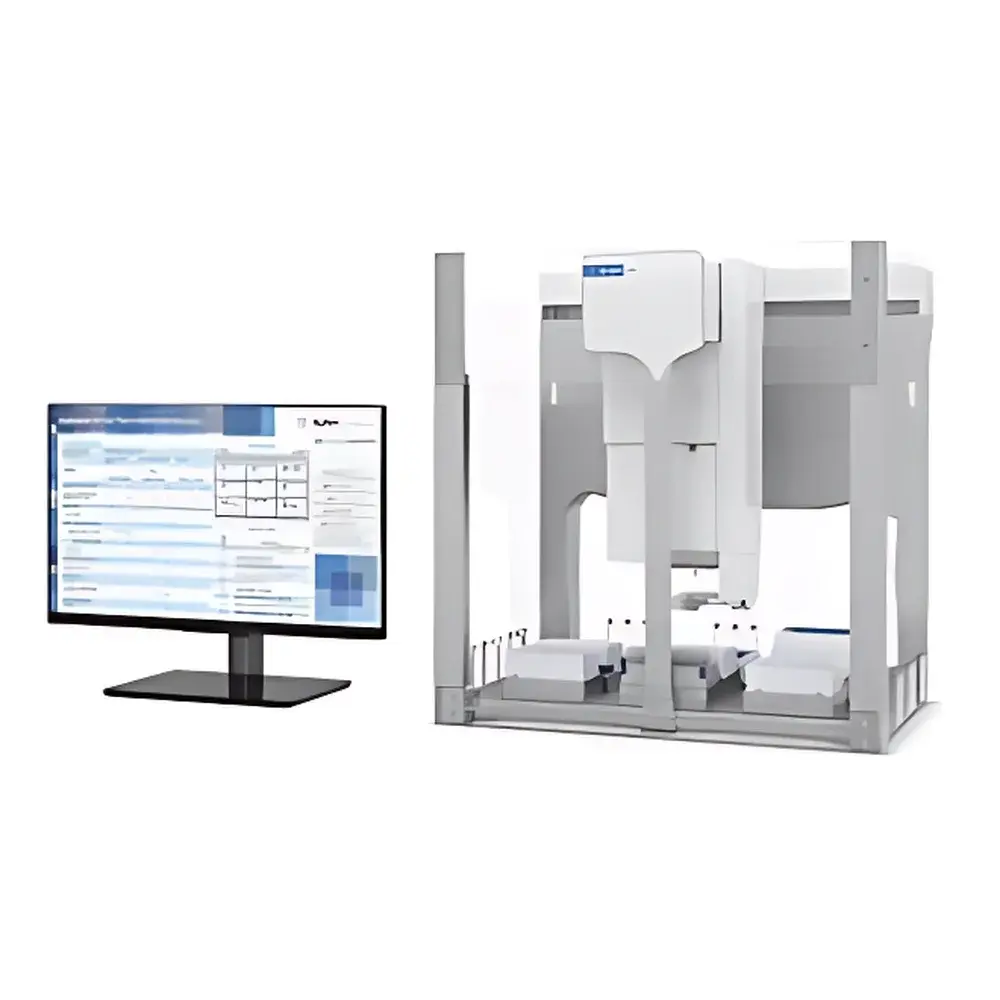
Agilent Bravo Metabolomics Sample Preparation Platform
| Brand | Agilent Technologies |
|---|---|
| Origin | Singapore |
| Manufacturer Type | Original Equipment Manufacturer (OEM) |
| Origin Category | Imported |
| Model | Bravo Metabolomics |
| Pricing | Available Upon Request |
Overview
The Agilent Bravo Metabolomics Sample Preparation Platform is a purpose-built, benchtop liquid handling workstation engineered for high-reproducibility sample preparation in untargeted and targeted metabolomics workflows. Based on the proven mechanical architecture and precision fluidics of the Agilent Bravo Liquid Handler, this platform integrates application-specific deck layouts, consumable carriers, and validated method scripts to automate critical pre-analytical steps—including plasma protein precipitation, phospholipid removal, solvent addition, vortex mixing, centrifugation coordination (via integration with compatible centrifuges), and plate transfers—prior to LC/MS analysis. Unlike generic liquid handlers requiring extensive method development and optimization, the Bravo Metabolomics system delivers a standardized, vendor-validated workflow specifically optimized for human and mammalian plasma matrices. Its design addresses a key source of analytical variability in metabolomics: inter-operator and inter-batch inconsistency during manual sample prep. By replacing manual pipetting with traceable, script-driven operations, the platform ensures consistent reagent volumes, incubation timing, mixing kinetics, and transfer accuracy—factors directly linked to metabolite recovery, ion suppression mitigation, and downstream chromatographic reproducibility.
Key Features
- Application-optimized hardware configuration: Dedicated deck layout with fixed-position carriers for 96-well deep-well plates, filter plates, collection plates, reagent reservoirs, and tip racks—minimizing reconfiguration time and cross-contamination risk.
- Pre-validated, modular software protocols: Agilent MassHunter BioConfirm Software includes built-in, editable methods for plasma deproteinization (e.g., acetonitrile/methanol-based), phospholipid depletion (e.g., supported liquid extraction), and derivatization-ready plate formatting—all compliant with Good Laboratory Practice (GLP) audit trails when deployed in regulated environments.
- Compact footprint (W × D × H: 58 × 61 × 53 cm): Designed for integration into standard biosafety cabinets or shared core facility bench spaces without requiring dedicated robotics suites.
- Traceable operation with full electronic lab notebook (ELN) compatibility: Each run logs timestamped events, tip usage, liquid class calibration status, and error flags—supporting 21 CFR Part 11 compliance when paired with validated Agilent OpenLab ECM configurations.
- Inter-laboratory reproducibility: Internal validation data across five independent academic metabolomics cores demonstrated median inter-site CVs 15.7% under manual protocols.
Sample Compatibility & Compliance
The platform is validated for human, rat, and mouse plasma samples collected in EDTA or heparin tubes. It supports input volumes from 10–100 µL per well and accommodates both fresh-frozen and thawed samples stored at –80 °C. All consumables—including low-binding polypropylene deep-well plates, hydrophilic PTFE filter plates, and sterile filtered organic solvents—are certified for trace-metal-free and low-background metabolite analysis. The system meets ISO/IEC 17025 requirements for method validation in accredited testing laboratories and aligns with Metabolomics Standards Initiative (MSI) Level 1 reporting guidelines for sample processing metadata. Regulatory use is restricted to research applications; it is not intended for clinical diagnostic or therapeutic decision-making per FDA and CE-IVD directives.
Software & Data Management
Controlled via Agilent MassHunter BioConfirm Software v10.1 or later, the platform features a role-based interface with three access tiers: Operator (run execution only), Method Developer (protocol editing with parameter locking), and Administrator (system calibration, user management, audit log review). All method files embed MSI-compliant metadata fields (e.g., sample storage duration, freeze-thaw cycles, anticoagulant type). Raw execution logs export in CSV and XML formats, supporting ingestion into LIMS systems (e.g., LabVantage, Thermo Fisher SampleManager) and third-party data processing pipelines such as XCMS Online or MZmine. Audit trails record every command execution, user login/logout, and software update—retained for ≥36 months per GLP retention policies.
Applications
- High-throughput plasma metabolite profiling for biomarker discovery in oncology, neurodegenerative disease, and metabolic syndrome cohorts.
- Longitudinal studies requiring strict batch-to-batch comparability across multi-center trials (e.g., NIH Common Fund programs).
- Method transfer between core facilities—enabling identical prep protocols across geographically dispersed labs using harmonized Bravo Metabolomics configurations.
- Integration with Agilent 6550 iFunnel Q-TOF or 6495C Triple Quadrupole LC/MS systems for end-to-end workflow automation from sample prep to data acquisition.
- Support for isotopic labeling experiments (e.g., ¹³C-glucose tracing) where precise volumetric consistency directly impacts labeling ratio accuracy.
FAQ
Is the Bravo Metabolomics Platform compatible with non-plasma sample types (e.g., urine, CSF, tissue extracts)?
While the validated workflows target plasma, the underlying Bravo hardware supports customization for other biofluids. Users must perform matrix-specific method verification per CLSI EP26-A guidelines before deployment.
Does the system include integrated centrifugation or drying capabilities?
No—centrifugation and nitrogen drying are performed offline using compatible third-party instruments (e.g., Eppendorf 5810 R, Savant SPD131DDA); the Bravo coordinates plate movement to and from these devices via I/O triggers.
Can existing Bravo Liquid Handlers be upgraded to the Metabolomics configuration?
Yes—qualified Agilent Bravo B or C series units may be retrofitted with the Metabolomics deck kit, software license, and validation documentation under Agilent Field Service Agreement.
What level of technical support is provided for protocol troubleshooting?
Agilent offers tiered support including remote diagnostics, on-site application assistance (optional annual contract), and access to the Agilent Metabolomics Community Portal containing SOPs, failure mode libraries, and peer-reviewed benchmark datasets.



