
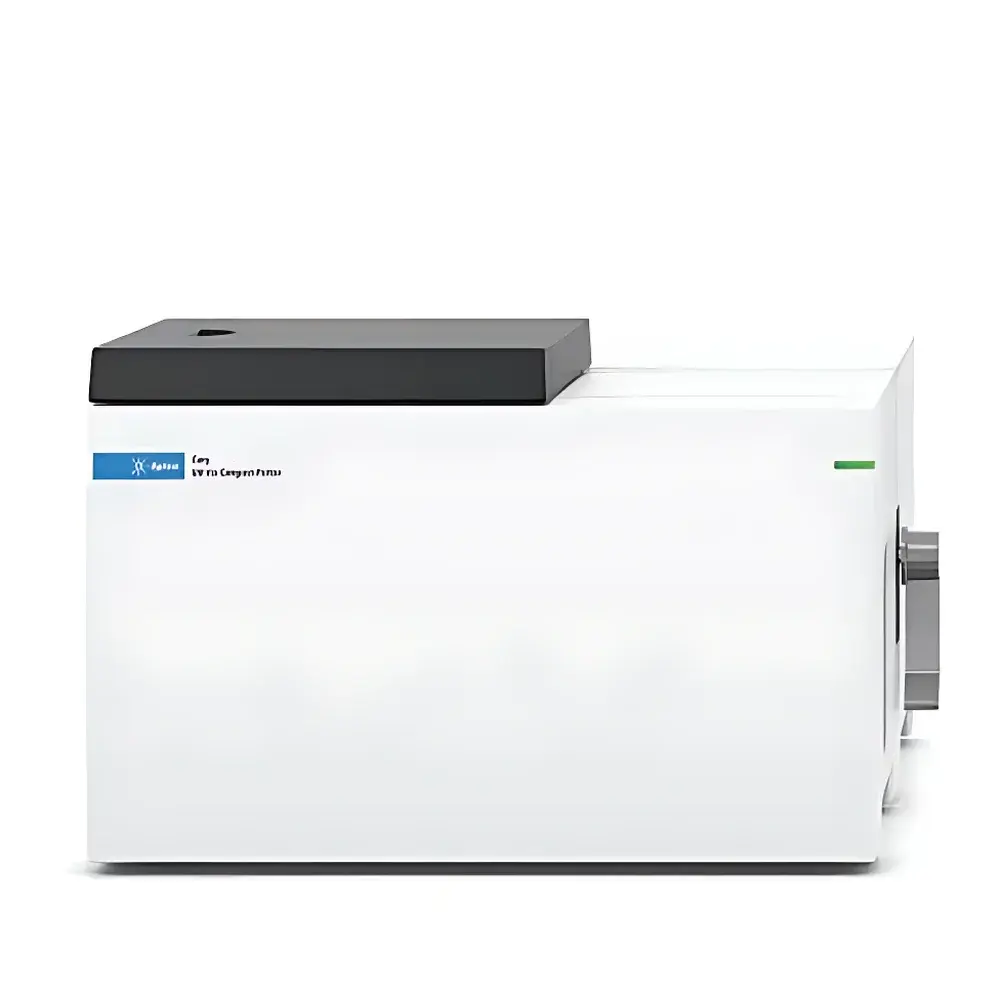
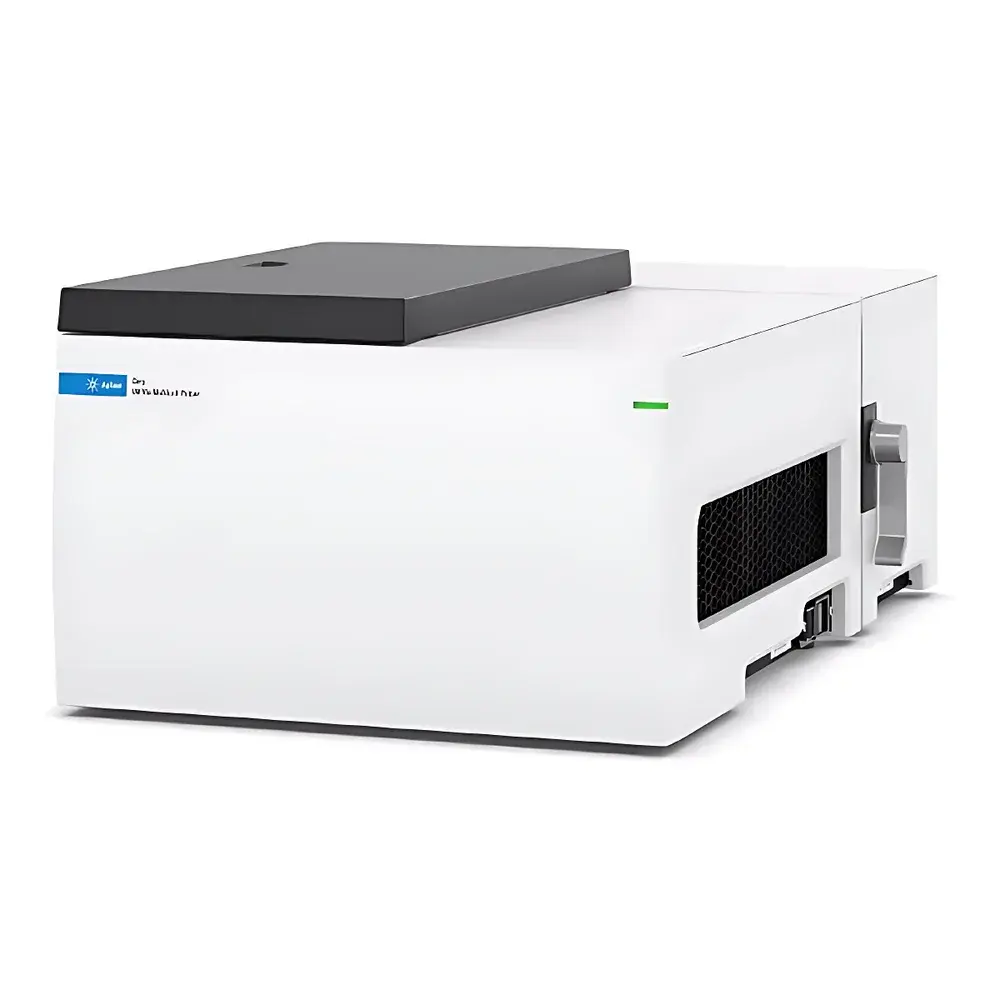
Agilent Cary 3500 UV-Vis Spectrophotometer
| Brand | Agilent Technologies |
|---|---|
| Origin | Malaysia |
| Manufacturer Type | Original Equipment Manufacturer (OEM) |
| Import Status | Imported |
| Model | Cary 3500 |
| Instrument Architecture | Double-beam |
| Detector Type | Photodiode Array (PDA) |
| Wavelength Range | 190 – 1100 nm |
| Automation Level | Automatic Wavelength Scanning |
| Spectral Bandwidth | 0.1 – 5.0 nm (UV-Vis) |
Overview
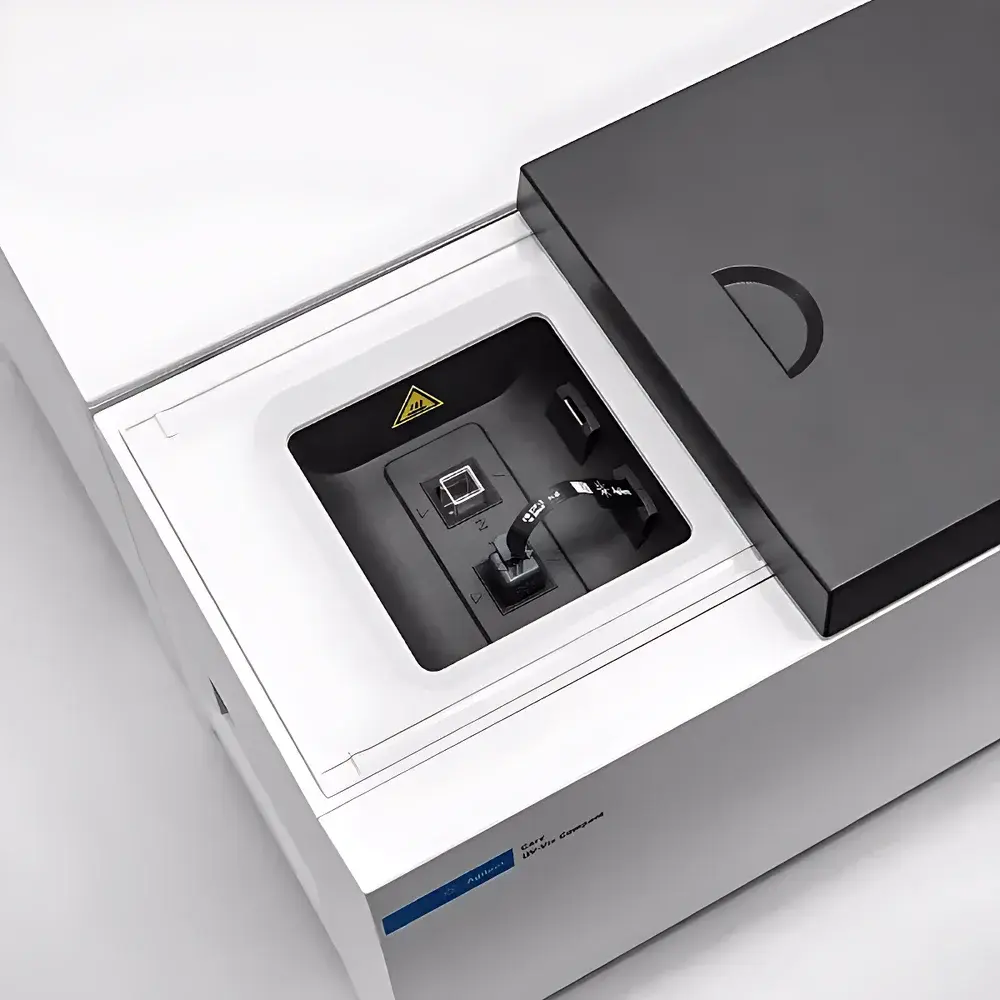
The Agilent Cary 3500 UV-Vis Spectrophotometer is a research-grade, double-beam optical instrument engineered for high-fidelity absorbance, transmittance, and reflectance measurements across the ultraviolet, visible, and near-infrared spectral regions (190–1100 nm). It employs a pulsed xenon lamp light source operating at 250 Hz and a dual-monochromator Littrow design to deliver exceptional photometric accuracy, low stray light (< 0.0001% at 220 nm), and long-term optical stability without mechanical realignment. Unlike traditional scanning instruments with moving sample holders or rotating grating mechanisms, the Cary 3500 features a permanently aligned, fixed-position cuvette compartment — eliminating positional drift, data gaps, and calibration dependency. Its core innovation lies in integrated multi-zone thermal control: up to four independent temperature-regulated zones can be maintained simultaneously within a single instrument platform, enabling parallel kinetic, thermodynamic, and stability studies under rigorously controlled conditions — all without external water baths, tubing, or acoustic interference.
Key Features
- Multi-zone Peltier-based temperature control system (-5 °C to +110 °C) with solid-state digital Cary temperature probes embedded directly in the cuvette path for real-time, sub-second thermal feedback and ±0.1 °C accuracy.
- Fixed-position, eight-cell autosampler configuration (standard on Multizone variant) supporting simultaneous measurement of reference, standards, and samples under identical optical and thermal conditions.
- Pulsed xenon lamp with 10-year limited warranty; eliminates daily warm-up, reduces lamp replacement frequency, and delivers stable intensity over >10⁹ pulses.
- High-speed data acquisition: up to 250 data points per second and maximum scan speed of 150,000 nm/min — sufficient to resolve rapid enzymatic reactions, protein unfolding transitions, and nucleic acid hybridization kinetics.
- Optically optimized beam profile: collimated, uniform light path <1.5 mm in width ensures reproducible quantitation of microvolume samples (down to 5 µL) in standard or custom cuvettes.
- No moving optical components; permanent optical alignment ensures zero recalibration requirement throughout instrument lifetime.
- Compliance-ready architecture supporting 21 CFR Part 11, EU Annex 11, GAMP 5, ISO/IEC 17025, and EPA 40 CFR Part 160 via Agilent OpenLab software integration.
Sample Compatibility & Compliance
The Cary 3500 accommodates standard 10-mm-pathlength quartz, glass, or plastic cuvettes, as well as microvolume cells, flow cells, and solid-sample reflectance accessories. Its dual-beam architecture compensates for solvent baseline drift and lamp intensity fluctuations, ensuring robust quantification of high-absorbance samples (up to 4.0 Abs) without dilution artifacts. Temperature-controlled experiments comply with ICH Q5C (stability testing), USP (spectrophotometric analysis), and ASTM E275 (UV-Vis method validation). The instrument’s hardware and software architecture are validated for use in GLP/GMP-regulated environments, with full audit trail support, electronic signatures, role-based access control, and secure data archiving through OpenLab CDS or OpenLab ECM.
Software & Data Management
Cary UV Workstation software provides intuitive method development for absorbance scanning, quantitative analysis, kinetics, temperature ramping, and multi-component spectral deconvolution. Over 50 preconfigured calculation templates — including DNA/RNA concentration (A260), protein quantitation (Bradford, Lowry, BCA), enzyme activity (ΔA/min), and melting temperature (Tm) determination — are embedded and fully customizable. When paired with Agilent OpenLab software suite, the system supports centralized data governance: raw spectra, processed results, metadata, and instrument logs are stored in encrypted, version-controlled repositories with time-stamped audit trails compliant with FDA 21 CFR Part 11 requirements. Electronic signature workflows, user permission hierarchies, and automated backup policies ensure traceability and regulatory readiness.
Applications
- Thermal denaturation profiling of proteins and nucleic acids (e.g., Tm determination of siRNA duplexes at ramp rates up to 40 °C/min).
- Real-time monitoring of enzyme kinetics under programmable temperature gradients.
- High-throughput quantification of biomolecules in QC/QA labs using standardized calibration curves generated in <1 second across 8 positions.
- Stability-indicating assays for pharmaceutical formulations under ICH-defined stress conditions.
- Quality control of nanomaterials, dyes, catalysts, and polymer solutions requiring precise spectral characterization from deep UV to NIR.
- Environmental analysis of nitrate, phosphate, heavy metals, and organic contaminants per EPA Method 4500 series protocols.
FAQ
What is the maximum number of independent temperature zones supported?
The Cary 3500 Multizone configuration supports up to four thermally isolated zones, each independently controllable from -5 °C to +110 °C.
Does the instrument require routine wavelength or photometric calibration?
No — the permanently aligned optical path and solid-state detector eliminate the need for user-performed wavelength or photometric calibration.
Can the Cary 3500 measure samples with absorbance above 4.0 Abs?
The specified photometric range is 0–4.0 Abs; measurements beyond this require attenuation or dilution to maintain linearity and minimize stray light effects.
Is the xenon lamp compatible with regulated environments?
Yes — the lamp is certified for use in 21 CFR Part 11-compliant workflows when operated within the Cary UV Workstation and OpenLab ecosystem.
What sustainability certifications does the Cary 3500 hold?
It carries the My Green Lab ACT Label, verifying reduced environmental impact across manufacturing, energy use, materials sourcing, and end-of-life recyclability.




