
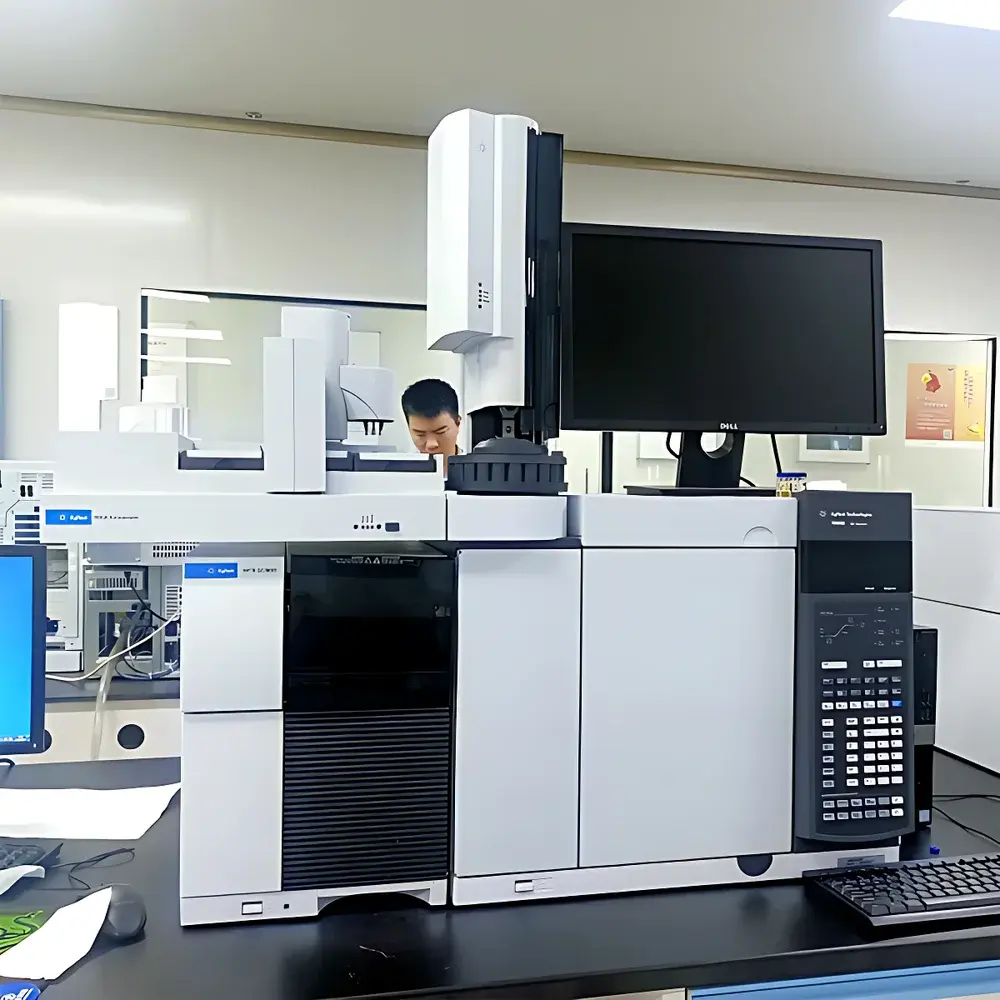
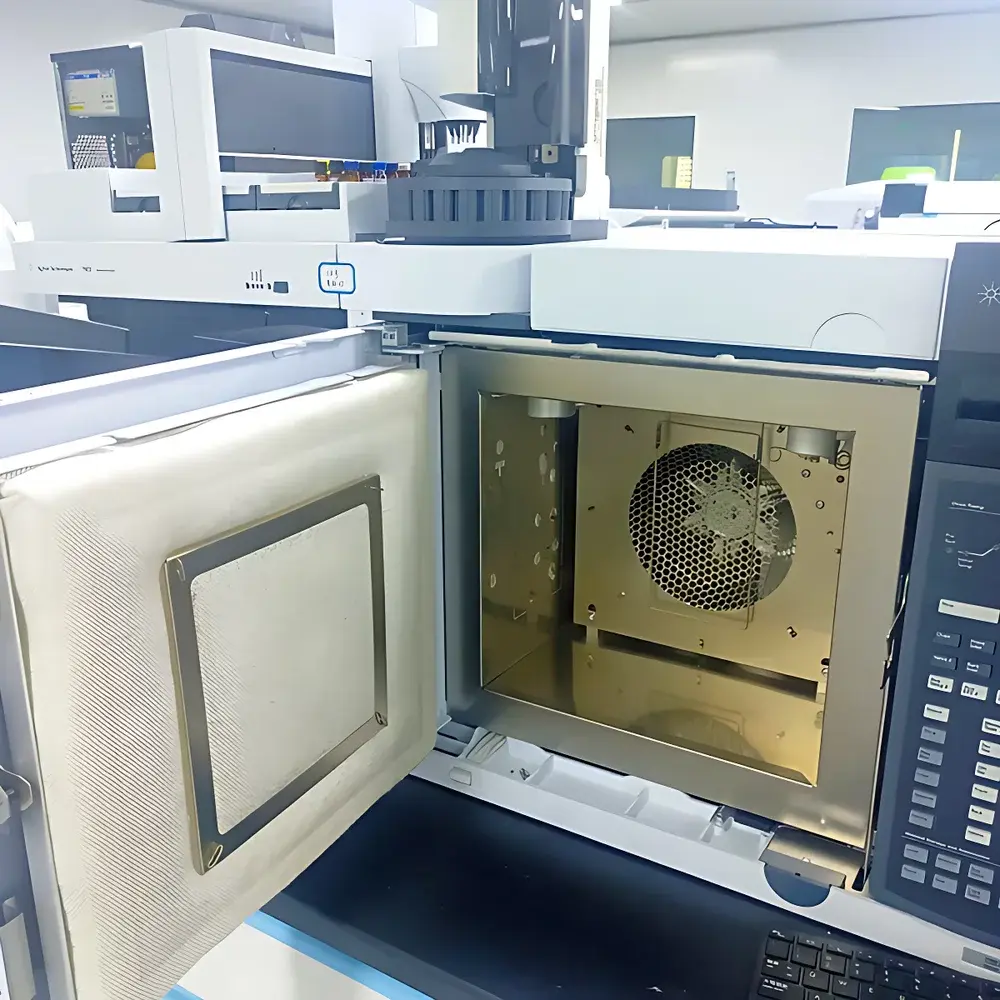
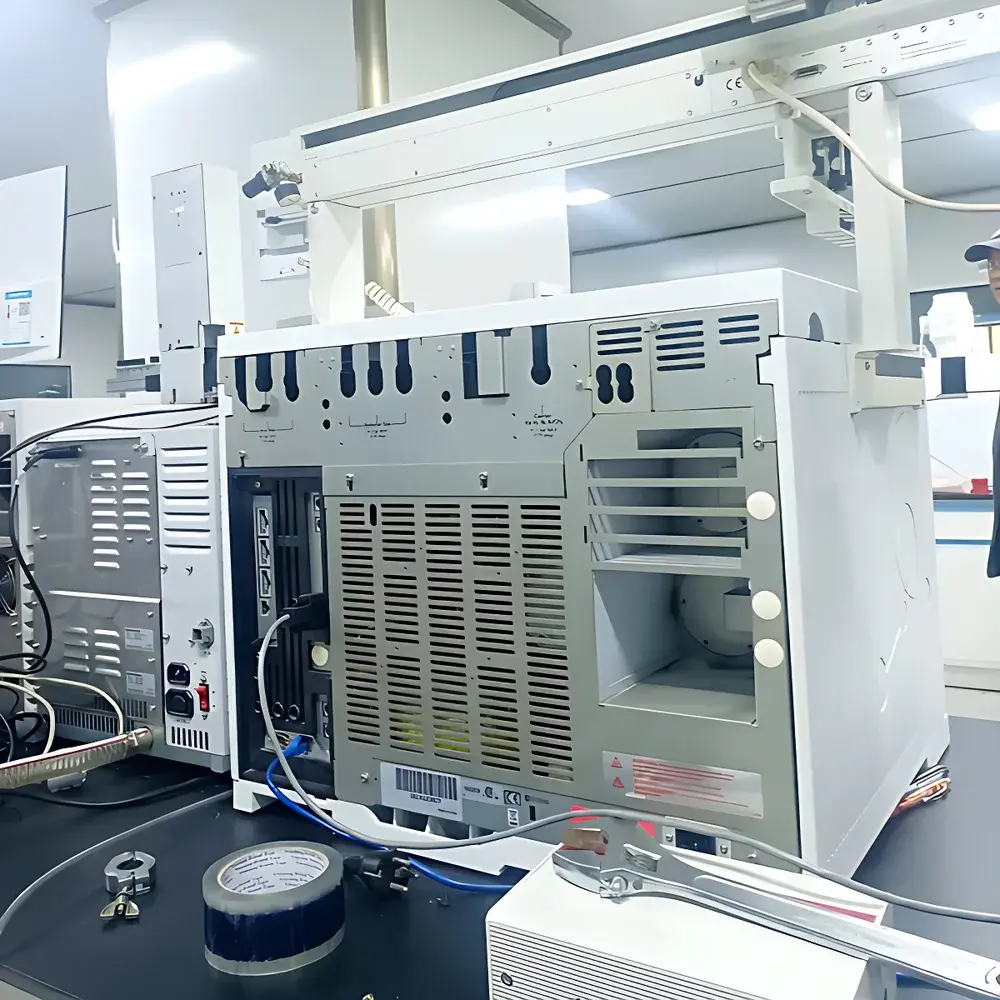
Agilent GCMSMS 7890B-7000C Triple Quadrupole Gas Chromatography Mass Spectrometry System
| Brand | Agilent Technologies |
|---|---|
| Origin | USA |
| Model | 7890B-7000C |
| Instrument Type | Triple Quadrupole Mass Spectrometer |
| GC Type | Conventional Gas Chromatograph |
| Mass Range | 10,000 m/z |
| Resolution | 1000 (FWHM) |
| Sensitivity | 300 cps/fA (electron multiplier gain referenced) |
| Scan Speed | 15,000 Da/sec |
| Mass Accuracy | ±100 ppm (calibrated) |
| Oven Ramp Rate | 125 °C/min |
| Detector Count | 10 (including HED-EM and optional TCD/ECD) |
| Pressure Control Precision | ±0.001 psi |
Overview
The Agilent GCMSMS 7890B-7000C is a fully integrated triple quadrupole gas chromatography–mass spectrometry (GC-MS/MS) system engineered for high-confidence quantitative and qualitative analysis in regulated and research environments. It combines the robust, high-resolution separation capability of the Agilent 7890B gas chromatograph with the exceptional selectivity and sensitivity of the 7000C triple quadrupole mass spectrometer. The system operates on tandem mass spectrometry principles: analytes eluting from the GC column are ionized via electron ionization (EI) in the Extractor ion source, fragmented in the first quadrupole (Q1), filtered by a precursor ion, subjected to collision-induced dissociation (CID) in the collision cell (q2), and finally detected as product ions in Q3. This configuration delivers superior specificity in complex matrices—such as environmental extracts, food homogenates, clinical biofluids, and forensic evidence—by eliminating isobaric interferences and suppressing chemical noise.
Key Features
- Extractor EI Ion Source: Designed for maximum ion transmission and minimal contamination buildup, enabling sub-4 fg OFN instrument detection limit (IDL) with high reproducibility across extended run sequences.
- Heated Gold-Plated Quadrupoles: Maintain thermal stability and surface inertness under high-vacuum conditions, reducing memory effects and improving long-term mass axis calibration stability.
- Triaxial High-Energy Dynode Electron Multiplier (HED-EM): Delivers enhanced signal-to-noise ratio and extended dynamic range (>6 orders) without saturation at high ion fluxes.
- Fast Pump-Down & Active Venting System: Reduces cooldown and re-evacuation time between runs; supports rapid method switching and high-throughput screening protocols.
- Early Maintenance Feedback (EMF): Monitors critical subsystem parameters—including detector voltage, filament emission current, vacuum gauge readings, and EPC pressure deviations—and generates actionable alerts prior to performance degradation or failure.
- Sleep/Wake Scheduling: Automatically places GC oven, MS source, and detector into low-power standby during non-operational hours and resumes full readiness ahead of scheduled acquisition windows—reducing energy consumption by up to 45% without compromising startup consistency.
Sample Compatibility & Compliance
The 7890B-7000C accommodates a broad spectrum of volatile and semi-volatile organic compounds (VOCs/SVOCs), including pesticides, polycyclic aromatic hydrocarbons (PAHs), brominated flame retardants (PBDEs), pharmaceutical residues, and endocrine disruptors. Its inert flow path—comprising Siltek-treated liners, deactivated transfer lines, and low-bleed columns—ensures minimal adsorption or catalytic decomposition of thermally labile species. The system complies with key regulatory frameworks: it supports audit trails and electronic signatures per FDA 21 CFR Part 11 when configured with validated MassHunter software; meets ISO/IEC 17025 requirements for accredited testing laboratories; and enables method validation in accordance with EPA Methods 8270, 8260, and 1613, as well as EU Commission Regulation (EU) No 2021/1274 for pesticide residue analysis. Retention Time Locking (RTL) functionality ensures method transfer fidelity across geographically dispersed Agilent GC platforms—critical for multi-site compliance programs.
Software & Data Management
MassHunter Workstation Software (version B.09 or later) provides end-to-end control—from instrument tuning and calibration through MRM method development, batch acquisition, peak integration, and report generation. Its enhanced MRM Optimization Tool automates compound-specific parameter selection (collision energy, dwell time, Q1/Q3 resolution) using built-in spectral libraries and empirical response models. The software integrates curated databases for >1,200 pesticides and >800 environmental contaminants, each annotated with retention indices, diagnostic transitions, and matrix-matched calibration curves. All raw data files (.D format) are stored with embedded metadata (instrument configuration, sequence logs, user credentials), supporting GLP/GMP traceability. Audit trail logging records every user action—including parameter edits, data reprocessing, and report exports—with timestamps and operator IDs. Data export options include CSV, PDF, and XML formats compatible with LIMS and ELN systems.
Applications
- Quantitative residue analysis in food safety testing (e.g., multi-residue pesticide screening per SANTE/2023/2023 guidelines)
- Environmental monitoring of persistent organic pollutants (POPs) in soil, water, and air particulates
- Pharmaceutical impurity profiling and genotoxic metabolite identification
- Clinical toxicology screening for drugs of abuse and therapeutic drug monitoring (TDM)
- Forensic confirmation of controlled substances in biological matrices
- Research applications requiring structural elucidation of unknown metabolites via MS/MS spectral matching
FAQ
What is the difference between IDL and LOD/LOQ in this system?
Instrument Detection Limit (IDL) is measured using eight fluoronaphthalene (OFN) under defined instrumental conditions and reflects system-level sensitivity independent of sample preparation. LOD and LOQ are method-dependent metrics incorporating extraction efficiency, matrix effects, and calibration uncertainty.
Can the 7890B GC operate independently of the 7000C MS?
Yes—the 7890B is a standalone GC platform with full EPC control, temperature programming, and compatibility with FID, TCD, ECD, and NPD detectors. Integration with the 7000C is achieved via dedicated GC-MS interface hardware and MassHunter synchronization protocols.
Is helium conservation supported when using hydrogen carrier gas?
The 7890B includes a programmable helium conservation module and supports hydrogen as an alternative carrier gas. Direct GC-MSD communication enables automatic pressure adjustment and fast pump-down to prevent detector damage during H₂ flow interruptions.
How does the system handle matrix-induced ion suppression?
The triple quadrupole architecture inherently mitigates suppression through selective reaction monitoring (SRM). Additionally, MassHunter offers post-acquisition correction tools using internal standard normalization and matrix-matched calibration strategies.
What maintenance intervals are recommended for routine operation?
Ion source cleaning is advised every 2–4 weeks depending on sample load; column trimming and inlet liner replacement every 100–200 injections; and vacuum pump oil change every 6 months. EMF notifications provide real-time guidance aligned with Agilent’s Preventive Maintenance Schedule (PMS-7890B/7000C Rev. D).






