
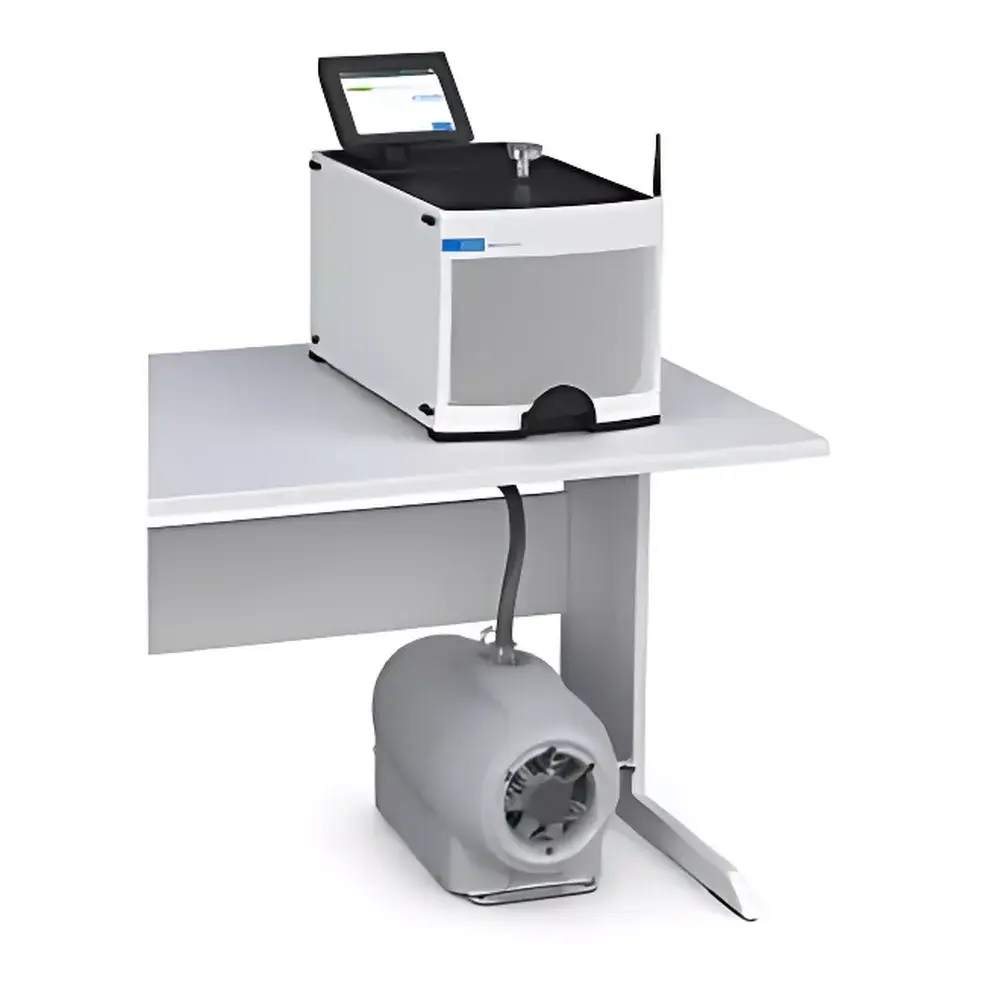
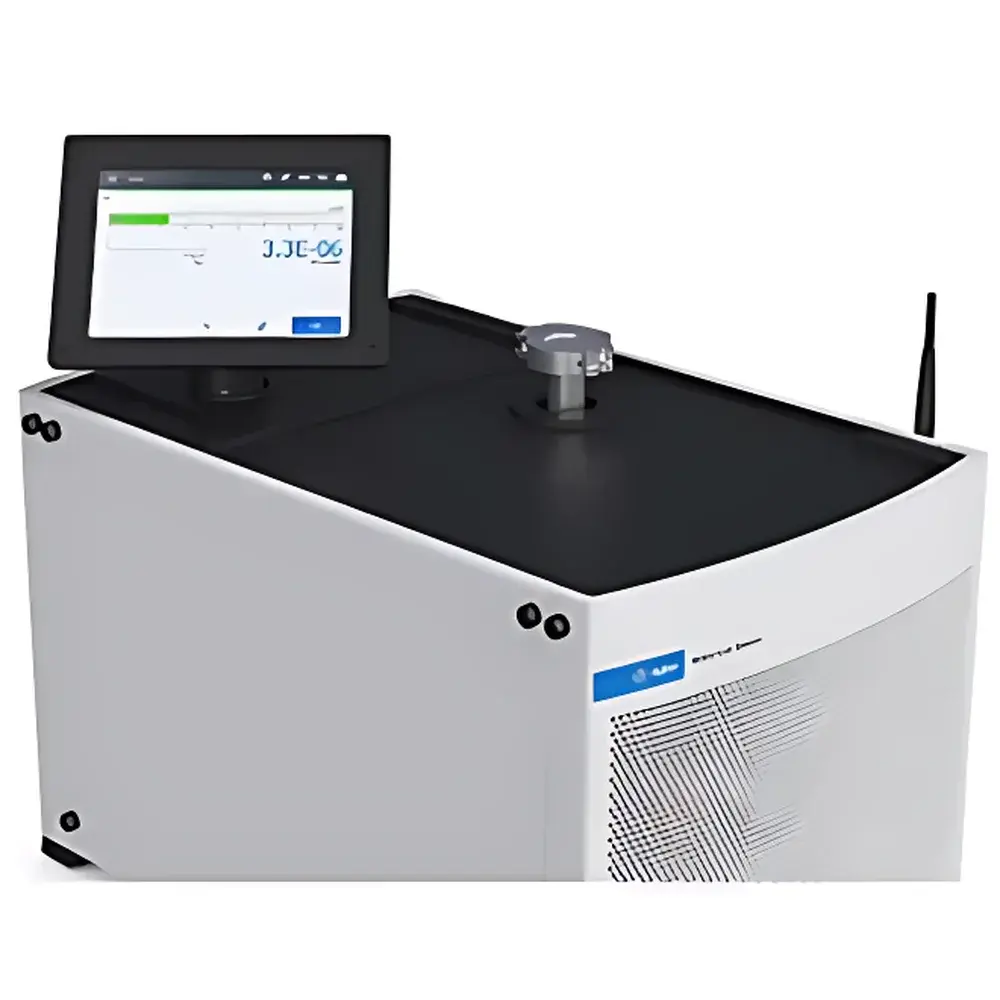
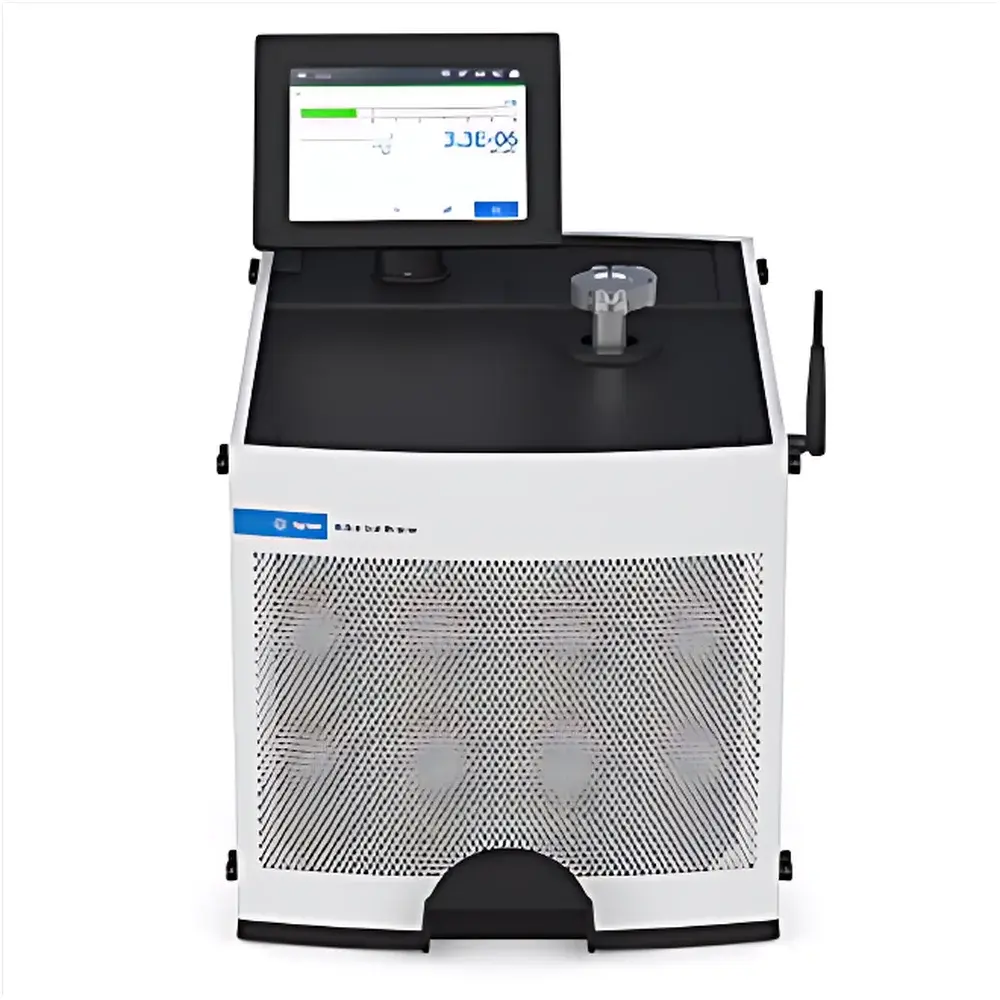
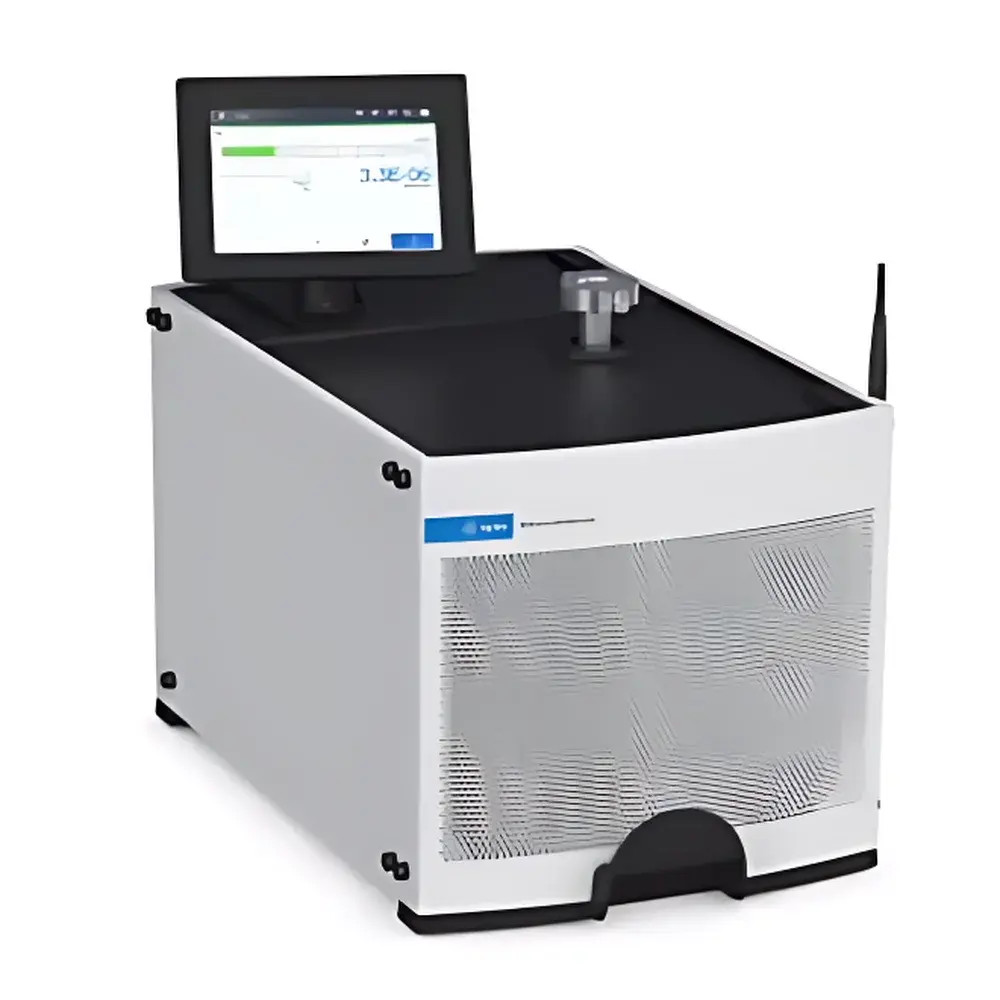
Agilent HLD BD15 Benchtop Dry Helium Mass Spectrometer Leak Detector
| Brand | Agilent Technologies |
|---|---|
| Origin | USA |
| Manufacturer Type | Original Equipment Manufacturer (OEM) |
| Import Status | Imported |
| Model | HLD BD15 |
| Pricing | Available Upon Request |
Overview
The Agilent HLD BD15 Benchtop Dry Helium Mass Spectrometer Leak Detector is a high-sensitivity, dedicated residual gas analyzer engineered for quantitative and qualitative helium-based leak detection in vacuum-integrated systems. Operating on the principle of magnetic sector mass spectrometry, the instrument selectively ionizes and separates helium atoms (mass-to-charge ratio m/z = 4) from background gases with high mass resolution and low interference. Unlike conventional sniffer-mode or pressure-rise methods, the HLD BD15 employs a calibrated vacuum manifold coupled to a high-efficiency turbomolecular pumping system, enabling detection limits down to 5 × 10⁻¹² mbar·L/s (typical, under optimized conditions), making it suitable for critical applications in semiconductor fabrication, medical device packaging, aerospace component validation, and ultra-high-vacuum (UHV) system commissioning.
Key Features
- Dry vacuum architecture: Integrated Agilent IDP-15 oil-free scroll pump (pumping speed: 15 m³/h) eliminates hydrocarbon contamination risk—essential for cleanroom environments and sensitive components.
- Benchtop form factor with reinforced structural chassis: Designed for stable operation on standard laboratory workbenches; footprint optimized for space-constrained QC labs.
- 180° rotatable industrial-grade capacitive touchscreen: IP65-rated interface with glare-reduced display, intuitive flat-menu navigation, and context-aware soft keys for rapid parameter selection.
- Six preconfigured application wizards: Guided setup sequences for common use cases—including vacuum chamber integrity testing, sealed package verification, and HVAC coil inspection—reduce operator dependency and minimize configuration errors.
- Enhanced data visualization suite: Real-time color-coded trend plots showing leak rate (mbar·L/s) and system pressure (mbar) over time; pinch-to-zoom functionality and user-defined threshold markers support forensic analysis of transient leakage events.
- Intelligent shutdown protocol: Automatically maintains spectrometer chamber vacuum post-cycle to preserve filament life and protect turbomolecular pump bearings during idle periods.
Sample Compatibility & Compliance
The HLD BD15 interfaces seamlessly with both rigid and flexible test fixtures via standardized CF-35 or KF-25 vacuum flanges. It supports direct connection to evacuated test objects (vacuum mode) or external helium spray (sniffer mode), accommodating parts ranging from microfluidic chips (2 m³). The system complies with ISO 9001:2015 quality management requirements and meets electromagnetic compatibility (EMC) standards per IEC 61326-1. Its software architecture supports audit trail generation and electronic signature capability, aligning with FDA 21 CFR Part 11 expectations for regulated environments where traceability and data integrity are mandatory.
Software & Data Management
Control and data acquisition are managed through Agilent’s proprietary LeakDetector Control Software (v3.2+), installed on an embedded industrial PC. The software provides full remote operation via Ethernet (TCP/IP), supports CSV/Excel export of time-stamped measurement logs, and enables user-level access control (administrator/operator/guest tiers). All calibration records, test protocols, and pass/fail criteria are stored in encrypted local databases with automatic backup to network drives. Raw spectral data (including ion current traces at m/z = 4) can be exported for third-party spectral deconvolution or long-term trending analysis.
Applications
- Leak integrity verification of hermetically sealed implantable devices (e.g., pacemakers, neurostimulators) per ISO 11607-2 and ASTM F2338.
- In-line leak screening of lithium-ion battery enclosures prior to electrolyte filling.
- Validation of vacuum insulation panels (VIPs) used in cryogenic storage systems.
- Commissioning and maintenance of UHV beamlines in synchrotron and particle accelerator facilities.
- Qualification of MEMS packaging substrates and wafer-level encapsulation processes.
FAQ
What is the minimum detectable leak rate under standard operating conditions?
Typical sensitivity is 5 × 10⁻¹² mbar·L/s when using vacuum-mode testing with optimal helium background suppression and calibrated reference leaks.
Does the HLD BD15 require liquid nitrogen or other cryogenic cooling?
No—it utilizes ambient-temperature ion optics and a heated filament source; no cryo-trapping or LN₂ infrastructure is needed.
Can the instrument be integrated into automated production lines?
Yes—Ethernet-based SCPI command set and OPC UA support enable seamless integration with PLCs and MES platforms for 100% inline leak testing.
Is routine calibration required, and what standards are supported?
Annual calibration is recommended using NIST-traceable helium permeation standards (e.g., Restek LK-1 series); built-in self-diagnostic routines verify mass axis stability and detector gain before each test cycle.
How does the dry pumping architecture affect long-term maintenance intervals?
Oil-free scroll and turbomolecular pumps reduce scheduled maintenance to biannual inspection only—no oil changes, filter replacements, or vapor trap servicing required within first 12,000 operational hours.





