
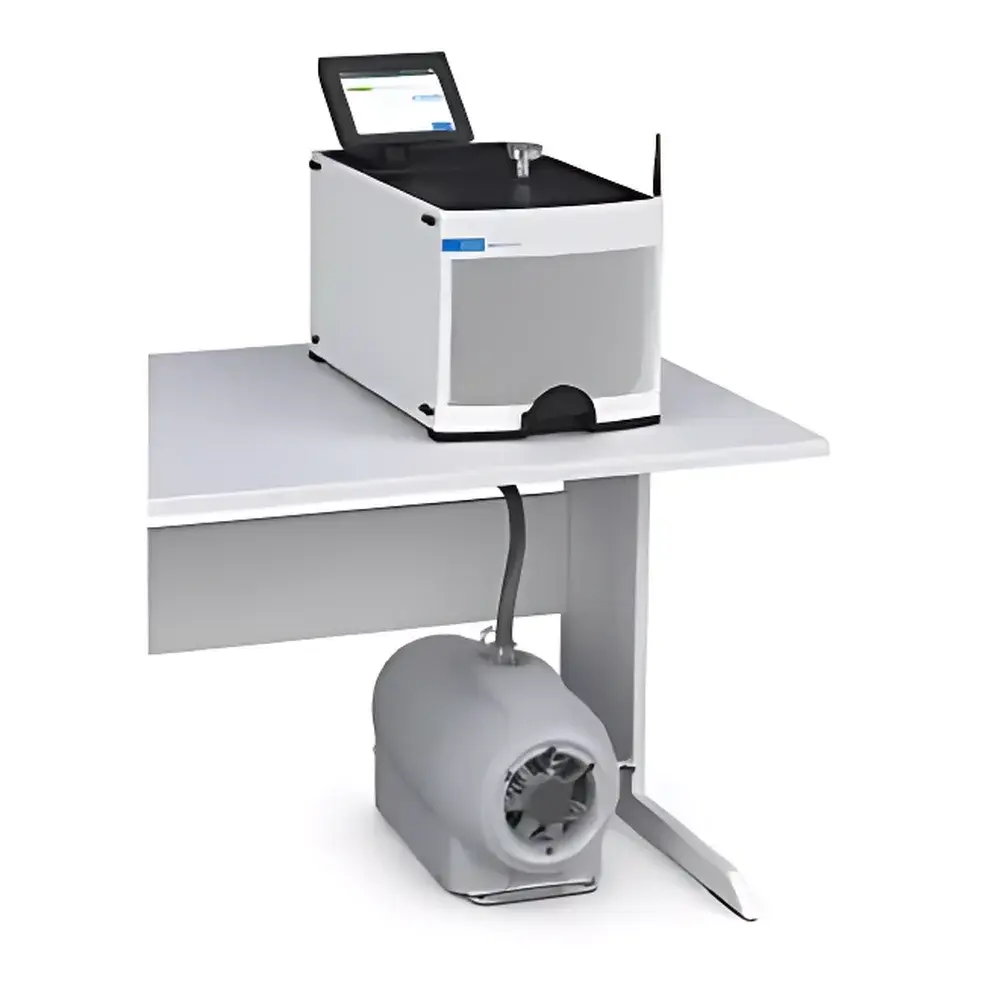
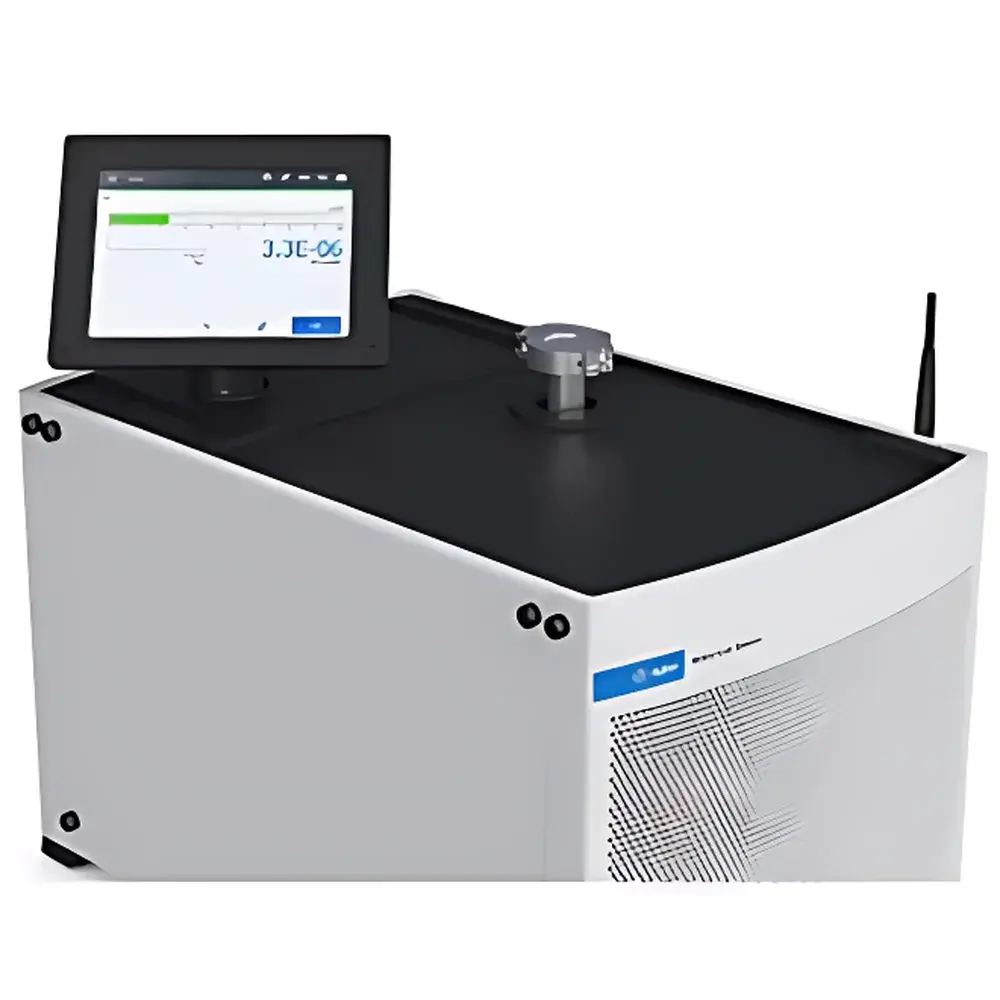
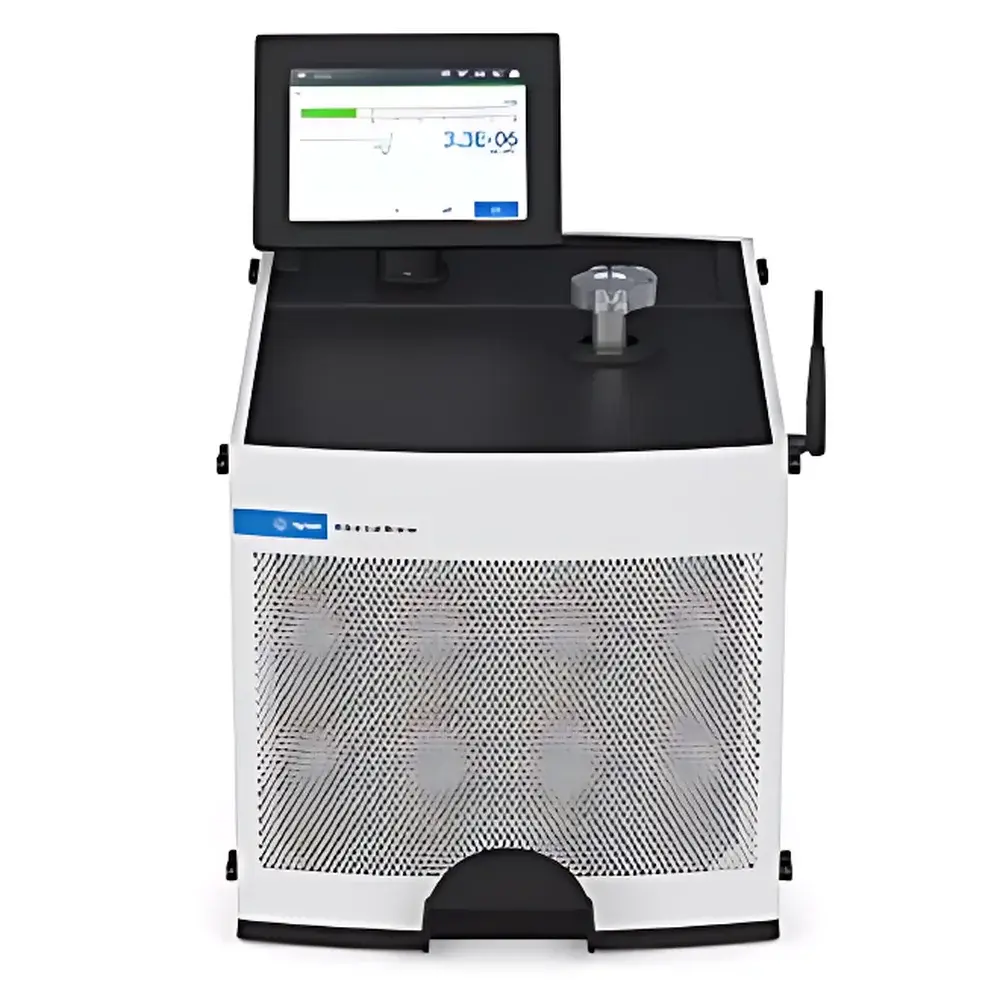
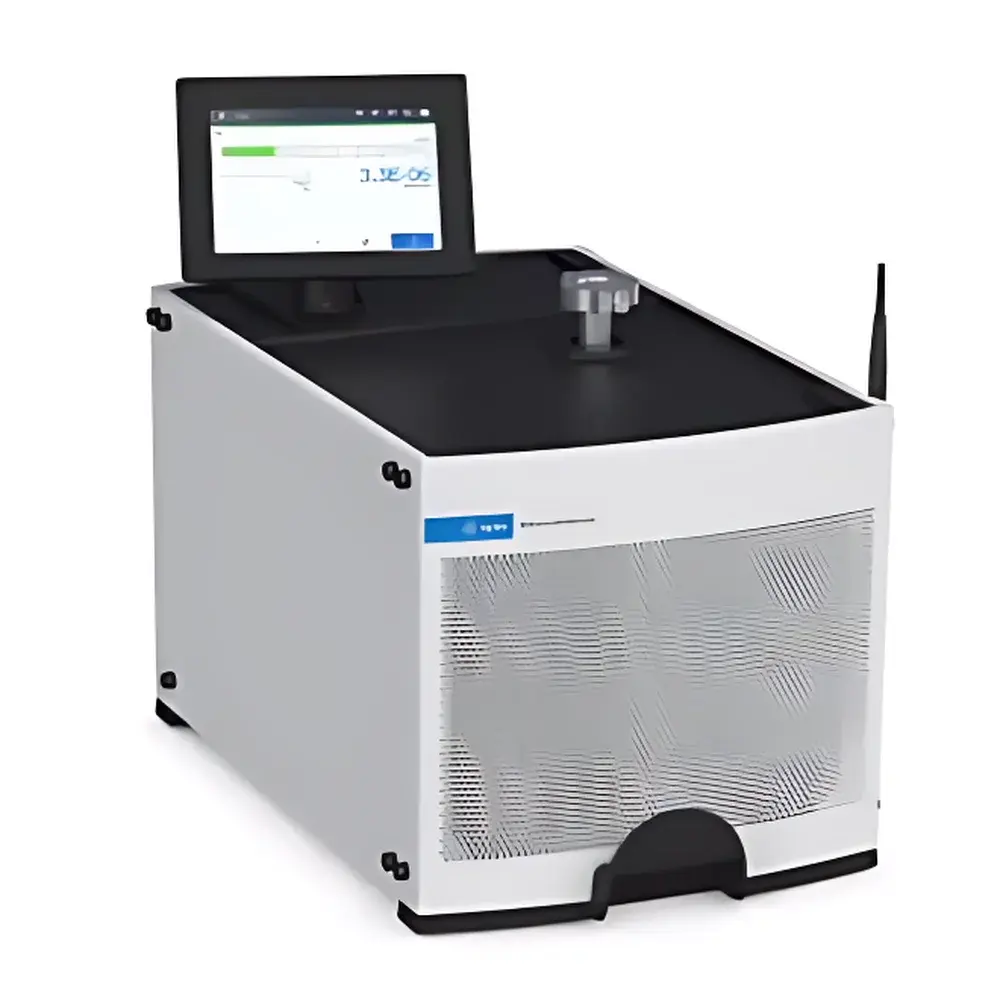
Agilent HLD BD30 Benchtop Dry Helium Mass Spectrometer Leak Detector
| Brand | Agilent Technologies |
|---|---|
| Origin | USA |
| Manufacturer Type | Original Equipment Manufacturer (OEM) |
| Import Status | Imported |
| Model | HLD BD30 |
| Pricing | Available Upon Request |
Overview
The Agilent HLD BD30 is a benchtop helium mass spectrometer leak detector engineered for high-sensitivity, quantitative leak detection in vacuum and pressurized systems. It operates on the principle of residual gas analysis using a quadrupole mass spectrometer tuned specifically to detect 4He ions (mass-to-charge ratio m/z = 4), enabling measurement of helium partial pressure as a direct indicator of leak rate. Unlike conventional tracer-gas methods relying on thermal conductivity or ionization chambers, the HLD BD30 leverages magnetic sector–free quadrupole mass filtering with optimized electron multiplier detection, delivering sub-10−12 mbar·L/s sensitivity under standard test conditions. Designed for integration into R&D labs, QC environments, and manufacturing cleanrooms, the system supports both vacuum-integrated (vacuum mode) and sniffer-based (pressure mode) configurations—making it suitable for evaluating hermeticity of sealed components such as semiconductor packages, medical devices, vacuum chambers, aerospace subsystems, and lithium-ion battery enclosures.
Key Features
- Dry pumping architecture featuring an integrated Agilent IDP-15 scroll vacuum pump (pumping speed: 15 m³/h at inlet), eliminating oil vapor backstreaming and ensuring contamination-free testing of sensitive components.
- 180° rotatable industrial-grade capacitive touchscreen with intuitive flat-menu navigation, supporting multi-language UI and contextual help overlays for rapid operator onboarding.
- Six preconfigured application wizards—including HVAC, semiconductor packaging, medical device validation, and vacuum vessel certification—automatically optimize spectrometer gain, scan range, background subtraction, and response time per ISO 20486 and ASTM E493 compliance protocols.
- Enhanced data visualization suite with real-time logarithmic leak-rate vs. time plots, color-coded threshold markers, pinch-to-zoom waveform inspection, and dual-axis pressure/leak-rate overlay for dynamic process correlation.
- Extended benchtop platform (620 × 450 mm usable surface area) accommodates large fixtures, custom test manifolds, and auxiliary instrumentation without requiring external mounting hardware.
- Intelligent shutdown sequence maintains turbomolecular pump vacuum integrity during idle periods, reducing warm-up time by up to 40% and extending rotor bearing life per manufacturer-recommended maintenance intervals.
Sample Compatibility & Compliance
The HLD BD30 is compatible with metallic, ceramic, glass, and polymer-encapsulated components rated for vacuum service up to 1 × 10⁻³ mbar base pressure. It supports test object volumes ranging from <10 mL (microelectronics) to >20 L (industrial heat exchangers), with optional external roughing line adapters for high-capacity systems. The instrument meets electromagnetic compatibility requirements per CISPR 11 Class B and safety standards IEC 61010-1:2010. Its helium-specific detection methodology aligns with ISO 10648-2 (leak detection — vocabulary and methods), ASTM E1003 (standard practice for helium mass spectrometer leak testing), and USP <1207> guidance for package integrity assessment in pharmaceutical applications. Audit trail functionality—including user login timestamps, parameter change logs, and raw spectrum export—supports GLP/GMP environments compliant with FDA 21 CFR Part 11 when paired with Agilent’s OpenLab CDS software.
Software & Data Management
Control and data acquisition are managed via Agilent’s proprietary HLD Control Suite v3.2, a Windows-based application offering local operation, remote monitoring via Ethernet/IP, and OPC UA server integration for MES/SCADA connectivity. All spectral data, leak-rate integrals, and environmental sensor readings (chamber temperature, pump status, helium concentration) are stored in vendor-neutral HDF5 format with embedded metadata (test ID, operator, date/time, calibration certificate ID). Automated report generation includes customizable PDF templates conforming to ISO/IEC 17025 documentation requirements. Raw .hld files support post-acquisition reprocessing—including baseline correction, peak deconvolution, and signal averaging—without dependency on proprietary runtime libraries.
Applications
- Hermeticity validation of MEMS sensors, RF filters, and optoelectronic housings during wafer-level and final assembly stages.
- Leak rate verification of implantable medical devices (e.g., pacemakers, neurostimulators) per ISO 11607 and AAMI TIR17.
- Quality assurance of vacuum-insulated panels (VIPs), cryogenic dewars, and fusion reactor diagnostic port seals.
- Failure analysis of lithium-ion battery pouch cells and cylindrical modules under controlled helium exposure protocols.
- Process qualification of laser-welded joints, brazed heat exchangers, and electron-beam sealed vacuum tubes.
- Regulatory submission support for FDA 510(k), CE Marking, and IEC 60601-1 third-party testing laboratories.
FAQ
What is the minimum detectable leak rate under standard vacuum-mode operation?
The HLD BD30 achieves a typical base sensitivity of 5 × 10⁻¹³ mbar·L/s when operated with optimal helium background suppression and calibrated with NIST-traceable reference leaks.
Can the system be used for pressure-mode (sniffer) testing?
Yes—the instrument includes a dedicated sniffer probe interface with flow-controlled sampling, adjustable response damping, and automatic zero-point compensation for ambient helium fluctuations.
Is the IDP-15 scroll pump field-serviceable?
The IDP-15 is designed for modular replacement; routine maintenance (e.g., inlet filter cleaning, bearing inspection) follows Agilent Service Bulletin SB-HLD-2023-04 and requires no vacuum chamber venting.
Does the system support automated calibration routines?
Calibration is performed using certified stainless-steel reference leaks (1 × 10⁻⁹ to 1 × 10⁻⁵ mbar·L/s); the software guides users through multi-point verification with pass/fail criteria per ISO 17025 Annex A.3.
How is data integrity ensured during long-duration tests?
All acquisitions include cyclic CRC-32 checksums, write-once filesystem logging, and optional encrypted storage via FIPS 140-2 compliant AES-256 modules available as an add-on configuration.




