
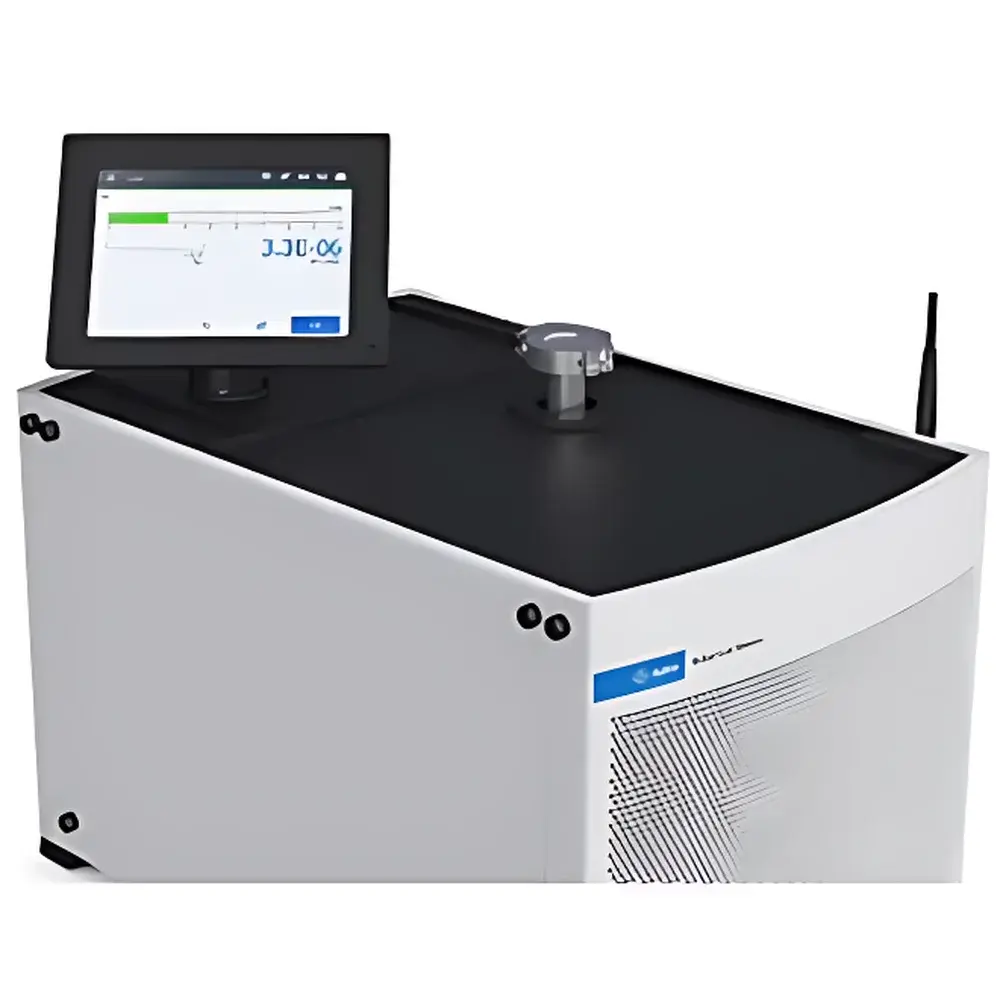
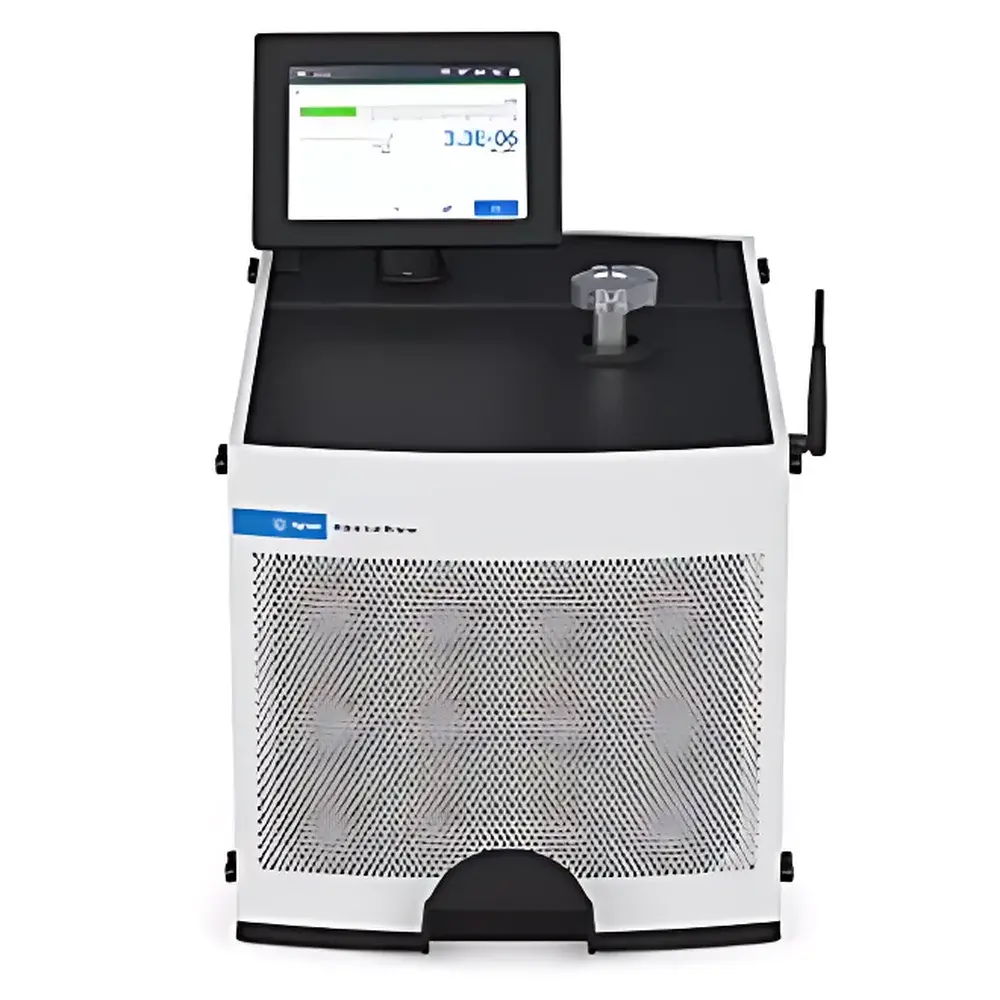
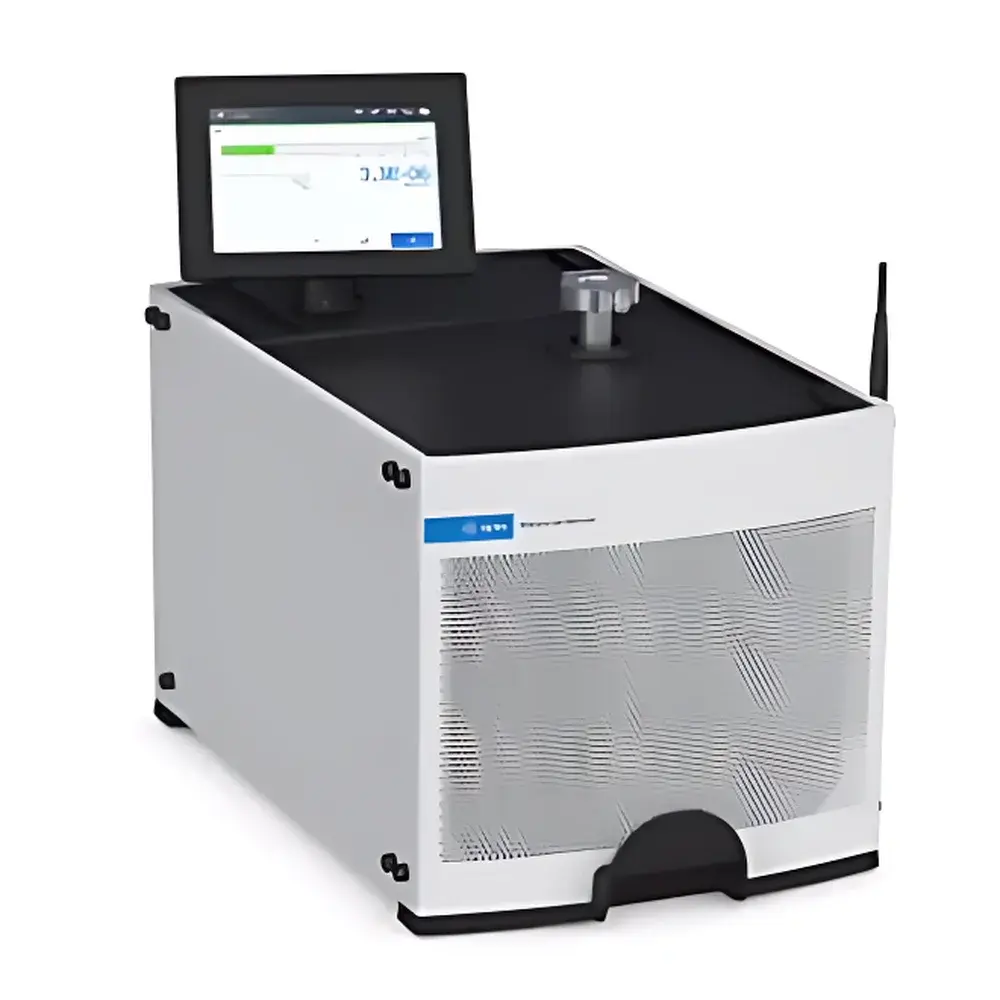
Agilent HLD PR02 Portable Helium Mass Spectrometer Leak Detector
| Brand | Agilent Technologies |
|---|---|
| Origin | USA |
| Manufacturer Type | Original Equipment Manufacturer (OEM) |
| Origin Category | Imported |
| Model | HLD PR02 |
| Pricing | Available Upon Request |
Overview
The Agilent HLD PR02 Portable Helium Mass Spectrometer Leak Detector is a compact, field-deployable analytical instrument engineered for high-sensitivity quantitative leak detection in vacuum and pressurized systems. It operates on the principle of residual gas analysis via quadrupole mass spectrometry, selectively detecting helium (mass-to-charge ratio m/z = 4) as a tracer gas with sub-10−¹² mbar·L/s sensitivity under optimized conditions. Unlike pressure decay or bubble testing methods, the HLD PR02 delivers traceable, quantitative leakage rates—enabling compliance with stringent industry requirements for hermeticity validation in semiconductor fabrication tools, aerospace components, medical device packaging, and ultra-high vacuum (UHV) research chambers. Its integrated architecture combines a quadrupole mass filter, electron ionization source, and secondary electron multiplier detector—all thermally stabilized to ensure signal stability across ambient temperature fluctuations (15–35 °C). The system achieves rapid response times (<100 ms) and low background noise (<5×10−¹⁴ mbar·L/s equivalent helium signal), supporting both sniffer-mode (localization) and vacuum-mode (quantitative measurement) operation.
Key Features
- Integrated Agilent DS 40M dual-stage rotary vane backing pump (pumping speed: 2 m³/h, ultimate pressure <5×10−² mbar), pre-aligned and factory-optimized for seamless coupling with the turbomolecular pump
- 180° rotatable industrial-grade capacitive touchscreen (7-inch, 1024×600 resolution) with glove-compatible operation and anti-glare coating for laboratory and cleanroom environments
- Six application-specific setup wizards—including HVAC, semiconductor chamber, pharmaceutical vial, cryogenic system, automotive EV battery, and UHV component modes—each pre-configuring scan range, dwell time, threshold logic, and alarm hysteresis
- Enhanced data visualization suite featuring real-time dual-axis plots: helium signal intensity (mbar·L/s) vs. time and chamber pressure (mbar) vs. time, with pinch-to-zoom, color-coded threshold bands, and overlay-capable multi-curve export
- Extended benchtop platform (420 × 320 mm usable surface area) accommodating fixtures, calibration standards, and sample adapters without external mounting hardware
- Intelligent shutdown protocol that maintains turbomolecular pump rotor spin-down under controlled vacuum (<1×10−⁴ mbar), minimizing bearing wear and eliminating oil backstreaming risk during idle periods
Sample Compatibility & Compliance
The HLD PR02 supports direct connection to systems operating under rough vacuum (1–100 mbar) or high vacuum (10−⁶–10−³ mbar), with compatibility extending to stainless steel, aluminum, glass, and ceramic test articles up to 1.2 m in length. Its helium introduction interface accepts standard 1/4″ VCR fittings and integrates with Agilent’s optional helium manifold kits for multi-port sequential testing. The instrument conforms to ISO 20485:2017 (leak detection—terminology and methodology), ASTM E499-22 (standard test method for helium mass spectrometer leak testing), and EN 1318-2:2021 (industrial leak testing—part 2: helium spray method). Audit trail functionality—including user login timestamps, parameter change logs, and raw spectral data archiving—is compliant with FDA 21 CFR Part 11 when paired with Agilent OpenLab CDS software (v2.10 or later).
Software & Data Management
Firmware v3.2.1 enables local data storage on internal 32 GB eMMC (retaining ≥10,000 test records with full metadata: date/time, operator ID, test mode, ambient T/P, helium concentration, leak rate, and pressure curve). USB-C and Ethernet interfaces support direct transfer to LIMS or MES platforms using standard SCPI commands and CSV/JSON export protocols. Optional Agilent LeakTest Suite (sold separately) provides automated pass/fail reporting per USP , statistical process control (SPC) charting for trend analysis, and PDF report generation with embedded digital signatures and calibration certificate linkage.
Applications
- Qualification of vacuum integrity in semiconductor lithography tools and deposition chambers
- Leak rate verification of implantable medical devices (e.g., pacemakers, neurostimulators) per ISO 11607-2
- In-process validation of aluminum battery enclosures for electric vehicles (EVs)
- Hermeticity screening of MEMS sensors and optical fiber feedthroughs
- Final acceptance testing of cryogenic dewars and superconducting magnet systems
- Root cause analysis of vacuum degradation in synchrotron beamline components
FAQ
What is the minimum detectable leak rate in vacuum mode?
Typical sensitivity is ≤5×10−¹² mbar·L/s for helium at 25 °C, dependent on background helium levels, pumping speed, and integration time.
Can the HLD PR02 be used for tracer gas testing with gases other than helium?
No—it is calibrated and optimized exclusively for helium (m/z = 4); alternative tracer gases require dedicated mass filters and ion source tuning not supported by this model.
Is external vibration isolation required during operation?
Not under standard lab conditions; however, operation near heavy machinery (>0.5 g RMS acceleration) may necessitate optional active damping mounts (Agilent P/N 5992-1625).
How often must the turbomolecular pump undergo preventive maintenance?
Agilent recommends inspection every 12 months or 8,000 operational hours, whichever occurs first, with bearing replacement intervals defined in the Maintenance Manual Rev. D.
Does the instrument support remote monitoring via network protocols?
Yes—via Modbus TCP and HTTP REST API endpoints for integration into facility SCADA systems, with TLS 1.2 encryption and role-based access control (RBAC) enabled by firmware v3.2.1.





