
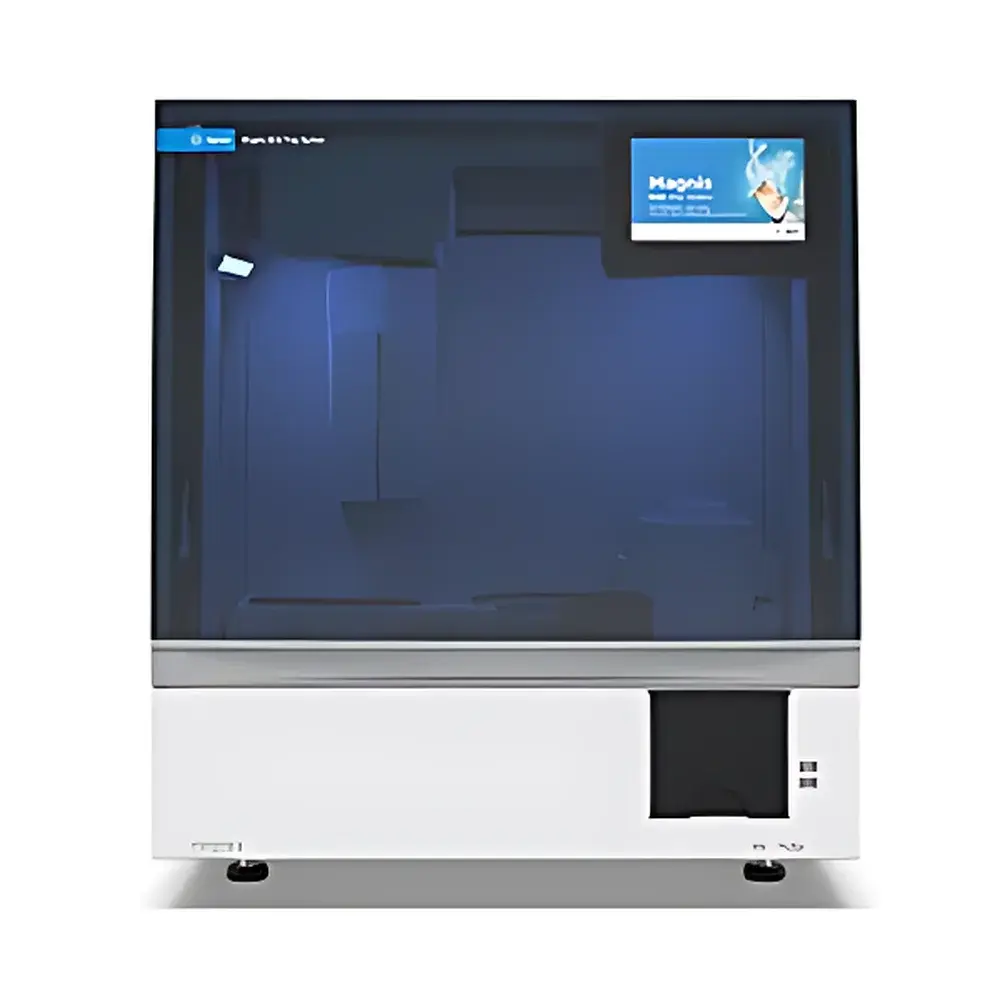
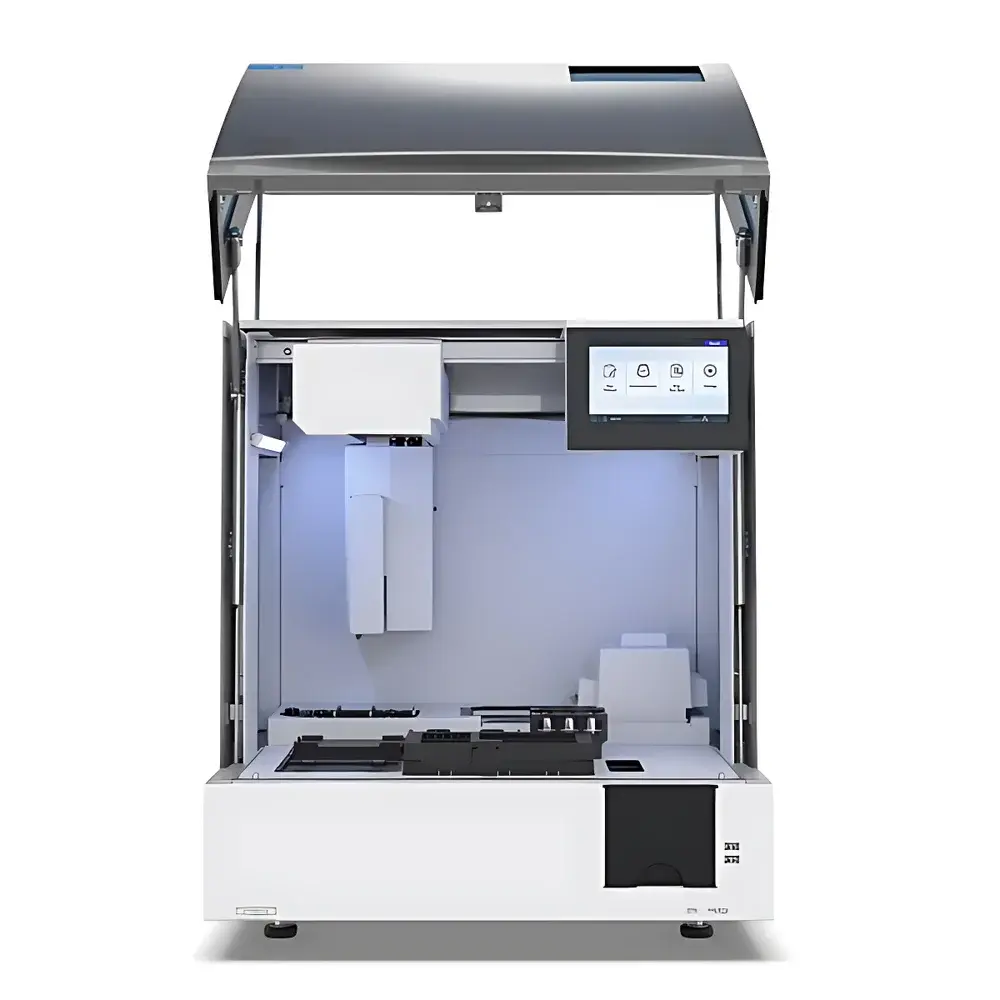
Agilent Magnis NGS Library Preparation System
| Brand | Agilent Technologies |
|---|---|
| Origin | Malaysia |
| Manufacturer | Agilent Technologies |
| Origin Category | Imported |
| Model | Magnis NGS |
| Instrument Type | Integrated Library Construction and QC System |
| Library Construction Method | Hybridization-Based Target Enrichment (Capture-Based) |
| Weight | 95 kg |
| Power Consumption | 450 W (avg) / 900 W (max) |
| Dimensions (W × D × H) | 620 mm × 720 mm × 710 mm |
| Operating Temperature | 15–25 °C |
| Relative Humidity | 30–70 % RH |
| Voltage | 100–240 VAC |
| Frequency | 50–60 Hz |
Overview
The Agilent Magnis NGS Library Preparation System is a compact, benchtop-integrated platform engineered for end-to-end automation of next-generation sequencing (NGS) library construction—specifically optimized for hybridization-based target enrichment workflows. Built upon the validated chemistry of the Agilent SureSelect XT HS2 reagent kits, the Magnis system supports both DNA- and RNA-derived input materials, enabling seamless integration of enzymatic fragmentation (for DNA) or reverse transcription (for total RNA) directly within the same automated run. Its architecture implements precise liquid handling, thermal cycling, magnetic bead-based purification, and on-instrument barcode verification to ensure analytical consistency across runs. Designed for reproducibility in regulated research environments, the Magnis operates without requiring advanced molecular biology expertise—making it suitable for core facilities, translational labs, and academic genomics centers seeking standardized, audit-ready library prep.
Key Features
- Self-calibrating and self-diagnostic hardware with real-time system health monitoring
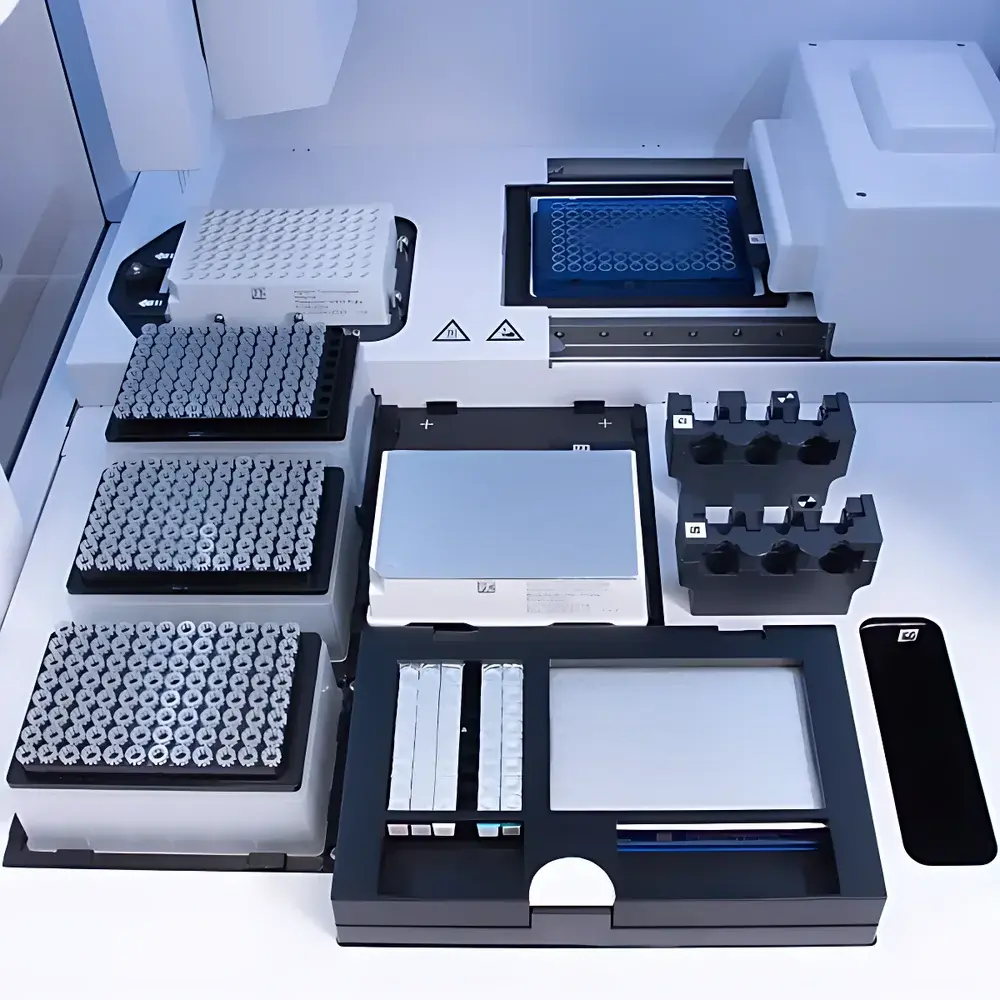
- Premixed, pre-aliquoted SureSelect XT HS2 reagent cartridges—minimizing pipetting error and cross-contamination risk
- Preloaded, protocol-optimized methods for Agilent catalog panels (e.g., Clinical Research Exome, Focused Custom Panels) and user-defined designs
- Intuitive onboard wizard guiding users through setup in under five minutes; no software installation or external computer required
- Integrated barcode scanning to validate reagent cartridge placement and prevent workflow misconfiguration
- Visual status feedback via multi-color LED indicators—green for operational readiness, amber for pending action, red for error state
- One-touch initiation: after loading samples and cartridges, users may leave the instrument unattended during full library construction (fragmentation, end-repair, A-tailing, adapter ligation, PCR amplification, and post-capture cleanup)
Sample Compatibility & Compliance
The Magnis system accepts purified genomic DNA (≥50 ng), FFPE-derived DNA (with optional repair module), and total RNA (≥100 ng) as starting material. It delivers libraries compatible with Illumina sequencing platforms (including NovaSeq, NextSeq, and MiSeq) and supports dual-indexed adapters meeting Illumina TruSeq specifications. All protocols are developed and verified under Agilent’s ISO 9001-certified manufacturing and quality systems. While designated “For Research Use Only (RUO)”, the Magnis workflow aligns with common GLP-aligned documentation practices—including electronic logbook entries, operator ID tracking, and timestamped run records—supporting traceability requirements in preclinical and biomarker discovery settings. It is not intended for diagnostic or clinical use per FDA 21 CFR §809.3(a) and EU IVDR Annex XVI exclusions.
Software & Data Management
The Magnis operates via embedded firmware with a touch-enabled graphical interface; no external PC or proprietary software license is required. All method files, calibration logs, and run reports are stored locally on encrypted internal memory. Exportable CSV-formatted run summaries include start/stop timestamps, reagent lot numbers, thermal profile deviations (if any), and final library yield estimates. When paired with the Agilent 4150 TapeStation System, raw data from TapeStation electropherograms can be manually imported into Magnis-generated reports for integrated QC documentation—facilitating end-to-end workflow traceability. Audit trail functionality meets basic ALCOA+ principles (Attributable, Legible, Contemporaneous, Original, Accurate), though full 21 CFR Part 11 compliance requires integration with enterprise LIMS or ELN platforms.
Applications
- Targeted exome and gene panel sequencing for oncology biomarker discovery
- Low-input FFPE tumor profiling with built-in DNA damage repair compatibility
- RNA-seq library generation from degraded or low-yield clinical specimens
- High-throughput validation of CRISPR editing outcomes via amplicon-based capture
- Standardized library prep across multi-site collaborative studies requiring inter-laboratory reproducibility
- Training and technology transfer in shared resource facilities where operator variability must be minimized
FAQ
Is the Magnis NGS system compatible with non-Agilent capture chemistries?
No—the system is specifically calibrated and validated for use with Agilent SureSelect XT HS2 and related SureSelect reagent kits. Substitution with third-party reagents voids performance guarantees and may compromise thermal ramp accuracy or bead-binding kinetics.
Can the Magnis perform shearing or size selection independently?
No—fragmentation is achieved enzymatically using SureSelect-provided enzymes; size selection occurs post-capture via SPRI bead parametric optimization, not physical separation. For mechanical shearing, external Covaris or Diagenode instruments are recommended upstream.
What maintenance is required beyond routine cleaning?
Agilent recommends quarterly verification of pipette accuracy, magnetic head alignment, and thermal block uniformity using Agilent-supplied calibration tools. No consumable wear parts require scheduled replacement within the first 24 months of operation.
Does the Magnis support custom primer design or in-house adapter synthesis?
Yes—custom index combinations and modified adapter sequences can be loaded as user-defined methods, provided they conform to Illumina’s dual-indexing specification and maintain compatible Tm and secondary structure profiles.
How does the Magnis handle sample tracking across multiple runs?
Each run generates a unique alphanumeric identifier linked to sample IDs entered at setup. Barcode-scanned tube labels are logged alongside reagent lot numbers and operator credentials—enabling retrospective reconstruction of preparation history for each sequencing library.



